Canadian Rockies Photography: The Basics
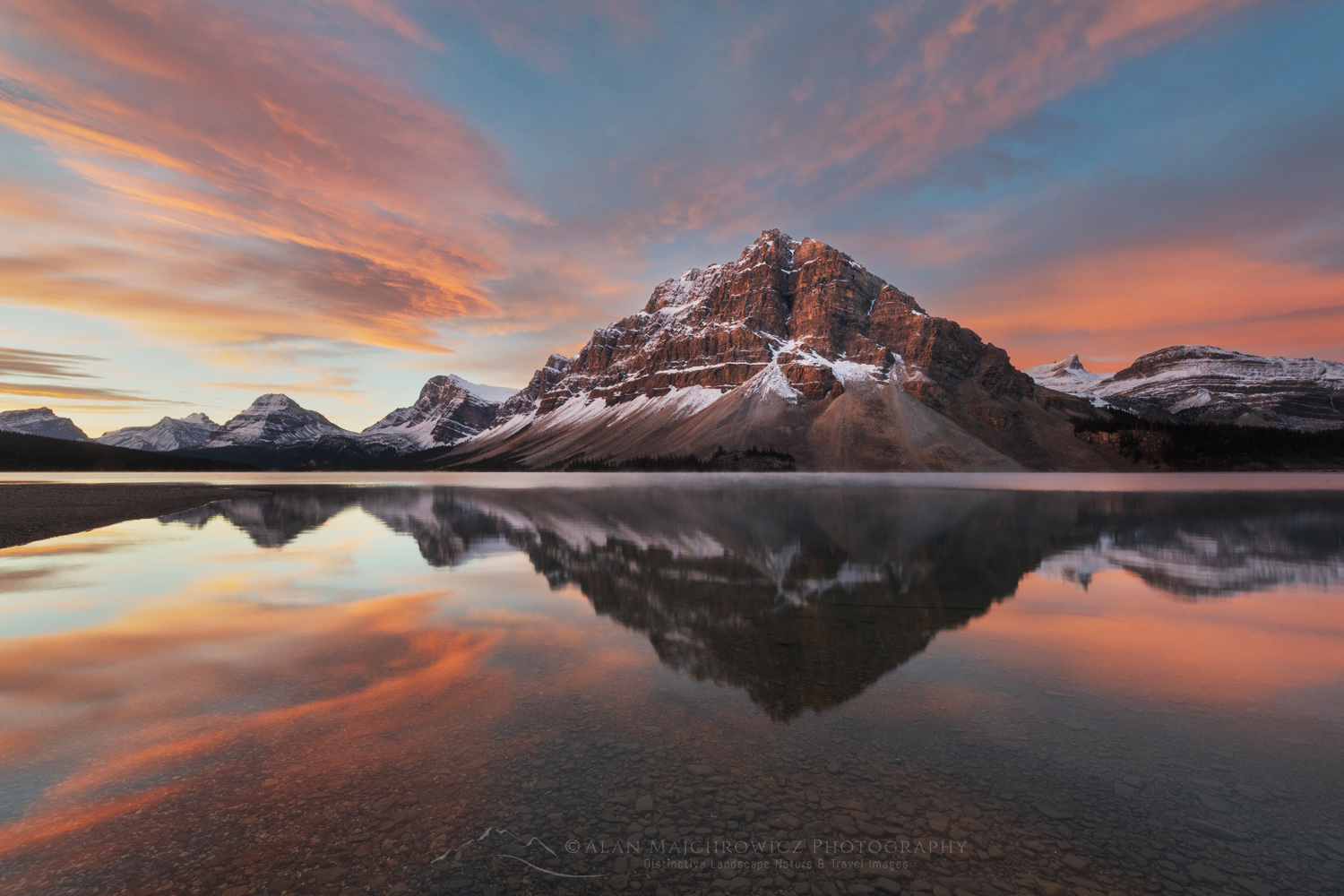 Bow Lake Banff National Park #88692 Purchase
A quick look at a map of Western Canada reveals range upon range of magnificent mountains, many crowned with impressive glaciers. But one range famously stands out among them all. Straddling the border of British Columbia and Alberta are the jaw-dropping Canadian Rockies. There are few mountain ranges on Earth that can equal the magnificence of these mountains. For landscape and nature photographers, these mountains offer a lifetime of endless photographic opportunities.
As a result, on a first visit to the Canadian Rockies, a photographer may be overwhelmed by the scenery and ask, “Where do I start?” An excellent question. And hopefully I can provide some answers and tips for your first, or next, Canadian Rockies photography tour.
Pro Tip: The Canadian Rockies encompass a staggering amount of jaw-dropping scenery. Therefore, don’t expect to see and photograph it all in one visit, even if you have months available. Make a general tourist-style first visit or two, then return over and over to explore more locations.
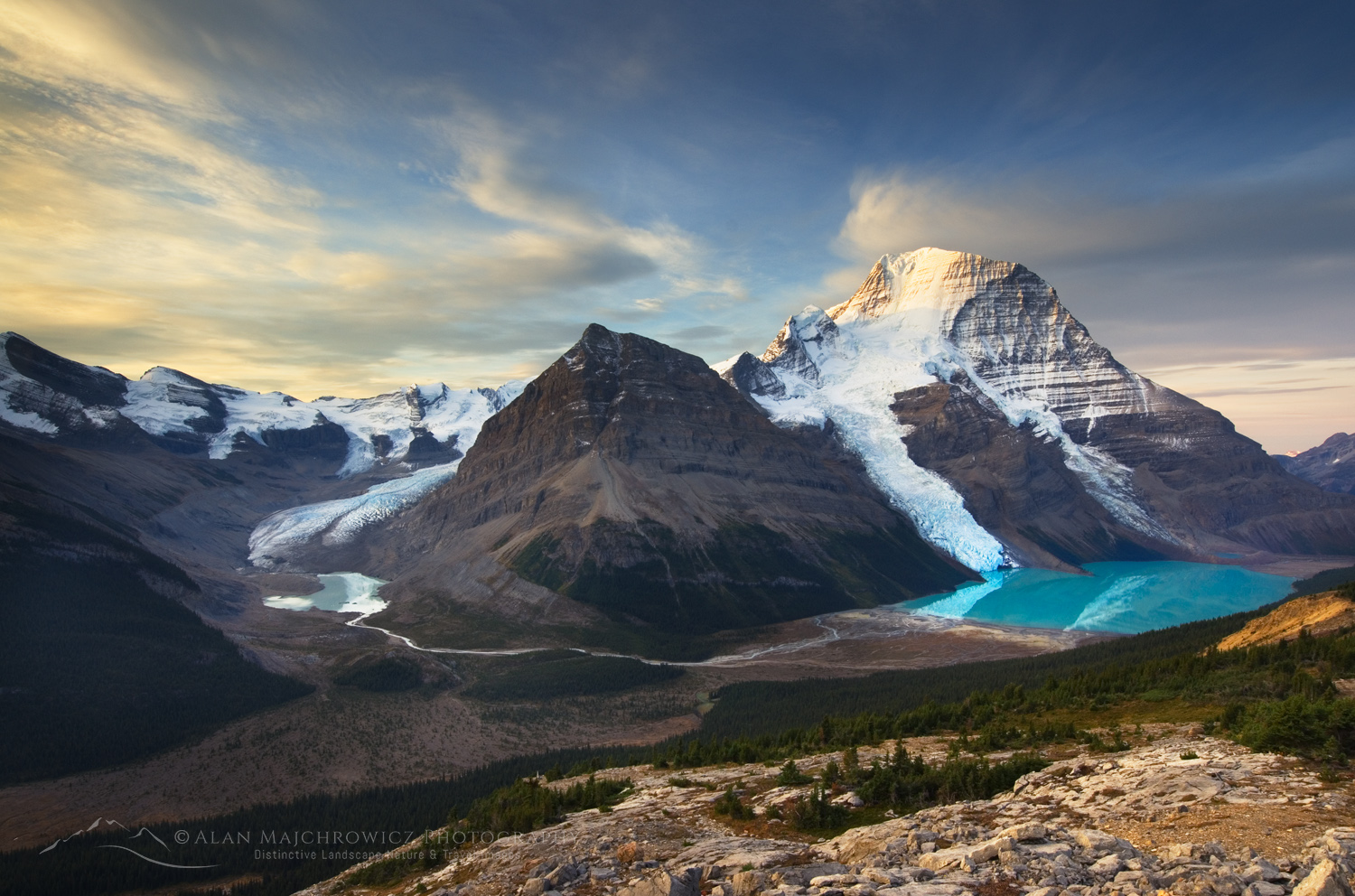 Mount Robson #54646 Purchase
Where are the Canadian Rockies?
Geographically, the Canadian Rockies extend from the U.S. border in Montana, in the south, to the Yukon Territory in the north. However, the most famously stunning section lies in the southern half of the range, at approximately 51º north. Here, the border with Alberta and British Columbia lies roughly along the continental divide. The northern edge of the section in this post is Mount Robson Provincial Park, and the southern edge is Kananaskis Country.
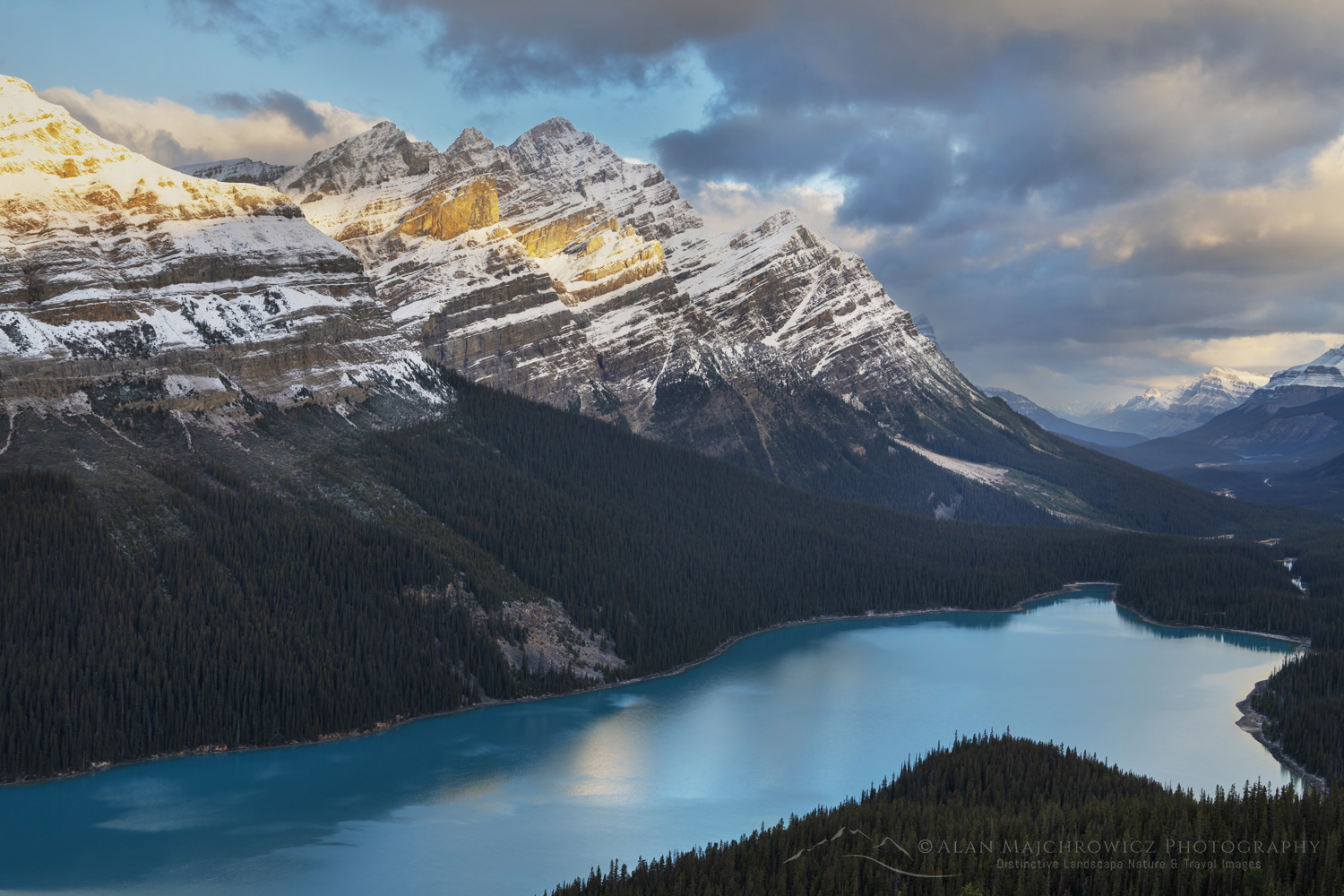 Peyto Lake Banff National Park #88877 Purchase
Within this area, the Canadian Rockies receive protected status by means of an interconnecting web of both National and Provincial parks. Listed below, from north to south, are the main parks.
- Mount Robson Provincial Park, British Columbia
- Willmore Wilderness Park, Alberta
- Jasper National Park, Alberta
- Banff National Park, Alberta
- Yoho National Park, British Columbia
- Kootenay National Park, British Columbia
- Height of the Rockies Provincial Park, British Columbia
- Mount Assiniboine Provincial Park, British Columbia
- Kananaskis Country, Alberta; Peter Lougheed Provincial Park, Spray Valley Provincial Park, Bow Valley Provincial Park, Sheep River Provincial Park
When to go on a Canadian Rockies Photography Trip
The short answer is any time of year! Most parks are open year-round, although with limited access and facilities in winter. Summer is glorious, but the crowds are also at their peak.
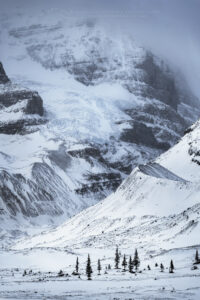 Columbia Icelfields in winter #82187 Purchase
- Winter: This is a spectacular season for photography in the Canadian Rockies. If you are prepared to work in cold temperatures, the rewards are no crowds to contend with and magical winter wonderland scenery. Most of the main roads are open and maintained for winter driving, including the Icefields Parkway. However, only a few campgrounds remain open in winter. Also, for photographing beyond the roadside, you’ll need snowshoes or skis to get around.
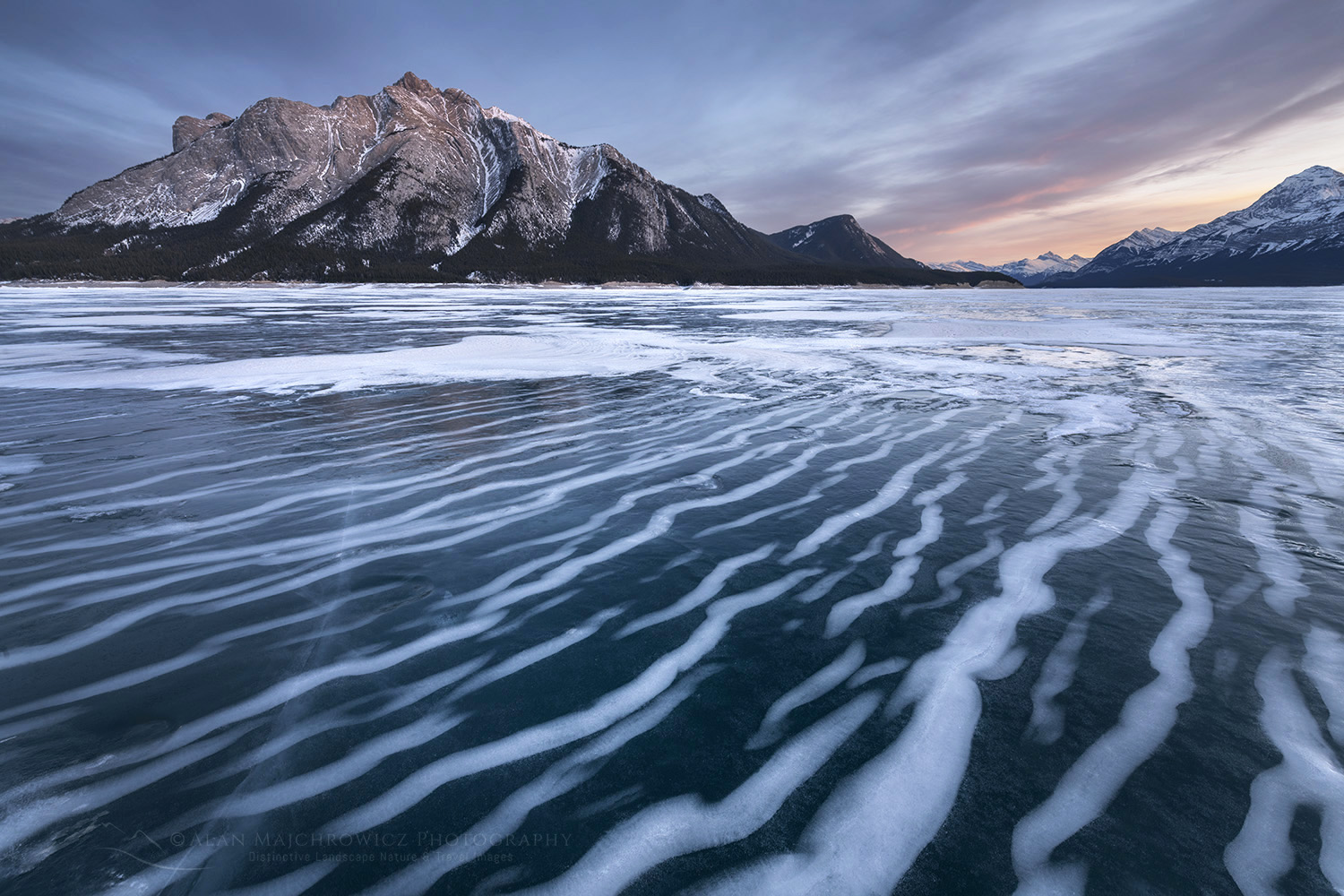 Abraham Lake #82406c Purchase
- Spring: This is also a good time for a photography trip. Days are longer and warmer, and crowds are light. The mountains still have an attractive cloak of snow, and the lowlands are beginning to green up. However, most higher trails will still be under deep snow.
- Summer: This is peak season; the mountains, lakes, and valleys are nothing short of magnificent. However, a summer photography tour, both front and backcountry, requires careful planning far in advance. Summer sees the greatest number of tourists, with campgrounds, hotels, and lodges reserved months or years in advance. Most scenic viewpoints run out of parking very early in the morning, some requiring shuttle reservations.
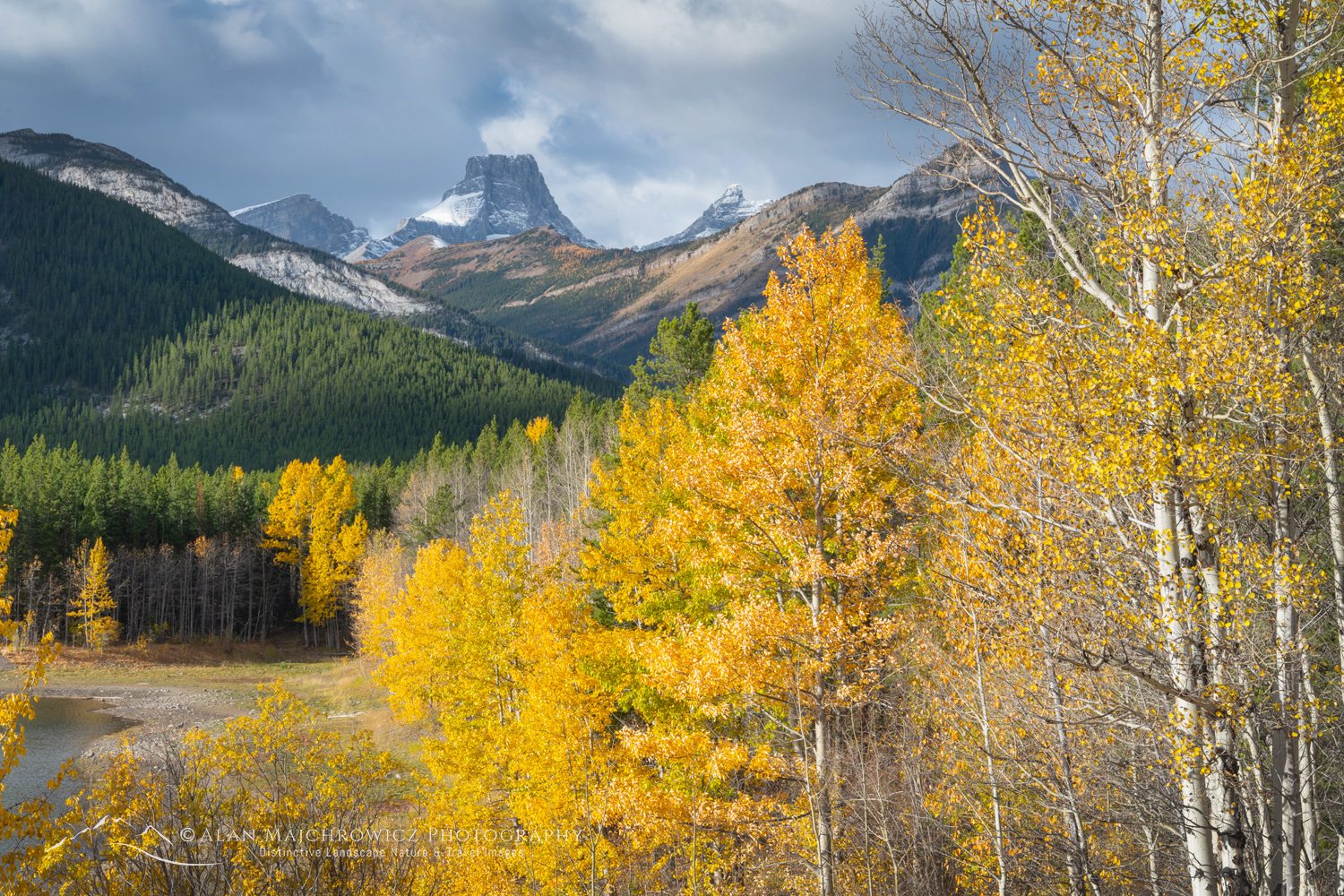 Kananskis Country fall foliage #81538 Purchase
- Fall: My favorite season for Canadian Rockies Photography. The days are still warm, with chilly nights and mornings. Weather patterns are unsettled and can bring fresh dustings of snow followed by beautiful sunny days. And, of course, there is fall foliage. Fall travel has increased in popularity over the years, so most parks can still be crowded.
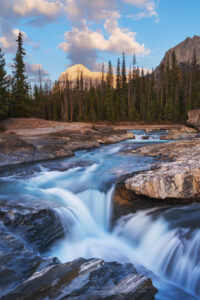 Yoho National Park #81715 Purchase
Where to go on a Canadian Rockies Photography Trip
That can be a very difficult question, and it depends on your photography goals. Do you want to photograph the most iconic images of the Canadian Rockies? Do you want to escape the crowds and backpack into seldom-photographed places? Or do you want to stick to roadside viewpoints and easy nature trails?
Excellent roads and backcountry trails are present in all of the parks listed above. But some parks offer better access to easy frontcountry landscapes. Others, such as Mount Robson and Height of the Rockies Provincial Parks, are mainly backcountry wilderness trip destinations. Below are some suggestions for your first few visits.
 Icefields Parkway Banff National Park #88889 Purchase
Frontcountry
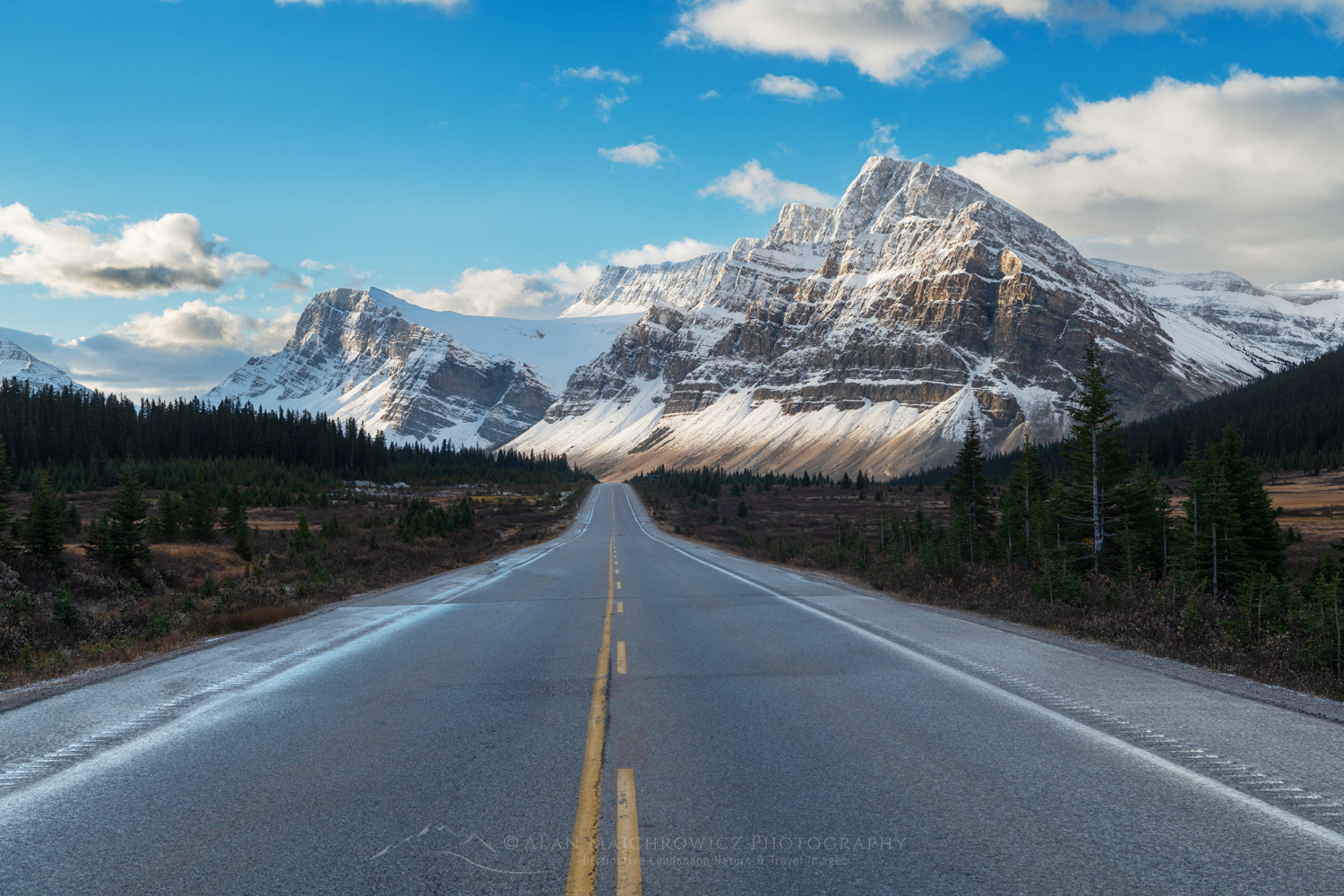
- Icefields Parkway: Jasper and Banff National Parks. This is one of the most iconic and scenic drives in North America, one you’re guaranteed to do over and over again. This scenic drive highlights some of the most dramatic scenery in the Canadian Rockies. Start at Jasper in the north or Lake Louise in the south. Spend an entire day taking it all in, and make notes for returning to the places that interest you the most.
 Lake Louise Banff National Park #54792 Purchase
 Moraine Lake Banff National Park #4100 Purchase
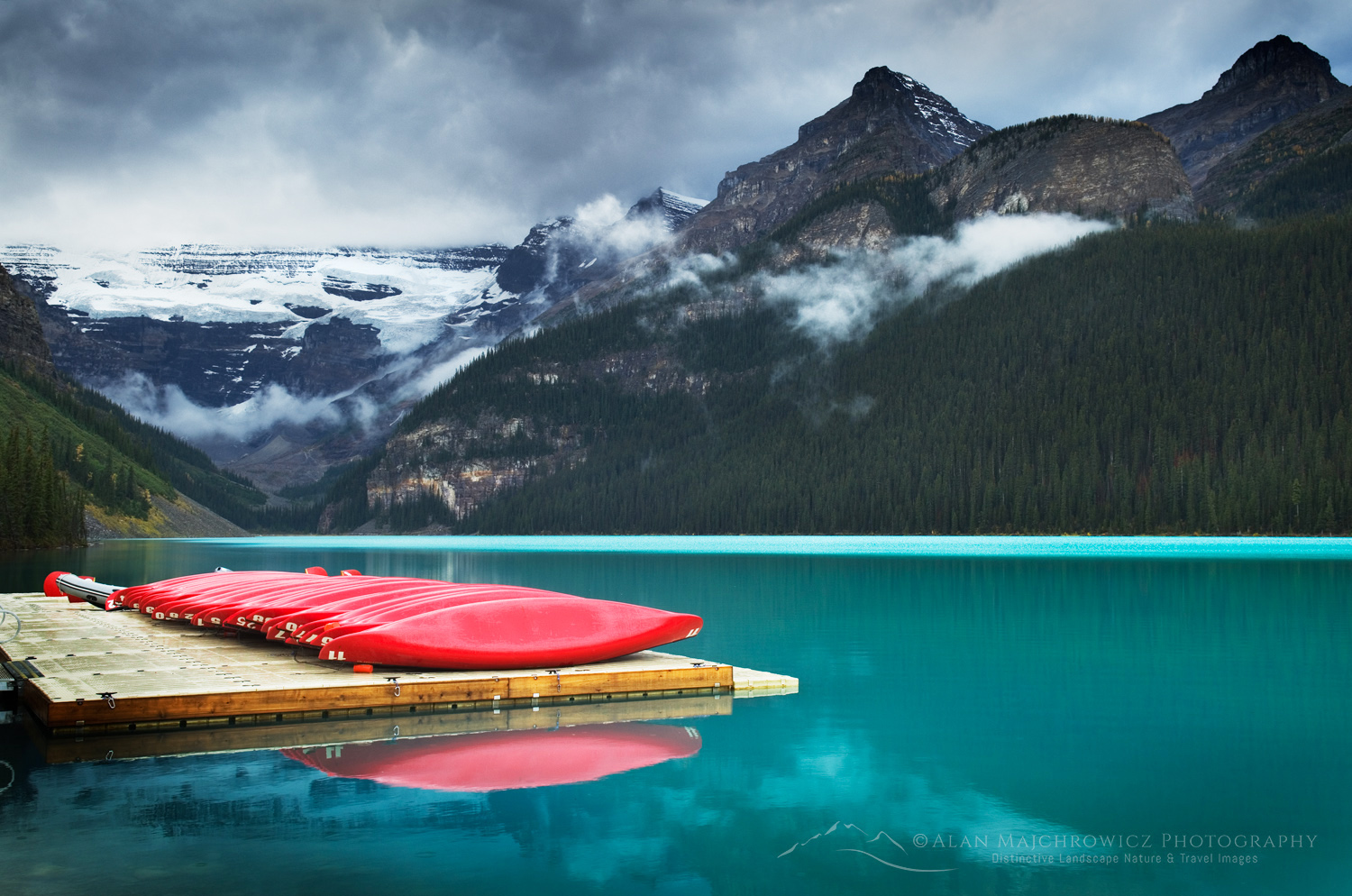
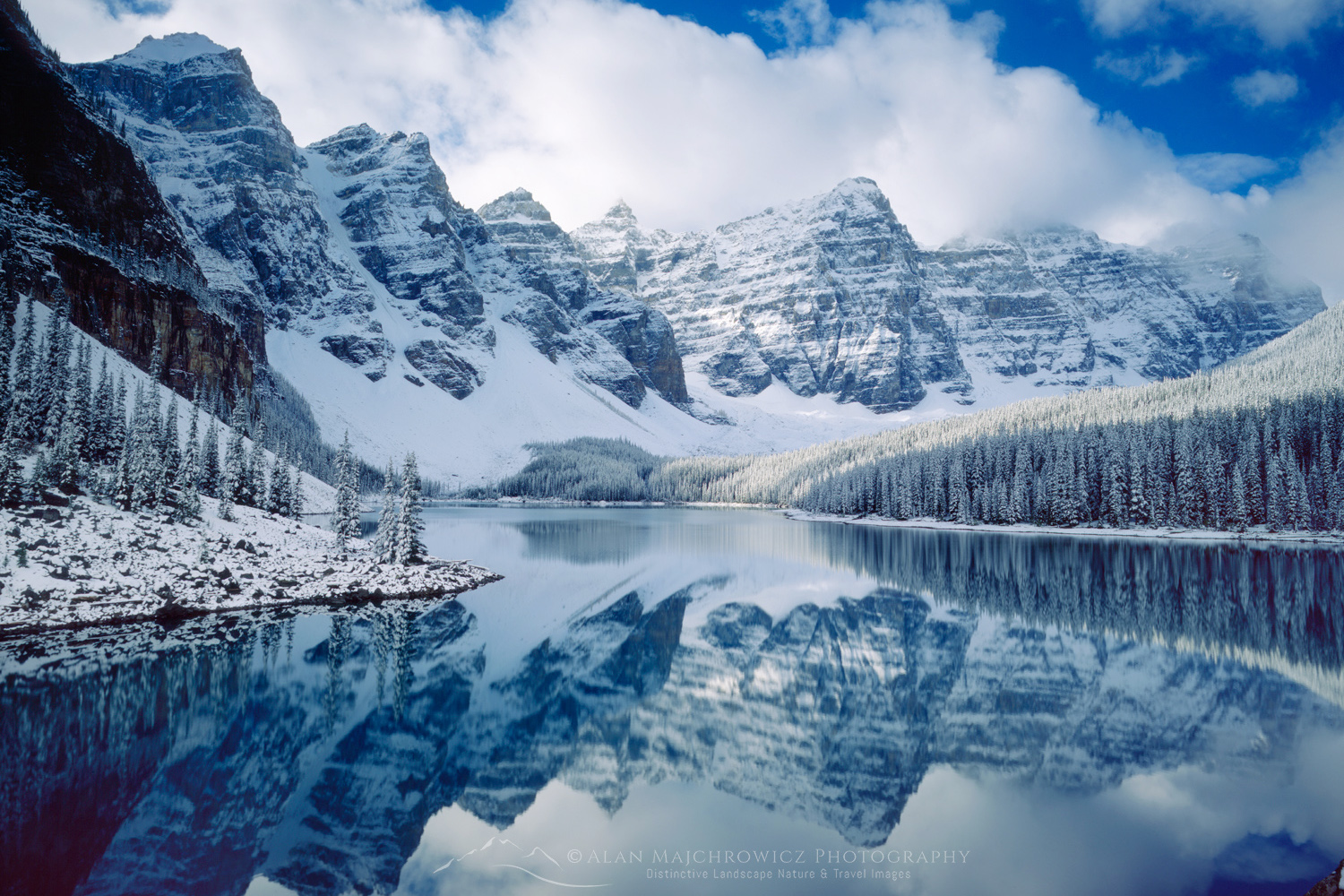
- Lake Louise Area: This is certainly the nexus for most photographers starting out photographing the Canadian Rockies. Lake Louise and Moraine Lake are especially notable for two of the most identifiable locations on Earth. These two lakes appear around the world on screensavers, tourist ads, packaging, and everything in between. That said, it will feel like every tourist in the world is with you, trying to photograph them.
- Bow Valley Scenic Parkway: In contrast to Lake Louise, this is a quiet alternative to the Trans-Canada Highway. This scenic drive has access to Johnston Canyon, Morant’s Curve viewpoint, and others. In the fall, this can be a good place to photograph aspens and elk herds.
 Kananaskis Country #81582 Purchase
- Kananaskis, Highway 40 and Smith-Dorrien Trail: SimiKananaskis Country, or “K” Country, is also where many locals go to escape the crowds of the bigger parks. This is one of the best locations for fall photography. While there are some good photo ops along the roads, some of the best photography is up the trails. Both roads can be combined for a scenic loop. But be aware that the Smith-Dorrien Road section of the western half is unpaved gravel.
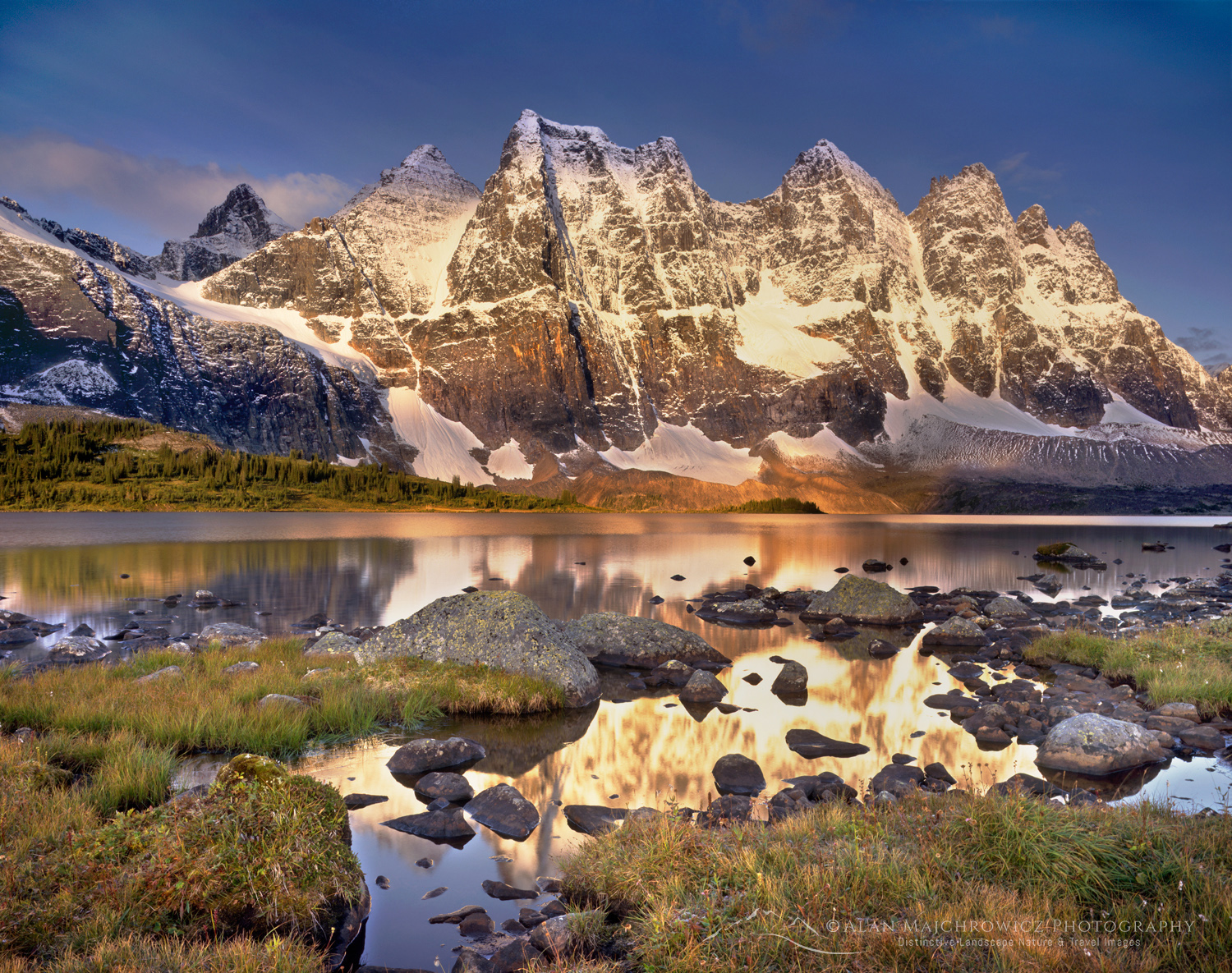 Tonquin Valley Jasper National Park #3055 Purchase
Backcountry
Below are some of the top backcountry locations for landscape photography. All require committing several days of backcountry travel to make a photography trip worthwhile. And all of them require permit reservations months in advance. I will describe them in detail in future blog posts.
- Berg Lake Trail, Mount Robson Provincial Park
- Tonquin Valley, Jasper National Park
- Skoki Loop, Banff National Park
- Lake O’Hara, Yoho National Park
- Rock Wall Trail, Kootenay National Park, British Columbia
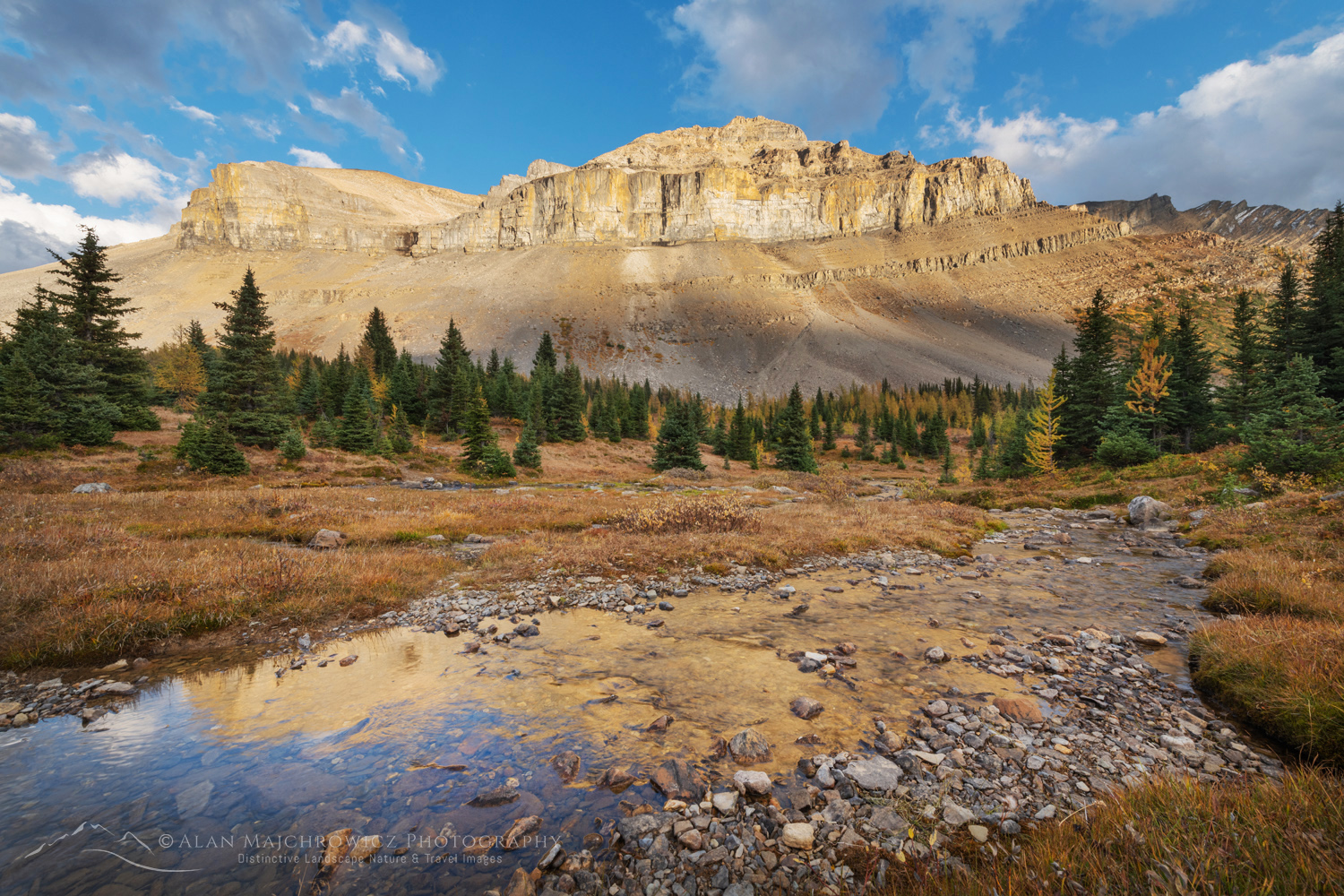 Skoki Loop Banff National Park #88568 Purchase
Basic Tips for Canadian Rockies Photography
Below are several tips that would apply to most photography trips in the Canadian Rockies
- Get up very early; Morning light rules. The vast majority of locations, especially around Lake Louise and the Icefields Parkway, photograph best in morning light. However, many also photograph well in evening light under the right conditions.
- Planning Patience and Persistance: Follow these three Ps is especially important for successful landscape and nature photography. Always Plan what and where and when you want to photography. Then, be patient and wait for the best light and weather conditions. And finally, be persistent, you may have to return over the course of several days or years to be rewarded with the scene you envision.
- Avoid the crowds; Photograph during golden hours. Any time between 8:00 a.m. and 6:00 p.m. is likely to be packed with tour buses and cars. Anyway, experienced photographers know the best times of day are generally the morning and evening golden hours. This is also when most of the tourists are either just waking up or calling it a day.
- Focus on only a few locations: As I mentioned earlier, this is a big area with amazing photo ops around every turn. It’s easy to try to fit everything into one trip. Consequently, it’s best to pick one area or subject and dedicate your available time to it.
- Make Reservations Early: I can’t stress this enough. Hotels and lodges often book out at least six months in advance. Most campsites, front and backcountry, are reservation-only. Moreover, they get reserved within minutes of becoming available. And some, most notably, like at Lake O’Hara, are reserved through lottery only. Therefore it is always advisable to have several alternative options ready.
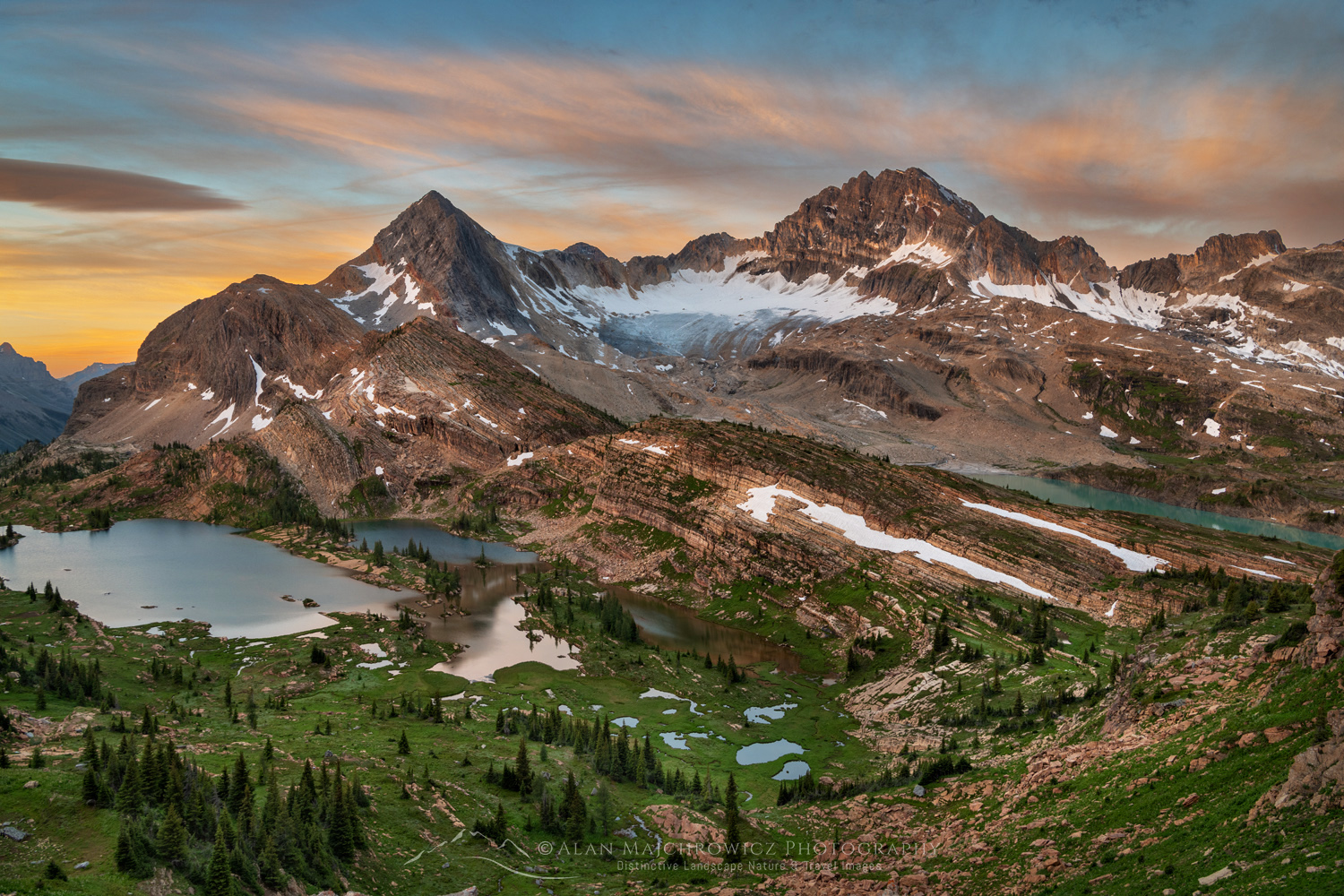 Height of the Rockies Provincial Park #86593 Purchase
Useful Links for a successful Canadian Rockies Photography Trip
- Guidebooks: Canadian Rockies Trail Guide, by Brian Patton and Bart Robinson; Classic Hikes in the Canadian Rockies, by Graeme Pole
- Maps:Gem Trek Maps
- Canada National Parks
- British Columbia Provincial Parks
- Alberta Provincial Parks
- Canadian Weather
- Helpful Blog Posts: Backpacking Photography Tips, Backpacking Photography Gear, Winter Photography Tips
Thank you for reading, and if you found this post to be enjoyable and informative, please feel free to share it with friends and family!
All photos appearing in Canadian Rockies Photography are available for Commercial Licensing and Fine Art Prints
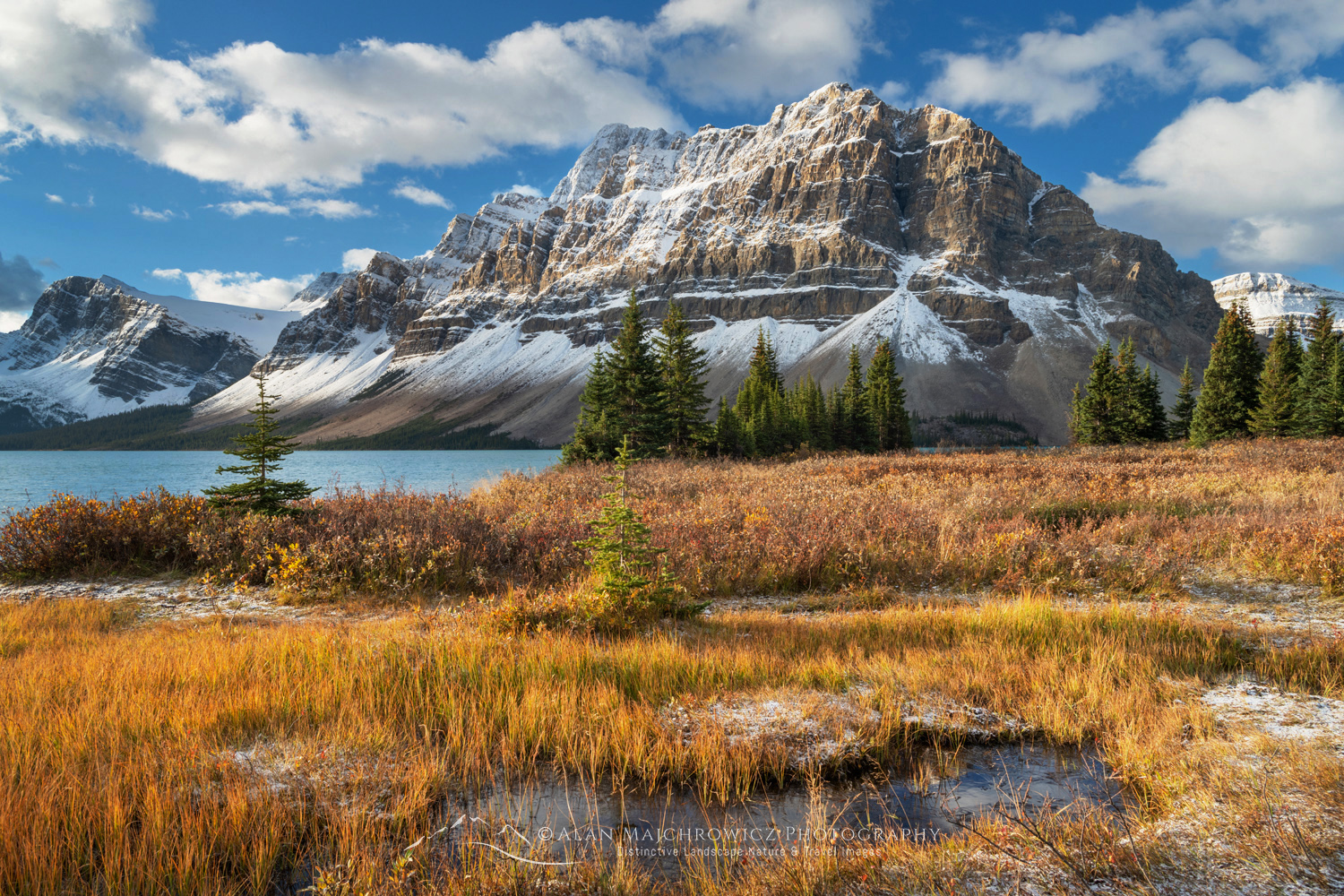 Bow Lake Banff National Park #86593 Purchase
Leave No Trace
Please, Please, Please! Don’t plan a trip to this or any other national park, monument, or wilderness area unless you are prepared to follow Leave No Trace guidelines (LNT). National parks and wilderness areas worldwide are under incredible pressure from the growing number of visitors. So, please do your part to help preserve these precious areas for future generations!
Please visit the Leave No Trace Center for Outdoor Ethics to learn more about LNT’s principles. Your children and grandchildren will thank you!
LEAVE NO TRACE SEVEN PRINCIPLES
1. Plan and Prepare
2. Travel and Camp on Durable Surfaces
3. Dispose of Waste Properly
4. Leave What You Find
5. Minimize Campfire Impacts
6. Respect Wildlife
7. Be Considerate of Other Visitors
© Leave No Trace: www.LNT.org
Learn about how to protect the places we love to photograph
Visit the Nature First Website