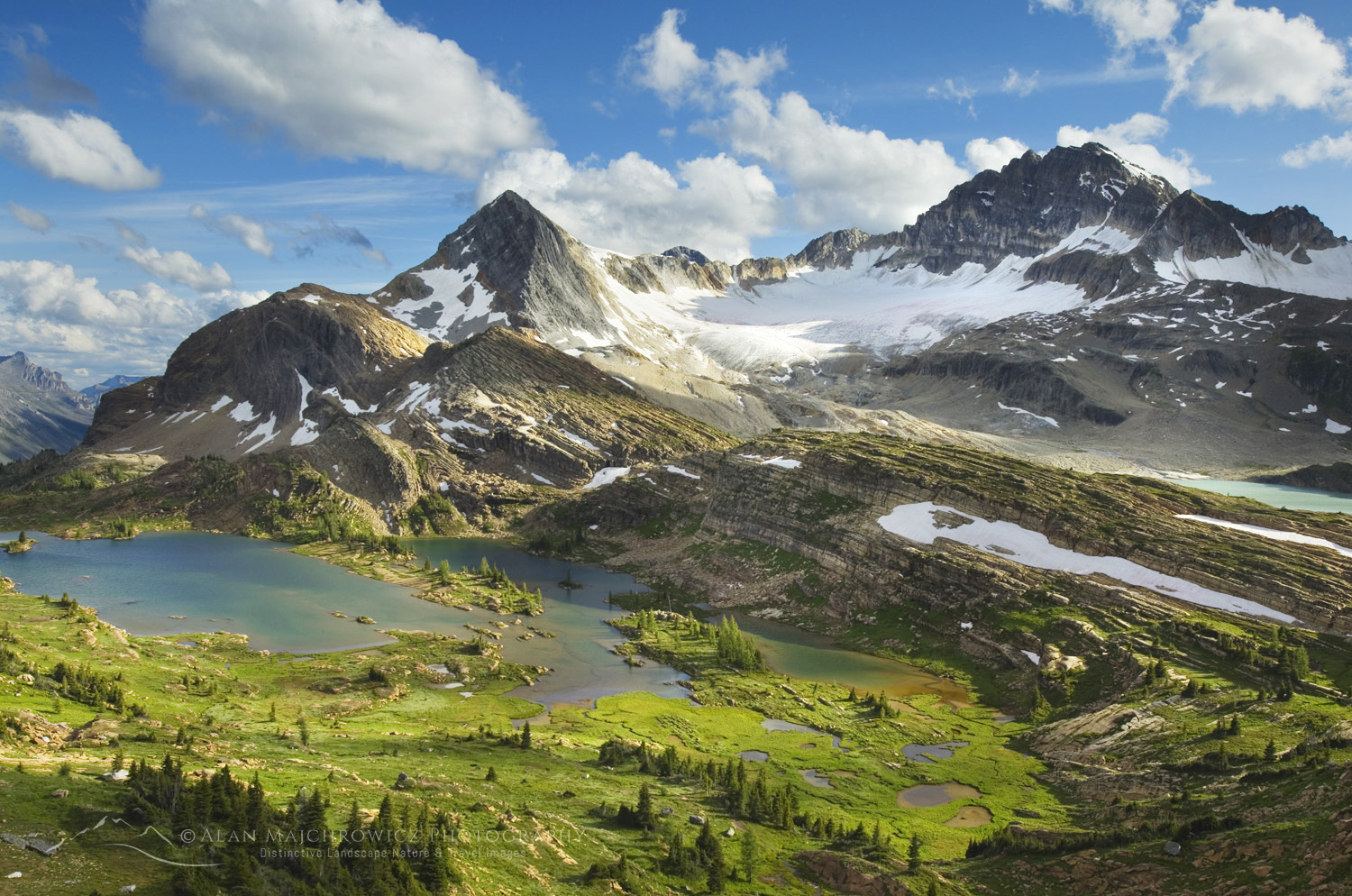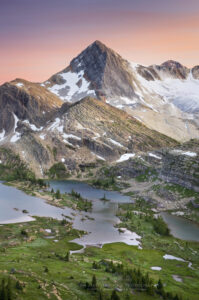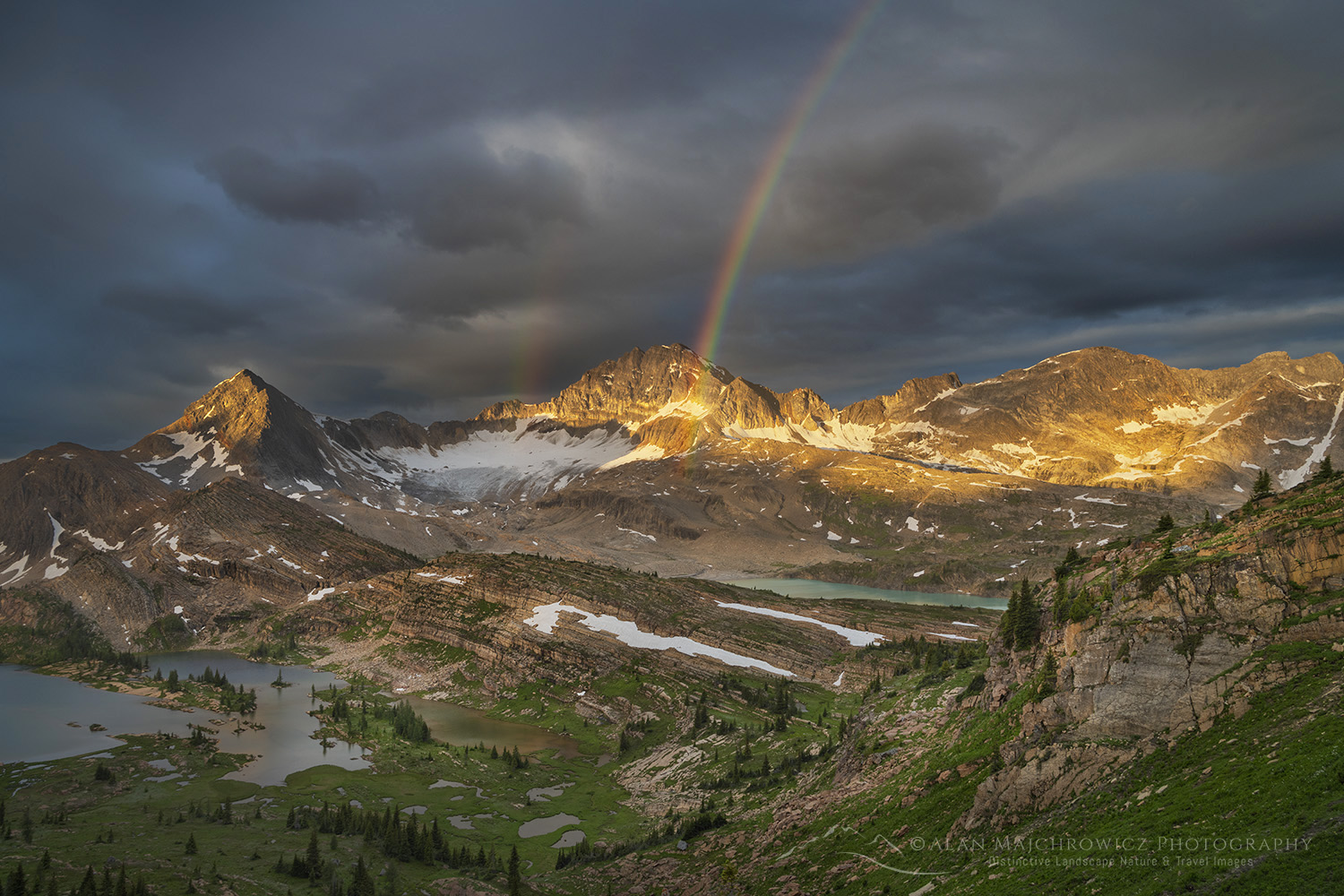
Sunrise rainbow over Limestone Lakes Basin. Height of the Rockies Provincial Park British Columbia

Limestone Lakes Height of the Rockies Provincial Park: Part 2

Sunrise rainbow over Limestone Lakes Basin. Height of the Rockies Provincial Park British Columbia Limestone Lakes Height of the RockiesRainbow over Limestone Lakes, Height of the Rockies Provincial Park #86474  Purchase

Limestone Lakes Height of the Rockies Provincial Park: Part 2

Limestone Lakes Height of the Rockies Provincial Park is one of the few places in the Canadian Rockies where a person can experience true solitude. And, it is also an exception in an era of reservations, lotteries, and fees for backpacking trips. As of 2026, there are no fees, reservations, or even a registration needed for a trip of any length.

Of course, as I mentioned in part one of this series, there are reasons for this. Limestone Lakes is not an easy backpacking destination. And it is too far and involved for a day-hike. However, for those willing to commit at least three days and lots of sweat, it is a dream destination.

So, let’s start the second half of the trip, where part one left off.
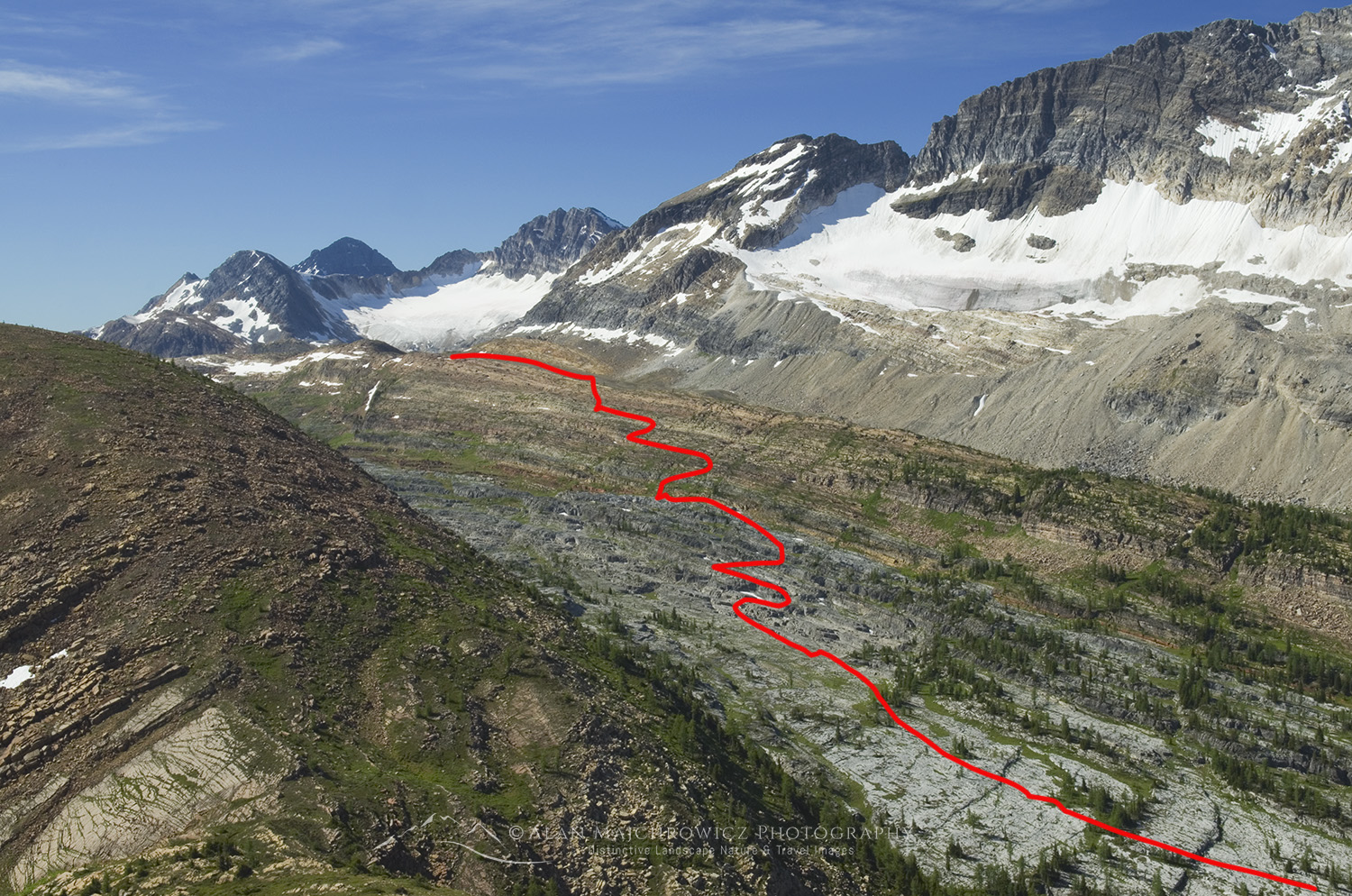
Route to Limestone Lakes Basin, Height of the Rockies Provincial Park British ColumbiaView of the route (red line) from the nub

Limestone Lakes, Cross Country Route-Finding

After leaving Sylvan Pass and ascending to the summit of the 8300′ nub, you get a great view of the route to Limestone Lakes. This is a good spot to rest and take a few moments to commit the scene to memory. Basically, you’ll need

to descend into the open upper valley and travel southwest and over numerous ascending ledges and cliffs to a pass overlooking the lakes basin. The route is always in the open and, using common sense, it is fairly obvious. A GPS can come in handy, but not necessary.

The first difficulty is getting down to the valley. Start descending southwest to a small meadowy pass. There may be faint glimpses of a trail here. Then head west until cliffs bar the way. At this point, you’ll need to find negotiable ledges while heading in a northwest direction. Take your time to scout out the best route. Eventually, the cliffs and ledges become easier, and the valley is reached. About 800′ below the summit of the nub. It’s a bit heartbreaking to realize that all the elevation you just lost will need to be regained again, and more.
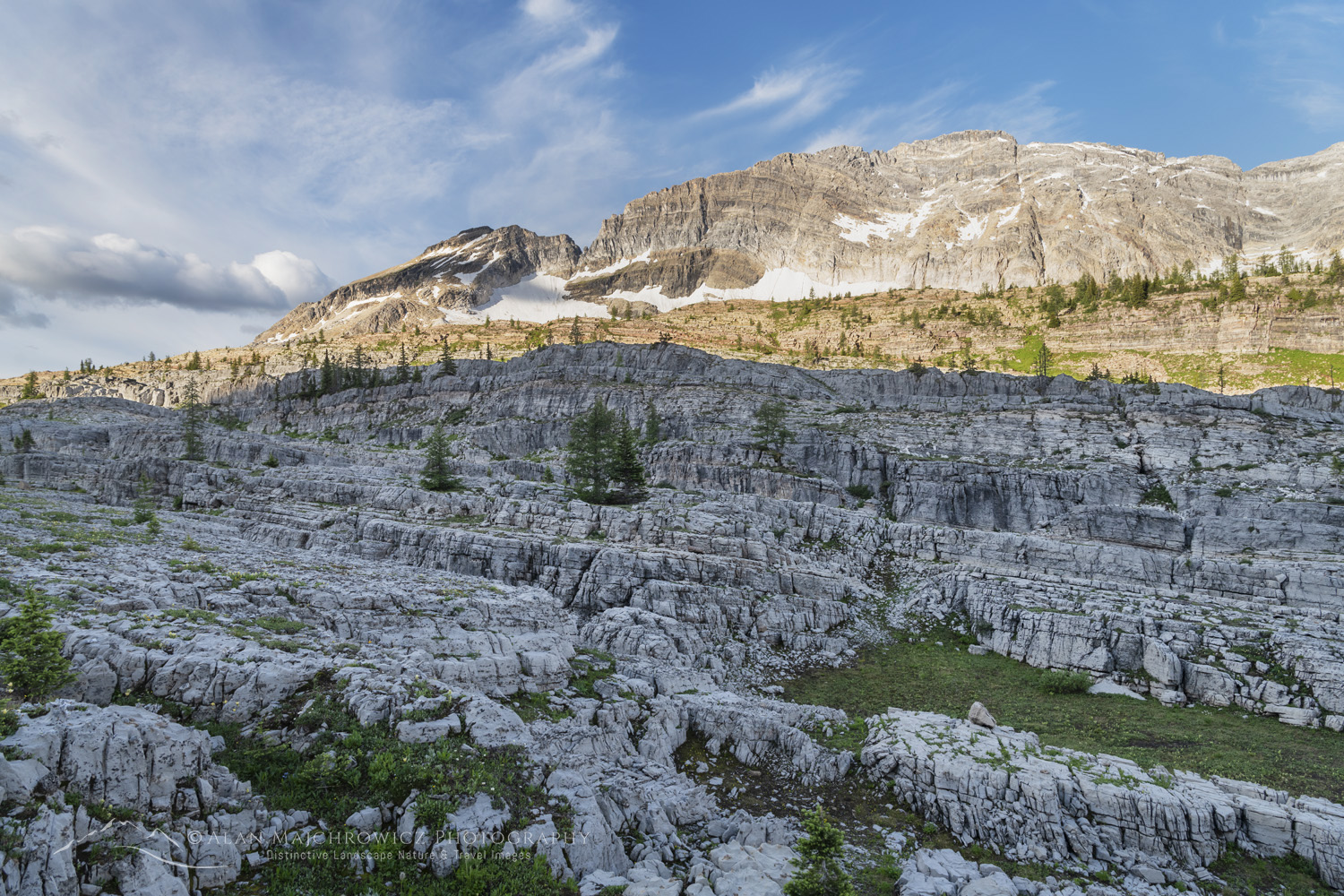
Broken cliffs of limestone Height of the Rockies Provincial Park British ColumbiaLimestone terraces #86598 Purchase

Crossing the Karst Terrain

Once in the valley, it is worth dropping your pack to take some time searching for the start of the alternate route to the Joffre Creek trail on your way out. Here is where a GPS will really come in handy, since it can be very frustrating and time-consuming to find the correct spot. The start of the very faint trail is about where the subalpine meets the forest, and it will travel northeast along the base of the nub.

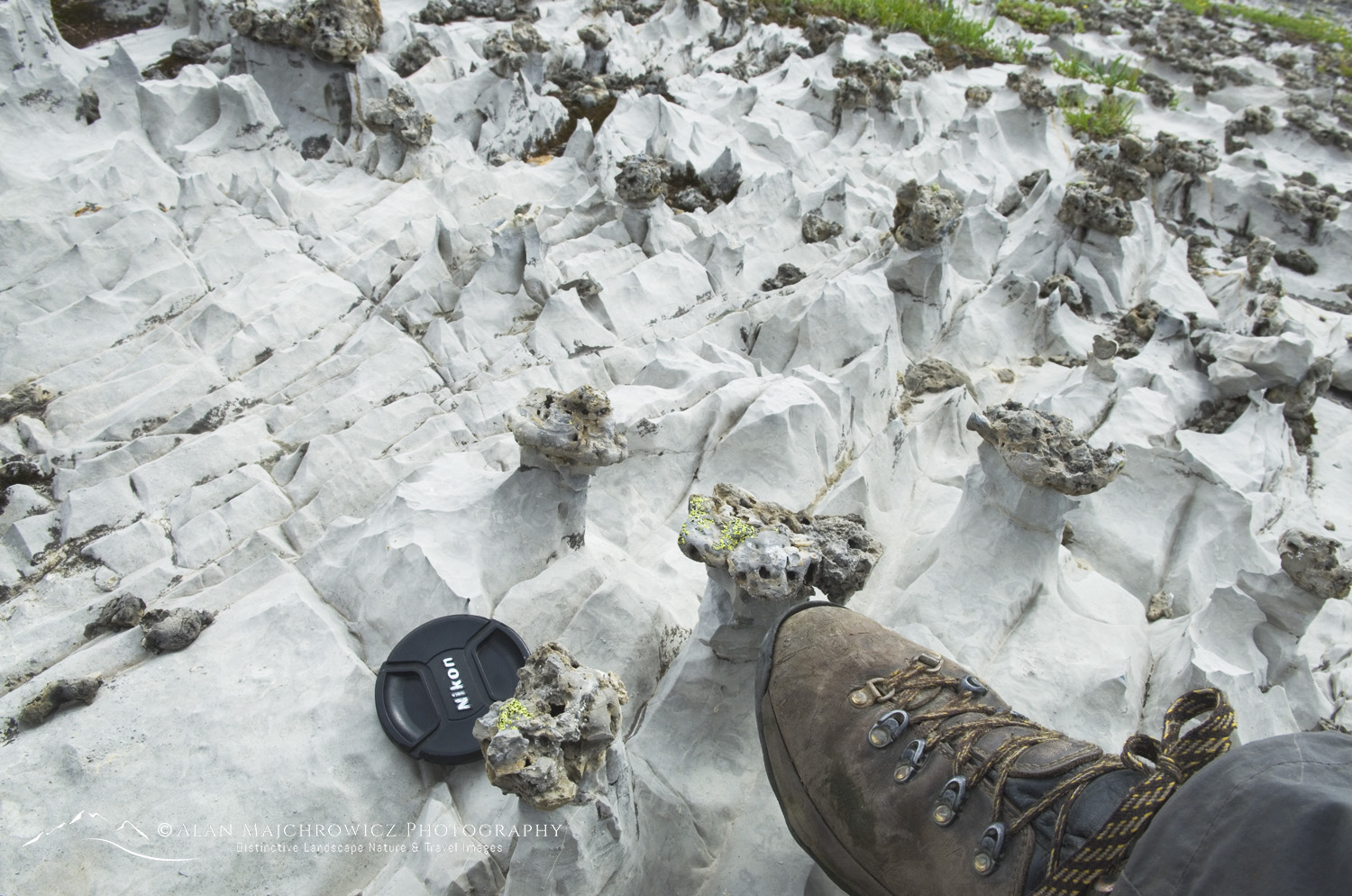
After locating the return trail, memorize it or take a photo before proceeding to the lakes. Now turn and head southwest across an increasingly broken terrain with lots of prickly limestone needles, fissures, and blocks. Fans of The Lord of the Rings will easily associate this section with the Emyn Muil

Sharp karst features in limestone, Height of the Rockies Provincial Park British ColumbiaSharp limestone formations

There are cairns seen sporadically throughout this area, but they’re often far apart and not always reliable. Make a general heading towards the limestone terraces, keeping a sharp eye out for the easiest passages up and through them.

If you are attempting to reach the lakes in one day, the terraces will be the most tiring part of the day. Here, seemingly easy passages through the cliffs will dead-end. Backtracking can be frequent, and when cresting one terrace, there always seems to be another to negotiate. Finally, after topping the last terrace, the terrain becomes easier, and you hike south to a talus pass.

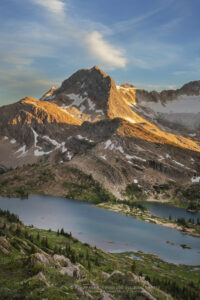
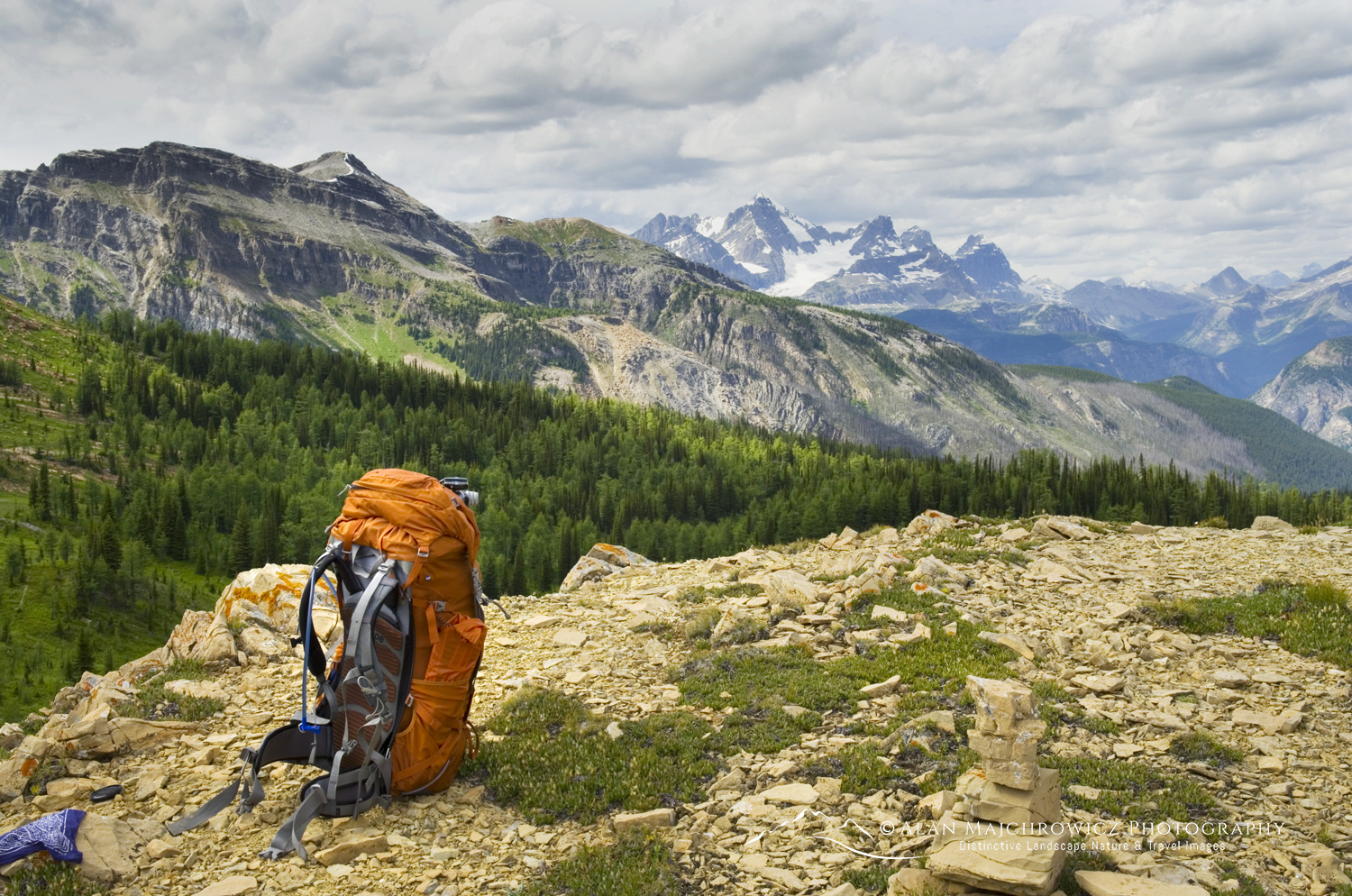
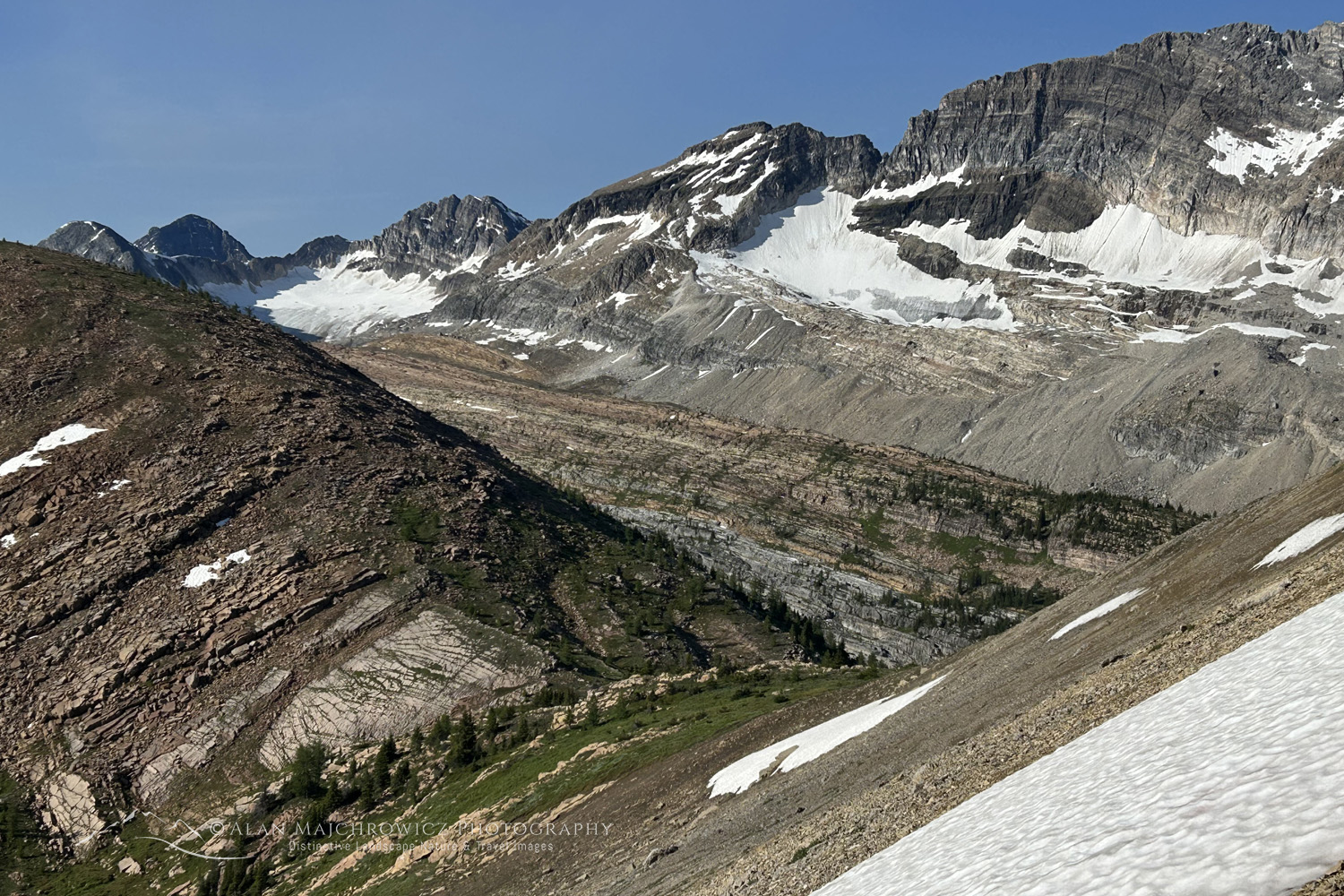
Upon reaching this pass, take in the majestic view you worked so hard to see. Spread out before you is the Limestone Lakes basin. Below are the sparkling lower lakes, and to the right is the turquoise glacial middle lake. Backing it all up are the multiple summits and glaciers of Russell Peak. Truly a breathtaking scene!
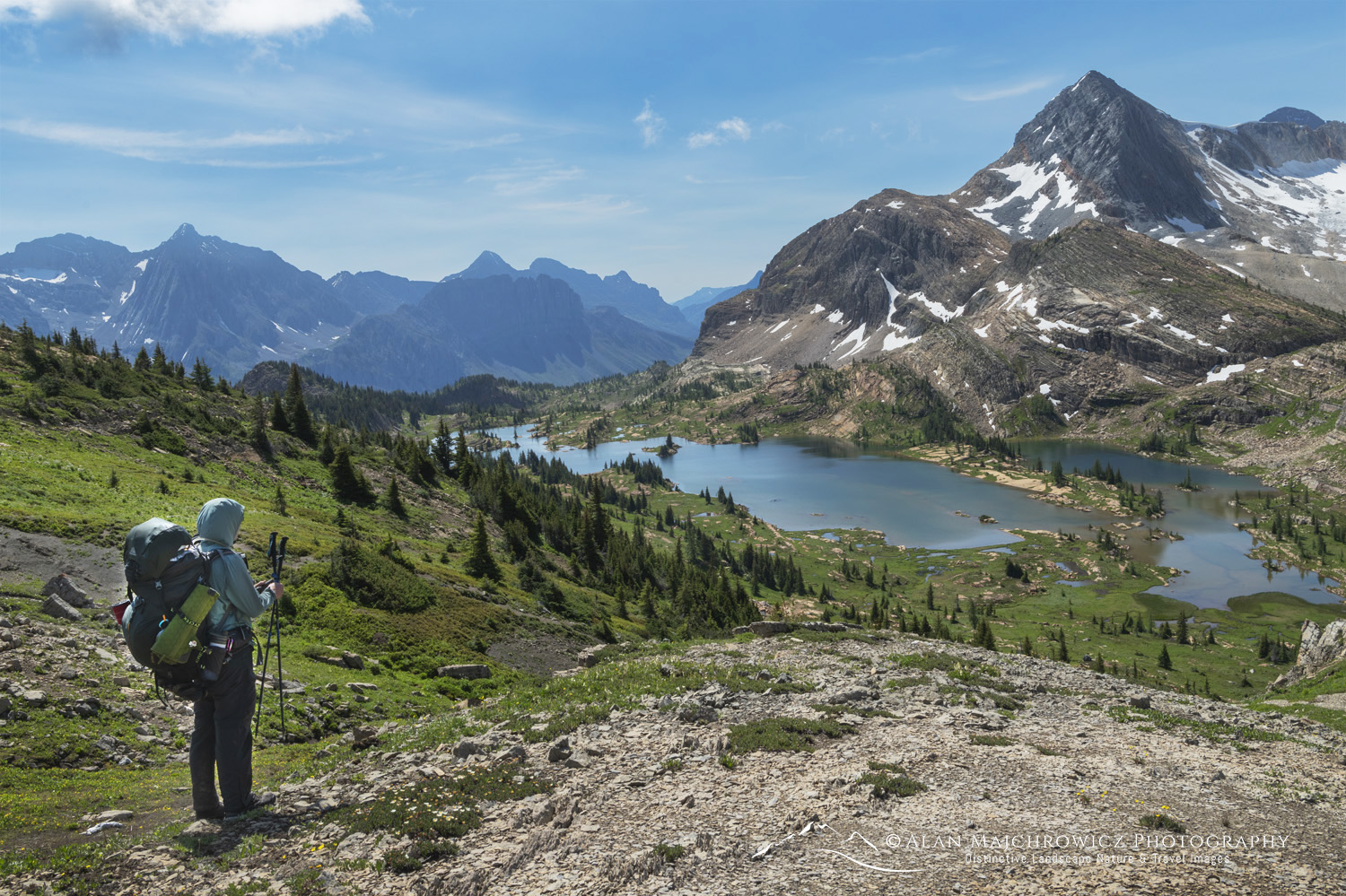
Backpacker overlooking Limestone Lakes Height of the Rockies Provincial Park British ColumbiaFirst view of Limestone Lakes #86390  Purchase

Limestone Lakes Base Camp

Choosing a base camp can be a difficult decision. There are no established camps anywhere in the area. You are pretty much free to camp wherever you like, except of course directly on fragile meadows. My choice was to find a spot high above the lakes. There you can enjoy the broad view directly from your tent. And exploration of all the lakes is within easy reach.

Note that while the lower lakes look very attractive, camping there among the meadowy wetlands will be more buggy. You’ll also need to climb back up to reach the other lakes. On the other hand, there may be very few water sources at camps above the lakes. This is especially true in late summer when snow patches are gone, and meadow creeks are dried up.
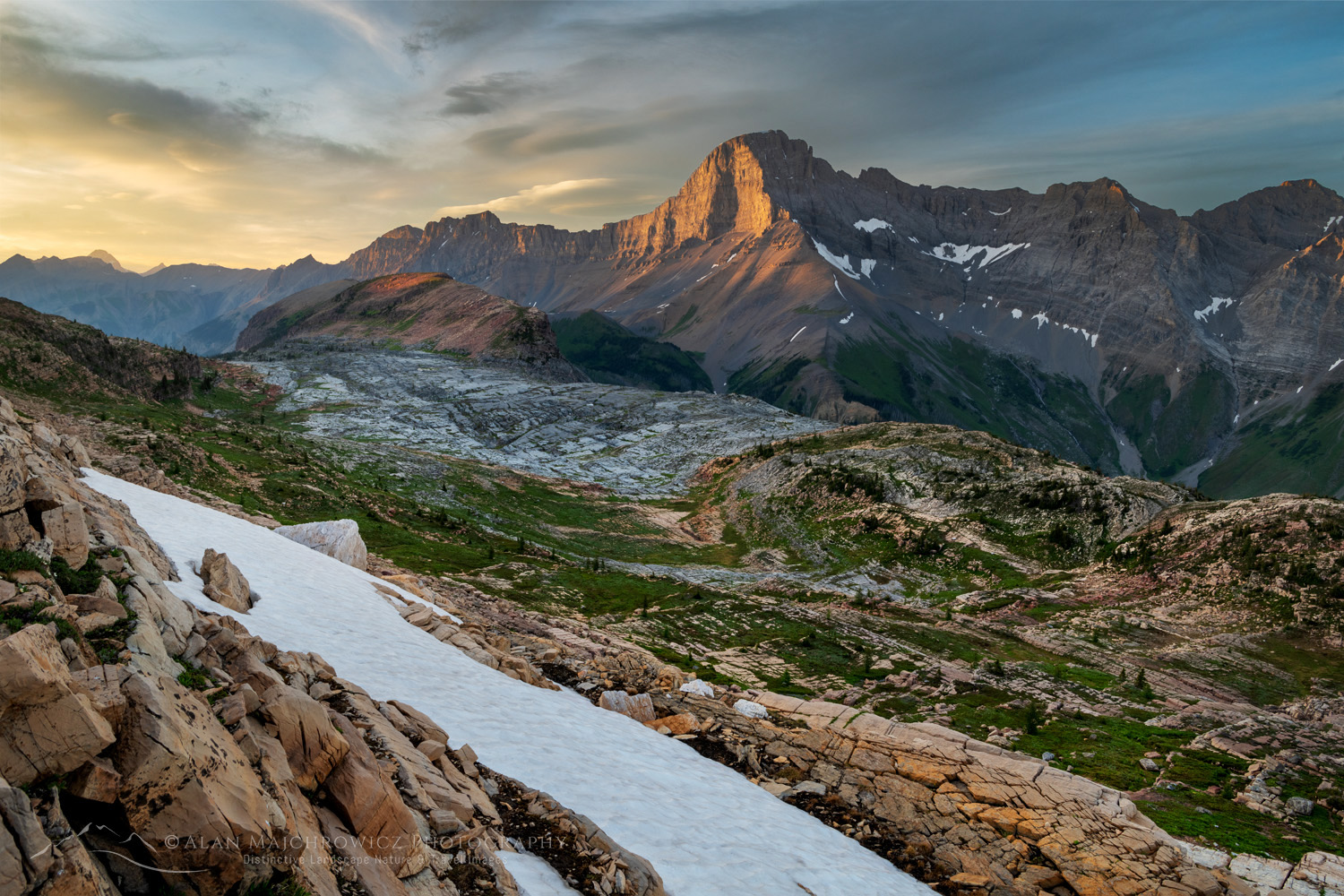
Mount Joffre seen from Limestone Lakes Basin in Height of the Rockies Provincial Park British ColumbiaJoffre Peak from Limestone Lakes #86453 Purchase

Exploring Limestone Lakes

From a higher camp, there are several areas to choose from. Being a photographer, lighting conditions always dictate my decisions. The entire area receives good golden-hour light in both morning and evening. However, the peaks east along the Divide are better in the evening hours.

My first exploration after setting up camp was hiking east and higher from the pass. There are a few more broken ledges to climb before the view opens up to a jaw-dropping view over fascinating karst terrain and the Continental Divide. Before you is a terrain of broken limestone terraces reminiscent of a Roman Coliseum. Looking northeast is the imposing bulk of Joffre Peak, beyond the route and nub you just crossed.
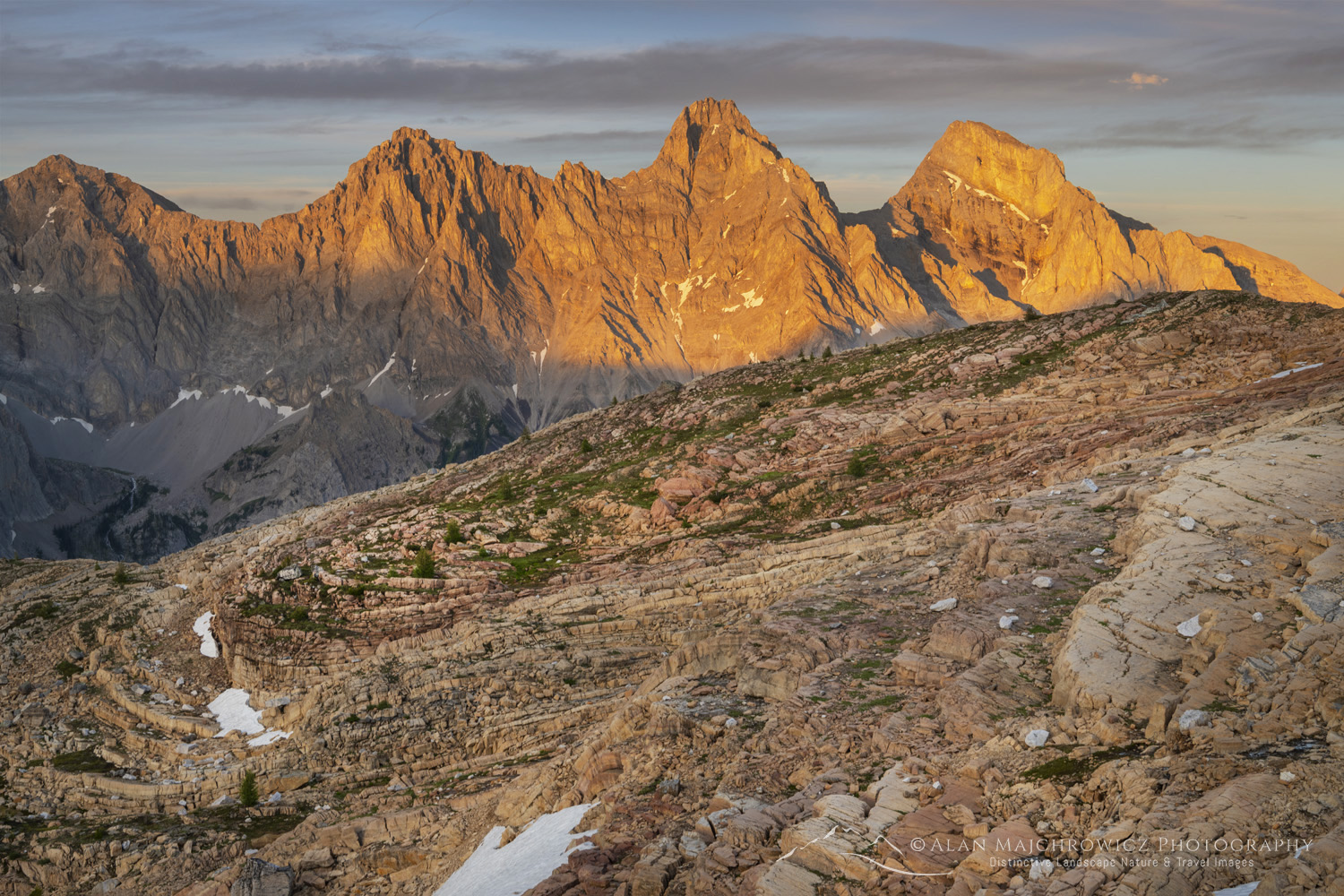
Karst formations in Limestone Lakes Basin Height of the Rockies Provincial Park“Coliseum” limestone ledges and the Continental Divide #86451 Purchase

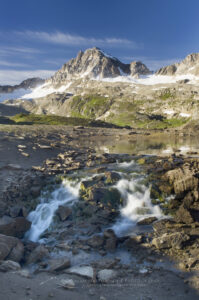
If you have only one full day at the lakes, I suggest first heading down to the scenic turquoise middle lake, then continuing a little higher to the west lakes. The entire area is wide open, crossing up and down meadowy ledges. One of the joys of exploring here is discovering numerous ponds and small cascading creeks.
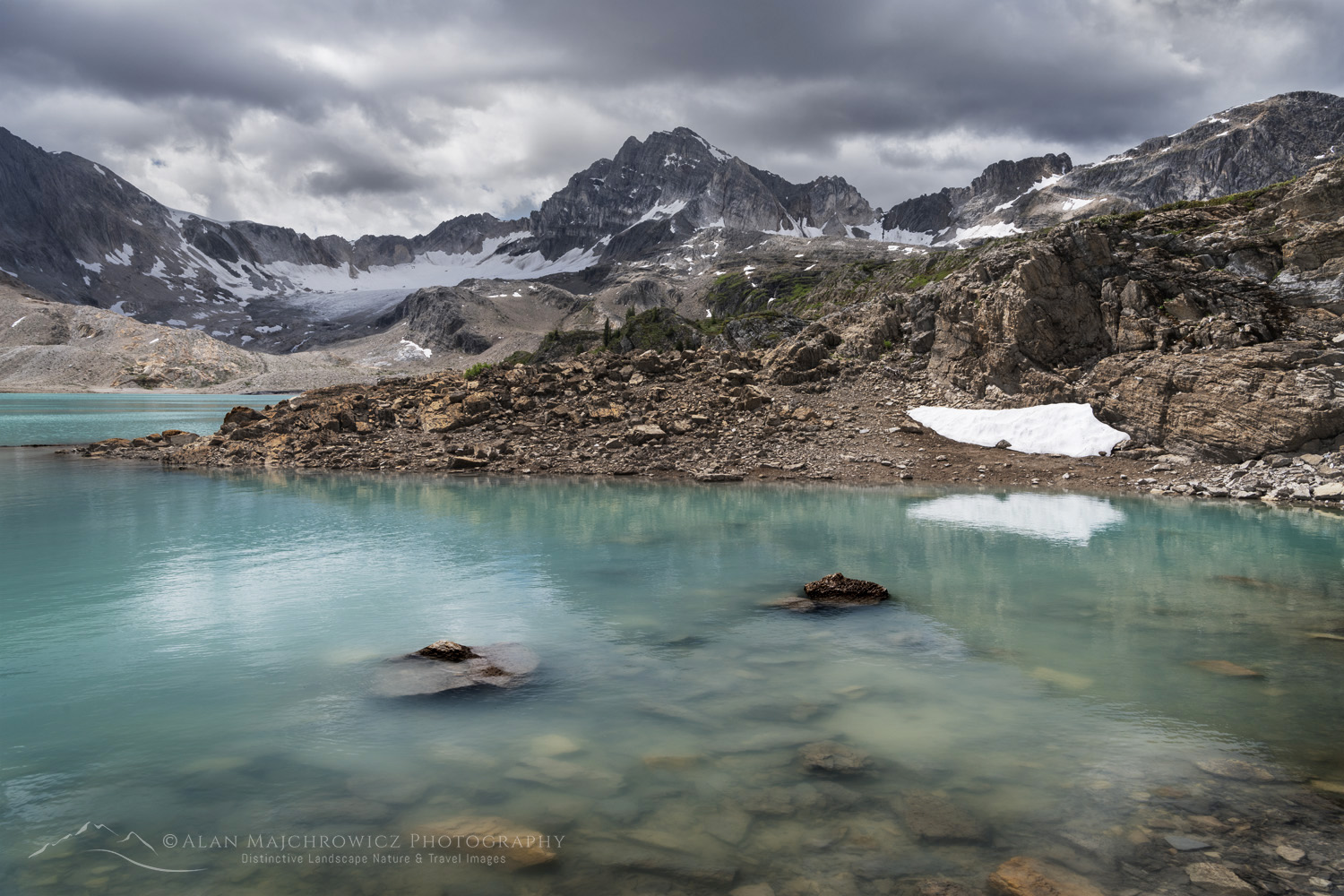
Middle Limestone Lake. Limestone Lakes Height of the Rockies Provincial Park British ColumbiaMiddle Limestone Lake #86503  Purchase

Small lake draining into a sinkhole in Limestone Lakes Basin Height of the Rockies Provincial ParkLake draining into sinkhole #46177 Purchase
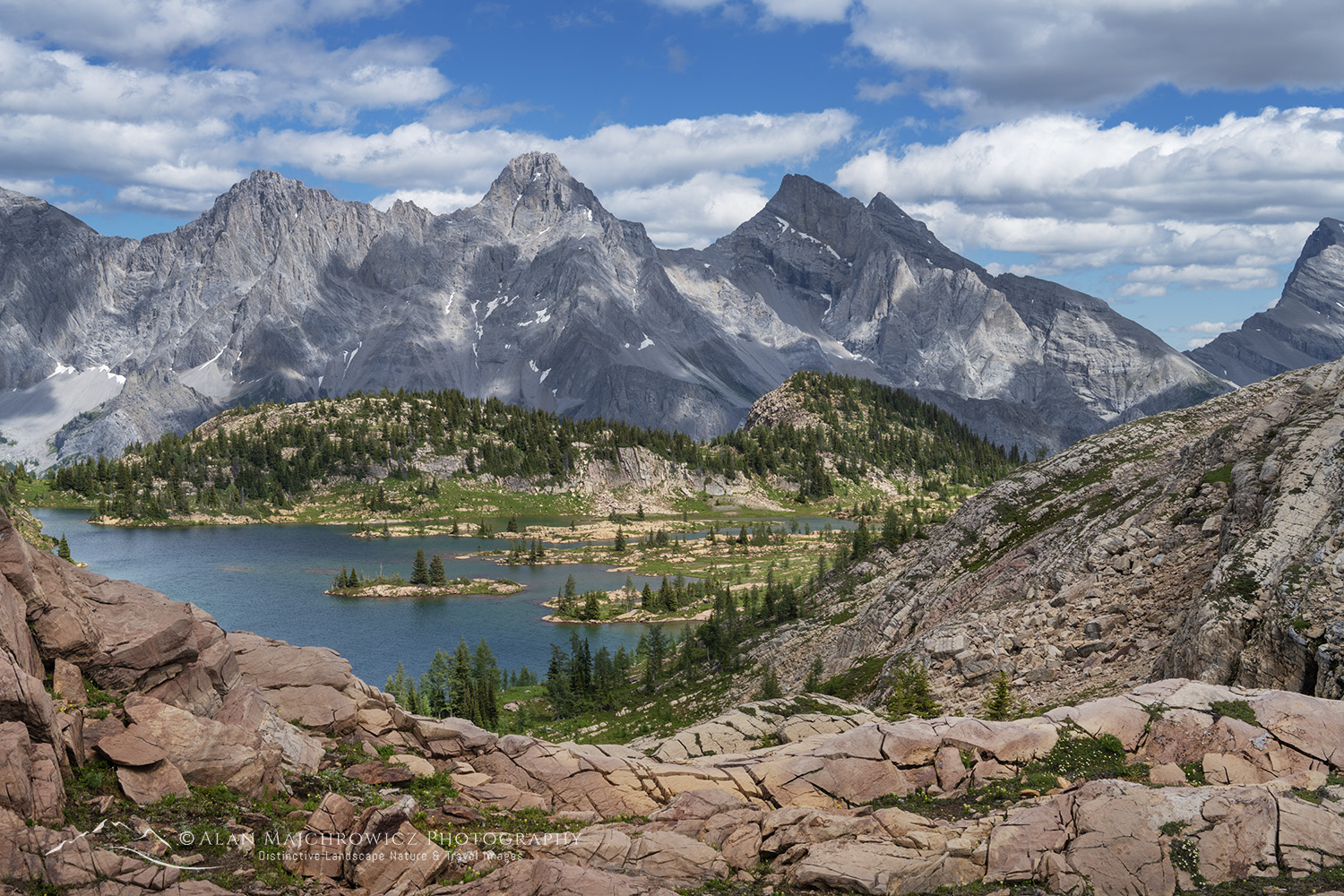
Lower Limestone Lakes. Limestone Lakes Basin. Height of the Rockies Provincial Park British ColumbiaLower Lakes and peaks of the Continental Divide #86545  Purchase

On my first visit, I came across a small lake in this area that was draining into a subterranean cavity. Was there an expansive glittering cave under my feet? Who knows? But on my second visit, I was unable to locate this oddity again.

Hiking east is a wonderful broad and open ridge separating the middle from the lower lakes. This ridge is very obvious from the first high view of the basin. It would also make an excellent base or second-day camp. If I ever go back again, I’ll definitely stay here a night or two! The view with the lower lakes backed by the peaks of the Divide is unforgettable.
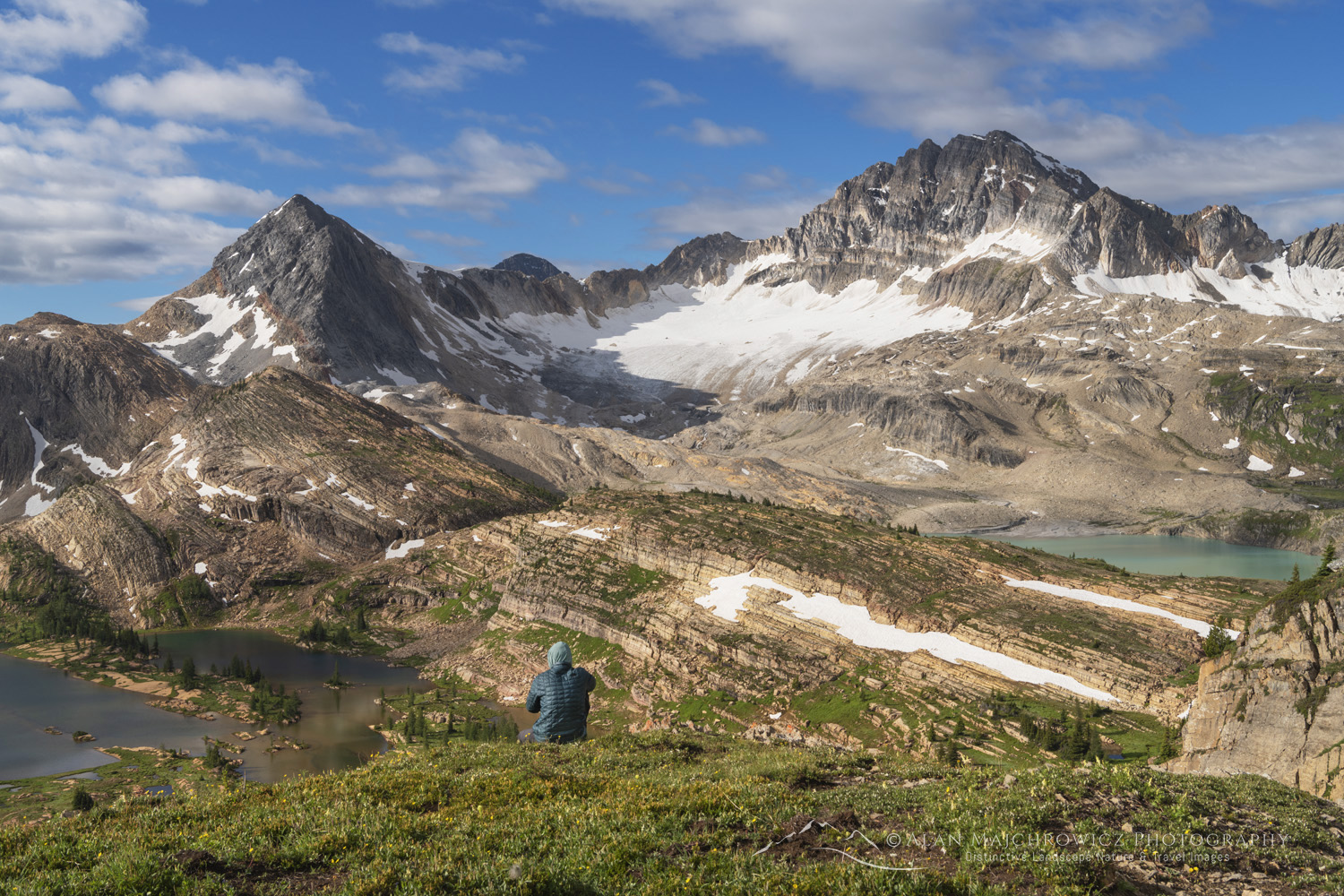
Hiker overlooking Limestone Lakes Basin in Height of the Rockies Provincial Park British ColumbiaTaking in the view of Limestone Lakes #86476  Purchase

The Return Route

After taking in the sights, it’s easy to see why I highly recommend staying at Limestone Lakes for at least two days. It’s such a shame to work so hard to get there and not have enough time to thoroughly enjoy it.

It is also easy to see why it is essential to have good weather throughout the trip. Recrossing all that open terrain with confusing ledges in rain or snow, with poor visibility, would be a nightmare. Not to mention the long, wet slog back down the valley trail.

Getting back to the spot where the alternate trail enters the forest can be frustrating. Even with careful route-finding and a GPS, the trail is elusive. When it is located, the trail still periodically disappears in the first mile or so. Eventually, the trail becomes more obvious and well-trod. However, it is always very rough with many frustrating ups and downs and numerous downed trees to cross.

At times, it may seem that going back the same way you came, over the nub, would have been easier. But then the path enters familiar supalpine forest, and the Joffere Creek trail junction appears.

It’s a bit of a bittersweet moment knowing that nearly all your hard work is nearly over, but the beauty of Limestone Lakes is now a memory.
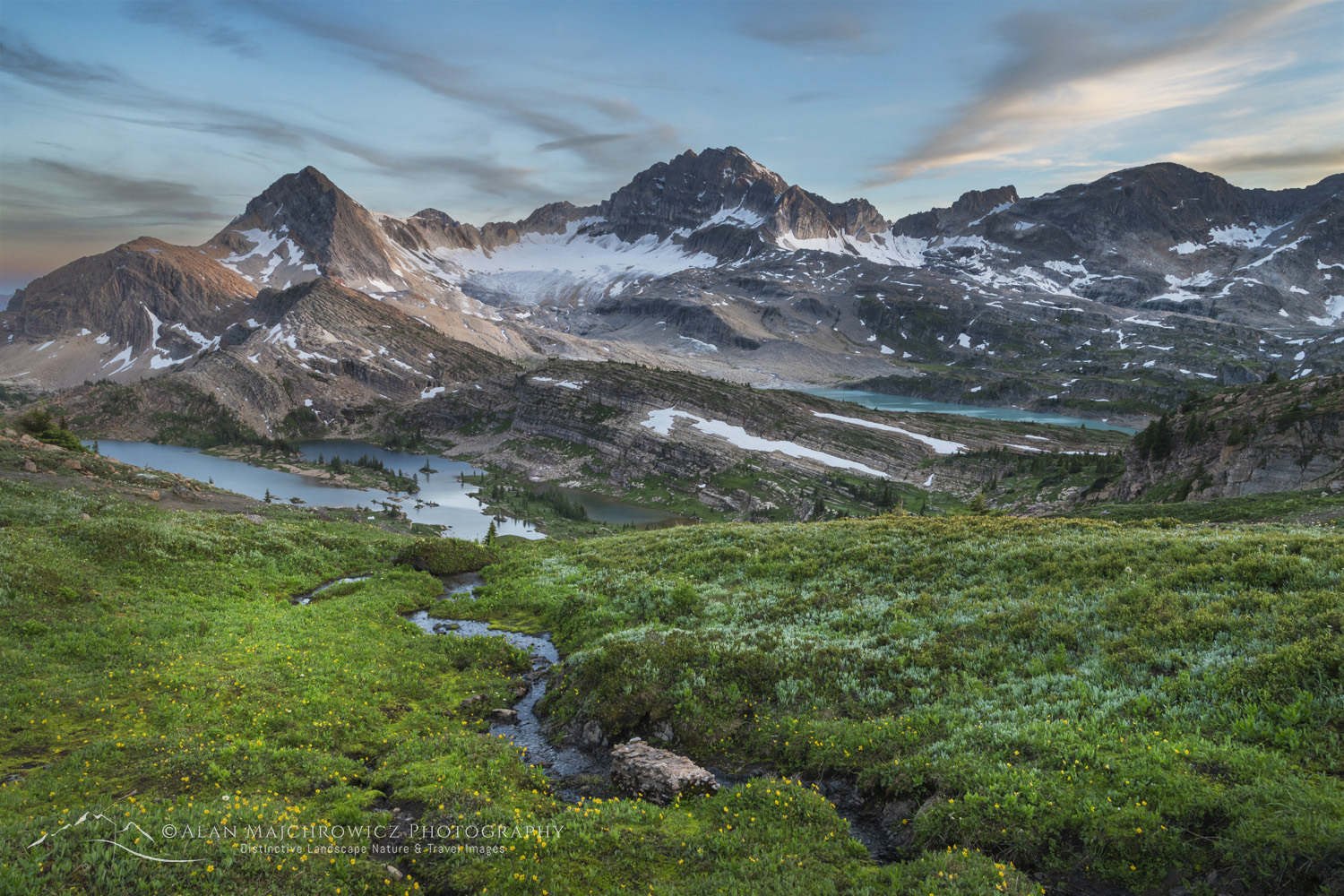
Limestone Lakes Basin. Height of the Rockies Provincial Park British ColumbiaParting view of Limestone Lakes and Russell Peak #86460  Purchase

If You Go to Limestone Lakes Height of the Rockies:

Trip length: 30 miles, round trip
Elevation Gain: 5600′
Permits: None needed as of 2026
Wildlife:
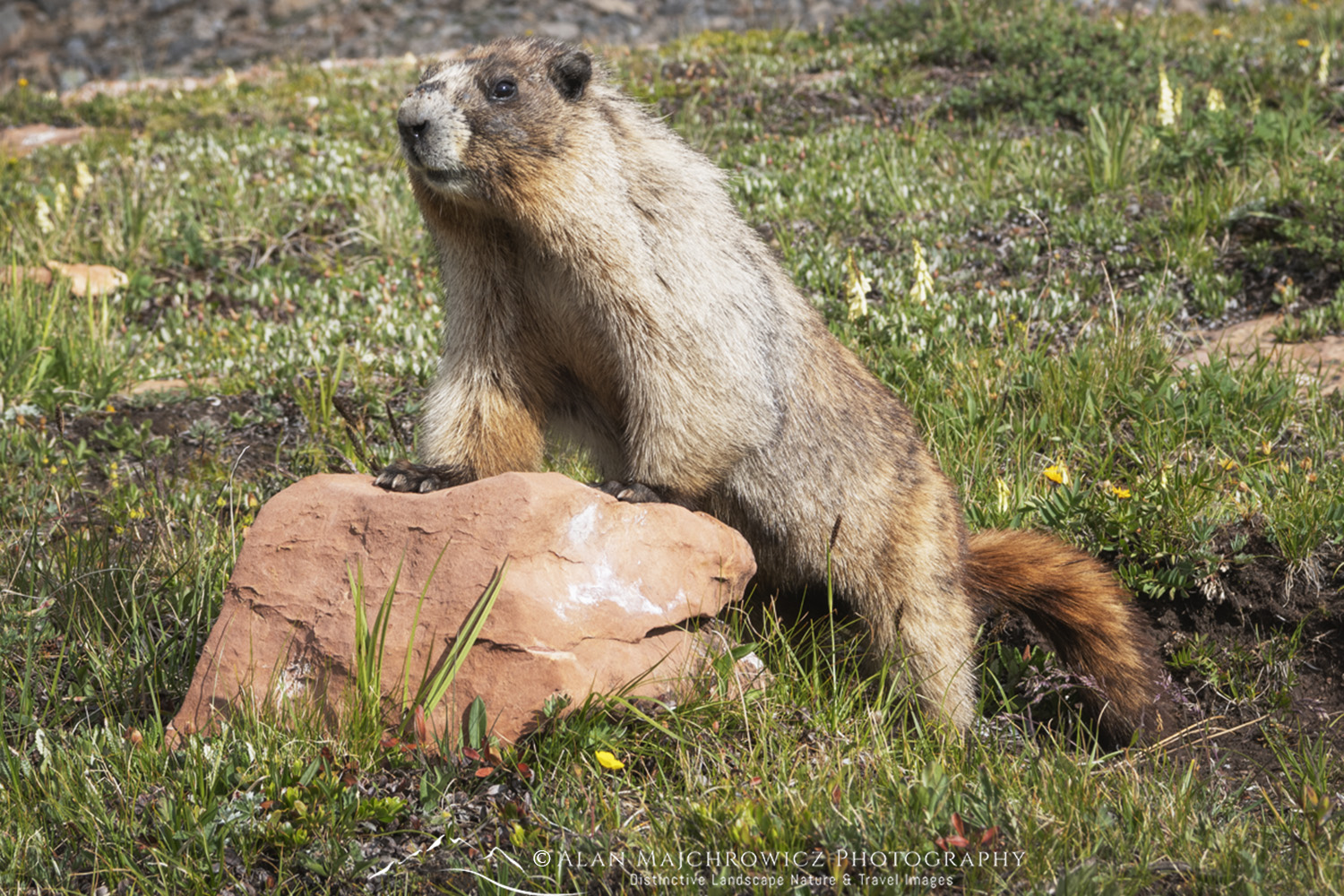
On both of my trips, I saw nothing more than marmots. However, that doesn’t mean bears are absent. The entire length of the Canadian Rockies is grizzly bear country. There are very few trees available to hang food bags in the lakes basin. Bear canisters are advised.

References Height of the Rockies Provincial Park
Mat Gunn’s excellent guidebook: Hikes Around Invermere & the Columbia River Valley.

Read:
Limestone Lakes Height of the Rockies Provincial Park Part 1

For tips on preparing for a backpacking and or photography trip to Limestone Lakes, check out these posts:

Backpacking Photography Gear Tips

Backpacking Photography Tips

Leave No Trace

Please, Please, Please!  Don’t plan a trip to this or any other national park, monument, or wilderness area unless you are prepared to follow Leave No Trace guidelines (LNT). National parks and wilderness areas worldwide are under incredible pressure from the growing number of visitors. So, please do your part to help preserve these precious areas for future generations!

Please visit the Leave No Trace Center for Outdoor Ethics to learn more about LNT’s principles. Your children and grandchildren will thank you!

LEAVE NO TRACE SEVEN PRINCIPLES

1. Plan and Prepare
2. Travel and Camp on Durable Surfaces
3. Dispose of Waste Properly
4. Leave What You Find
5. Minimize Campfire Impacts
6. Respect Wildlife
7. Be Considerate of Other Visitors
© Leave No Trace: www.LNT.org

Learn about how to protect the places we love to photograph
Visit the Nature First Website

Nature First the alliance for responsible nature photography

All photos appearing in this post are available for Commercial Licensing and Fine Art Prints. Click on any image to purchase, or contact me for more info!

Limestone Lakes Height of the Rockies Provincial Park: Part 2
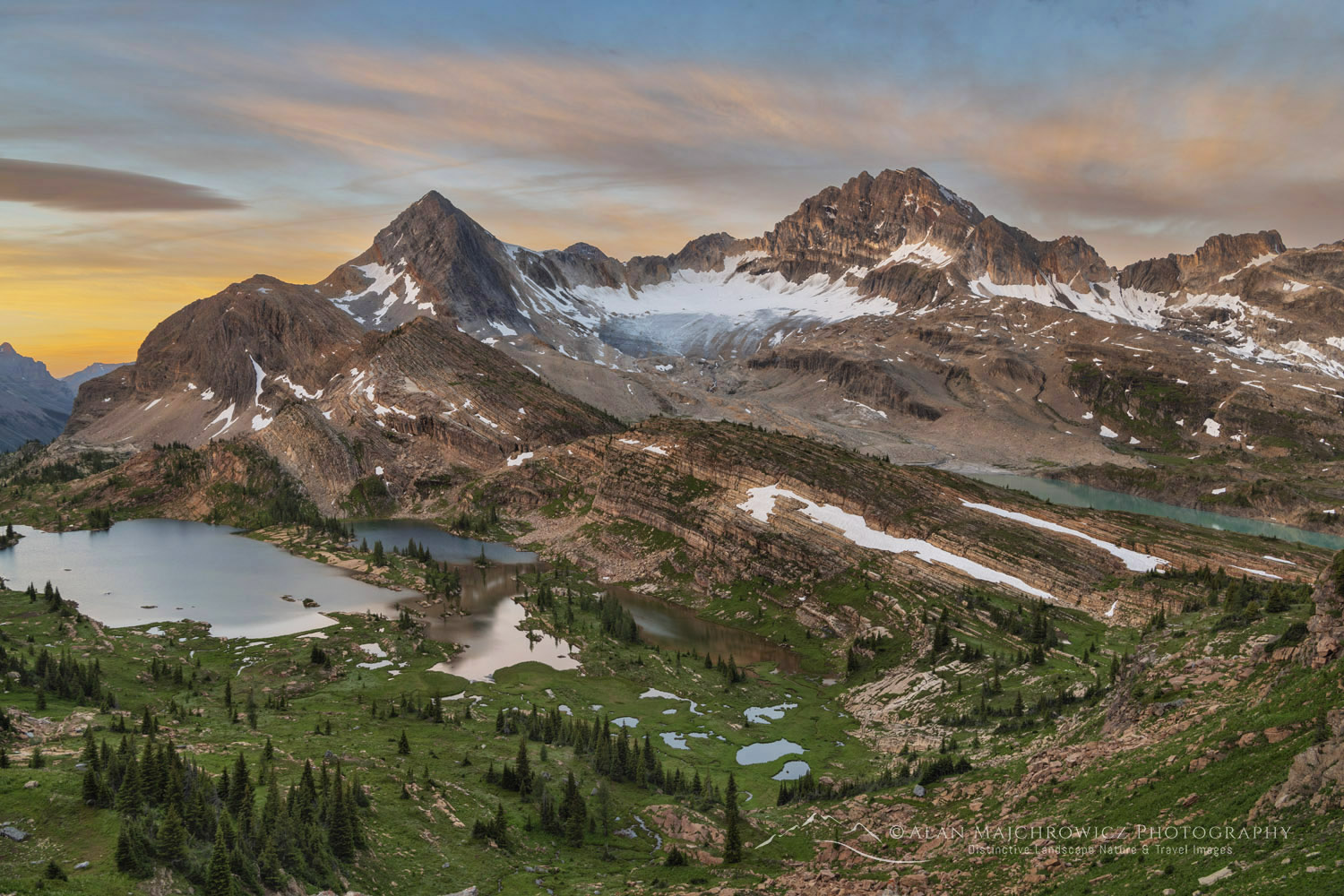
Limestone Lakes basin, Height of the Rockies Provincial Park, British Columbia #86593

Limestone Lakes Height of the Rockies Provincial Park Part 1

Evening light over Russel Peak and Limestone Lakes in Height of the Rockies Provincial Park British Columbia Limestone LakesRussell Peak and Limestone Lakes  #86593  Purchase

Limestone Lakes Height of the Rockies Provincial Park

Limestone Lakes, in Height of the Rockies Provincial Park, is a dream destination for backpackers and photographers who really want to get away from it all. In today’s era of advance reservations, lottery-style permits, and crowds, this location offers a taste of wilderness freedoms rarely seen anymore. Here, in the middle of the Canadian Rockies, you can experience a level of solitude amid grand landscapes seldom found outside the most remote locations on Earth.

Height of the Rockies Provincial Park is a small, little-known park in the Canadian Rockies. It is located on the west side of the continental divide, just southwest of Mount Assiniboine. There are a couple of reasons for the park being so little-known. The first is its remote location. The main access to the park is an unpaved road about 40 miles in length. Although the road is generally in good shape for ordinary vehicles, it is a very long and dusty drive. Another reason is the park’s relatively few maintained trails. These trails are mostly user-maintained and are often little more than routes.  Reaching the fabulous alpine areas requires lots of work and determination. Limestone Lakes is, perhaps, the main destination in Height of the Rockies Provincial Park, which is accessed by one of those trails.

Evening light over Russel Peak and Limestone Lakes in Height of the Rockies Provincial Park British Columbia Limestone LakesLower Limestone Lakes and Russell Peak #86447 Purchase

Limestone Lakes Difficulty Level

*Before I go any further, I must impress the fact that a trip to Limestone Lakes is definitely not for novices to backpacking or wilderness travel.  However, those who are accustomed to cross-country wilderness travel and mountaineering will find the trip relatively easy. From the first step at the trailhead, the entire trip is an arduous undertaking. About half of the distance is on a long, steep, brushy, and poorly maintained trail. In some long sections, it is merely a boot-beaten route. The second half is an unmarked cross-country route across difficult alpine terrain.

A reasonable trip to Limestone Lakes would require at least three days. Given that, to truly explore and enjoy this magnificent location would require four to six days.

To this date, I have made two wonderfully memorable trips to Limestone Lakes. The first trip was solo, and the second was to guide a fellow wilderness lover. Through both trips, I have learned a few lessons that I can pass on to others wishing to visit this area.

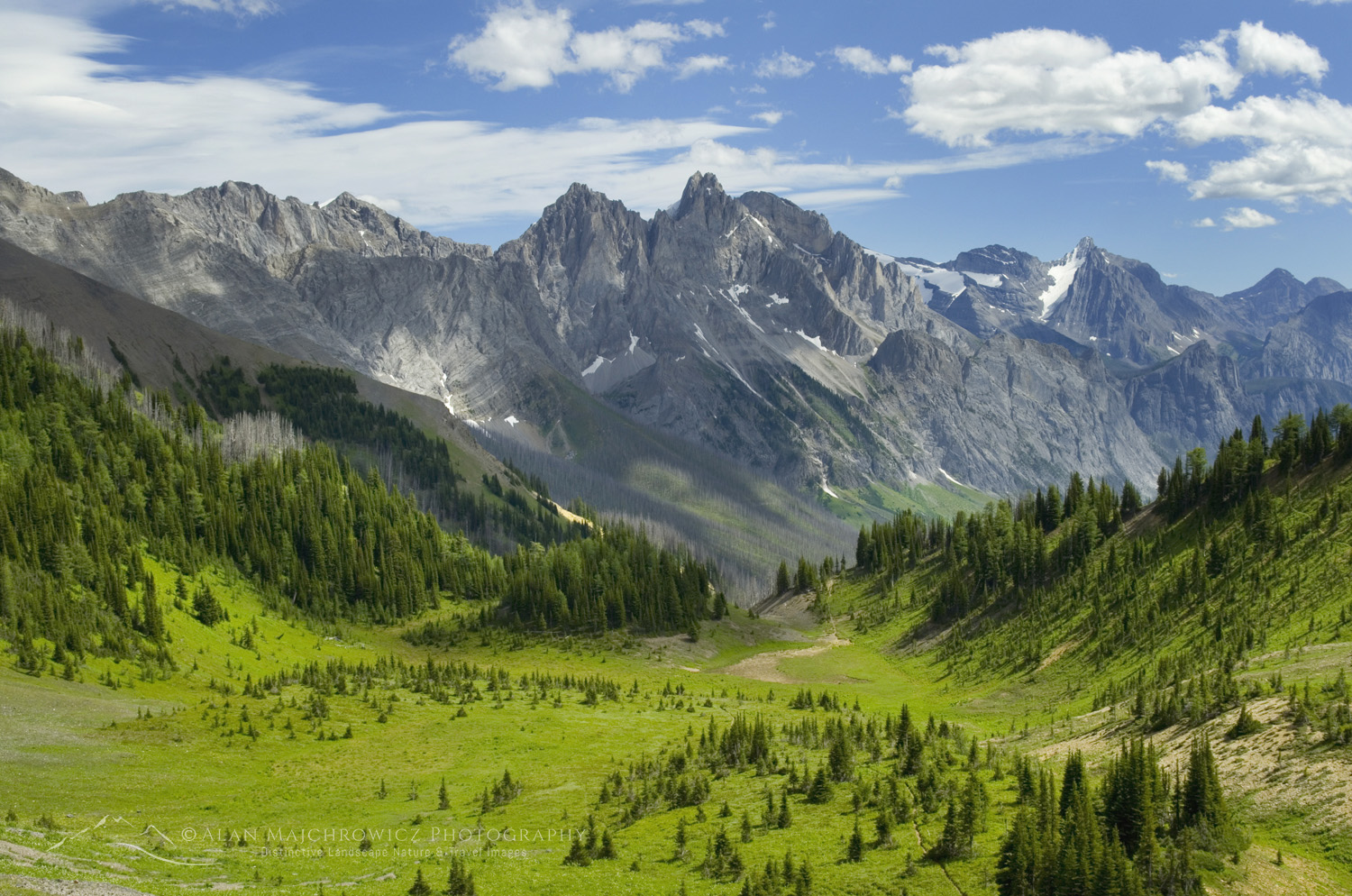
Height of the Rockies Provincial Park View north to the Royal Group from Sylvan Pass

When to Visit Limestone Lakes

Early July through mid-September are optimum times to visit Limestone Lakes. By early July, the alpine areas are generally snow-free, but creek crossings can still be challenging. September will see the end of flying insects, but there is an increasing risk of early-season snow.

I won’t get into specific details regarding elevations, distances, or GPS coordinates. I don’t use a GPS or other wilderness travel apps, although most will find tham handy. I’ve always relied on plain paper maps and common sense wilderness travel skills, acquired over many years of hiking and backpacking. However, readers will get a good general overview of what to expect.

For more details, please refer to the Height of the Rockies Provincial Park website and Mat Gunn’s excellent guidebook: Hikes Around Invermere & the Columbia River Valley.

Hoary Marmot (Marmota caligata) Height of the Rockies Provincial Park British ColumbiaA local resident of Limestone Lakes #86491 

Pro Tip:  Do not attempt this trip in poor weather! During my most recent trip, it rained for the first two days, and the trail to Sylvan Pass was a nightmare. The hip-high brush was dripping wet, and within minutes, we were soaked to the skin. After miles of this misery, we arrived at a campsite below Sylvan Pass, nearly hypothermic.

In addition, by the time you reach the lakes basin, you are a long way from your vehicle in a vast trail-less alpine arena. Limestone Lakes is not an enviable place to be stuck in case of poor weather with limited visibility! Plan very carefully and be prepared! And don’t forget that in case of bad weather there is nor shame in bailing!

View south from Sylvan Pass, Height of the Rockies Provincial Park British Columbia CanadaLooking south from Sylvan Pass

Joffre Creek Trail

The trailhead is located at the end of the long drive on the Palliser River Road. Here is where the fun starts. The trailhead kiosk sports an enticing photo of the beautiful Limestone Lakes Basin. It also states the trail itself begins a short way up the road on the left, amidst an old burn. It’s very easy to miss this poorly marked spot. And, on my second visit, we couldn’t find it and opted to continue where the trail started on my previous trip. This then entailed a bit of bushwhacking and route-finding.

Whether you find the true trail or not, your second obstacle, and possibly a deal-breaker for some, is crossing Joffre Creek. There once was a sturdy bridge crossing the creek. But nature has a way of obliterating man’s designs. Where there once was a pretty creek running through a dense forest, there now is a wide expanse of downed trees and channels choked with rocks and boulders. Needless to say, there is no longer a bridge.  Unless a log jam is found, travellers will need to ford a swift and often deep creek over hidden slippery rocks.

Once on the other side of Joffre Creek, you’ll need to locate the beginning of the true trail. There may be cairns marking it, but if you cross up or downstream, the trail can be difficult to find. It is imperative to travel southeast near the creek to locate it. The start of the Palliser River Trail is also here, so if you start hiking a trail in a northerly direction, you’re on the wrong one.

After a short level stretch through the forest, the trail begins climbing up to the pass in earnest. For the next seven miles, it continues relentlessly up to Sylvan Pass. Along the way, several long, very steep sections are encountered, another major creek crossing, long, marshy boot-soaking stretches, and lots of thick brush where the trail can’t even be seen.

Since this trail receives only a minimum of maintenance, hikers will also encounter plenty of downed trees and other obstacles to negotiate.

It is also important to note that the only suitable campsite before Sylvan Pass is at about the halfway mark. If you get a late start, this would be the place to stop. It is right on the trail just before a long marshy stretch. If you decide to base-camp here and day-hike to Limestone Lakes, you’re still in for a long, arduous day, with little opportunity to enjoy the lakes basin.

Joffre Peak andSylvan Pass, Height of the Rockies Provincial Park, British Columbia, CanadaJoffre Peak and Sylvan Pass, bottom center

Sylvan Pass and Alternate Route

After about 6 miles of hiking, hikers will reach a trail junction where an important decision must be made. At this junction, you are just entering the subalpine zone, with trees beginning to thin out. Here, you can either continue another mile or so on the trail to Sylvan Pass, or take the right-hand junction to an alternate route to Limestone Lakes.

The first option to Sylvan Pass is my personal recommendation. It involves more elevation gain and route-finding, but it is all above timberline and definitely more scenic. It also offers an excellent view of the route across the karst plateau, which you must cross to reach the lakes. On the downside, after climbing the nub above the pass, hikers will need to descend considerably and negotiate some moderate ledges and cliffs to enter the extensive karst basin.

On the other hand, the alternate route at the junction is a bit more direct, but it involves lots of ups and downs. In addition, it is a very rough trail, nearly always in the forest, and, in addition, affords no views. I recommend taking the Sylvan Pass route on the way in and the alternate route on the way out.

Continuing along the trail to Sylvan Pass, the terrain finally opens up into a pleasant sub-alpine meadow. There are very few established sites to pitch a tent, therefore choose a spot in the trees away from the fragile meadows. From here, Sylvan Pass is visible, about one-half mile further up from the meadows.

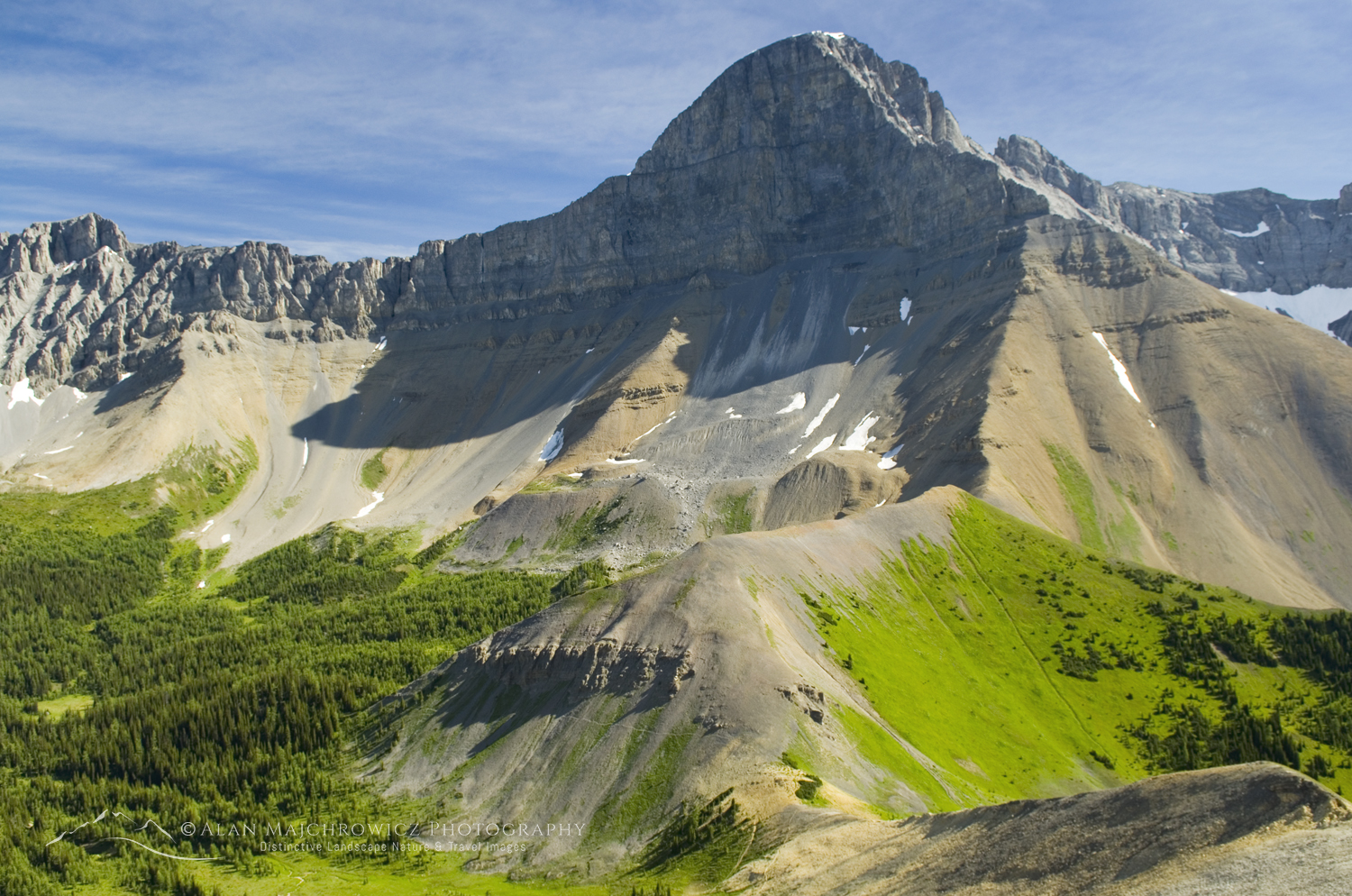
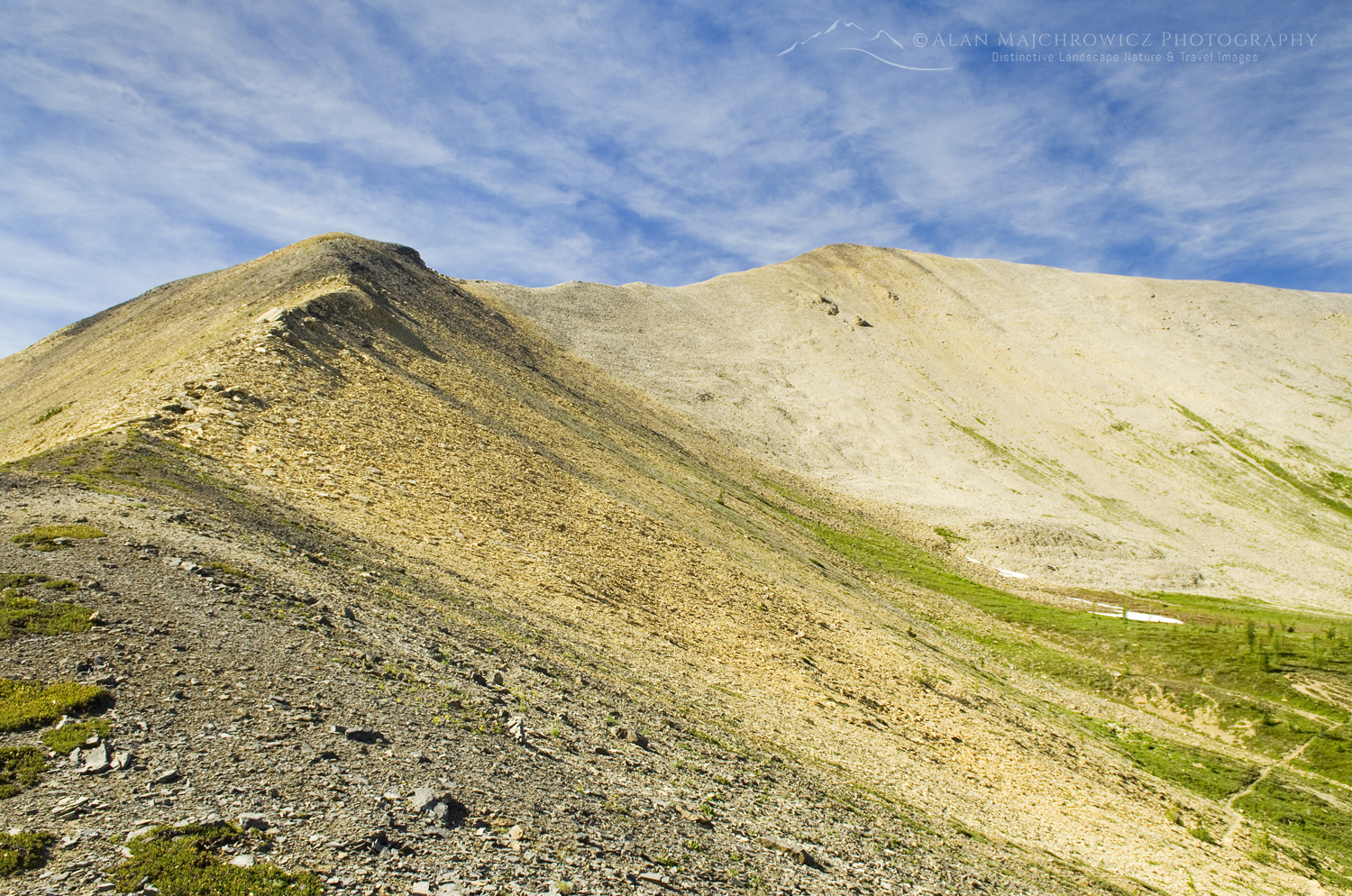
 Height of the Rockies Provincial Park, British Columbia, Canada8300′ nub seen from Sylvan Pass

Sylvan Pass to the Karst Plateau

Upon reaching Sylvan Pass, you are rewarded with a beautiful vista of rugged mountains, glaciers, and valleys. From here, your route is all cross-country route-finding, except for a few, although possibly misleading cairns.

After a brief rest at the pass, hike west up steep, loose talus to the summit of the 8300′ nub. Catch your breath and take in your first views to the southwest of Russell Peak and Limestone Lakes Basin. From here, you have approximately five miles of pure alpine wilderness to negotiate.

Continue to the lakes in:
Limestone Lakes Height of the Rockies Provincial Park Part 2
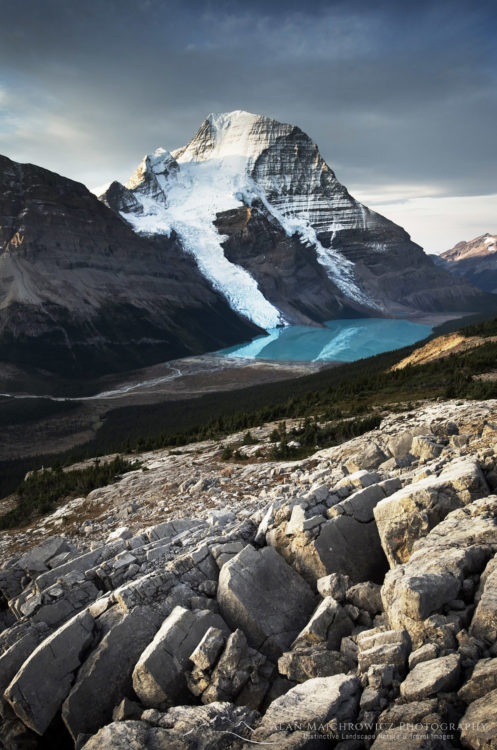
 Height of the Rockies Provincial Park, British Columbia, Canada Limestone LakesFirst view of Russell Peak (far left in distance) from the nub

Limestone Lakes Basic Info:

Trip length: 30 miles, round trip
Elevation Gain: 5600′
Permits: None needed as of 2026
Wildlife:
On both of my trips, I saw nothing more than marmots. Although this may be true, it doesn’t mean bears are absent. The entire length of the Canadian Rockies is grizzly bear country. There are very few trees available to hang food bags in the lakes basin. Bear canisters are advised.

References Height of the Rockies Provincial Park
Mat Gunn’s excellent guidebook: Hikes Around Invermere & the Columbia River Valley.

For tips on preparing for a backpacking and or photography trip to Limestone Lakes, check out these posts:

Backpacking Photography Gear Tips

Backpacking Photography Tips

Leave No Trace

Please, Please, Please!  Don’t plan a trip to this or any other national park, monument, or wilderness area unless you are prepared to follow Leave No Trace guidelines (LNT). National parks and wilderness areas worldwide are under incredible pressure from the growing number of visitors. So, please do your part to help preserve these precious areas for future generations!

Please visit the Leave No Trace Center for Outdoor Ethics to learn more about LNT’s principles. Your children and grandchildren will thank you!

LEAVE NO TRACE SEVEN PRINCIPLES

1. Plan and Prepare
2. Travel and Camp on Durable Surfaces
3. Dispose of Waste Properly
4. Leave What You Find
5. Minimize Campfire Impacts
6. Respect Wildlife
7. Be Considerate of Other Visitors
© Leave No Trace: www.LNT.org

Learn about how to protect the places we love to photograph
Visit the Nature First Website
Nature First the alliance for responsible nature photography

All photos appearing in this post are available for Commercial Licensing and Fine Art Prints. Click on any image to purchase, or contact me for more info!

Limestone Lakes Height of the Rockies Provincial Park: Part 1

Russell Peak and Limestone Lakes Basin, Height-of-the-Rockies Provincial Park, British Columbia, Canada #46109

Summer Photography Adventures 2025

Summer photography adventures are just around the corner, and this summer’s itinerary includes many exciting locations. The general plan is to begin in late June and return somewhere in the beginning of September. It’s an ambitious schedule, and if all goes well, I’ll be returning with many new and spectacular images. However, as always, unforeseen circumstances and weather may alter some planned destinations.

Russell Peak and Limestone Lakes Basin, Height-of-the-Rockies Provincial Park, British Columbia, Canada #46109 Summer Photography Adventures 2025Limestone Lakes Basin. British Columbia  #46109

After a few short warm-up trips in the North Cascades, I will travel to British Columbia, Alberta, Yukon, the Northwest Territories, and Alaska. Many of these locations will involve multi-day backpacking to outstanding and remote locations. And, if all goes as planned, it will even include a short dip in the Arctic Ocean!

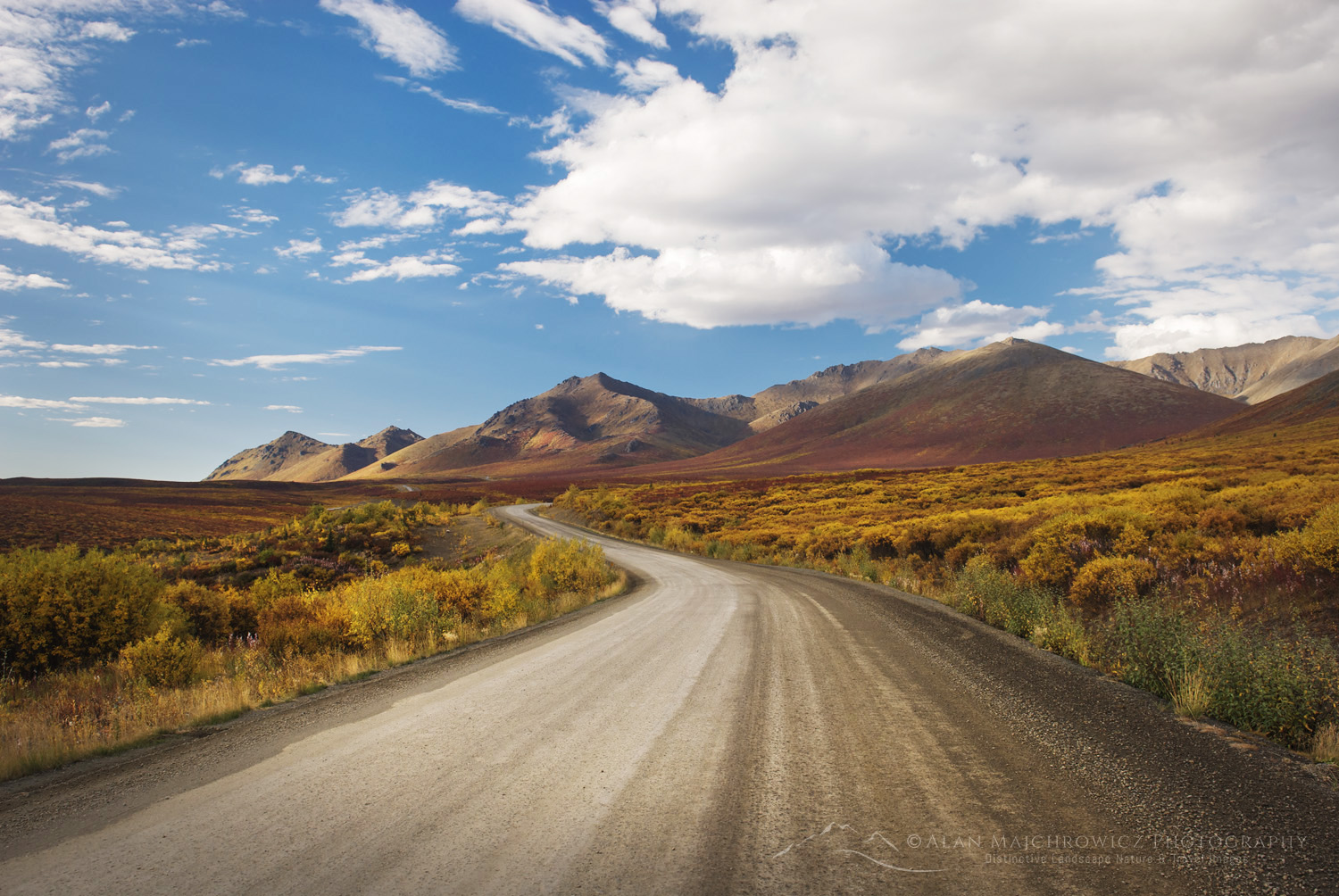
The Dempster Highway winds its way through the Ogilvie Mountains, Tombstone Territorial Park, Yukon, Canada #15390Dempster Highway, Yukon Territory #15390

Summer Photography Adventures Special Fine Art Print Offer 

Would you like to be a part of the Summer Photography Adventures? For a limited time, you can receive a free 11×14 signed fine art print of any image made during this trip! Click this link to take advantage of and learn more about this unique opportunity.

Summer Photography Adventures Locations:

Sunset alpenglow over Russell Peak and Limestone Lakes Basin, Height-of-the-Rockies Provincial Park, British Columbia, Canada #46245 Summer Photography Adventures 2025Limestone Lakes Basin. British Columbia  #46245

Canadian Rockies/Purcells/Selkirks

The first destinations of this leg will be in the Selkirk and Purcell Mountains of British Columbia. Most of these destinations are familiar, as I’ve made many trips to those areas. Next on the schedule will be a seven-day backpacking trip to Limestone Lakes, a spectacular but seldom-visited corner of the Canadian Rockies.

  • Glacier National Park, Hermit Meadows *
  • Silent Lake, Purcell Mountains *
  • Whirlpool Lake, Purcell Mountains *
  • Bugaboos, Purcell Mountains *
  • Limestone lakes, Height of the Rockies Provincial Park **
  • Kananaskis Country
  • Icefields Parkway, Banff and Jasper National Parks

* Overnight Backpacking
** Multi-day Backpacking

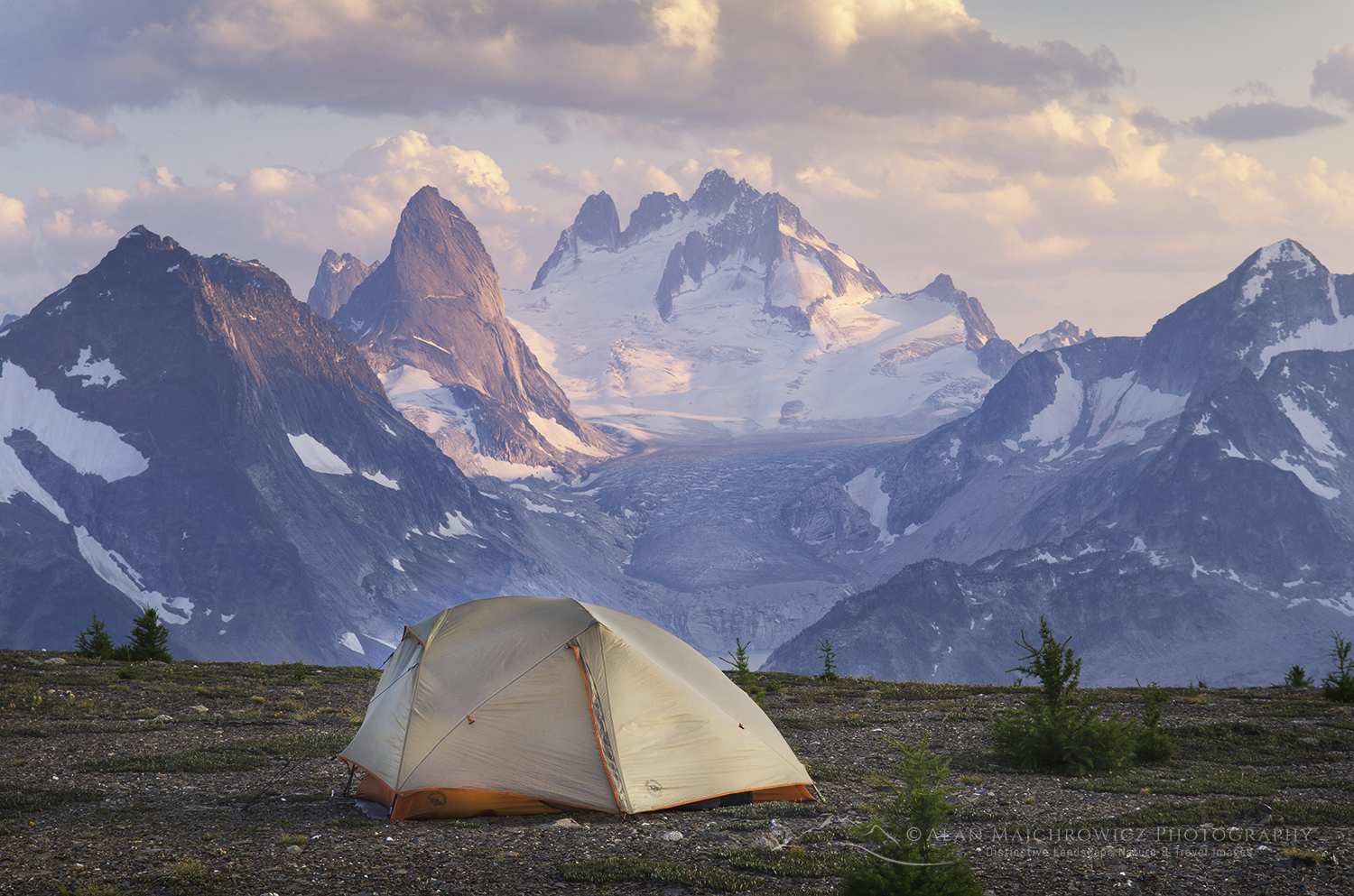
Tent at backcountry camp on Rocky Point Ridge. Howser Towers Vowell Glacier in the distance. Bugaboo Provincial Park, Purcell Mountains, British Columbia. #62962Bugaboos, British Columbia #62962

Northern Canadian Rockies

The second leg of Summer Photography Adventures will take me to the Northern Rockies of British Columbia. This will be my first visit to this remote and wild region of the Canadian Rockies, and I’m excited to have the opportunity to photograph there! This region has a true feeling of immense and raw wilderness that is increasingly rare in destinations further south. And being this far north, there are few roads and established trails.

  • Tumbler Ridge UNESCO Global Geopark
  • Wokkpash Valley, Stone Mountain Provincial Park **
  • Muncho Lake Provincial Park

** Multi-day Backpacking

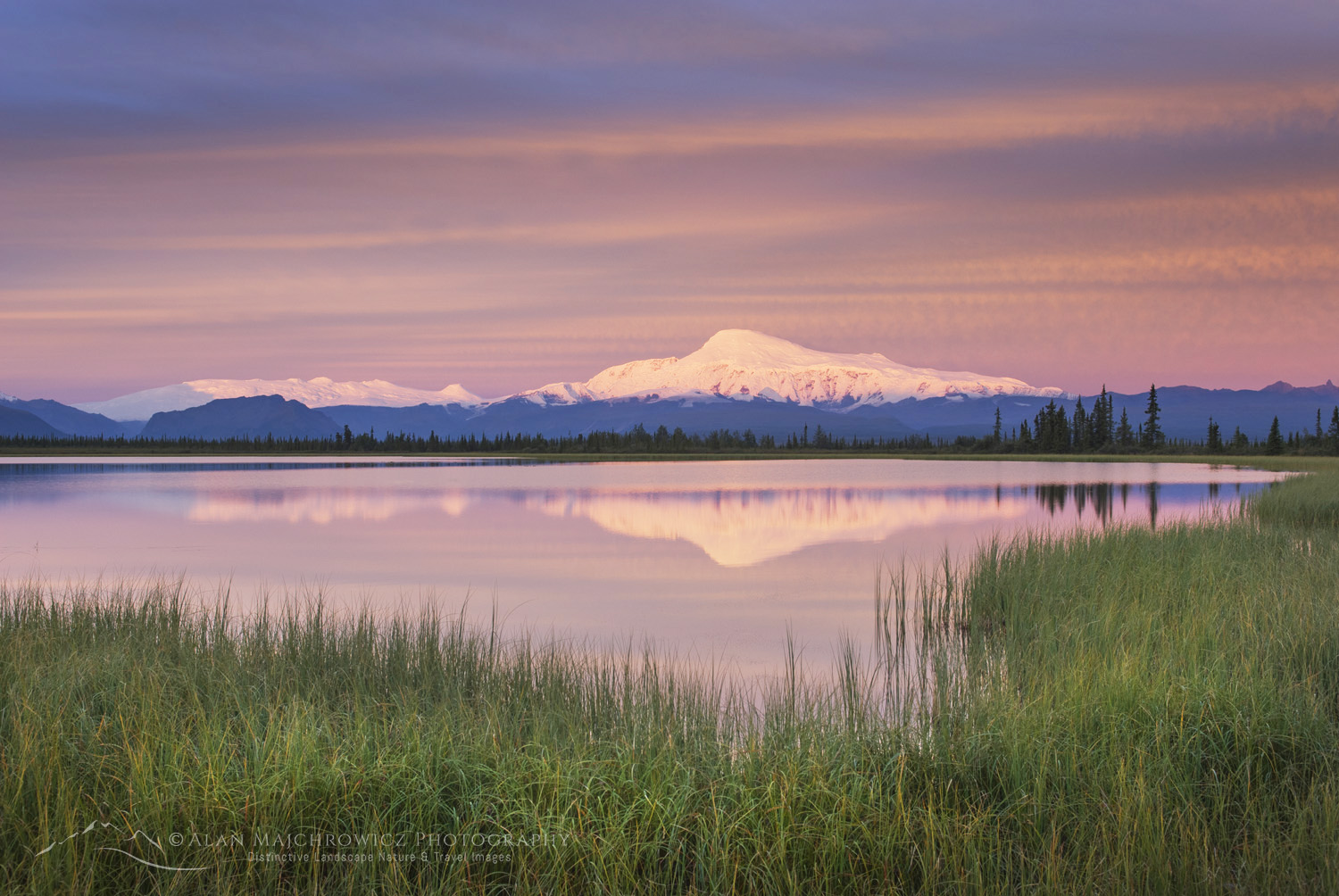
Mount Sanford 16,237 ft (4,949 m) Wrangell-St. Elias National Park, Alaska #14339Mount Sanford, Wrangell St.-Elias National Park #14339

Wrangell-St. Elias National Park, Alaska

Wrangell-St. Elias is a National Park I’ve wanted to return to for many years. On my only visit there, I was awestruck at the raw and wild nature of the landscape and mountains. Even more than the Northern Rockies in British Columbia, Wrangell is an immense park, nearly devoid of roads and trails. Aside from the McCarthy area, getting around the park requires chartering air taxis or grueling cross-country travel across rivers, marshes, and glaciers.

I plan to include the Nabesna Road and McCarthy/Kennecott area. Topping off the visit will be a flightseeing trip over the park’s spectacular glaciers and mountains.

  • Nabesna Road, Mount Sanford, and Wrangell Mountains viewpoints
  • Kennecott Glacier*
  • Flightseeing over Wrangell and St. Elias Ranges

* Overnight Backpacking

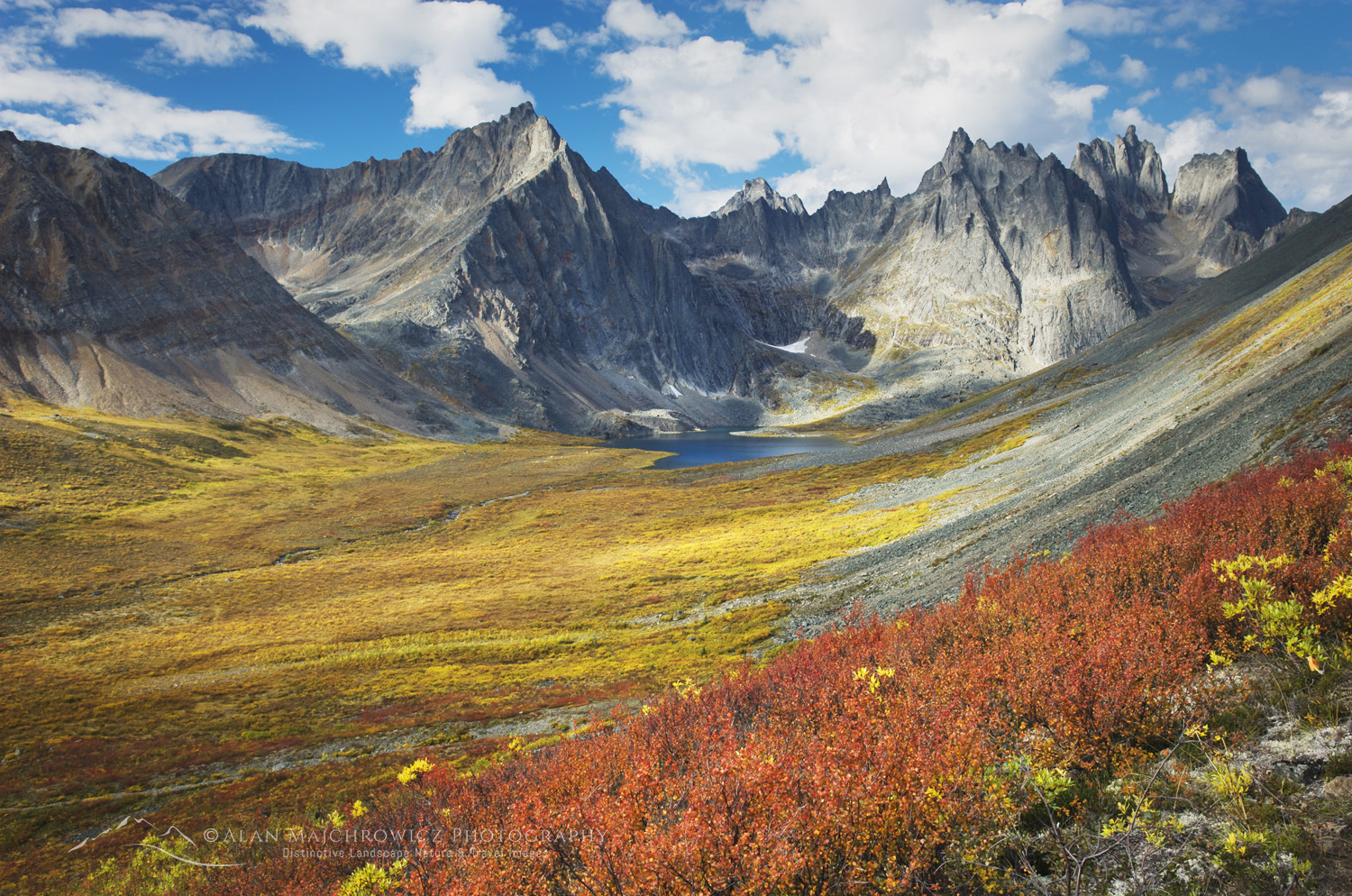
Grizzly Creek valley displaying tundra in full autumn color, Tombstone Territorial Park Yukon Canada #15190Tombstone Territorial Park #15190

Yukon and Northwest Territories

This last leg of the trip promises to be the most exciting, Yukon Territory and the Arctic. After topping up supplies in Dawson City, the route will travel north for 740km along the Dempster Highway to Inuvik, Northwest Territories. But it won’t stop there; another 147km on the Tuktoyaktuk Highway will take me to the shores of the Arctic Ocean! Seeing, dipping in, and even tasting the waters of the Arctic has been a lifelong dream of mine. So I’m beyond excited to have this experience!

However, before reaching this epic conclusion, I have a backpacking trip reserved in Tombstone Territorial Park. This spectacular park is located just a few degrees south of the Arctic Circle and features towering granite spires rising above the tundra and boreal forest.

My multi-day backpacking trip in the park and the drive up the Dempster highway is scheduled to coincide with the peak of fall color in late August. During this period, the tundra is ablaze in yellow, orange, and red, rivalling the best autumn displays of New England.

  • Dawson City
  • Tombstone Territorial Park **
  • Dempster Highway
  • Pingo Canadian Landmark, Tuktoyaktuk Highway
  • Arctic Ocean, Tuktoyaktuk, Northwest Territories

** Multi-day Backpacking

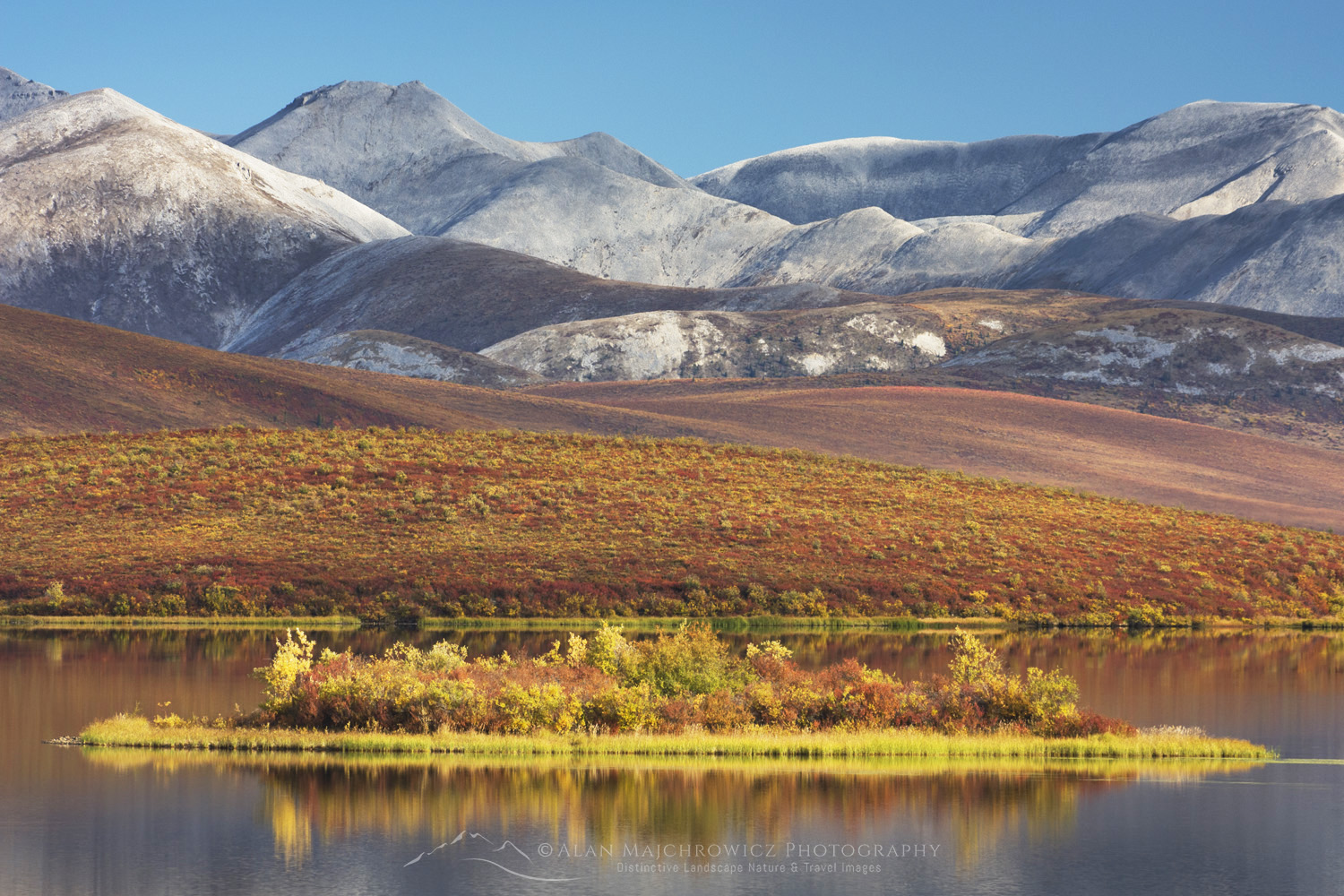
Lake in the Blackstone Plateau reflected clouds and hills of the Ogilvie Range, Yukon, Canada #15390 Summer Photography Adventures 2025Ogilvie Mountains Yukon Territory #15390

All photos appearing in this post are available for Commercial Licensing and Fine Art Prints. Click on any image to purchase, or contact me for more info!


Learn about how to protect the places we love to photograph
Visit the Nature First Website
Nature First the alliance for responsible nature photography

Summer Photography Adventures 2025

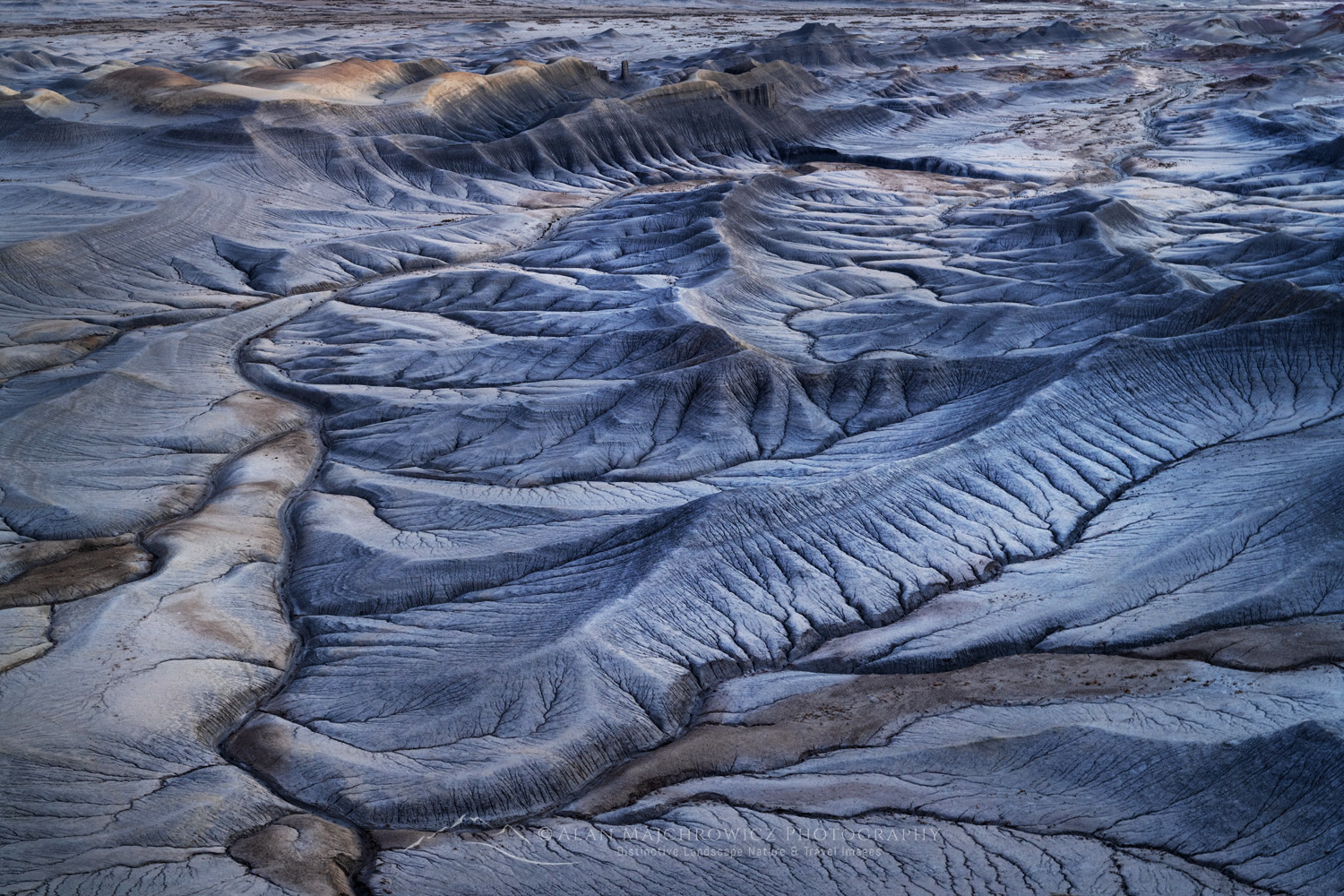
Upper Blue Hills Badlands in the Caineville Desert, Utah #84910

Photo Highlights 2024

Once again, it’s time to look back and reflect on the past year and some of the Photo Highlights of 2024. The photos in this collection represent some of my favorite images from the past twelve months.

One of the recurrent themes in my photography this past year was shapes and patterns. These are also some of my favorite photos because they represent moments I felt an overwhelming connection with the natural world. For me, having that intimate connection with the subject is an essential element that gives an image greater depth and meaning.

So here are my selections, and of course, feel free to comment and vote on your favorite. Thanks for viewing, I hope you have a joyous new year filled with peace and prosperity!

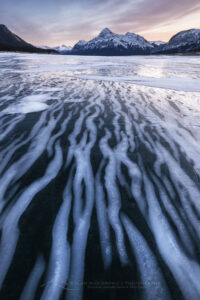
Striped patterns of snow frozen on the surface of Abraham Lake Alberta Canada #82384 Photo Highlights 20241. Abraham Lake Alberta #82384  Purchase

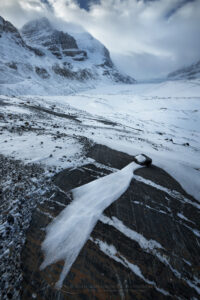
Windswept terminal moraine of Athabasca Glacier in winter, Mount Andromeda and Athabasca Glacier are in the distance. Jasper National Park Alberta Canada #82245b Photo Highlight 20242. Columbia Icefields, Jasper National Park #82245b Purchase

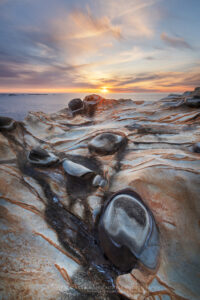
Sunset over Mineral concretions on cliffs of Shore Acres State Park Oregon #830123. Shore Acres State Park Oregon #83012  Purchase

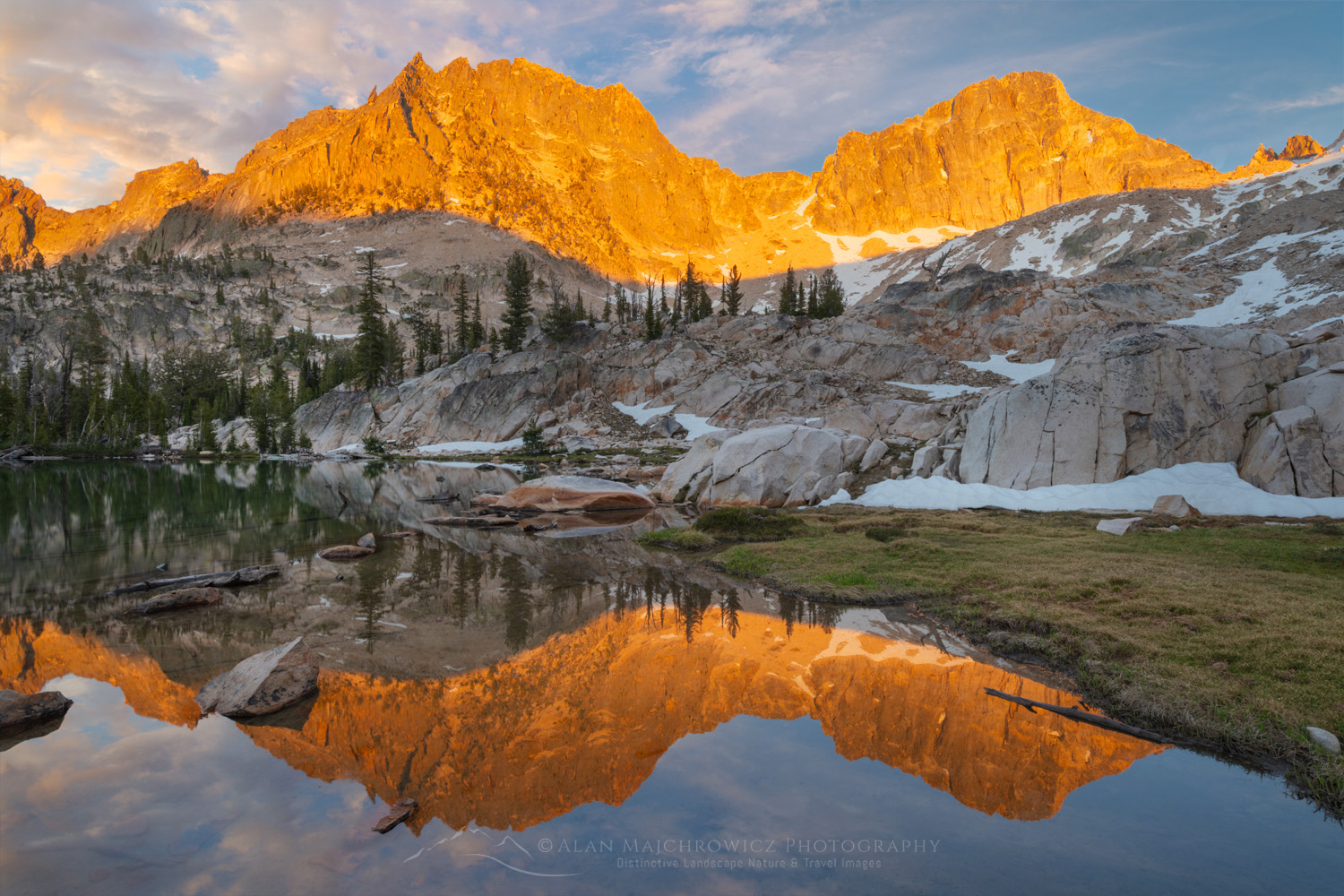
Golden light of sunset reflected on still waters of a tarn in Upper Cramer Basin Sawtooth Wilderness, Idaho #83712b Photo Highlights 20244. Cramer Lakes, Sawtooth Mountains Idaho #83712b  Purchase

Dramatic sunrise sky over Paulina Lake and the Cascade Range seen from Paulina Peak overlook. Newberry National Volcanic Monument, Oregon #840825. Newberry Crater National Volcanic Monument Oregon #84082  Purchase

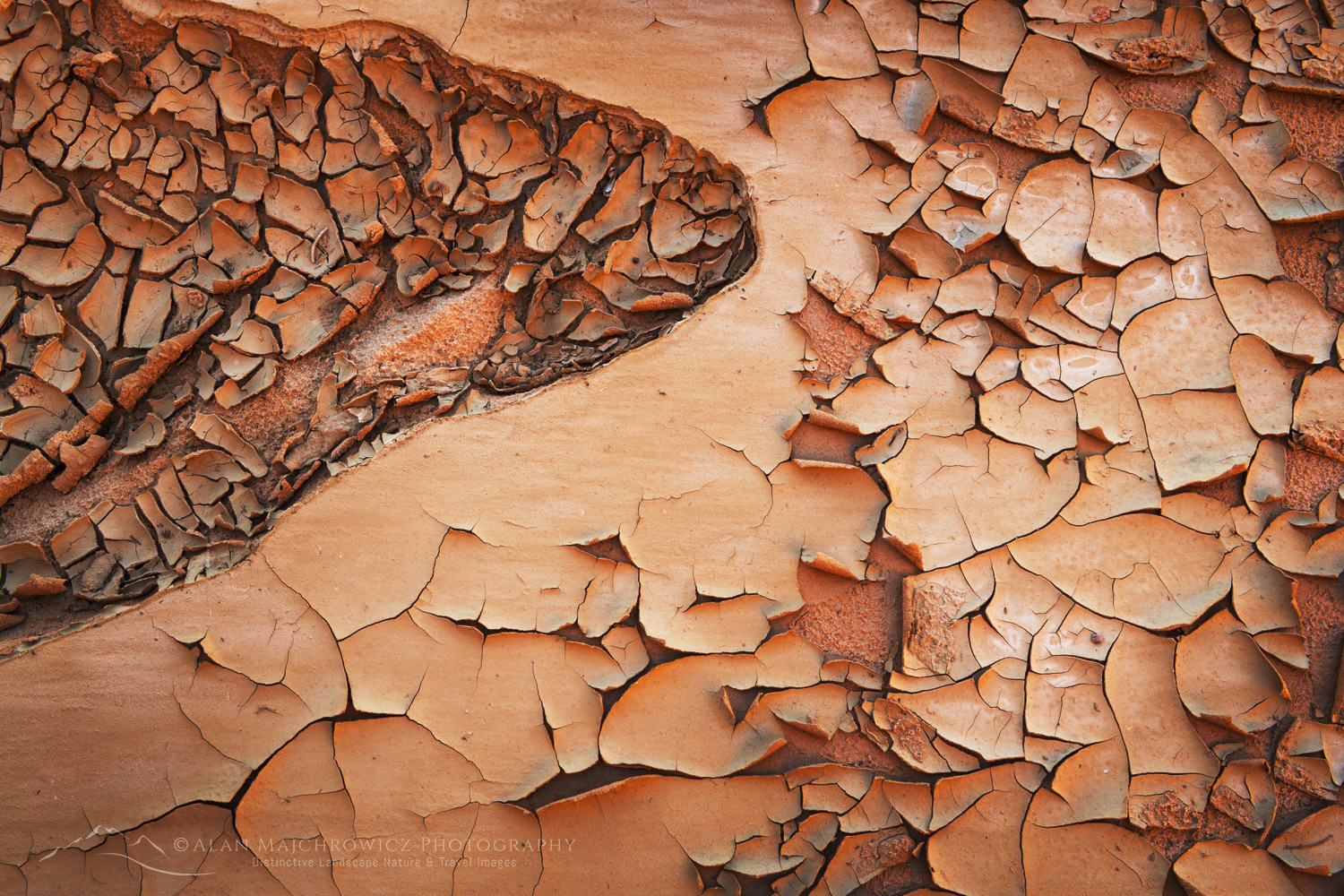
Cracked mud patterns in Harris Wash Grand Staircase-Escalante National Monument Utah #846146. Mud Cracks, Harris Wash Utah #84614  Purchase

Mummy Cliffs Capitol Reef National Park, Utah #848117. Mummy Cliffs Capitol Reef National Park #84811  Purchase

Upper Blue Hills Badlands in the Caineville Desert, Utah #84910 Photo Highlights 20248. Blue Hills Badlands Utah #84910  Purchase

Dramatic view of the Upper Blue Hills Badlands from Skyline Rim. Caineville Desert, Utah #850029. Skyline Rim Utah #85002  Purchase

Sunset at Wooden Shoe Arch Overlook. Islands in the Sky District, Canyonlands National Park #8537610. Needles District, Canyonlands National Park #85376  Purchase

All photos appearing in Photo Highlights 2024 can be purchased as Fine Art Prints. They can also be licensed for commercial usage.

Help Conserve the places you and I love

If the images in this post inspire you to go out to visit or photograph our natural world please consider some of the ethical guidelines presented below:

Leave No Trace
To learn about the principles and practicing LNT please take a few minutes to visit the Leave No Trace Center for Outdoor Ethics. Your children, grandchildren and the Earth will thank you!

LEAVE NO TRACE SEVEN PRINCIPLES

1. Plan Ahead and Prepare
2. Travel and Camp on Durable Surfaces
3. Dispose of Waste Properly
4. Leave What You Find
5. Minimize Campfire Impacts
6. Respect Wildlife
7. Be Considerate of Other Visitors
© Leave No Trace: www.LNT.org


Principles of Nature First:

  • Prioritize the well-being of nature over photography
  • Educate yourself about the places you photograph
  • Reflect on the possible impact of your actions
  • Use discretion if sharing your locations
  • Know and follow all rules and regulations
  • Always follow Leave No Trace principles, and strive to leave places better than you found them
  • Actively promote and educate others about these principles

Photo Highlights of 2024

Mount Robson Canadian Rockies

Mount Robson Canadian Rockies

Mount Robson Canadian Rockies

   Mount Robson Canadian Rockies British ColumbiaMount Robson Canadian Rockies British Columbia #54613 Purchase

Here is another image from last September’s trip to Mount Robson in the Canadian Rockies, since this image has garnered an exceptionally favorable response on social media I felt that I should fill in a little background on how it was made. This was my third trip to Mount Robson Provincial Park and I had high hopes of getting some stunning images of the mountain. I had allocated five days to fulfill my goal. However, by the third day I was becoming frustrated by the lack of interesting light. The weather was spectacular, warm with blue skies. But while great for outdoor activities it didn’t possess the kind of light I had hoped for. Finally on the third morning clouds from an approaching storm arrived just as the sun was coming up. Perfect timing and conditions to illuminate the sky and mountains in a warm glow. Just what I wanted!

Mount Robson sunrise Canadian Rockies British ColumbiaMount Robson Canadian Rockies British Columbia #54615 Purchase

The images above were some of the first made as the sky warmed with a reddish magenta glow. I had thoroughly investigated this spot the day before to see where and how the best compositions lined up. I knew there were many possibilities for both horizontal and vertical images. So I mentally took note on which were the best and planned the shoot accordingly if the light cooperated. This plan paid off the next morning as I knew there would be a limited amount of time before the light began to fade.

By the time I had finished working this area the light was still going strong. About a half mile east along this basin there was another spot I planned on photographing in the evening or next morning. With the approaching weather I had a feeling there might not be another opportunity like this one. So I gathered up my equipment and ran along the basin as fast I could, and hastily set up my tripod. By this time most of the warm dawn glow had faded but the light was still intense on the clouds. The third image in this post  is one of the last from that morning. The post processing was nothing more than adjusting levels and curves with some burning and dodging. I like to keep things on that end as simple and strait forward as possible.

Mount Robson Canadian Rockies British Columbia Mount Robson Canadian Rockies British Columbia #54646   Purchase

Mount Robson Canadian Rockies British ColumbiaMount Robson Canadian Rockies British Columbia #54651r   Purchase

Kananaskis Country, Alberta

Canadian Rockies Fall Photography

Canadian Rockies Fall Photography

Kananaskis Country, Alberta Canadian Rockies Fall PhotographyKananaskis Country Alberta  #53471  Purchase

Fall is here and very soon the annual parade of colors will begin. It seems like just yesterday I was photographing wildflowers in the North Cascades during the height of summer! This year I will once again be returning to several special locations in the majestic Canadian Rockies. It will actually be a close repeat of last years trip which was cut short due to an early arrival of wet cold weather, hopefully I’ll be more lucky this time.

The trip will begin at Mount Robson Provincial Park in the North followed by Tonquin Valley in Jasper National Park. By the time in finished with those two locations fall color and especially the subalpine larches will be in full swing. I’ll then head south into Banff National Park, Kootenay National Park, Yoho National Park, and Mount Assiniboine Provincial Park.

While I’m on this trip I will of course be in contact with Coleen in the office who will be taking care of regular business and client requests.