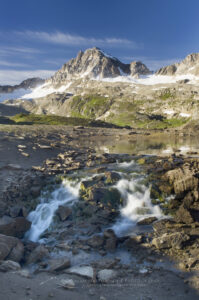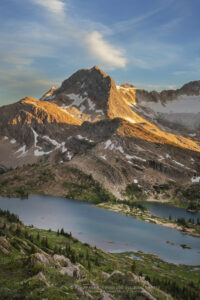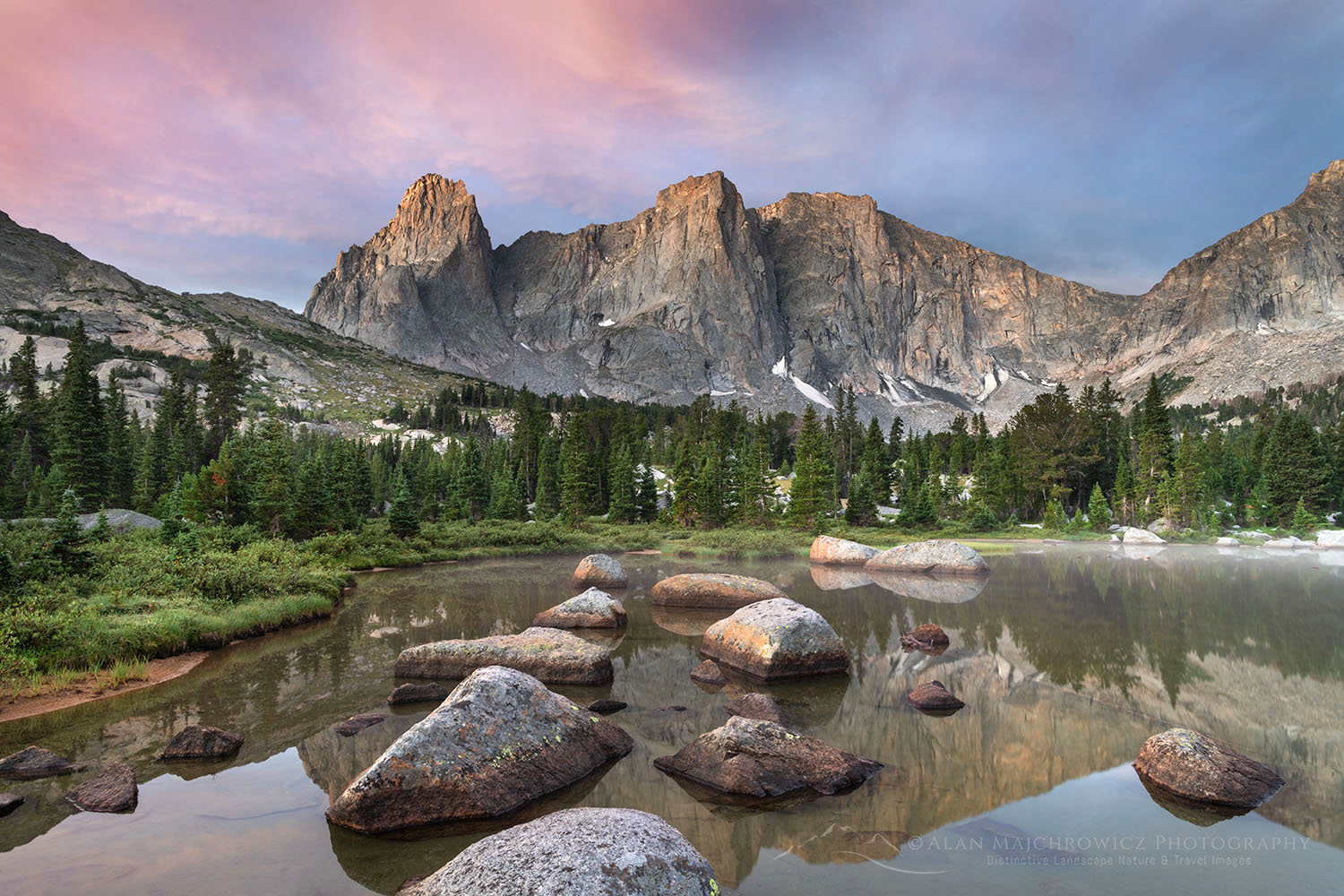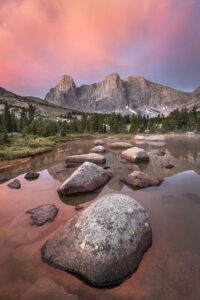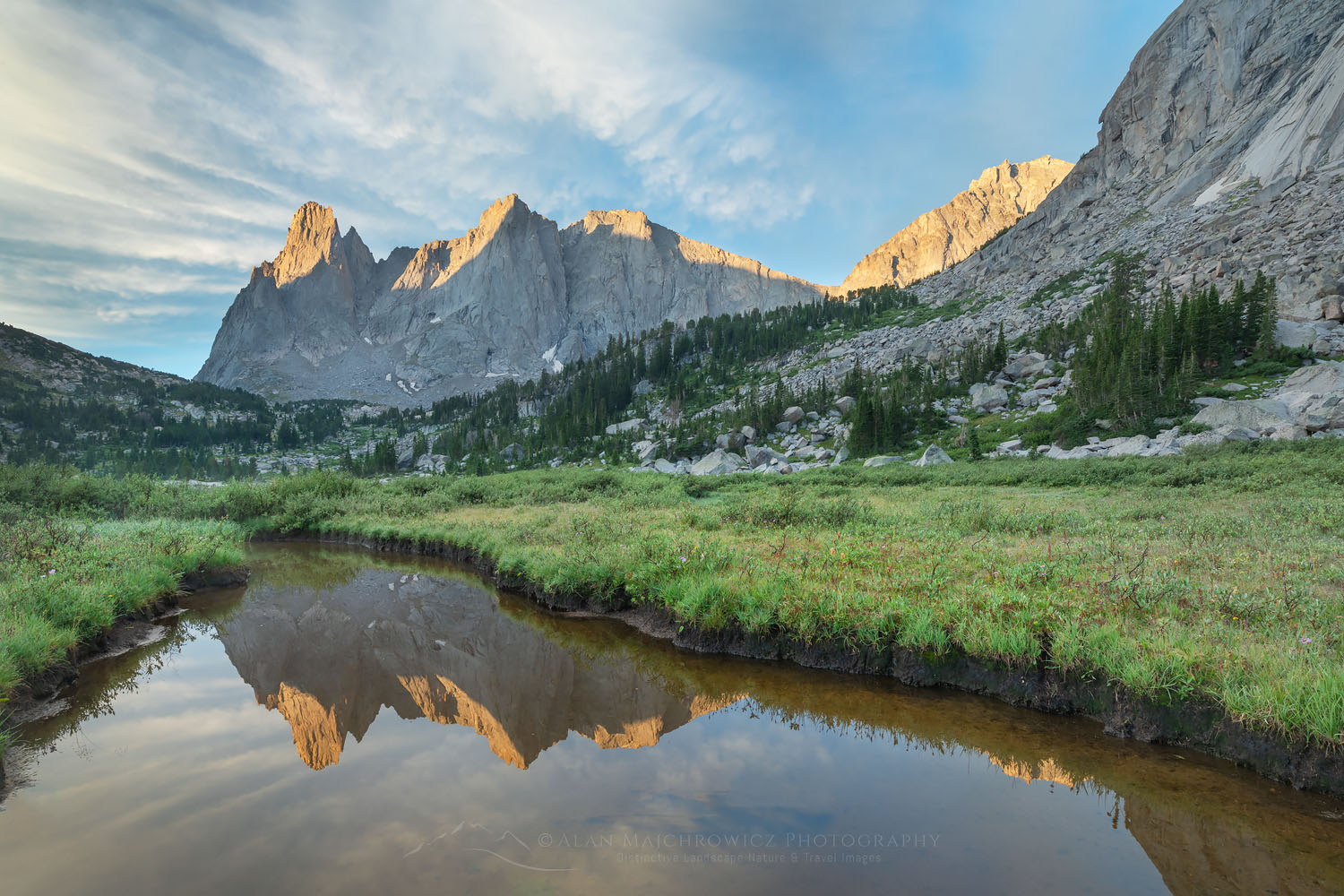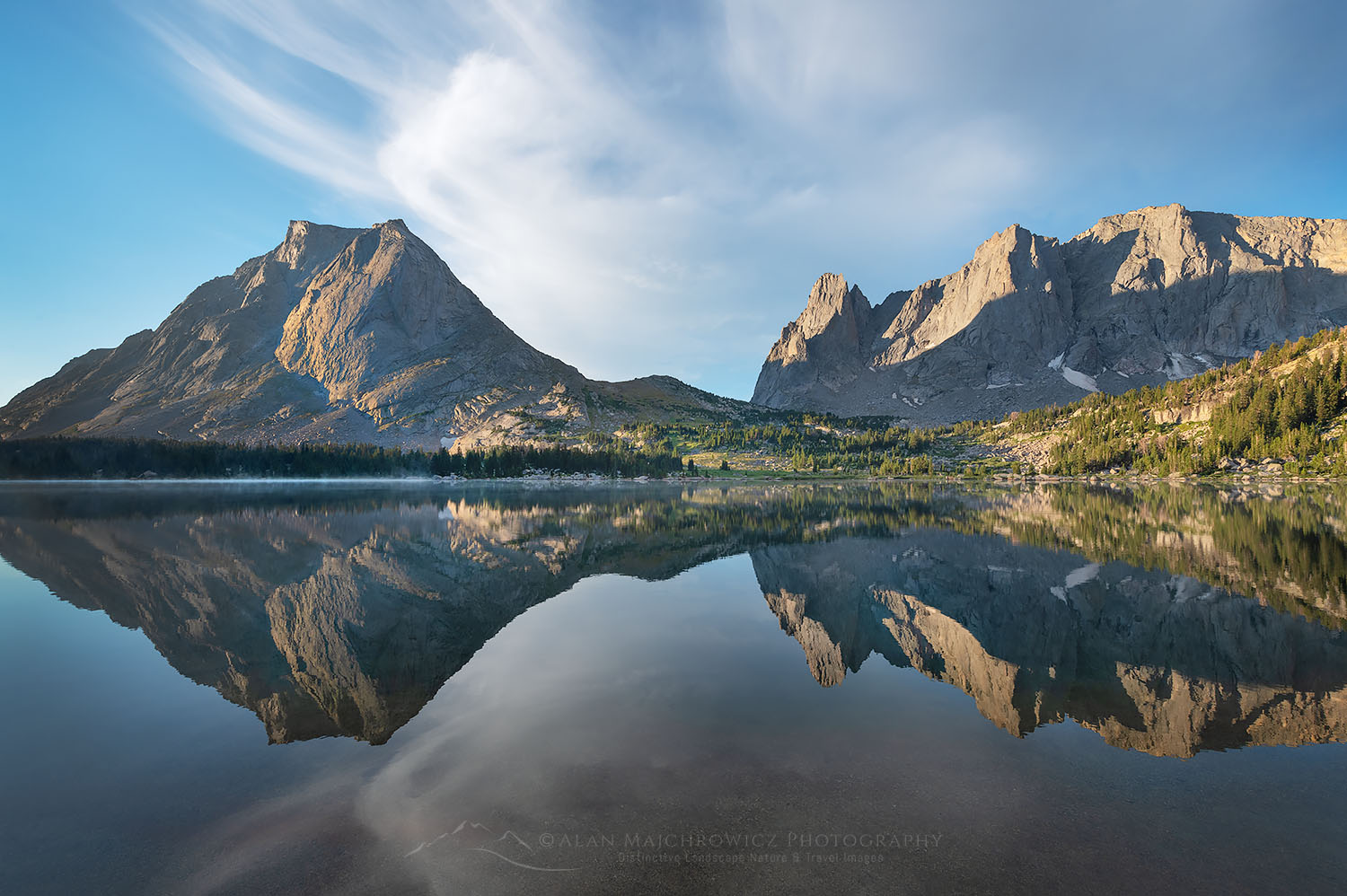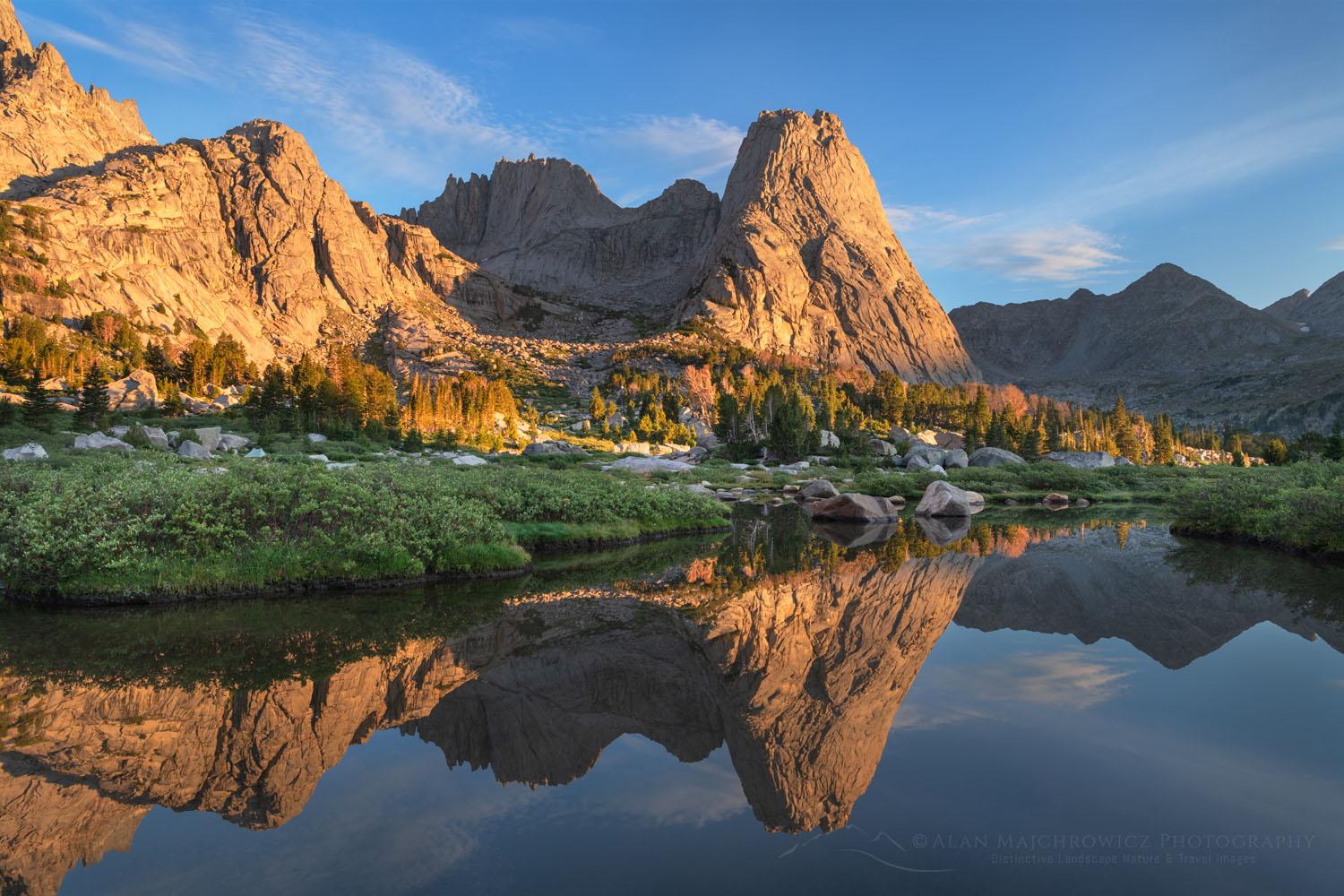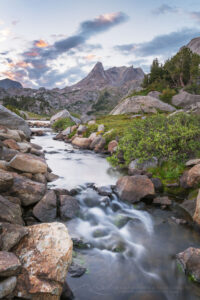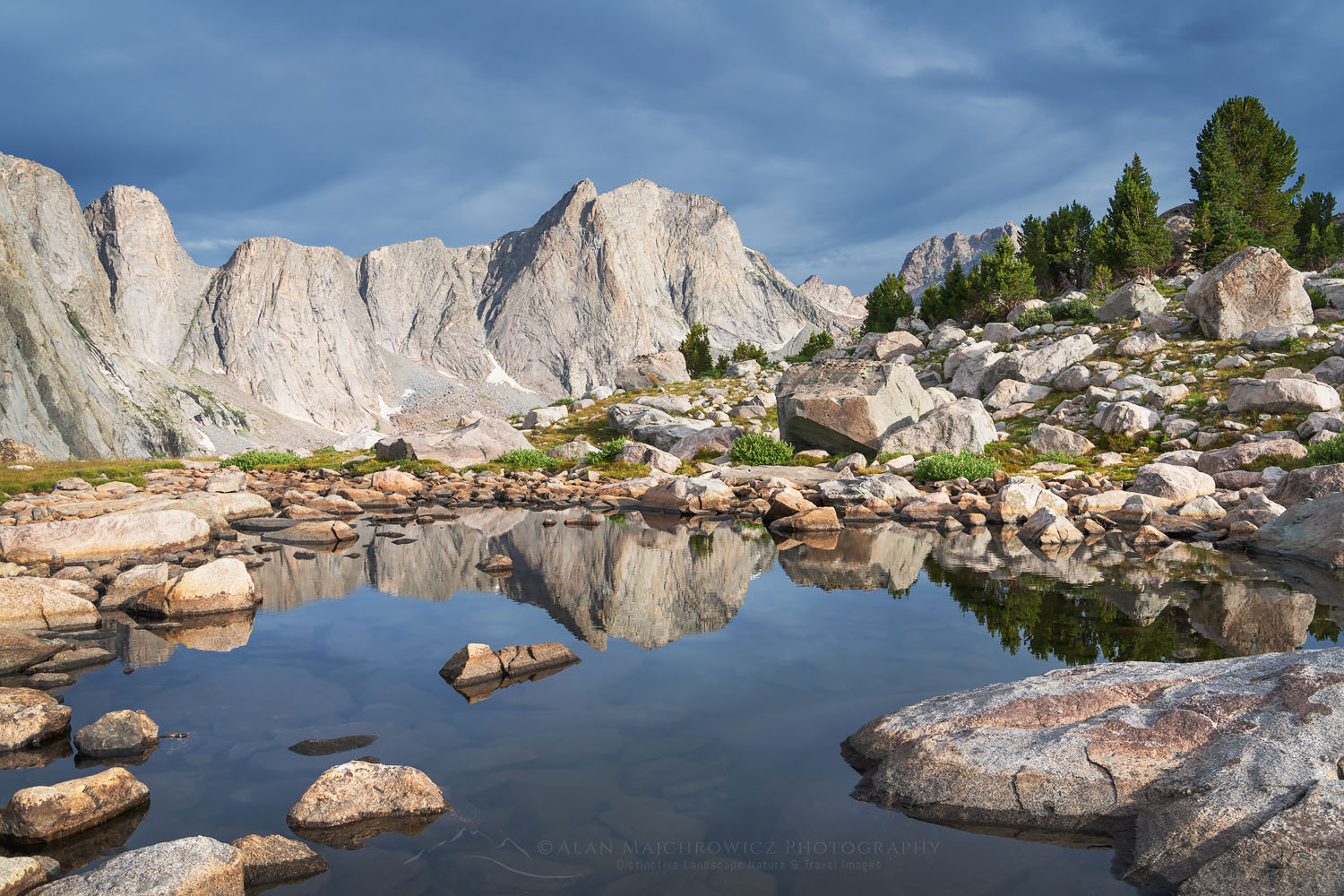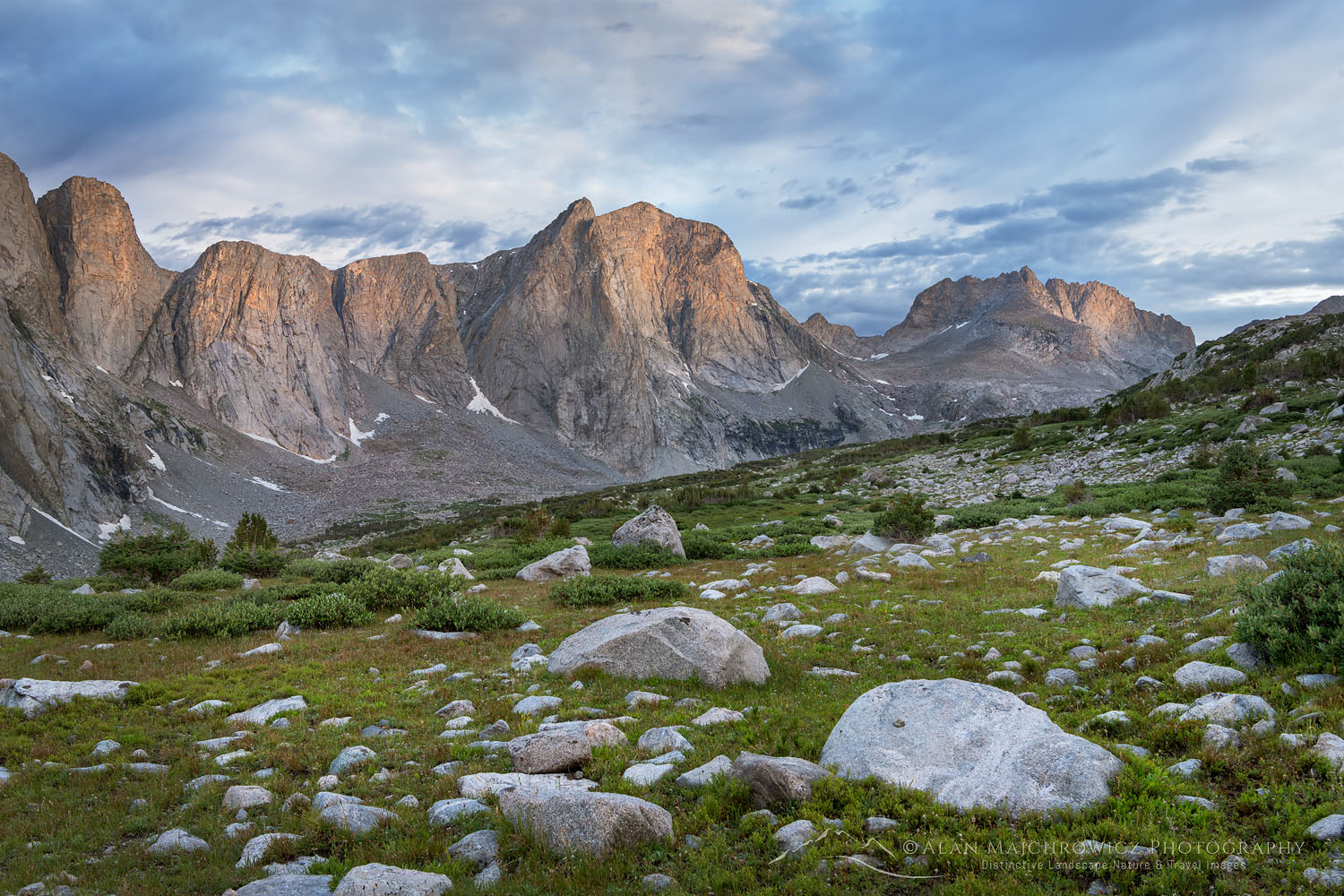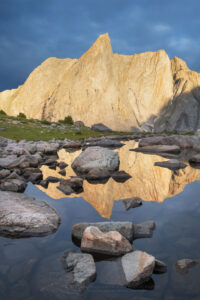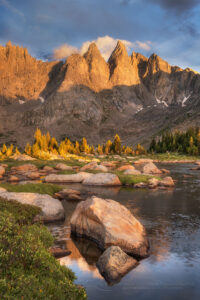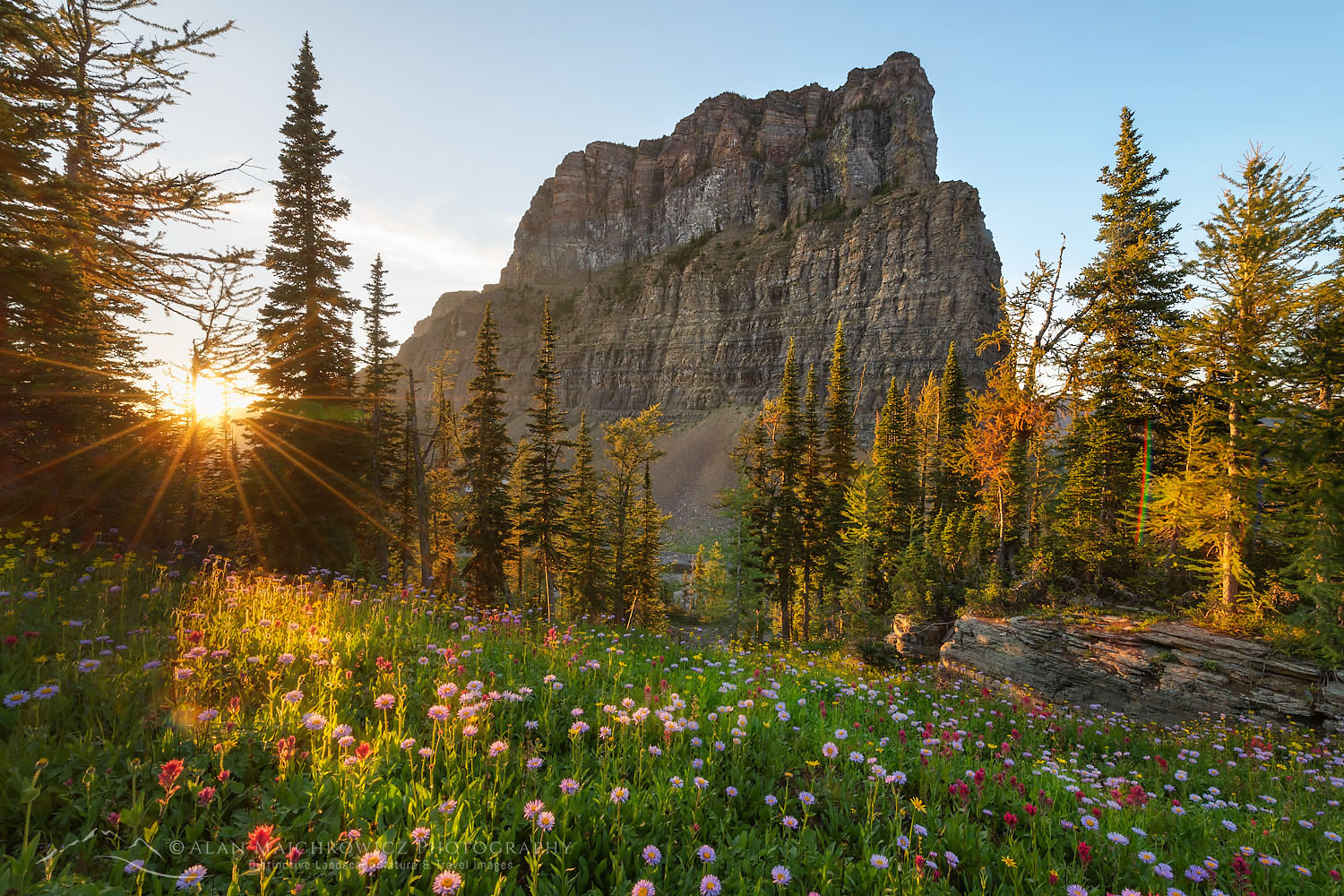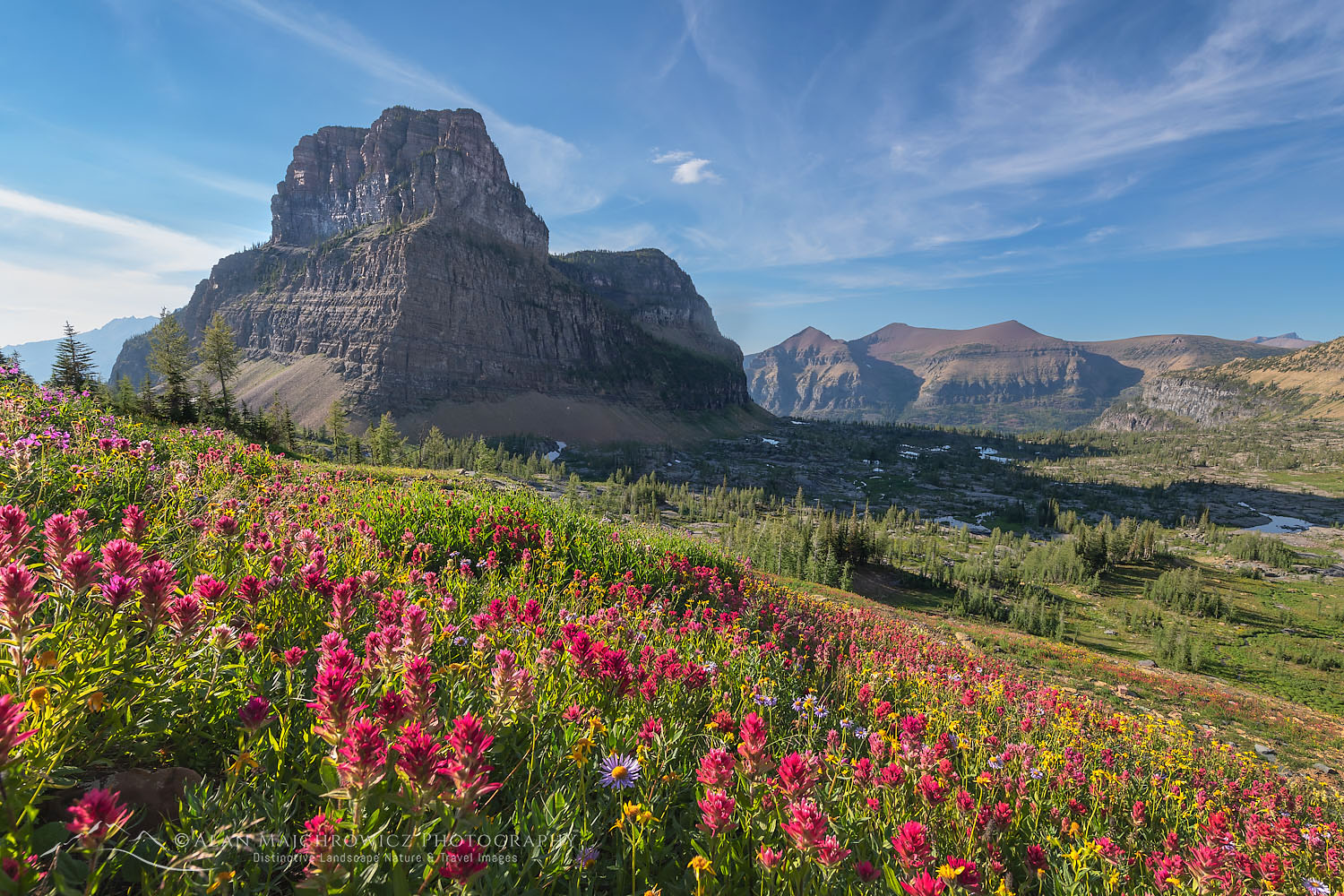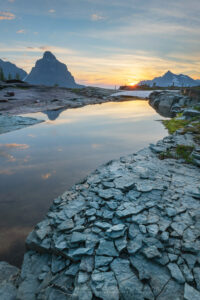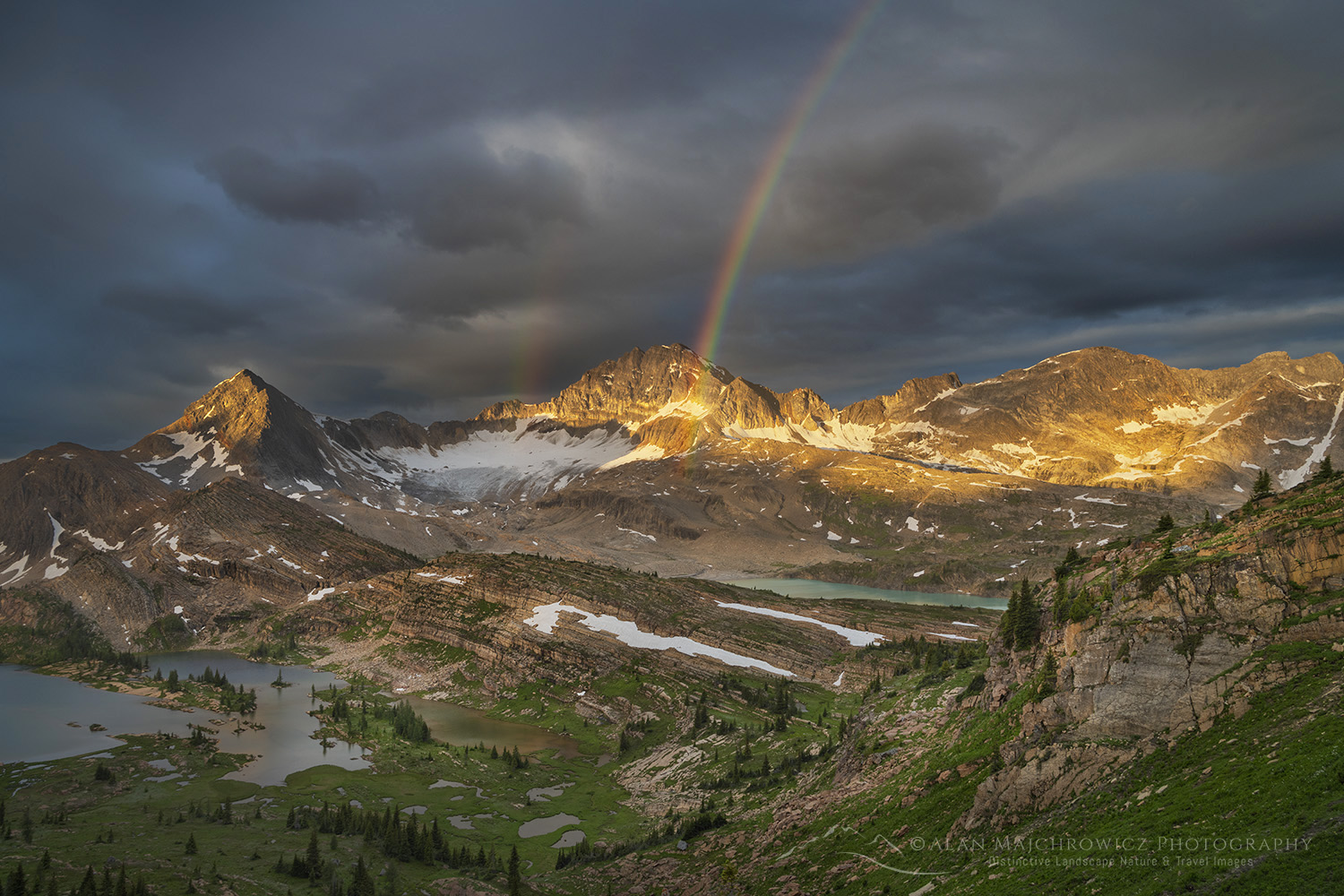
Sunrise rainbow over Limestone Lakes Basin. Height of the Rockies Provincial Park British Columbia

Limestone Lakes Height of the Rockies Provincial Park: Part 2

Sunrise rainbow over Limestone Lakes Basin. Height of the Rockies Provincial Park British Columbia Limestone Lakes Height of the RockiesRainbow over Limestone Lakes, Height of the Rockies Provincial Park #86474  Purchase

Limestone Lakes Height of the Rockies Provincial Park: Part 2

Limestone Lakes Height of the Rockies Provincial Park is one of the few places in the Canadian Rockies where a person can experience true solitude. And, it is also an exception in an era of reservations, lotteries, and fees for backpacking trips. As of 2026, there are no fees, reservations, or even a registration needed for a trip of any length.

Of course, as I mentioned in part one of this series, there are reasons for this. Limestone Lakes is not an easy backpacking destination. And it is too far and involved for a day-hike. However, for those willing to commit at least three days and lots of sweat, it is a dream destination.

So, let’s start the second half of the trip, where part one left off.
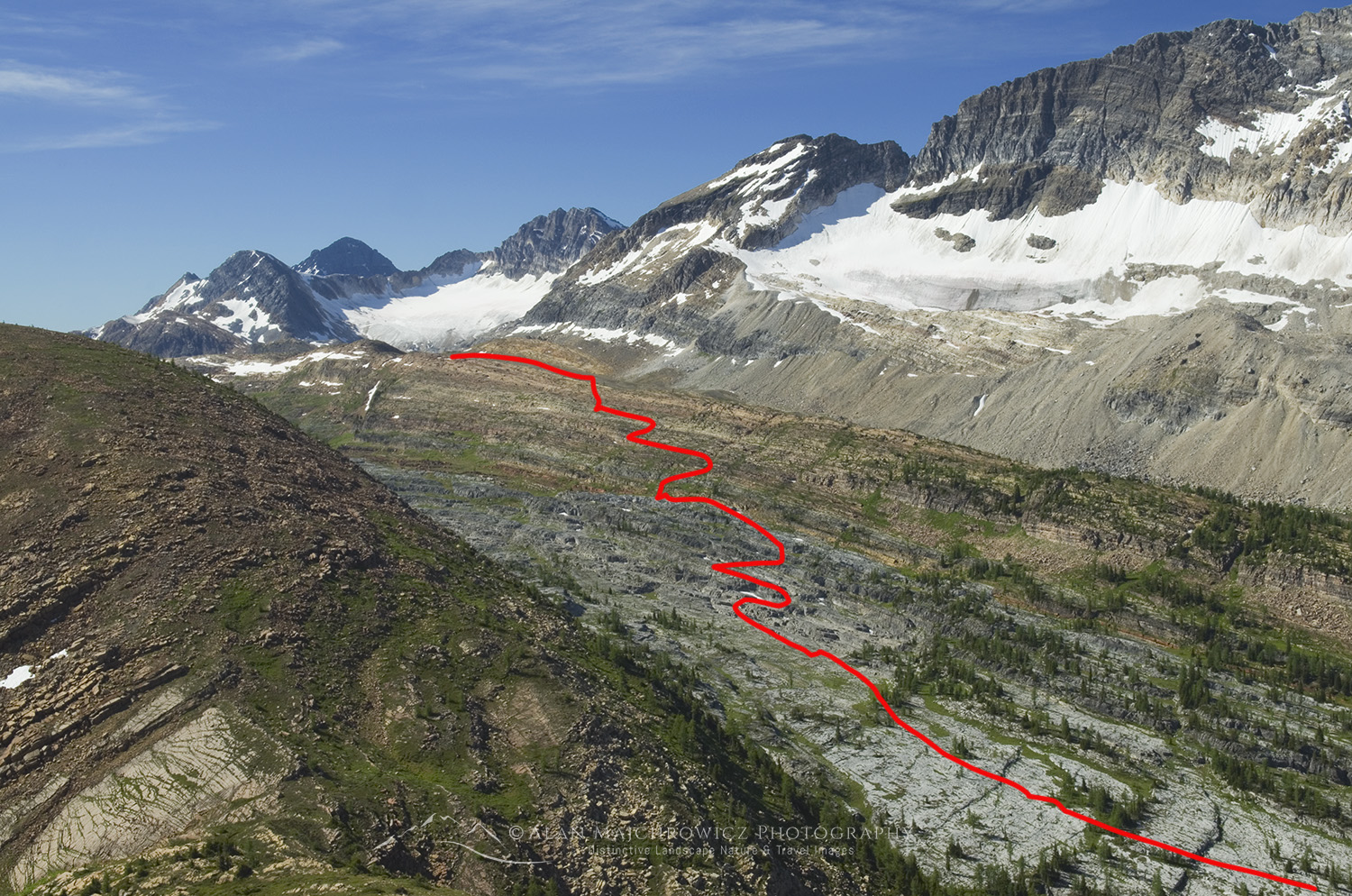
Route to Limestone Lakes Basin, Height of the Rockies Provincial Park British ColumbiaView of the route (red line) from the nub

Limestone Lakes, Cross Country Route-Finding

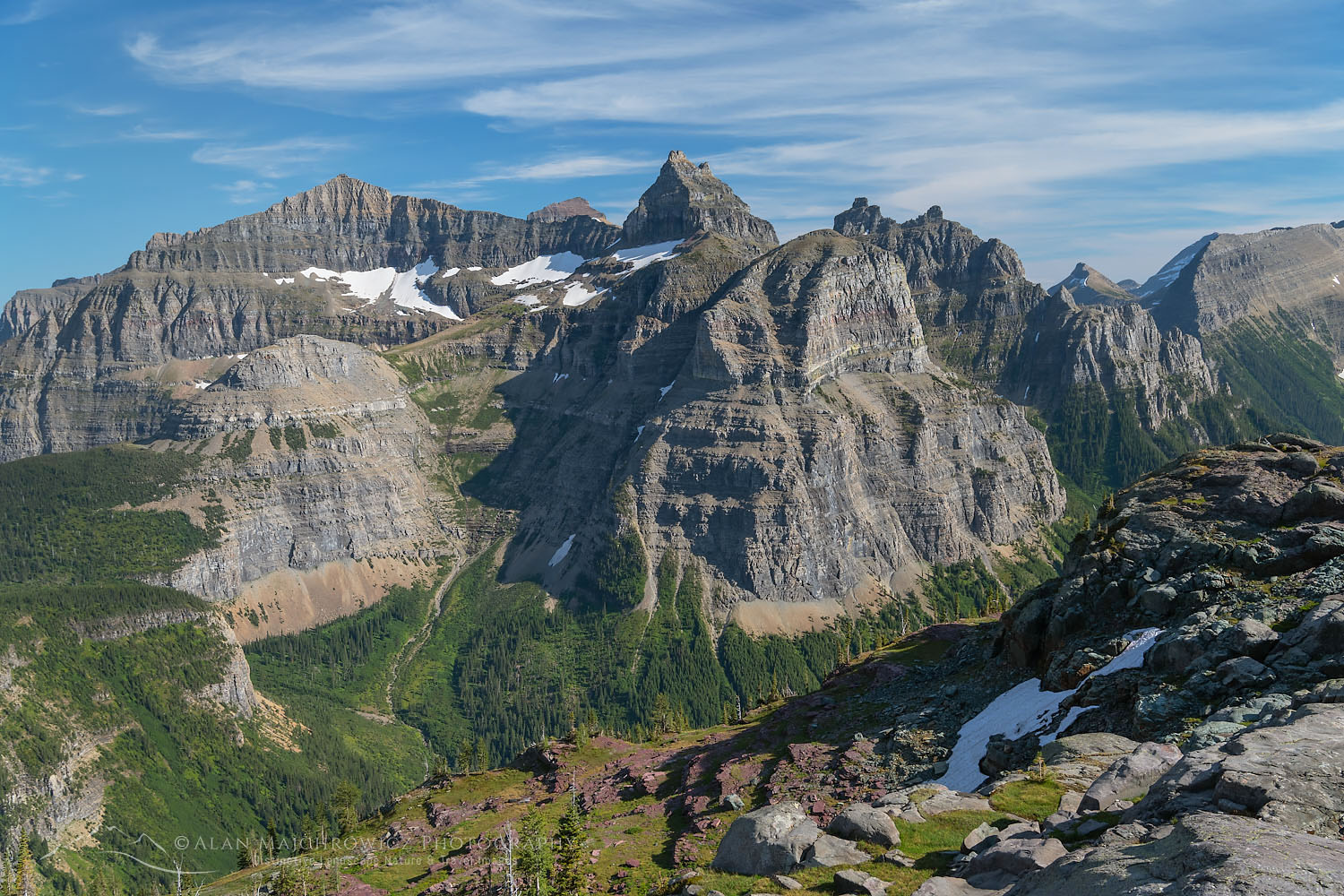
After leaving Sylvan Pass and ascending to the summit of the 8300′ nub, you get a great view of the route to Limestone Lakes. This is a good spot to rest and take a few moments to commit the scene to memory. Basically, you’ll need

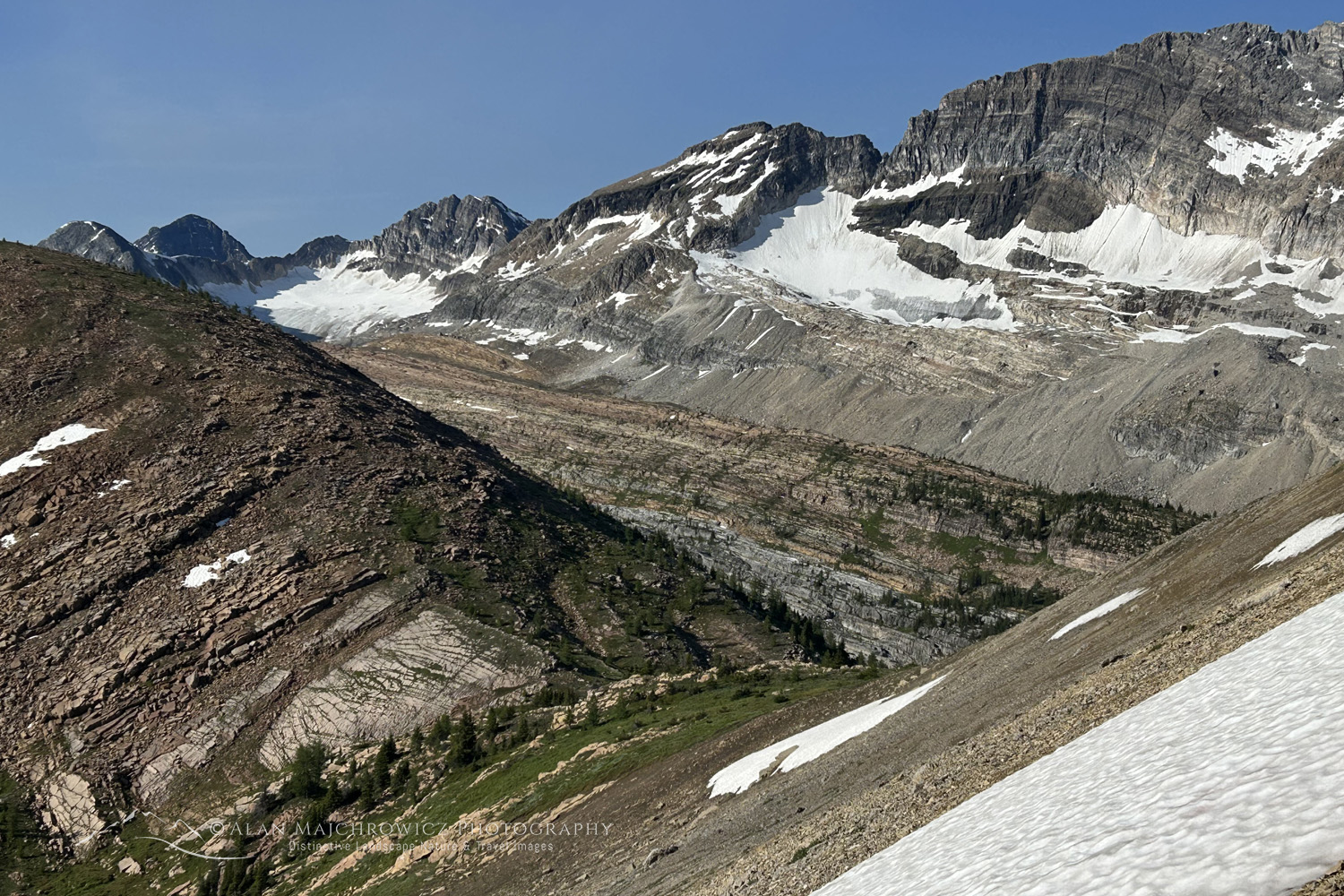
to descend into the open upper valley and travel southwest and over numerous ascending ledges and cliffs to a pass overlooking the lakes basin. The route is always in the open and, using common sense, it is fairly obvious. A GPS can come in handy, but not necessary.

The first difficulty is getting down to the valley. Start descending southwest to a small meadowy pass. There may be faint glimpses of a trail here. Then head west until cliffs bar the way. At this point, you’ll need to find negotiable ledges while heading in a northwest direction. Take your time to scout out the best route. Eventually, the cliffs and ledges become easier, and the valley is reached. About 800′ below the summit of the nub. It’s a bit heartbreaking to realize that all the elevation you just lost will need to be regained again, and more.
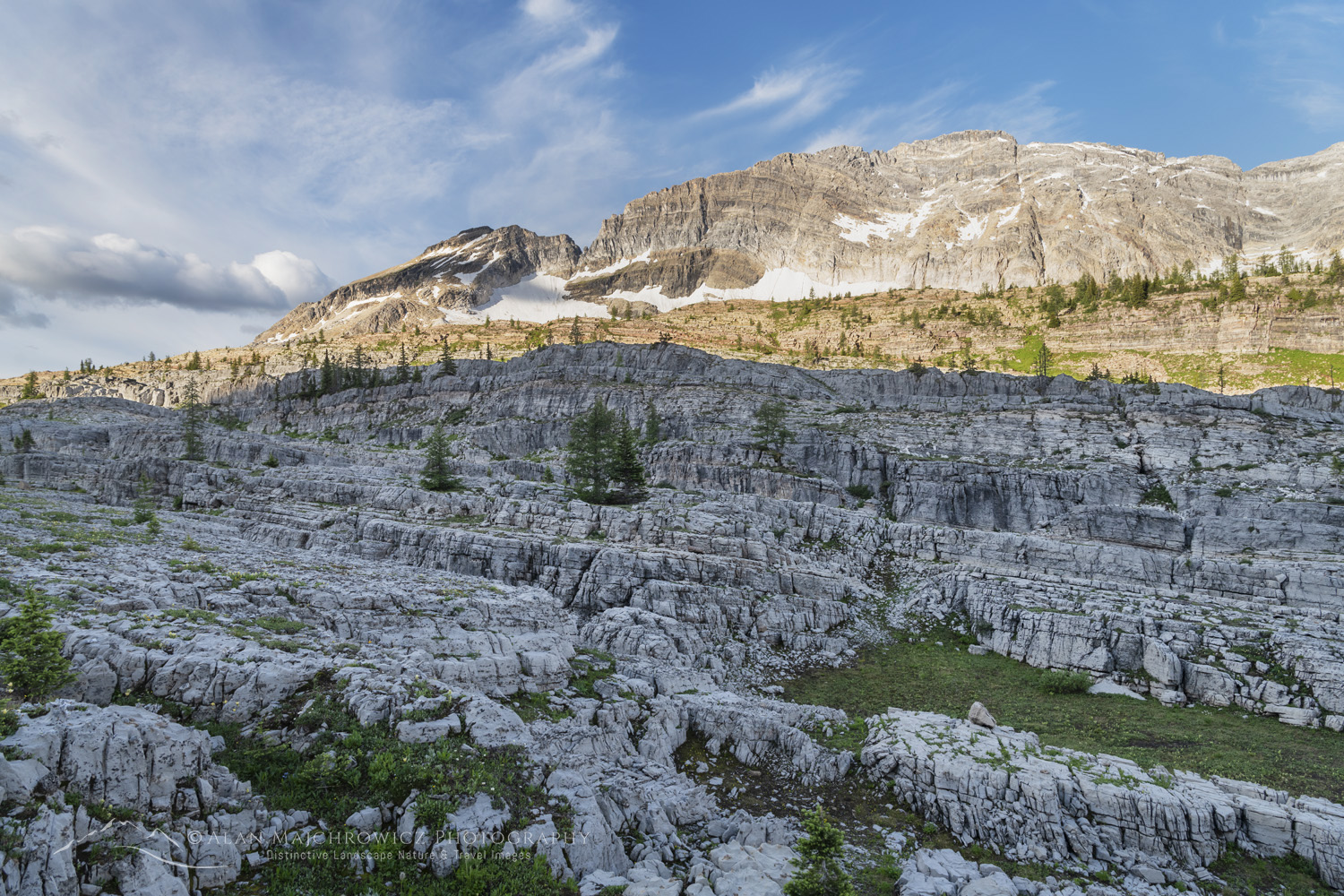
Broken cliffs of limestone Height of the Rockies Provincial Park British ColumbiaLimestone terraces #86598 Purchase

Crossing the Karst Terrain

Once in the valley, it is worth dropping your pack to take some time searching for the start of the alternate route to the Joffre Creek trail on your way out. Here is where a GPS will really come in handy, since it can be very frustrating and time-consuming to find the correct spot. The start of the very faint trail is about where the subalpine meets the forest, and it will travel northeast along the base of the nub.

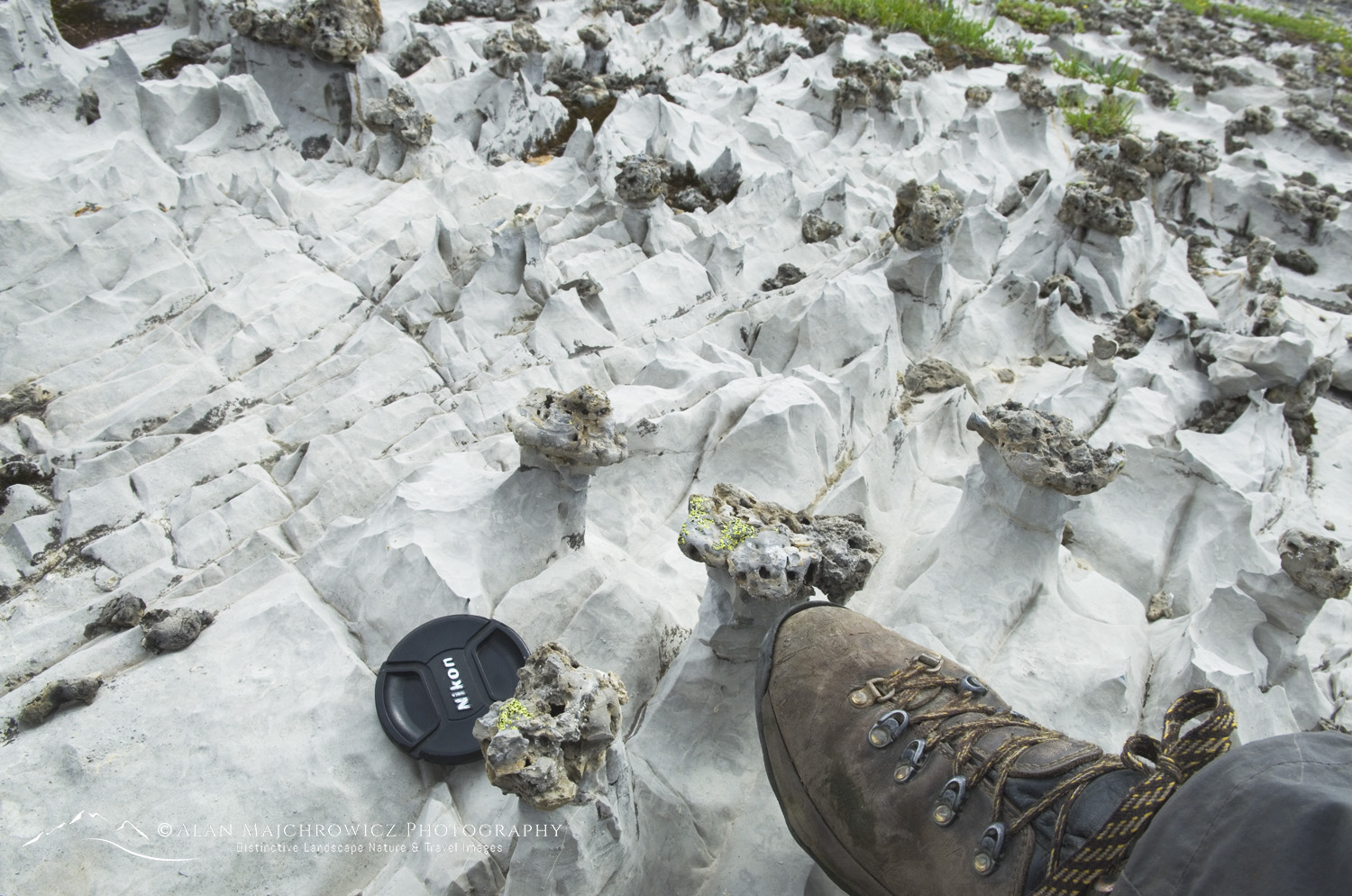
After locating the return trail, memorize it or take a photo before proceeding to the lakes. Now turn and head southwest across an increasingly broken terrain with lots of prickly limestone needles, fissures, and blocks. Fans of The Lord of the Rings will easily associate this section with the Emyn Muil

Sharp karst features in limestone, Height of the Rockies Provincial Park British ColumbiaSharp limestone formations

There are cairns seen sporadically throughout this area, but they’re often far apart and not always reliable. Make a general heading towards the limestone terraces, keeping a sharp eye out for the easiest passages up and through them.

If you are attempting to reach the lakes in one day, the terraces will be the most tiring part of the day. Here, seemingly easy passages through the cliffs will dead-end. Backtracking can be frequent, and when cresting one terrace, there always seems to be another to negotiate. Finally, after topping the last terrace, the terrain becomes easier, and you hike south to a talus pass.

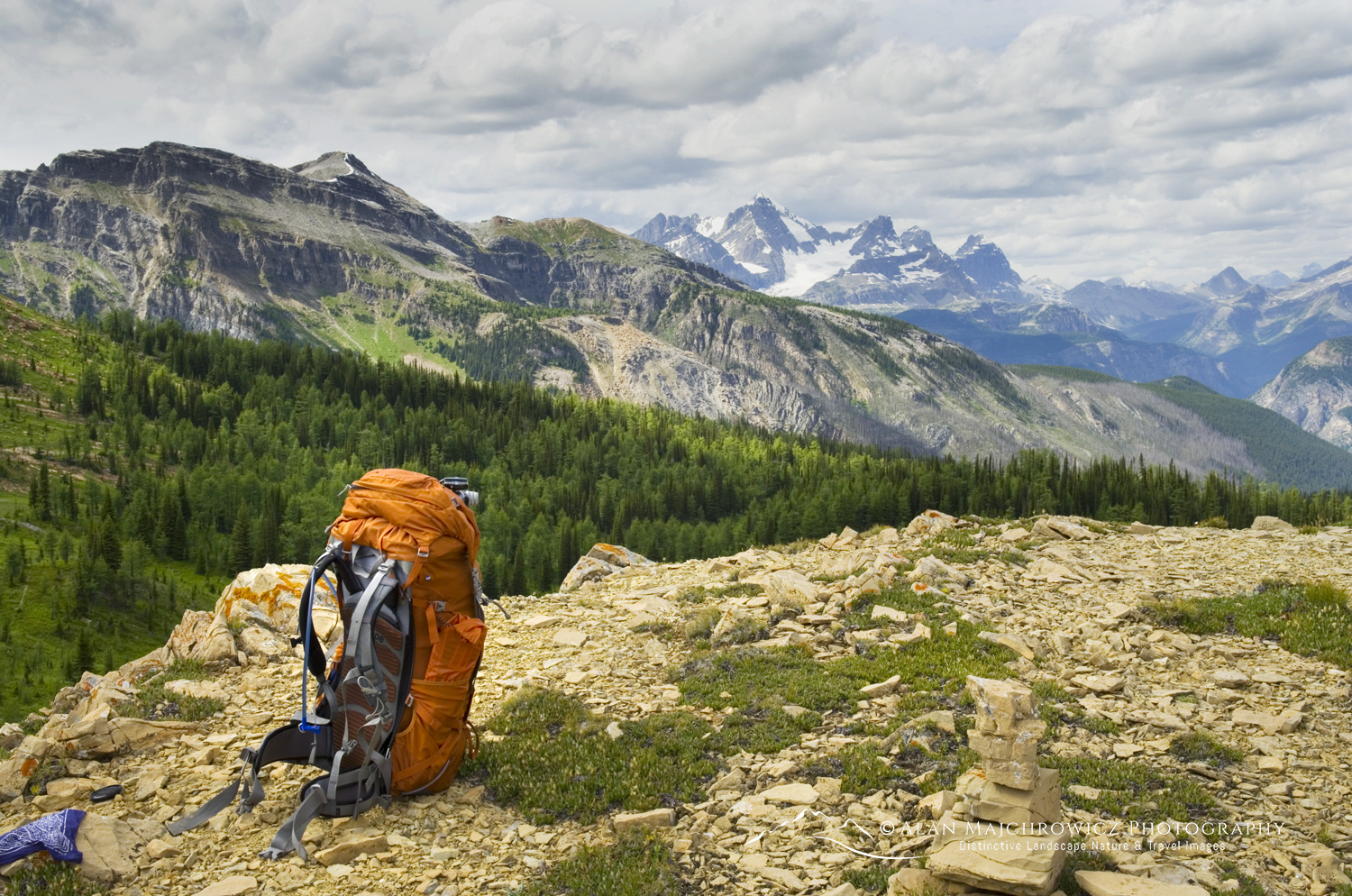
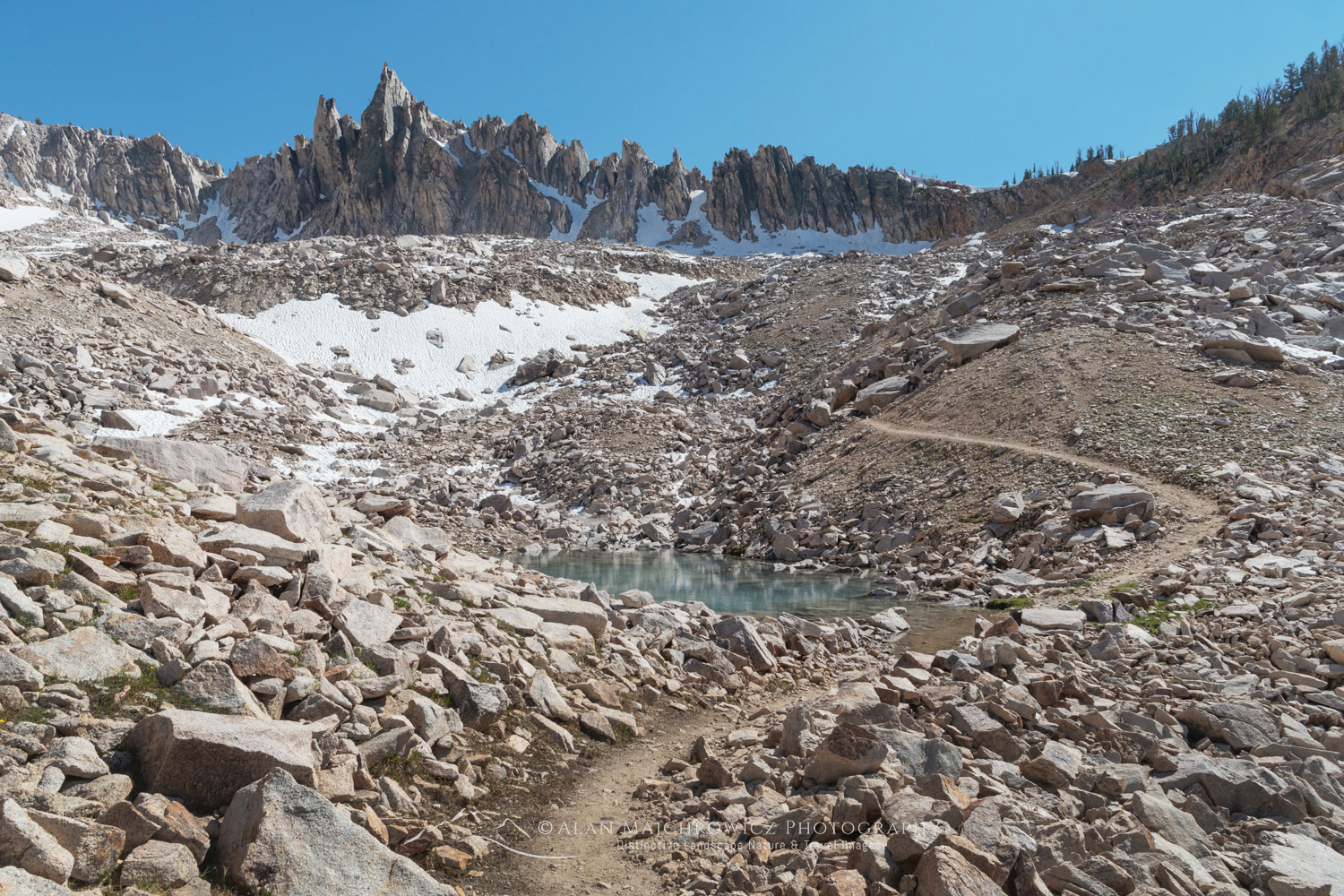
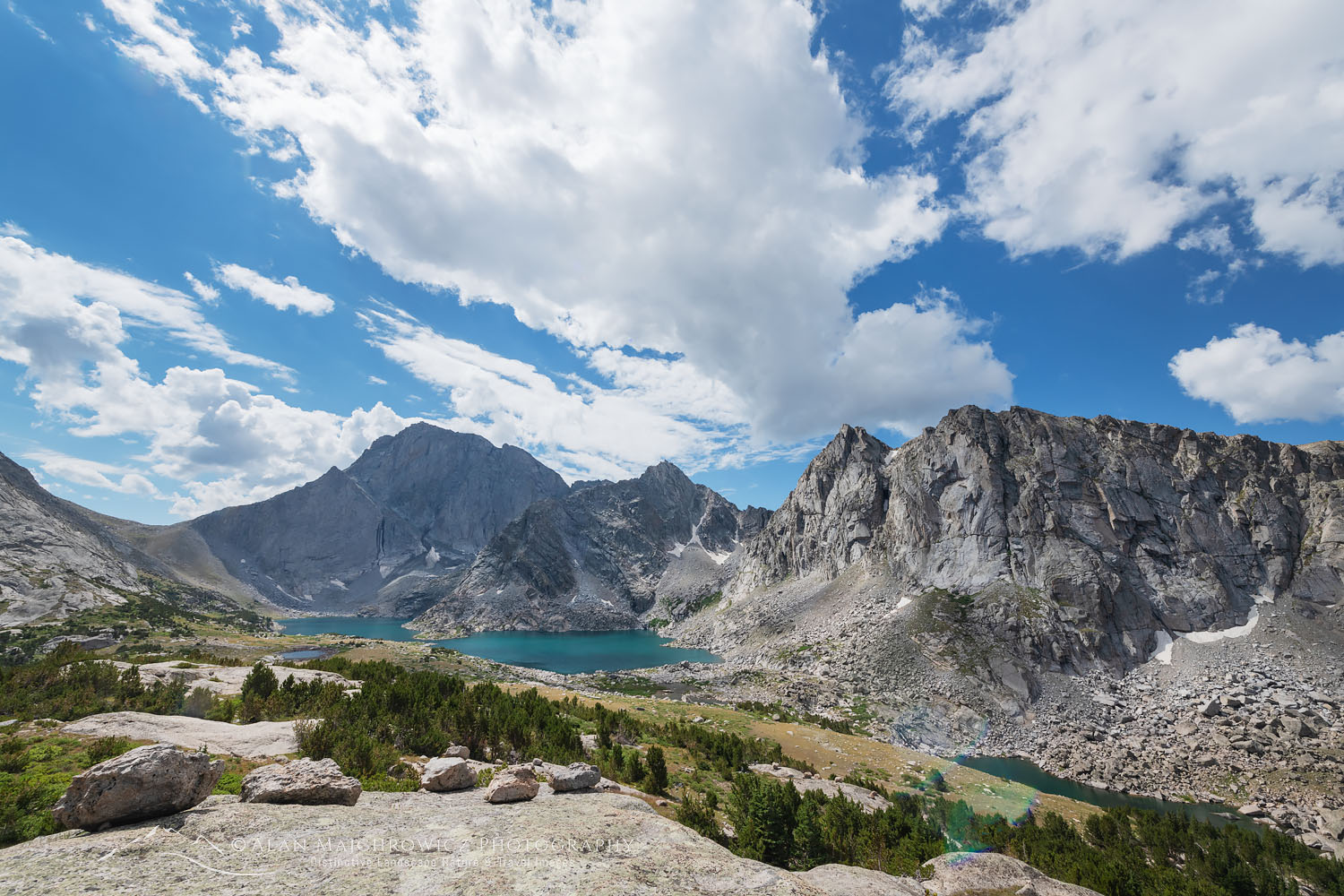
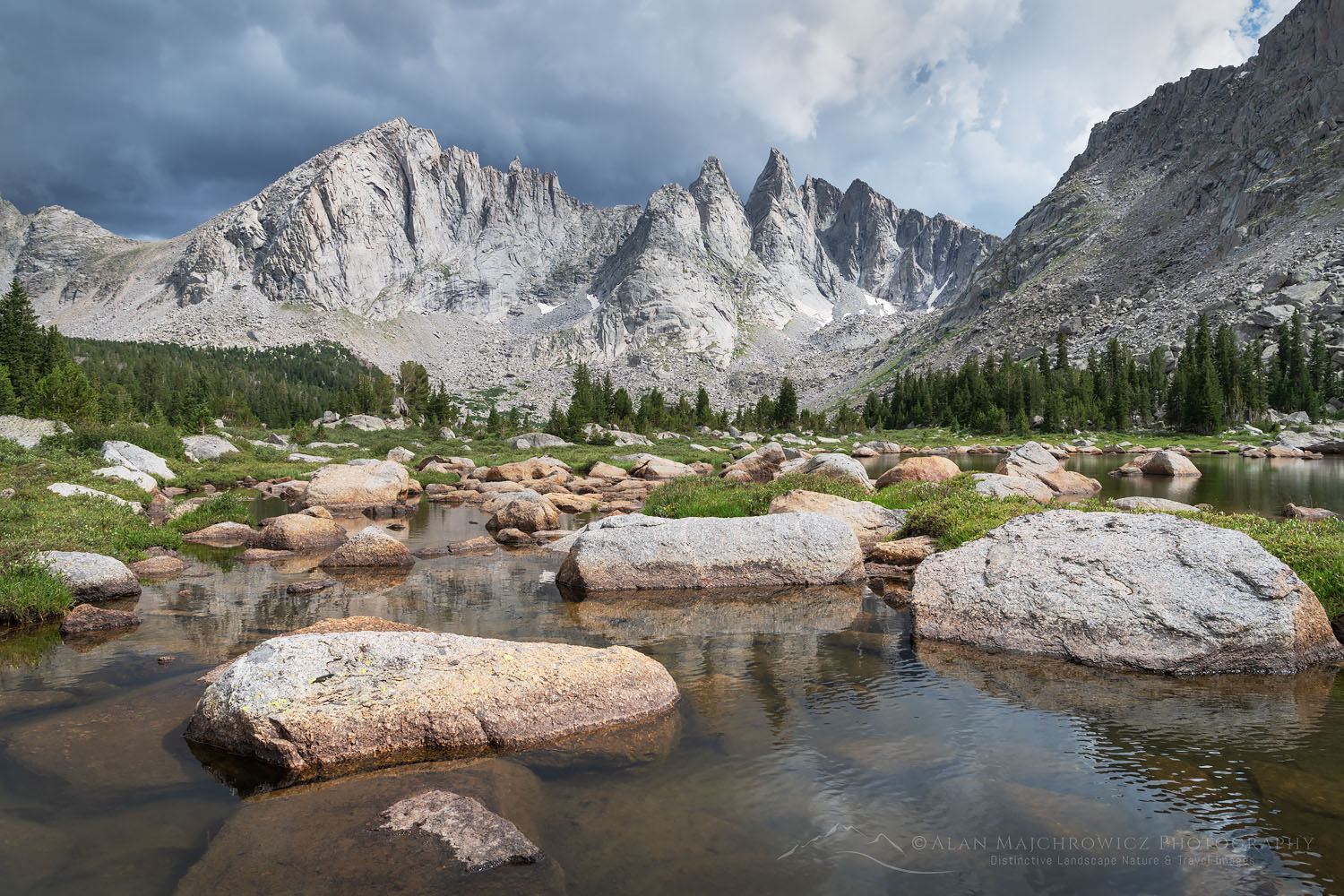
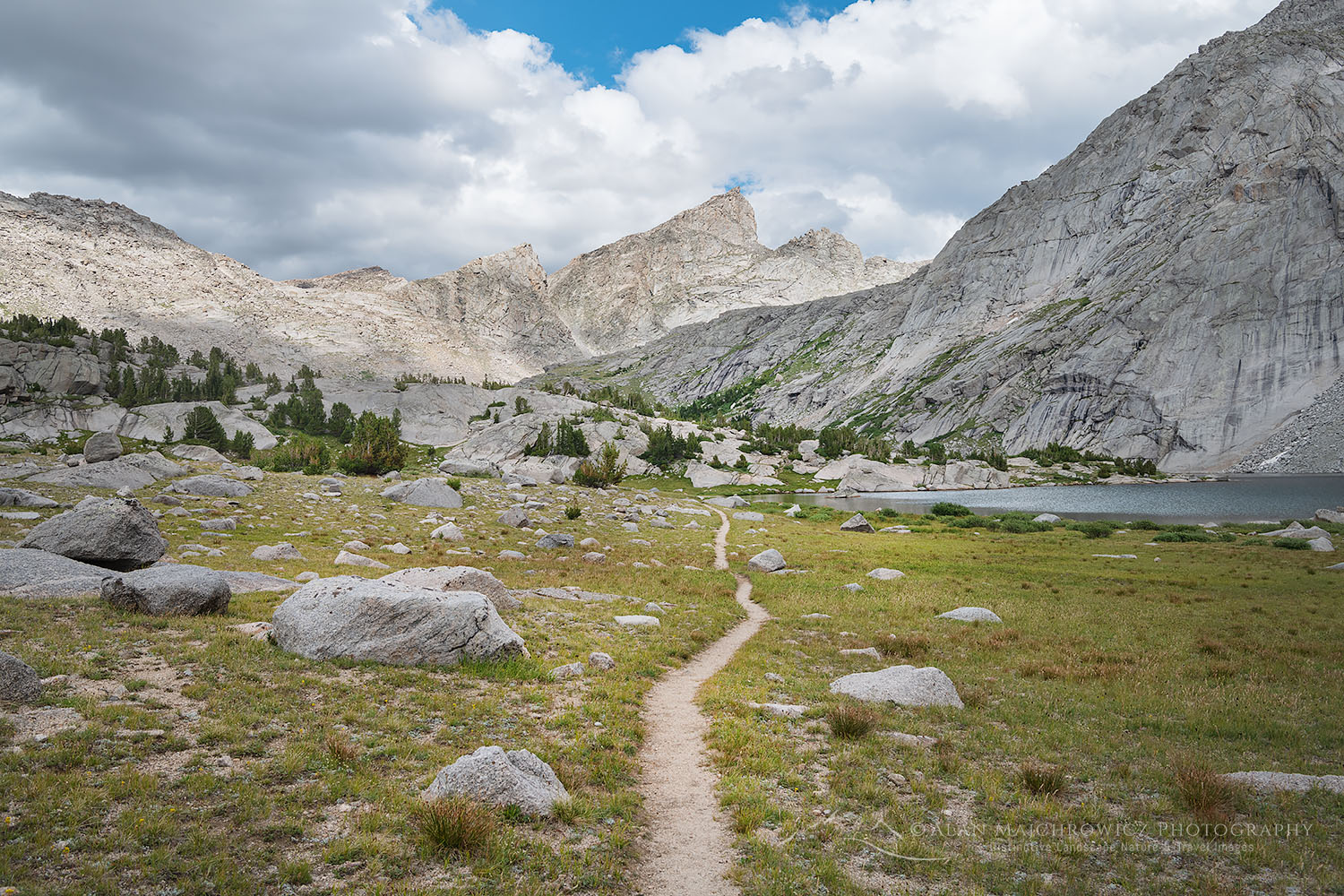
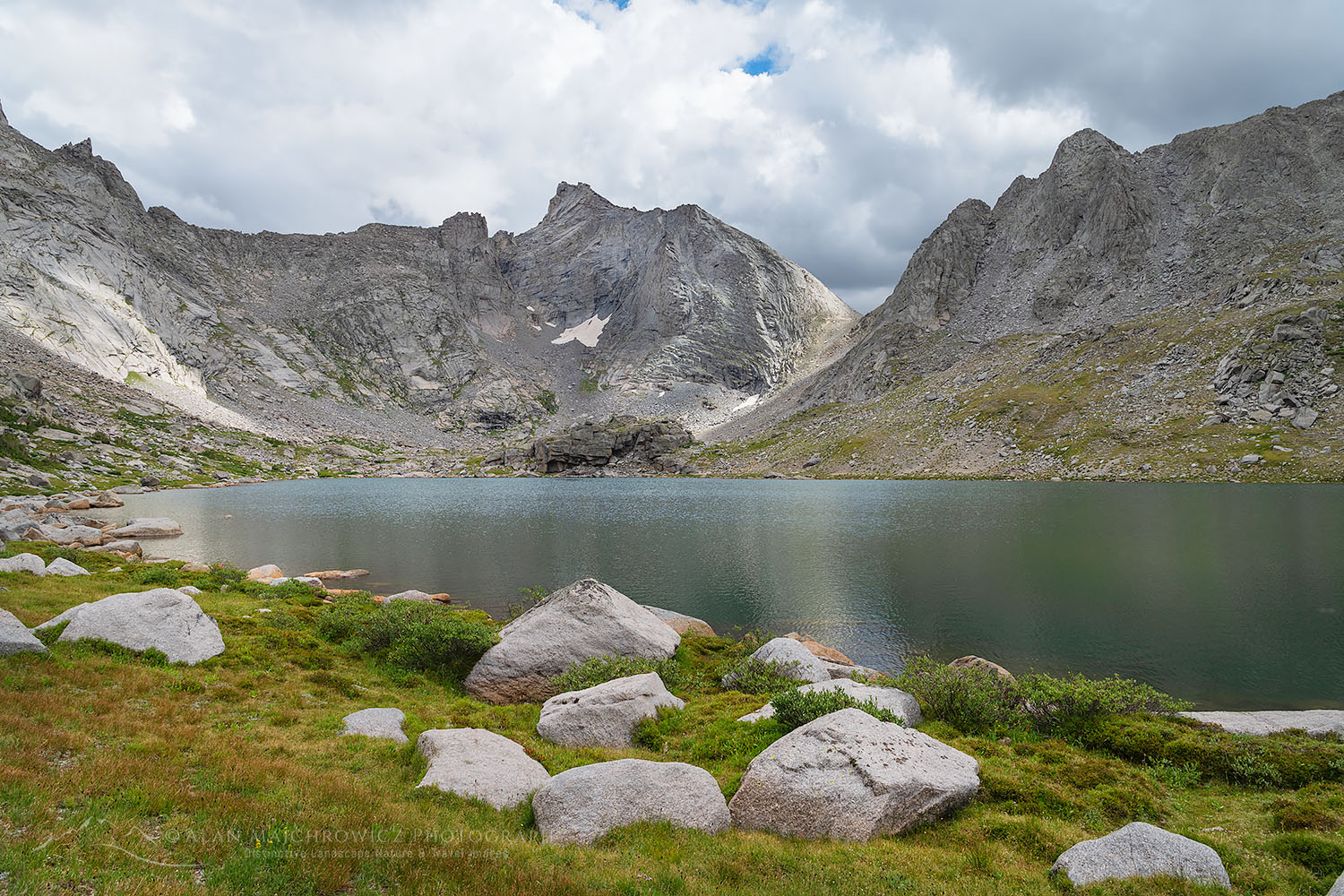
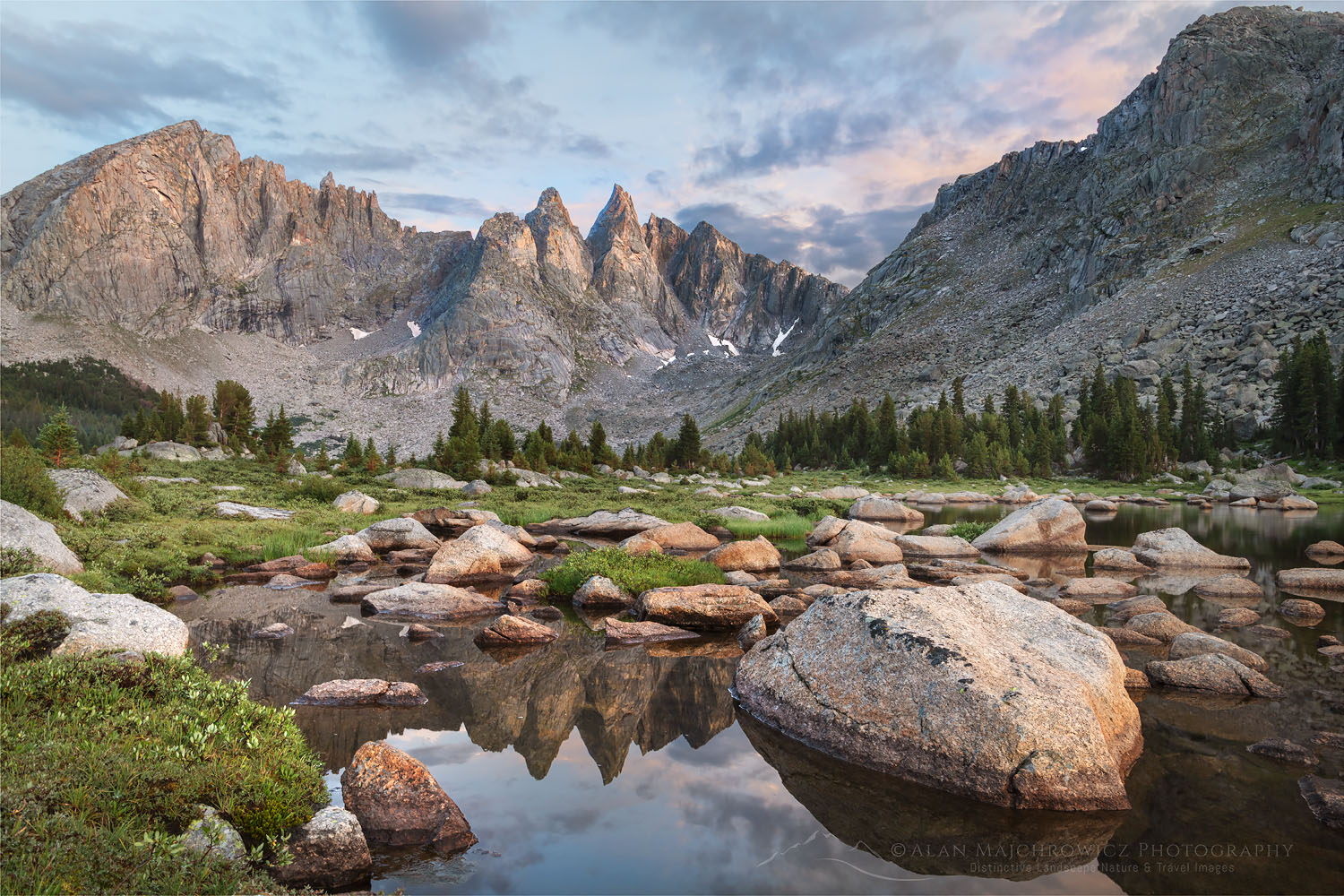
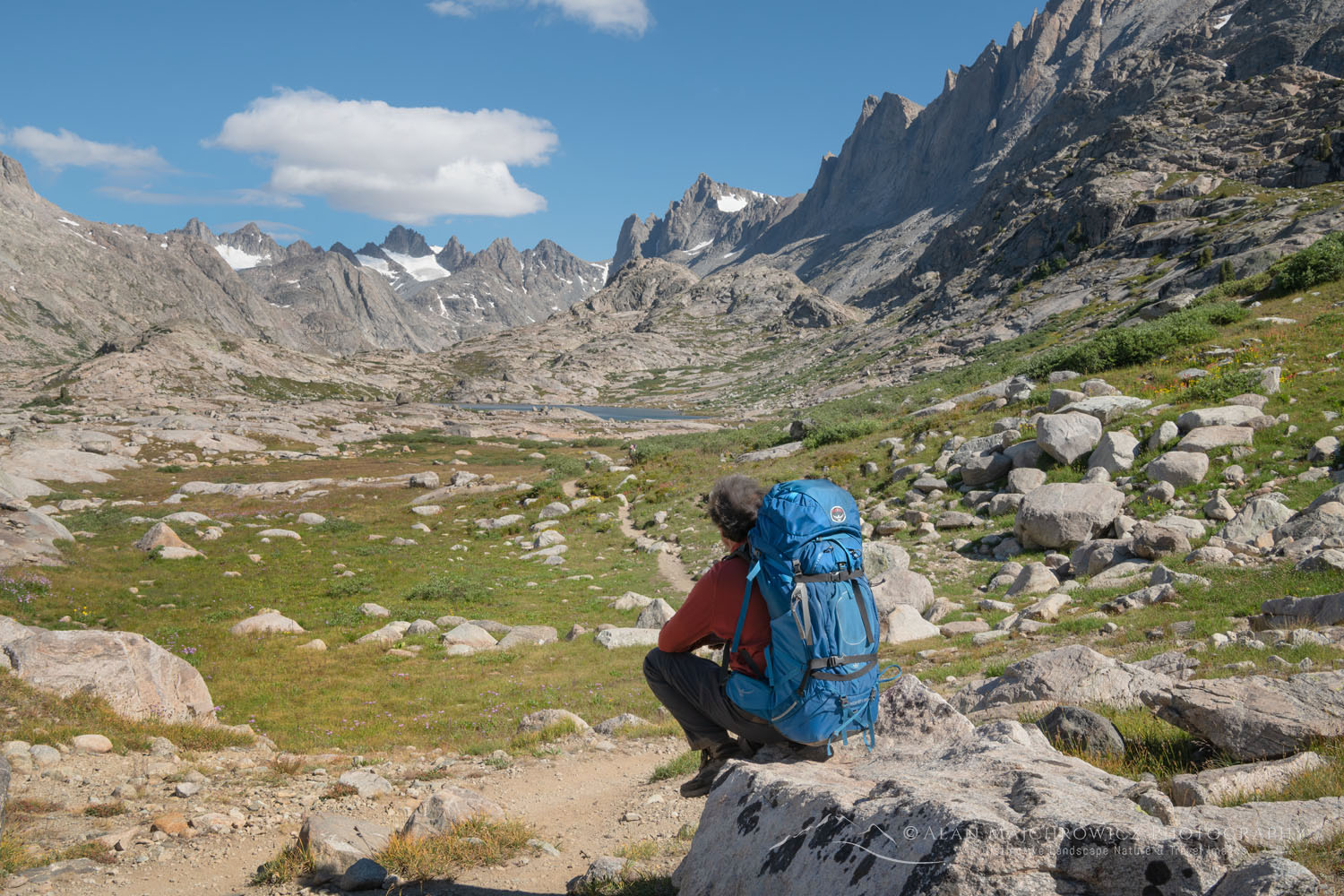
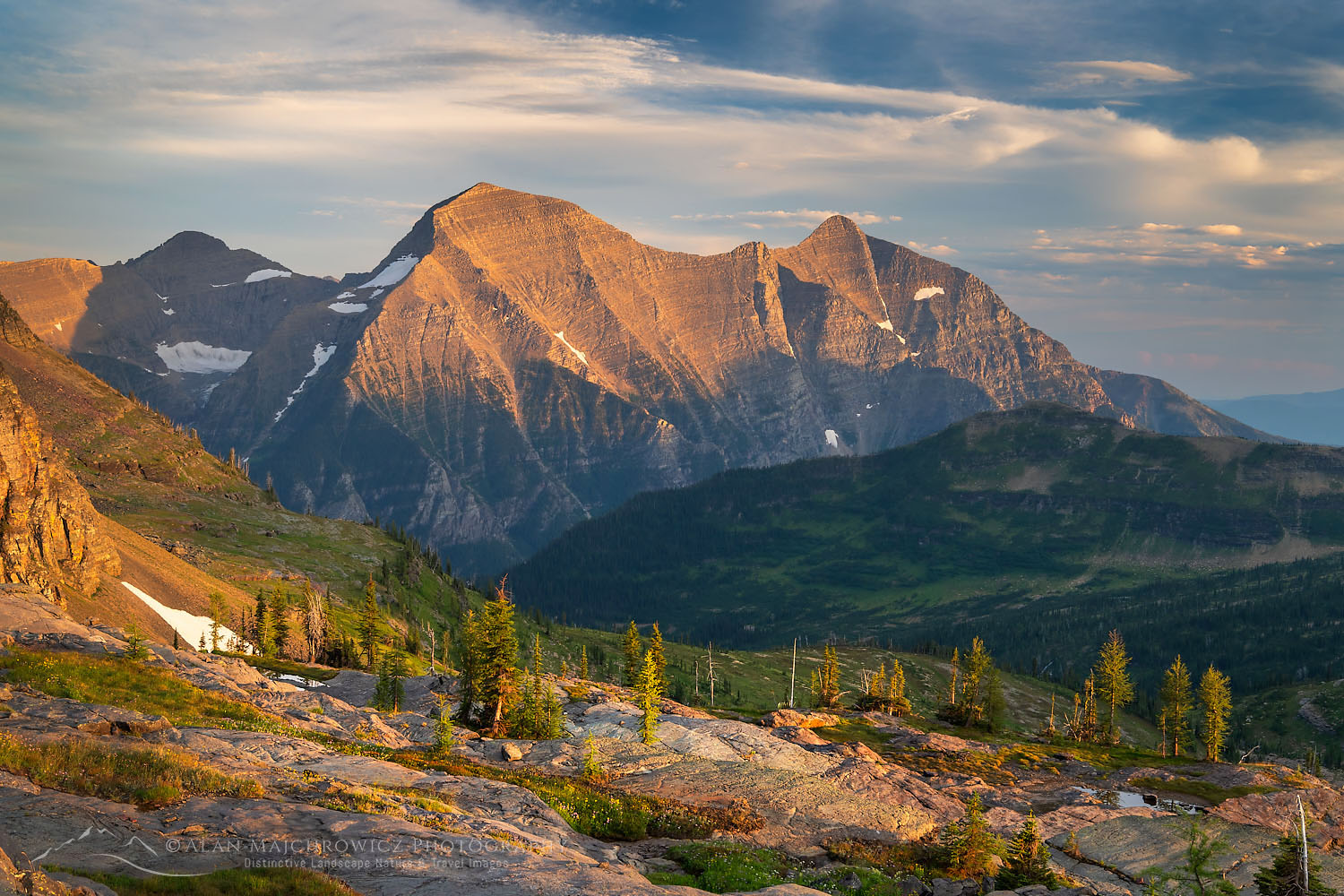
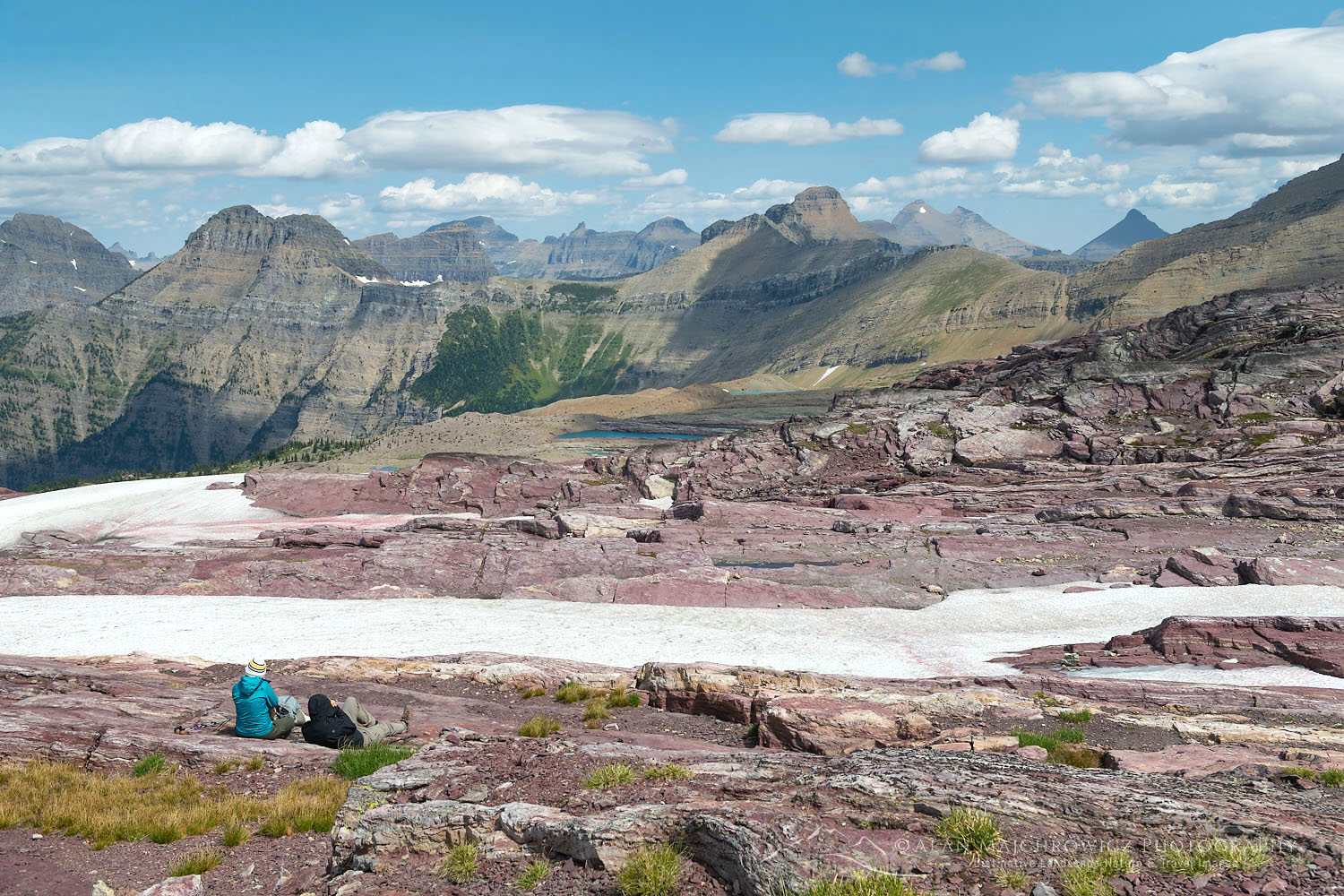
Upon reaching this pass, take in the majestic view you worked so hard to see. Spread out before you is the Limestone Lakes basin. Below are the sparkling lower lakes, and to the right is the turquoise glacial middle lake. Backing it all up are the multiple summits and glaciers of Russell Peak. Truly a breathtaking scene!
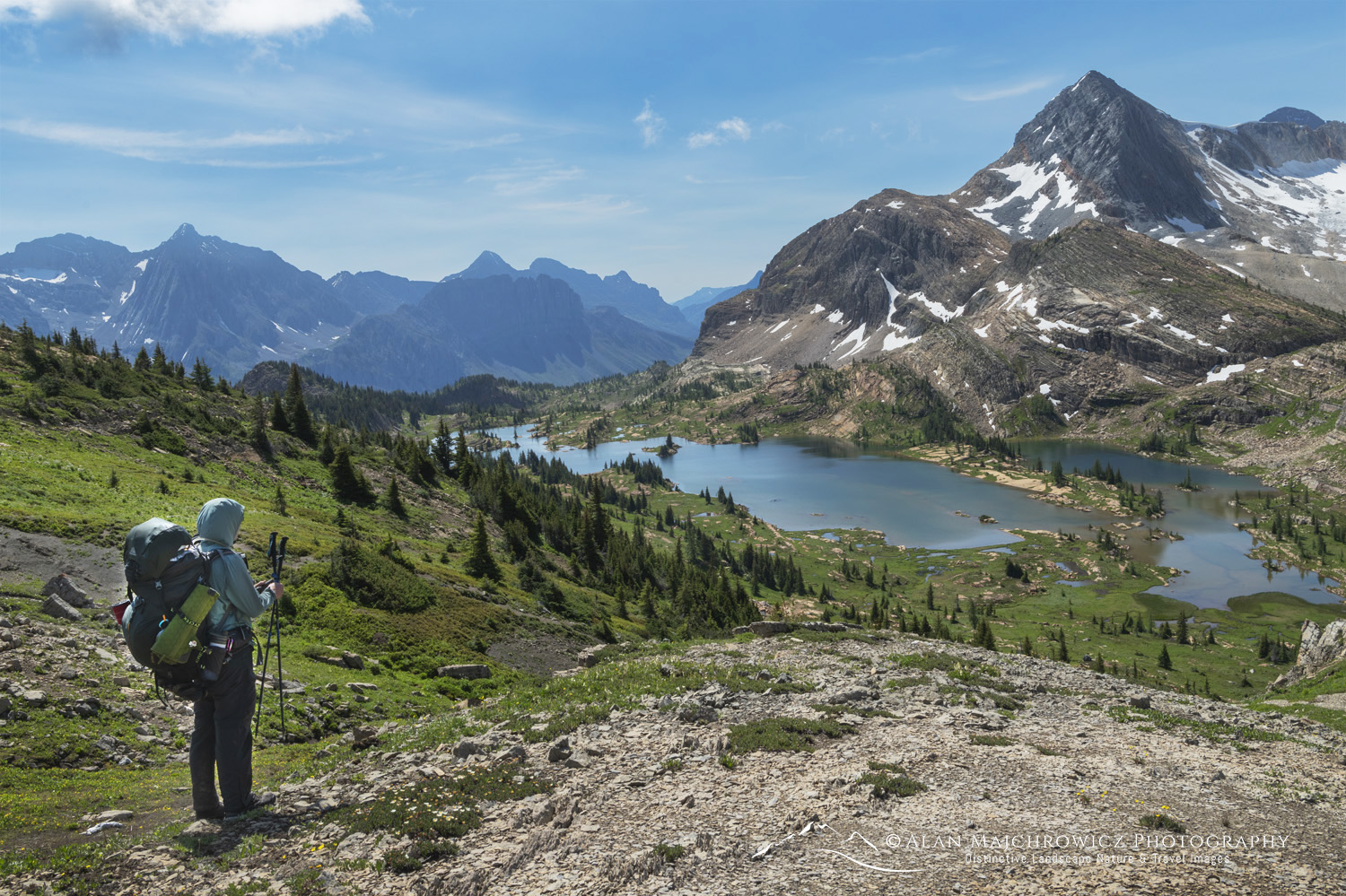
Backpacker overlooking Limestone Lakes Height of the Rockies Provincial Park British ColumbiaFirst view of Limestone Lakes #86390  Purchase

Limestone Lakes Base Camp

Choosing a base camp can be a difficult decision. There are no established camps anywhere in the area. You are pretty much free to camp wherever you like, except of course directly on fragile meadows. My choice was to find a spot high above the lakes. There you can enjoy the broad view directly from your tent. And exploration of all the lakes is within easy reach.

Note that while the lower lakes look very attractive, camping there among the meadowy wetlands will be more buggy. You’ll also need to climb back up to reach the other lakes. On the other hand, there may be very few water sources at camps above the lakes. This is especially true in late summer when snow patches are gone, and meadow creeks are dried up.
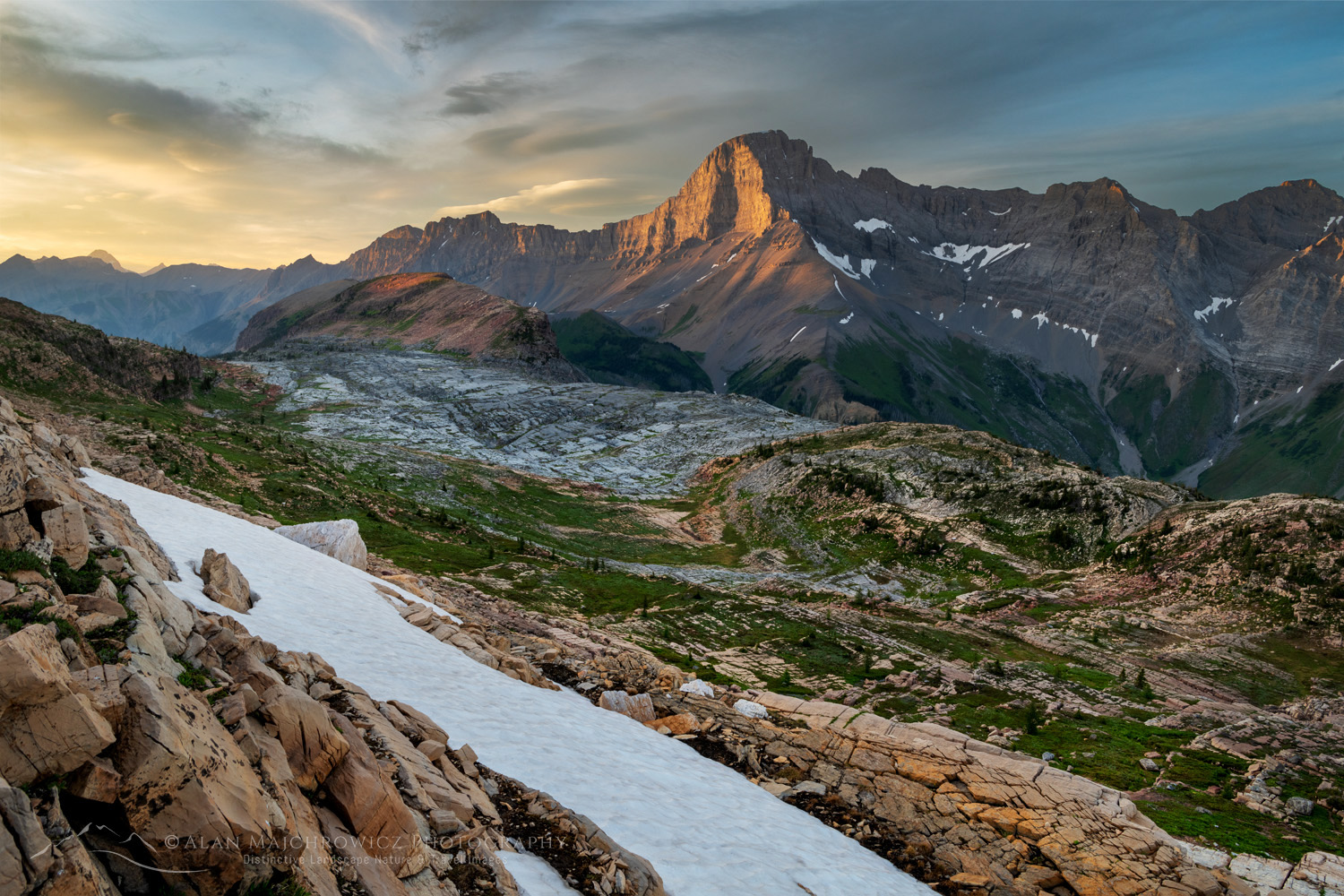
Mount Joffre seen from Limestone Lakes Basin in Height of the Rockies Provincial Park British ColumbiaJoffre Peak from Limestone Lakes #86453 Purchase

Exploring Limestone Lakes

From a higher camp, there are several areas to choose from. Being a photographer, lighting conditions always dictate my decisions. The entire area receives good golden-hour light in both morning and evening. However, the peaks east along the Divide are better in the evening hours.

My first exploration after setting up camp was hiking east and higher from the pass. There are a few more broken ledges to climb before the view opens up to a jaw-dropping view over fascinating karst terrain and the Continental Divide. Before you is a terrain of broken limestone terraces reminiscent of a Roman Coliseum. Looking northeast is the imposing bulk of Joffre Peak, beyond the route and nub you just crossed.
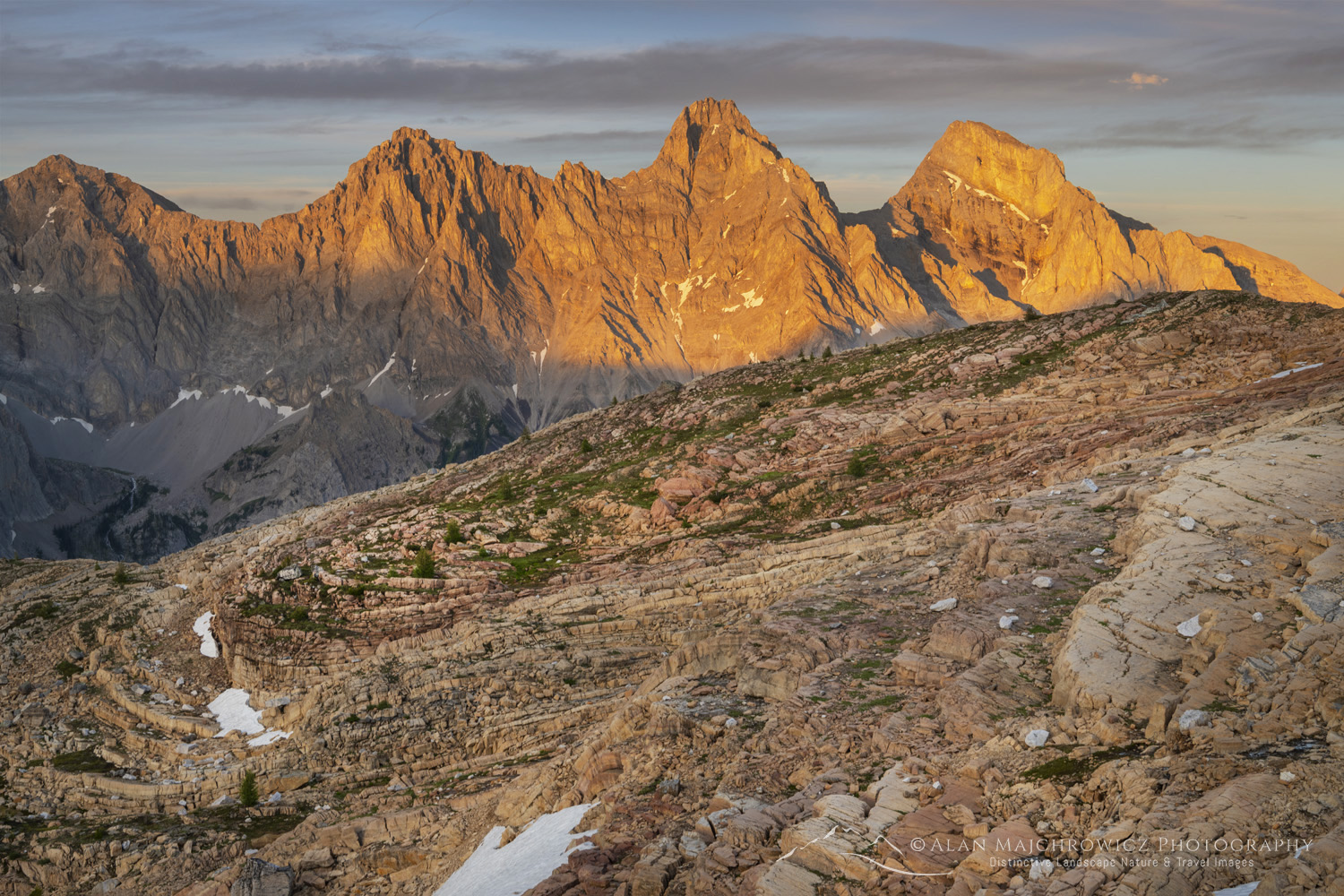
Karst formations in Limestone Lakes Basin Height of the Rockies Provincial Park“Coliseum” limestone ledges and the Continental Divide #86451 Purchase

If you have only one full day at the lakes, I suggest first heading down to the scenic turquoise middle lake, then continuing a little higher to the west lakes. The entire area is wide open, crossing up and down meadowy ledges. One of the joys of exploring here is discovering numerous ponds and small cascading creeks.
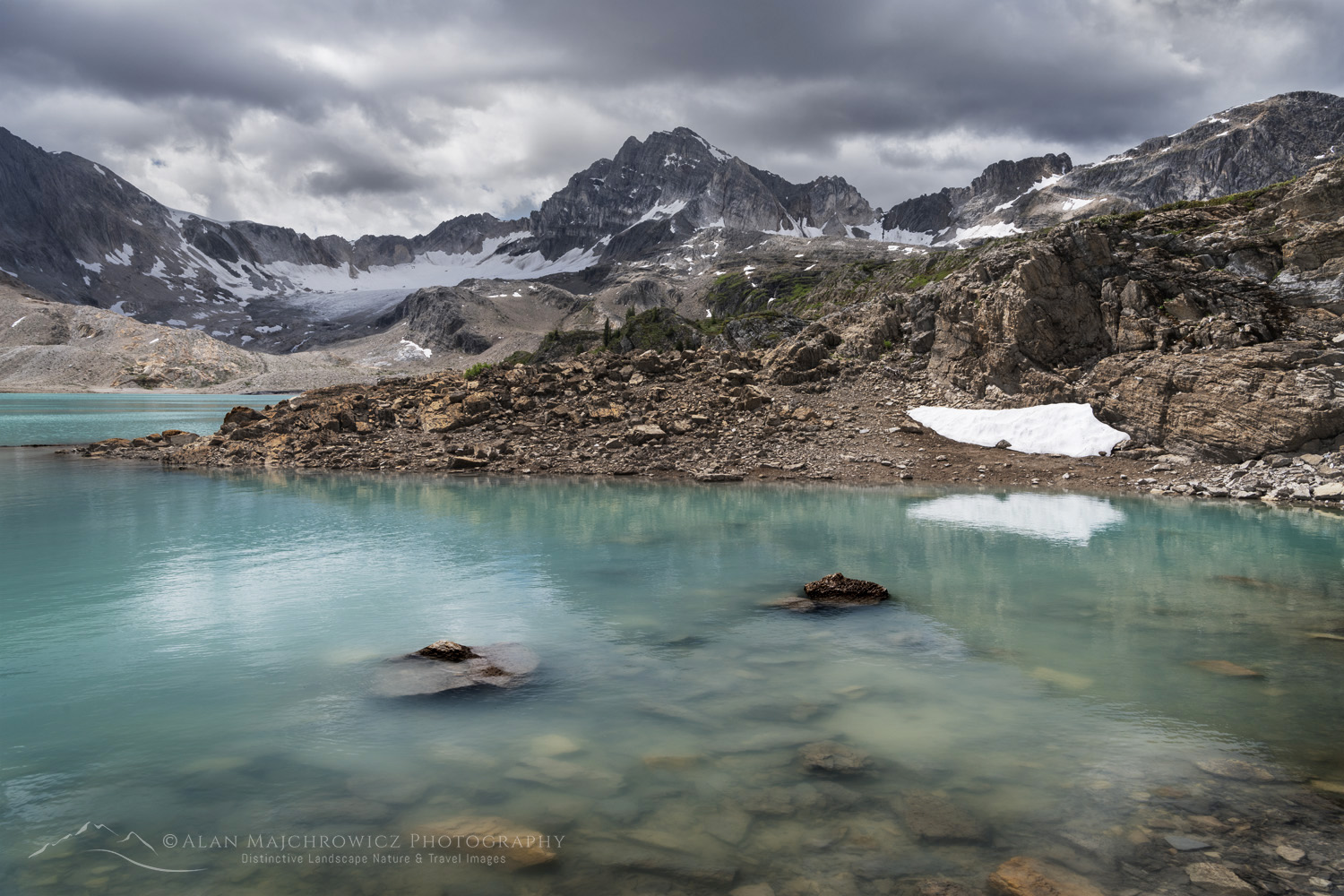
Middle Limestone Lake. Limestone Lakes Height of the Rockies Provincial Park British ColumbiaMiddle Limestone Lake #86503  Purchase

Small lake draining into a sinkhole in Limestone Lakes Basin Height of the Rockies Provincial ParkLake draining into sinkhole #46177 Purchase
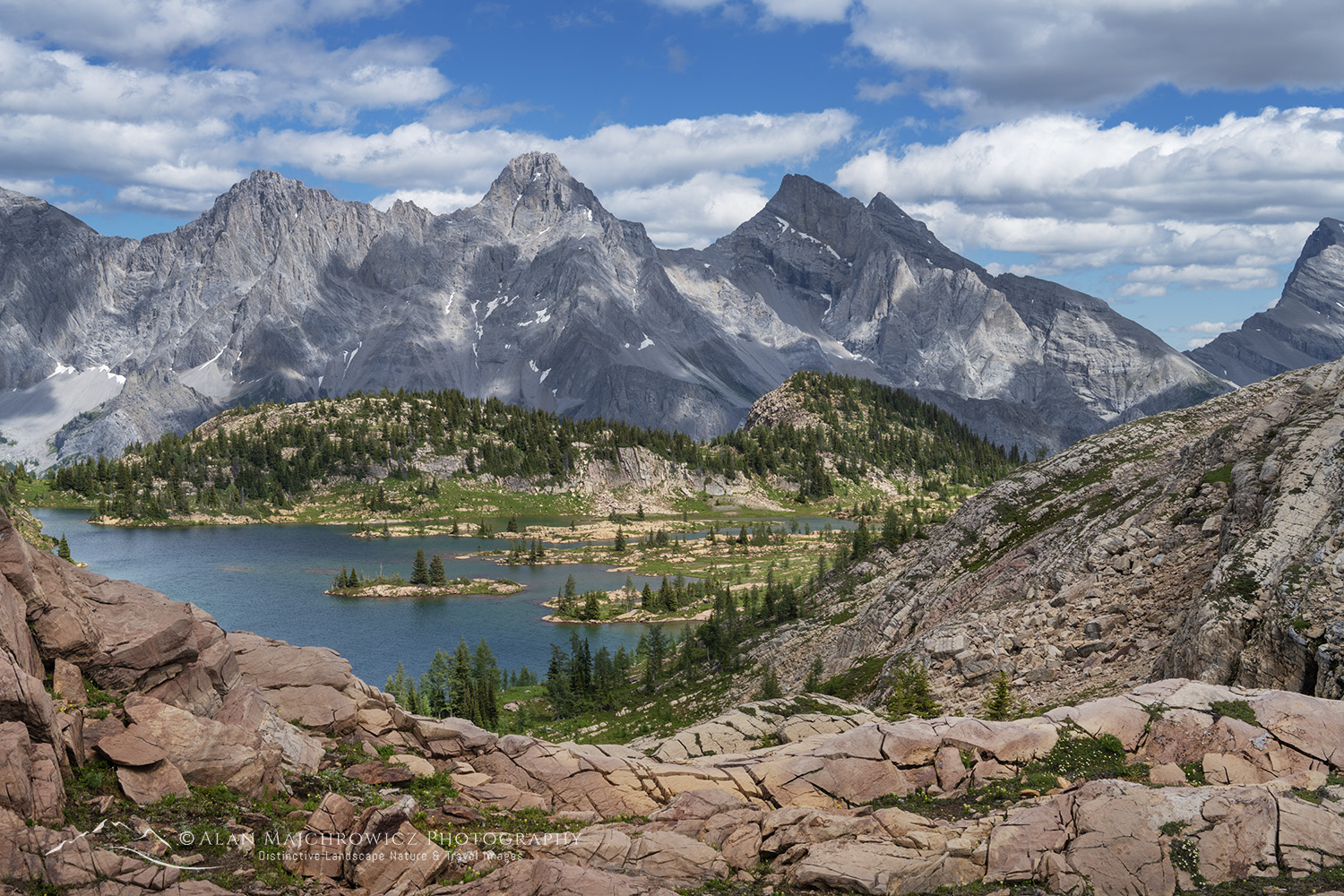
Lower Limestone Lakes. Limestone Lakes Basin. Height of the Rockies Provincial Park British ColumbiaLower Lakes and peaks of the Continental Divide #86545  Purchase

On my first visit, I came across a small lake in this area that was draining into a subterranean cavity. Was there an expansive glittering cave under my feet? Who knows? But on my second visit, I was unable to locate this oddity again.

Hiking east is a wonderful broad and open ridge separating the middle from the lower lakes. This ridge is very obvious from the first high view of the basin. It would also make an excellent base or second-day camp. If I ever go back again, I’ll definitely stay here a night or two! The view with the lower lakes backed by the peaks of the Divide is unforgettable.
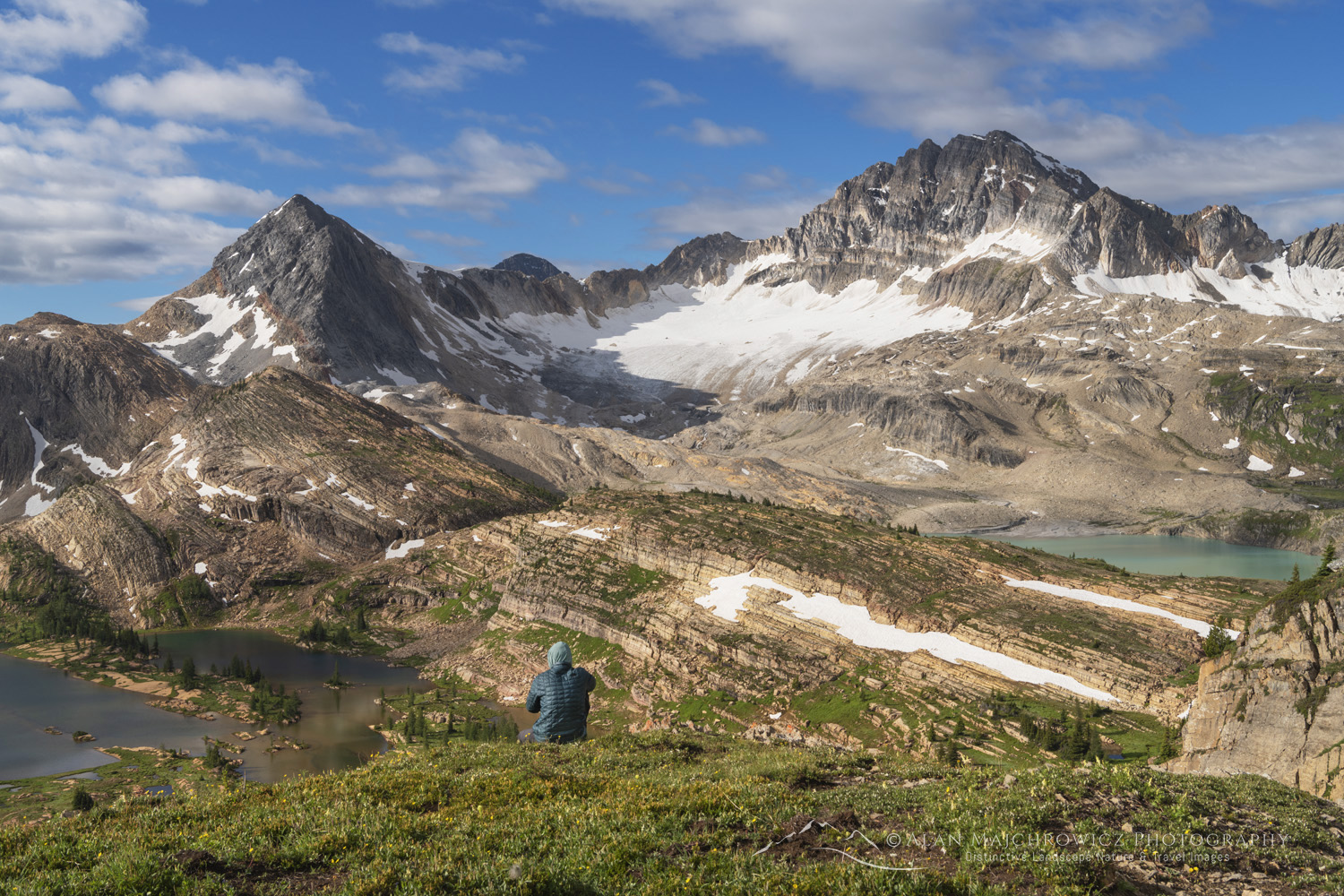
Hiker overlooking Limestone Lakes Basin in Height of the Rockies Provincial Park British ColumbiaTaking in the view of Limestone Lakes #86476  Purchase

The Return Route

After taking in the sights, it’s easy to see why I highly recommend staying at Limestone Lakes for at least two days. It’s such a shame to work so hard to get there and not have enough time to thoroughly enjoy it.

It is also easy to see why it is essential to have good weather throughout the trip. Recrossing all that open terrain with confusing ledges in rain or snow, with poor visibility, would be a nightmare. Not to mention the long, wet slog back down the valley trail.

Getting back to the spot where the alternate trail enters the forest can be frustrating. Even with careful route-finding and a GPS, the trail is elusive. When it is located, the trail still periodically disappears in the first mile or so. Eventually, the trail becomes more obvious and well-trod. However, it is always very rough with many frustrating ups and downs and numerous downed trees to cross.

At times, it may seem that going back the same way you came, over the nub, would have been easier. But then the path enters familiar supalpine forest, and the Joffere Creek trail junction appears.

It’s a bit of a bittersweet moment knowing that nearly all your hard work is nearly over, but the beauty of Limestone Lakes is now a memory.
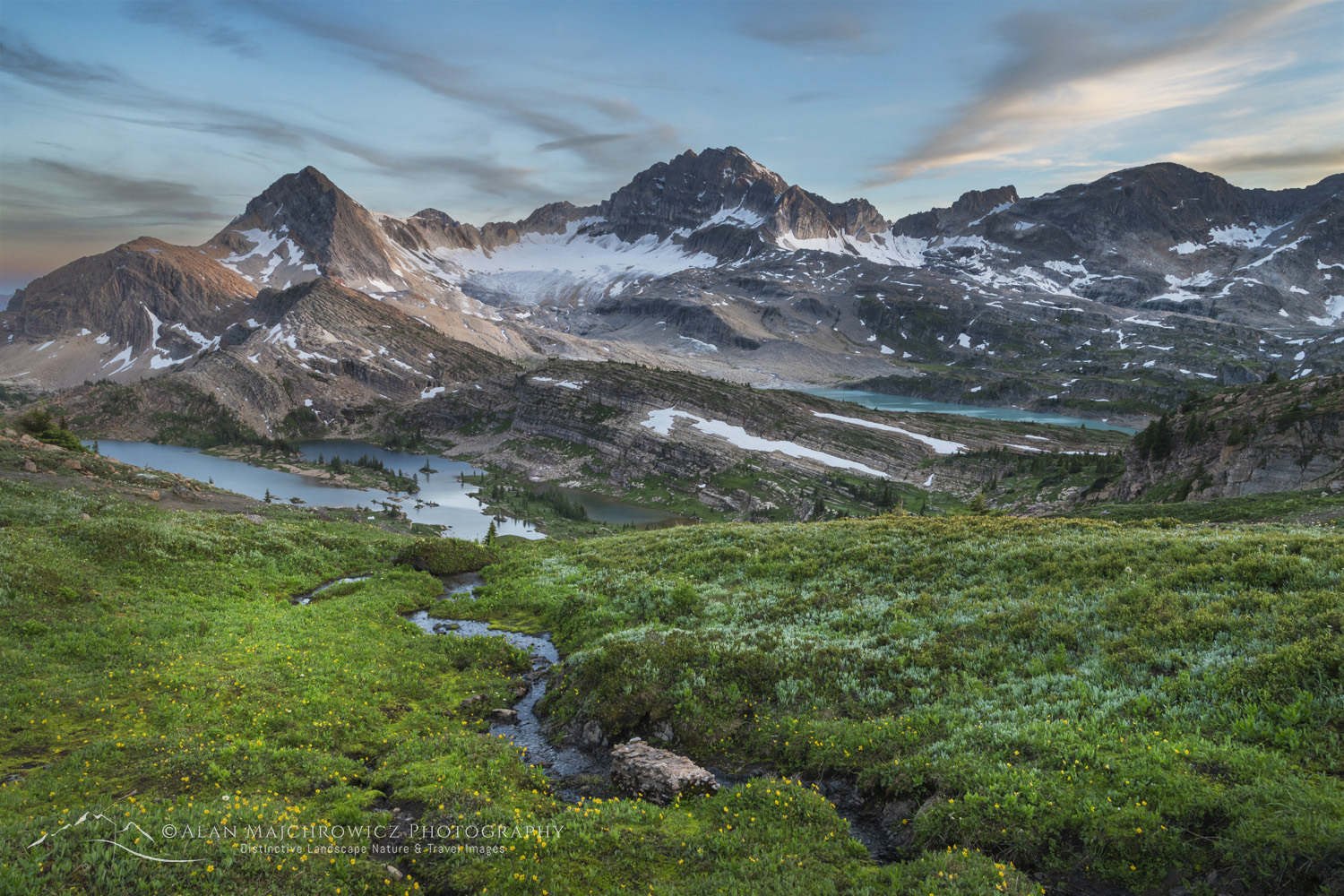
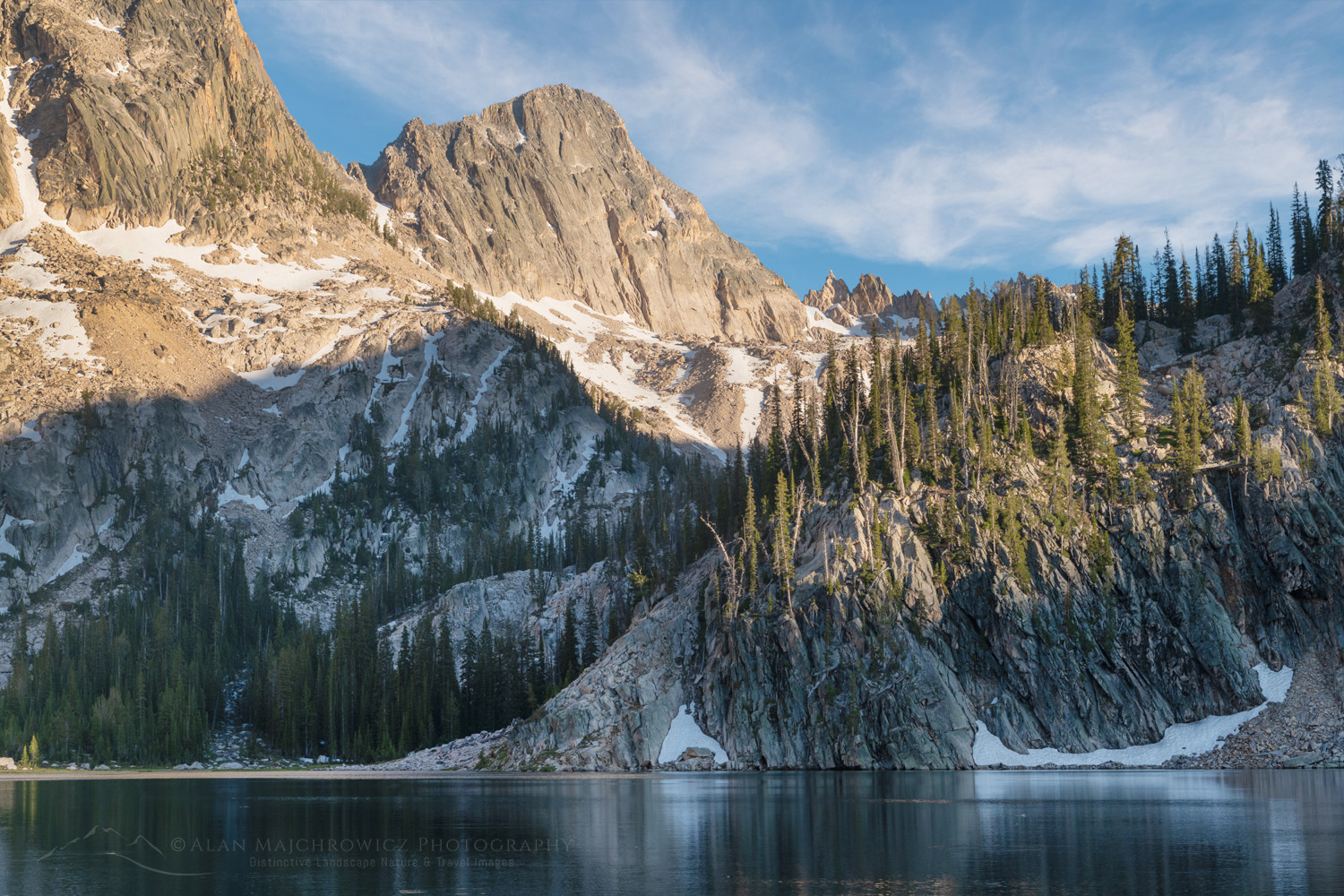
Limestone Lakes Basin. Height of the Rockies Provincial Park British ColumbiaParting view of Limestone Lakes and Russell Peak #86460  Purchase

If You Go to Limestone Lakes Height of the Rockies:

Trip length: 30 miles, round trip
Elevation Gain: 5600′
Permits: None needed as of 2026
Wildlife:
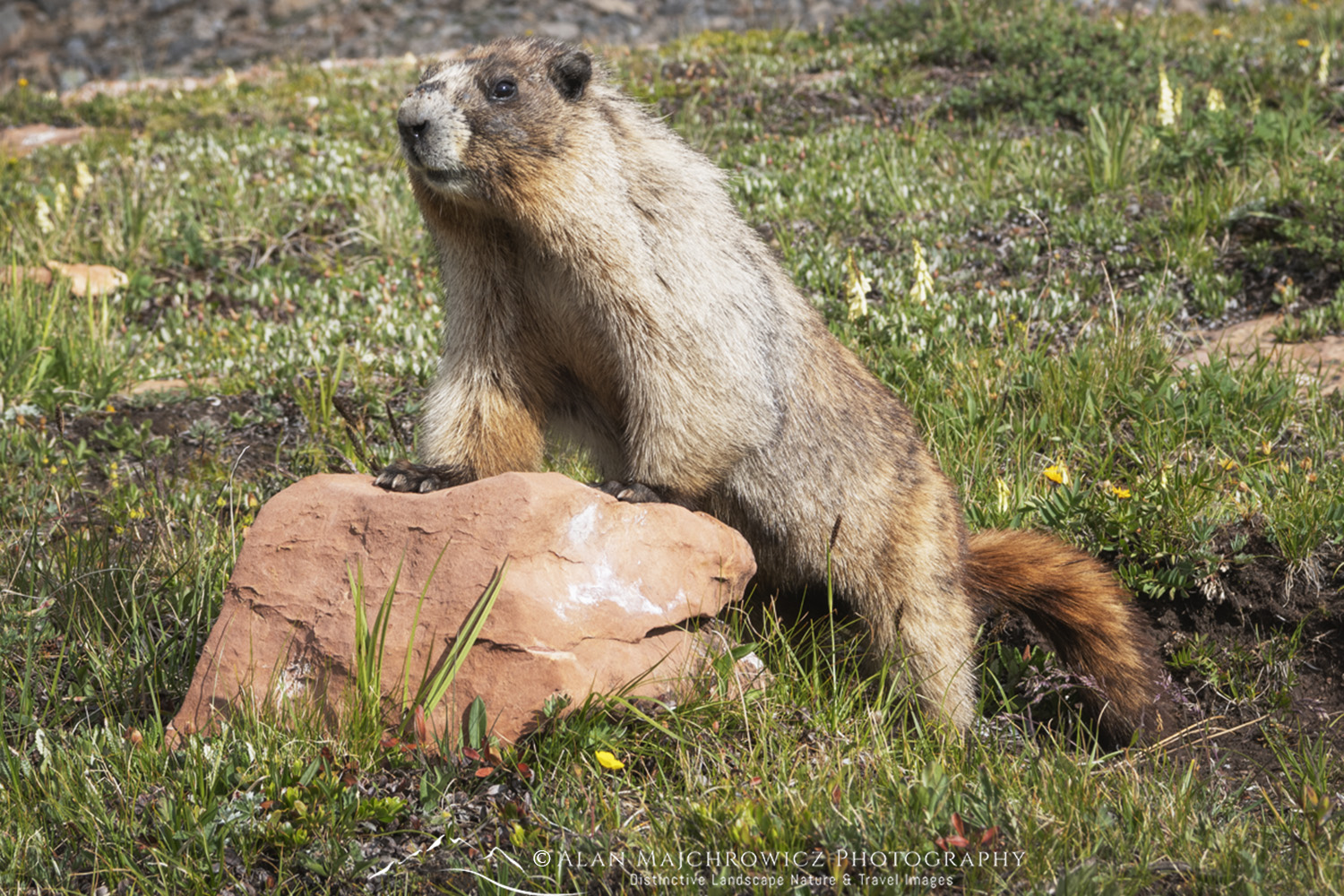
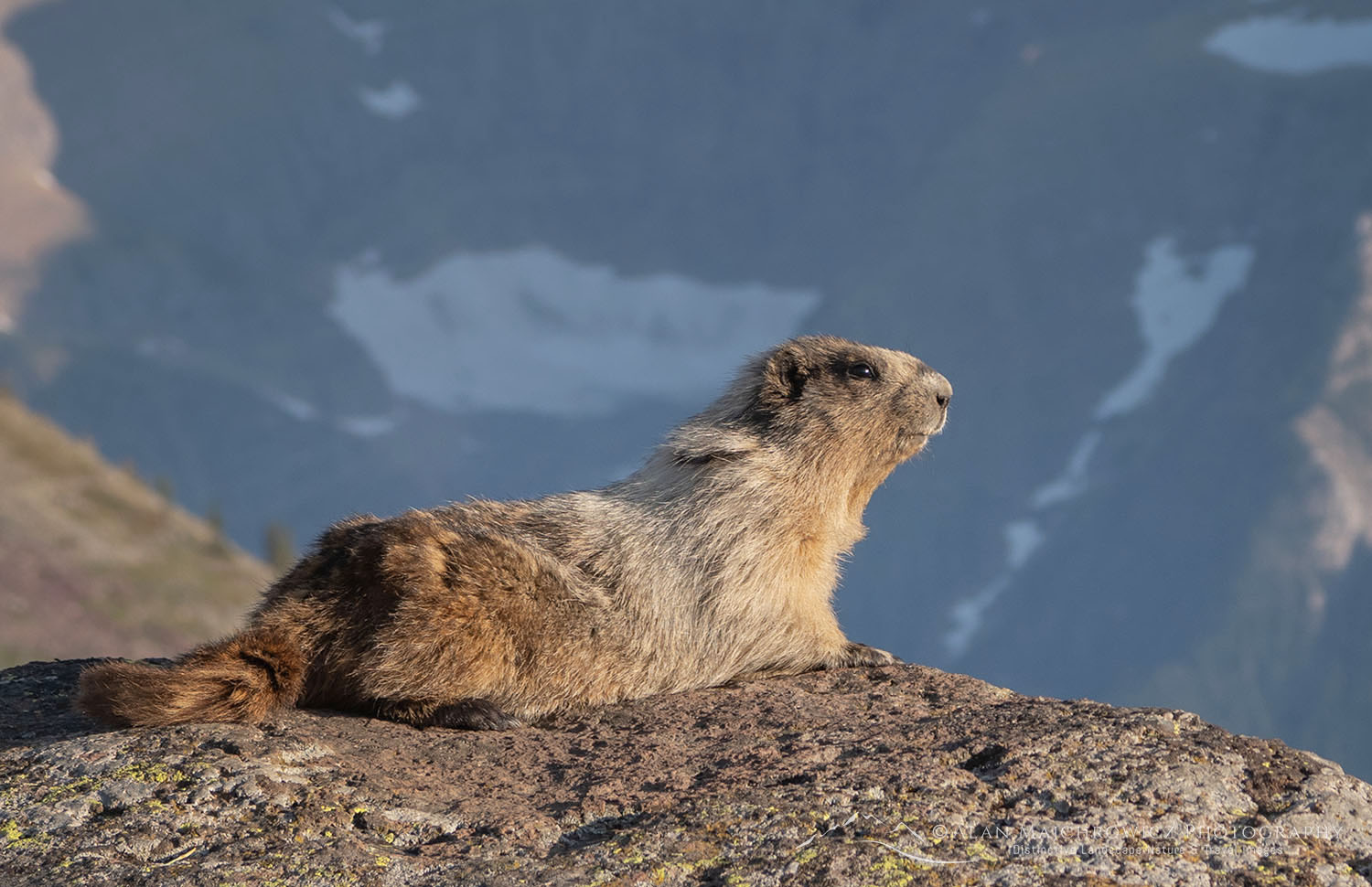
On both of my trips, I saw nothing more than marmots. However, that doesn’t mean bears are absent. The entire length of the Canadian Rockies is grizzly bear country. There are very few trees available to hang food bags in the lakes basin. Bear canisters are advised.

References Height of the Rockies Provincial Park
Mat Gunn’s excellent guidebook: Hikes Around Invermere & the Columbia River Valley.

Read:
Limestone Lakes Height of the Rockies Provincial Park Part 1

For tips on preparing for a backpacking and or photography trip to Limestone Lakes, check out these posts:

Backpacking Photography Gear Tips

Backpacking Photography Tips

Leave No Trace

Please, Please, Please!  Don’t plan a trip to this or any other national park, monument, or wilderness area unless you are prepared to follow Leave No Trace guidelines (LNT). National parks and wilderness areas worldwide are under incredible pressure from the growing number of visitors. So, please do your part to help preserve these precious areas for future generations!

Please visit the Leave No Trace Center for Outdoor Ethics to learn more about LNT’s principles. Your children and grandchildren will thank you!

LEAVE NO TRACE SEVEN PRINCIPLES

1. Plan and Prepare
2. Travel and Camp on Durable Surfaces
3. Dispose of Waste Properly
4. Leave What You Find
5. Minimize Campfire Impacts
6. Respect Wildlife
7. Be Considerate of Other Visitors
© Leave No Trace: www.LNT.org

Learn about how to protect the places we love to photograph
Visit the Nature First Website

Nature First the alliance for responsible nature photography

All photos appearing in this post are available for Commercial Licensing and Fine Art Prints. Click on any image to purchase, or contact me for more info!
Limestone Lakes Height of the Rockies Provincial Park: Part 2
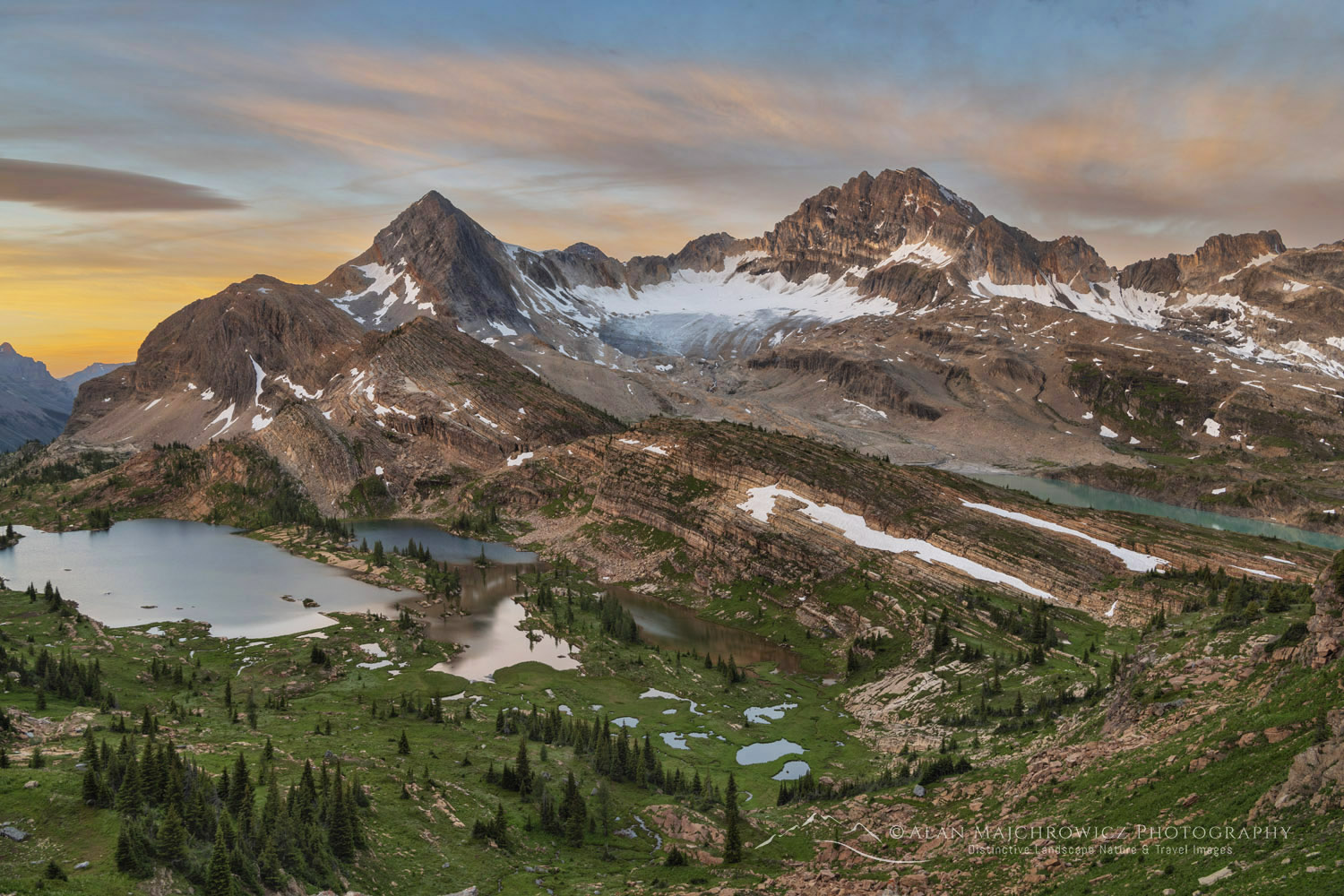
Limestone Lakes basin, Height of the Rockies Provincial Park, British Columbia #86593

Limestone Lakes Height of the Rockies Provincial Park Part 1

Evening light over Russel Peak and Limestone Lakes in Height of the Rockies Provincial Park British Columbia Limestone LakesRussell Peak and Limestone Lakes  #86593  Purchase

Limestone Lakes Height of the Rockies Provincial Park

Limestone Lakes, in Height of the Rockies Provincial Park, is a dream destination for backpackers and photographers who really want to get away from it all. In today’s era of advance reservations, lottery-style permits, and crowds, this location offers a taste of wilderness freedoms rarely seen anymore. Here, in the middle of the Canadian Rockies, you can experience a level of solitude amid grand landscapes seldom found outside the most remote locations on Earth.

Height of the Rockies Provincial Park is a small, little-known park in the Canadian Rockies. It is located on the west side of the continental divide, just southwest of Mount Assiniboine. There are a couple of reasons for the park being so little-known. The first is its remote location. The main access to the park is an unpaved road about 40 miles in length. Although the road is generally in good shape for ordinary vehicles, it is a very long and dusty drive. Another reason is the park’s relatively few maintained trails. These trails are mostly user-maintained and are often little more than routes.  Reaching the fabulous alpine areas requires lots of work and determination. Limestone Lakes is, perhaps, the main destination in Height of the Rockies Provincial Park, which is accessed by one of those trails.

Evening light over Russel Peak and Limestone Lakes in Height of the Rockies Provincial Park British Columbia Limestone LakesLower Limestone Lakes and Russell Peak #86447 Purchase

Limestone Lakes Difficulty Level

*Before I go any further, I must impress the fact that a trip to Limestone Lakes is definitely not for novices to backpacking or wilderness travel.  However, those who are accustomed to cross-country wilderness travel and mountaineering will find the trip relatively easy. From the first step at the trailhead, the entire trip is an arduous undertaking. About half of the distance is on a long, steep, brushy, and poorly maintained trail. In some long sections, it is merely a boot-beaten route. The second half is an unmarked cross-country route across difficult alpine terrain.

A reasonable trip to Limestone Lakes would require at least three days. Given that, to truly explore and enjoy this magnificent location would require four to six days.

To this date, I have made two wonderfully memorable trips to Limestone Lakes. The first trip was solo, and the second was to guide a fellow wilderness lover. Through both trips, I have learned a few lessons that I can pass on to others wishing to visit this area.

Height of the Rockies Provincial Park View north to the Royal Group from Sylvan Pass

When to Visit Limestone Lakes

Early July through mid-September are optimum times to visit Limestone Lakes. By early July, the alpine areas are generally snow-free, but creek crossings can still be challenging. September will see the end of flying insects, but there is an increasing risk of early-season snow.

I won’t get into specific details regarding elevations, distances, or GPS coordinates. I don’t use a GPS or other wilderness travel apps, although most will find tham handy. I’ve always relied on plain paper maps and common sense wilderness travel skills, acquired over many years of hiking and backpacking. However, readers will get a good general overview of what to expect.

For more details, please refer to the Height of the Rockies Provincial Park website and Mat Gunn’s excellent guidebook: Hikes Around Invermere & the Columbia River Valley.

Hoary Marmot (Marmota caligata) Height of the Rockies Provincial Park British ColumbiaA local resident of Limestone Lakes #86491 

Pro Tip:  Do not attempt this trip in poor weather! During my most recent trip, it rained for the first two days, and the trail to Sylvan Pass was a nightmare. The hip-high brush was dripping wet, and within minutes, we were soaked to the skin. After miles of this misery, we arrived at a campsite below Sylvan Pass, nearly hypothermic.

In addition, by the time you reach the lakes basin, you are a long way from your vehicle in a vast trail-less alpine arena. Limestone Lakes is not an enviable place to be stuck in case of poor weather with limited visibility! Plan very carefully and be prepared! And don’t forget that in case of bad weather there is nor shame in bailing!

View south from Sylvan Pass, Height of the Rockies Provincial Park British Columbia CanadaLooking south from Sylvan Pass

Joffre Creek Trail

The trailhead is located at the end of the long drive on the Palliser River Road. Here is where the fun starts. The trailhead kiosk sports an enticing photo of the beautiful Limestone Lakes Basin. It also states the trail itself begins a short way up the road on the left, amidst an old burn. It’s very easy to miss this poorly marked spot. And, on my second visit, we couldn’t find it and opted to continue where the trail started on my previous trip. This then entailed a bit of bushwhacking and route-finding.

Whether you find the true trail or not, your second obstacle, and possibly a deal-breaker for some, is crossing Joffre Creek. There once was a sturdy bridge crossing the creek. But nature has a way of obliterating man’s designs. Where there once was a pretty creek running through a dense forest, there now is a wide expanse of downed trees and channels choked with rocks and boulders. Needless to say, there is no longer a bridge.  Unless a log jam is found, travellers will need to ford a swift and often deep creek over hidden slippery rocks.

Once on the other side of Joffre Creek, you’ll need to locate the beginning of the true trail. There may be cairns marking it, but if you cross up or downstream, the trail can be difficult to find. It is imperative to travel southeast near the creek to locate it. The start of the Palliser River Trail is also here, so if you start hiking a trail in a northerly direction, you’re on the wrong one.

After a short level stretch through the forest, the trail begins climbing up to the pass in earnest. For the next seven miles, it continues relentlessly up to Sylvan Pass. Along the way, several long, very steep sections are encountered, another major creek crossing, long, marshy boot-soaking stretches, and lots of thick brush where the trail can’t even be seen.

Since this trail receives only a minimum of maintenance, hikers will also encounter plenty of downed trees and other obstacles to negotiate.

It is also important to note that the only suitable campsite before Sylvan Pass is at about the halfway mark. If you get a late start, this would be the place to stop. It is right on the trail just before a long marshy stretch. If you decide to base-camp here and day-hike to Limestone Lakes, you’re still in for a long, arduous day, with little opportunity to enjoy the lakes basin.

Joffre Peak andSylvan Pass, Height of the Rockies Provincial Park, British Columbia, CanadaJoffre Peak and Sylvan Pass, bottom center

Sylvan Pass and Alternate Route

After about 6 miles of hiking, hikers will reach a trail junction where an important decision must be made. At this junction, you are just entering the subalpine zone, with trees beginning to thin out. Here, you can either continue another mile or so on the trail to Sylvan Pass, or take the right-hand junction to an alternate route to Limestone Lakes.

The first option to Sylvan Pass is my personal recommendation. It involves more elevation gain and route-finding, but it is all above timberline and definitely more scenic. It also offers an excellent view of the route across the karst plateau, which you must cross to reach the lakes. On the downside, after climbing the nub above the pass, hikers will need to descend considerably and negotiate some moderate ledges and cliffs to enter the extensive karst basin.

On the other hand, the alternate route at the junction is a bit more direct, but it involves lots of ups and downs. In addition, it is a very rough trail, nearly always in the forest, and, in addition, affords no views. I recommend taking the Sylvan Pass route on the way in and the alternate route on the way out.

Continuing along the trail to Sylvan Pass, the terrain finally opens up into a pleasant sub-alpine meadow. There are very few established sites to pitch a tent, therefore choose a spot in the trees away from the fragile meadows. From here, Sylvan Pass is visible, about one-half mile further up from the meadows.

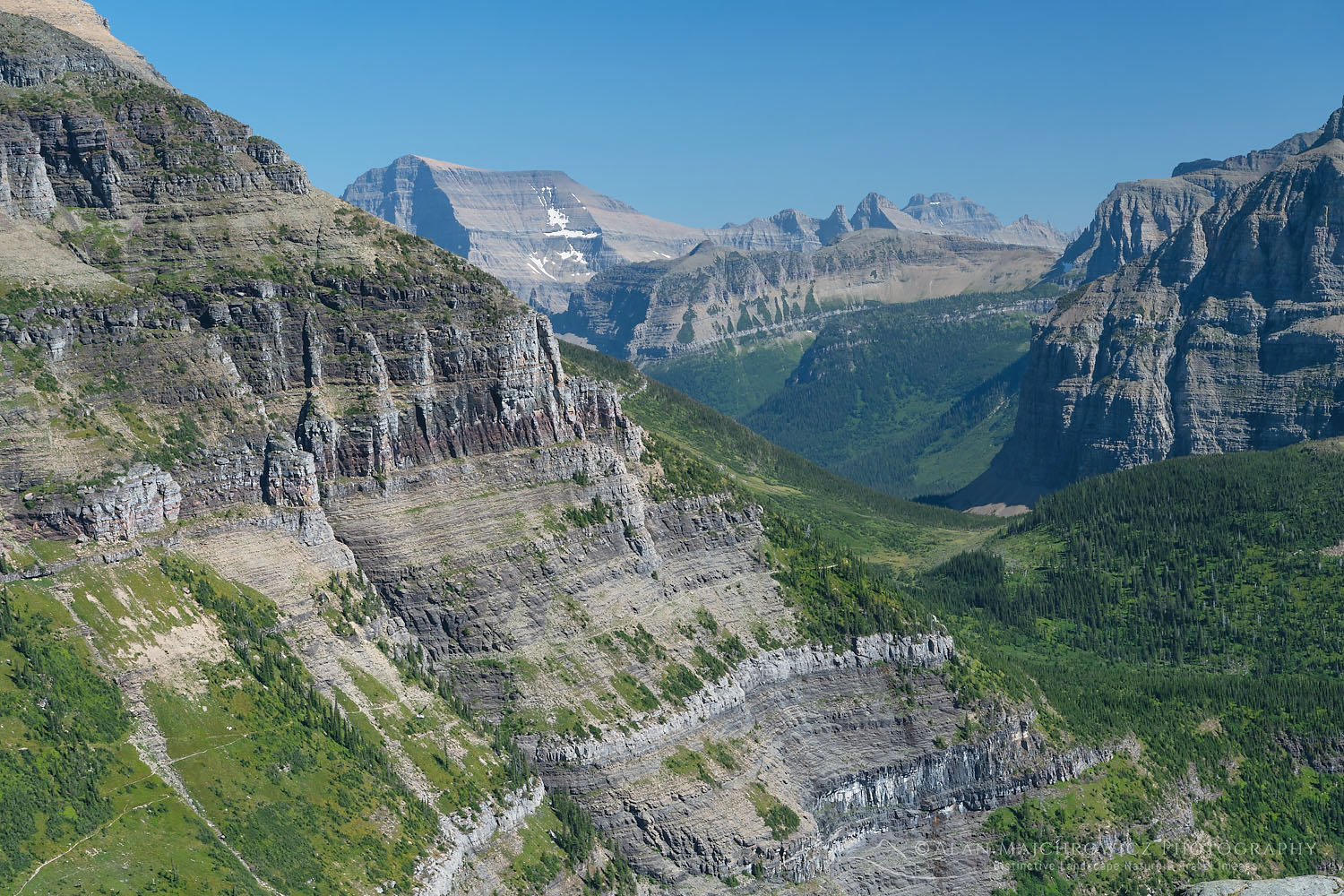
 Height of the Rockies Provincial Park, British Columbia, Canada8300′ nub seen from Sylvan Pass

Sylvan Pass to the Karst Plateau

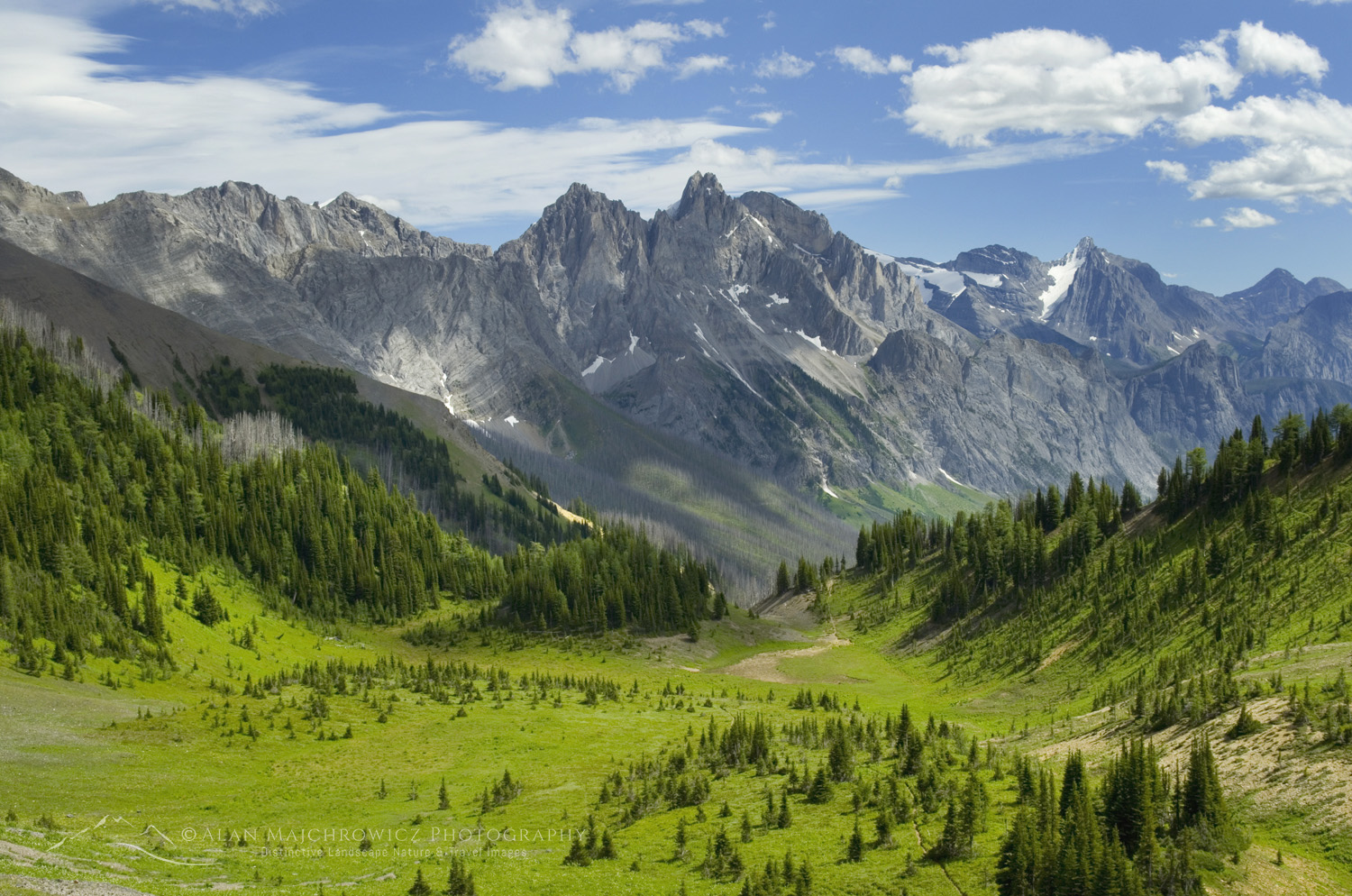
Upon reaching Sylvan Pass, you are rewarded with a beautiful vista of rugged mountains, glaciers, and valleys. From here, your route is all cross-country route-finding, except for a few, although possibly misleading cairns.

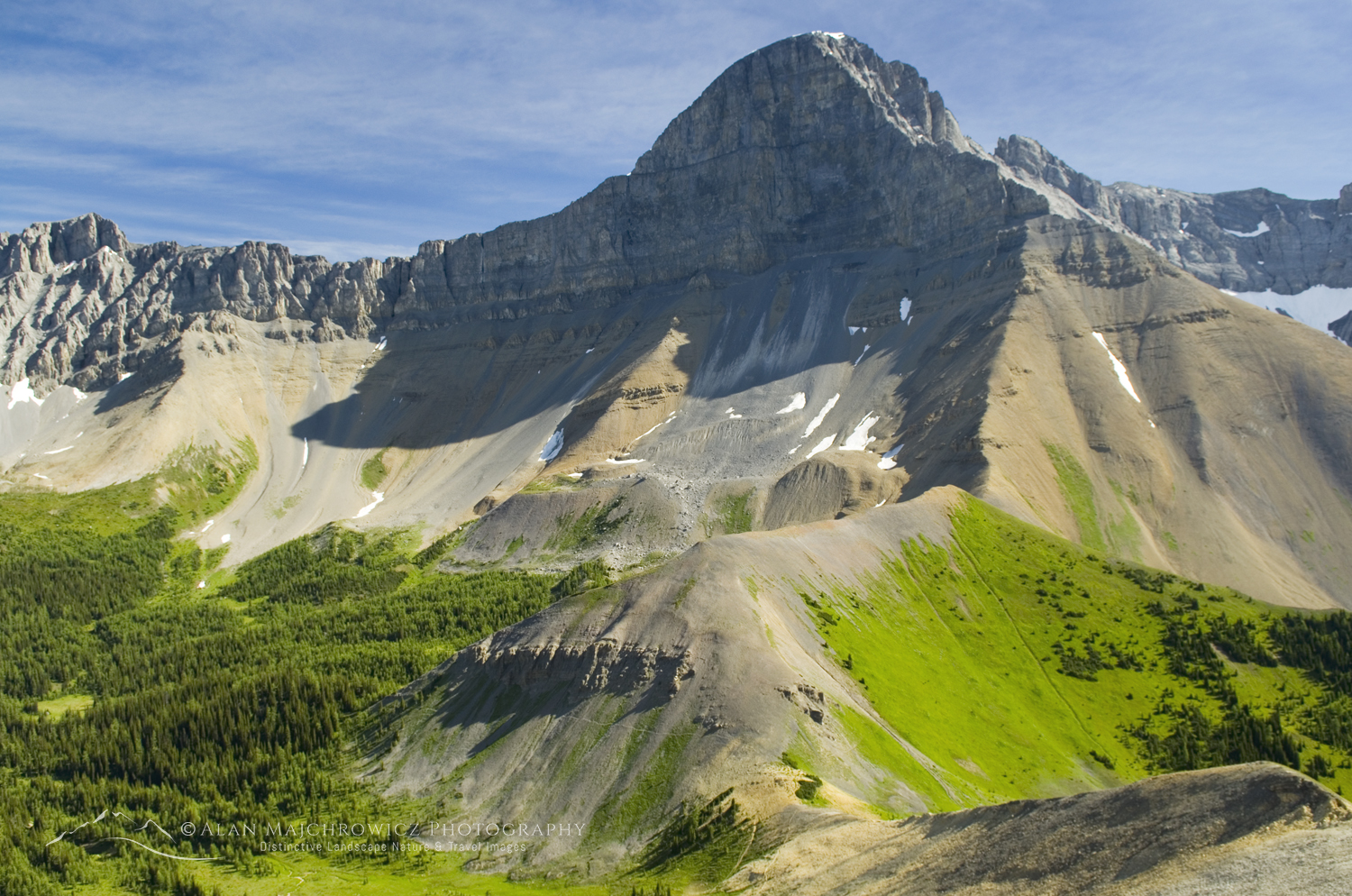
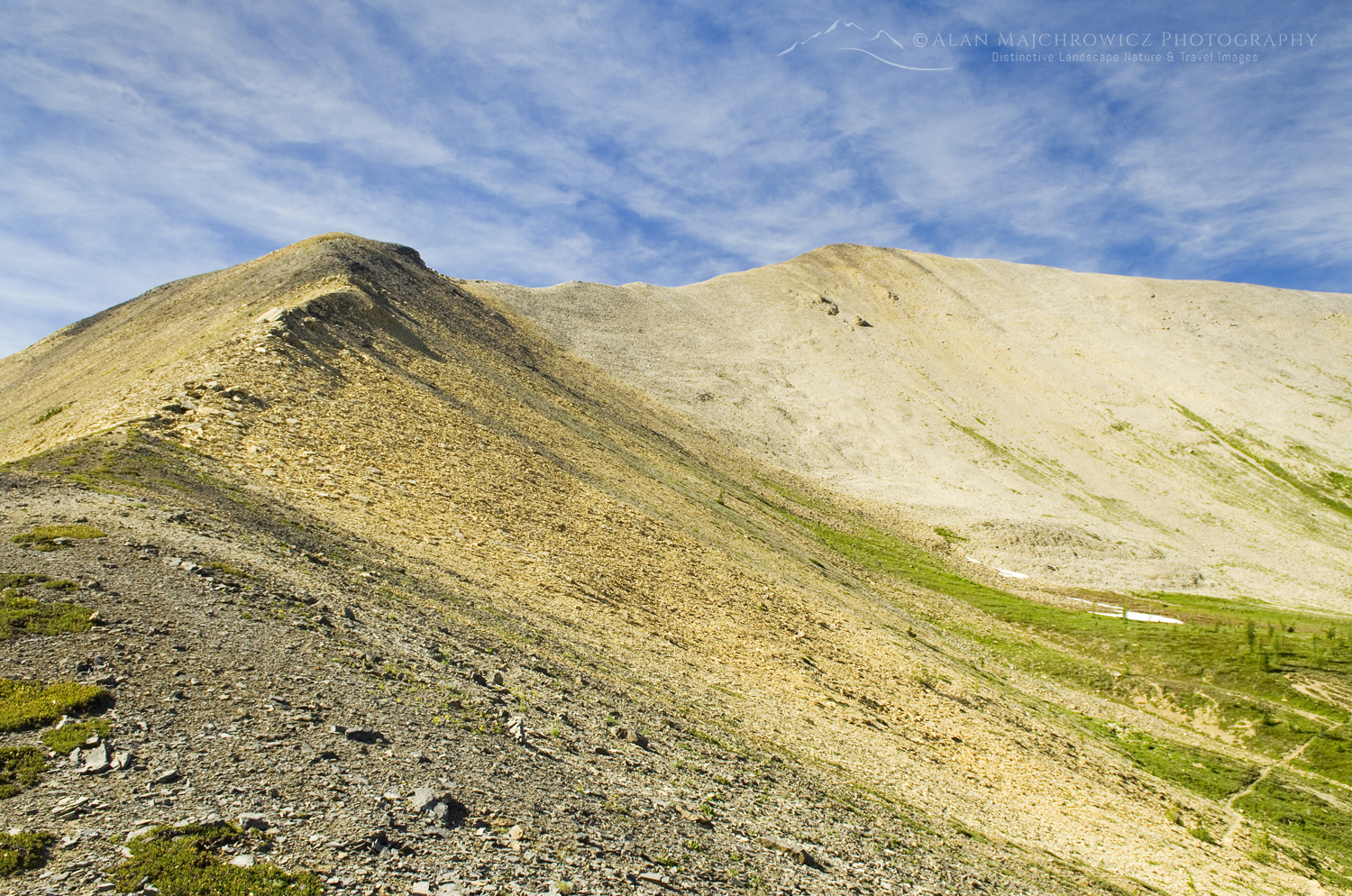
After a brief rest at the pass, hike west up steep, loose talus to the summit of the 8300′ nub. Catch your breath and take in your first views to the southwest of Russell Peak and Limestone Lakes Basin. From here, you have approximately five miles of pure alpine wilderness to negotiate.

Continue to the lakes in:
Limestone Lakes Height of the Rockies Provincial Park Part 2
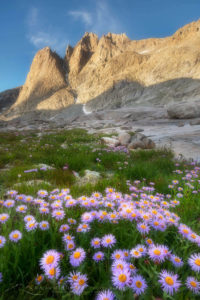
 Height of the Rockies Provincial Park, British Columbia, Canada Limestone LakesFirst view of Russell Peak (far left in distance) from the nub

Limestone Lakes Basic Info:

Trip length: 30 miles, round trip
Elevation Gain: 5600′
Permits: None needed as of 2026
Wildlife:
On both of my trips, I saw nothing more than marmots. Although this may be true, it doesn’t mean bears are absent. The entire length of the Canadian Rockies is grizzly bear country. There are very few trees available to hang food bags in the lakes basin. Bear canisters are advised.

References Height of the Rockies Provincial Park
Mat Gunn’s excellent guidebook: Hikes Around Invermere & the Columbia River Valley.

For tips on preparing for a backpacking and or photography trip to Limestone Lakes, check out these posts:

Backpacking Photography Gear Tips

Backpacking Photography Tips

Leave No Trace

Please, Please, Please!  Don’t plan a trip to this or any other national park, monument, or wilderness area unless you are prepared to follow Leave No Trace guidelines (LNT). National parks and wilderness areas worldwide are under incredible pressure from the growing number of visitors. So, please do your part to help preserve these precious areas for future generations!

Please visit the Leave No Trace Center for Outdoor Ethics to learn more about LNT’s principles. Your children and grandchildren will thank you!

LEAVE NO TRACE SEVEN PRINCIPLES

1. Plan and Prepare
2. Travel and Camp on Durable Surfaces
3. Dispose of Waste Properly
4. Leave What You Find
5. Minimize Campfire Impacts
6. Respect Wildlife
7. Be Considerate of Other Visitors
© Leave No Trace: www.LNT.org

Learn about how to protect the places we love to photograph
Visit the Nature First Website
Nature First the alliance for responsible nature photography

All photos appearing in this post are available for Commercial Licensing and Fine Art Prints. Click on any image to purchase, or contact me for more info!

Limestone Lakes Height of the Rockies Provincial Park: Part 1

Elephant Rock (L) and the Twin Sisters, City Of Rocks National Reserve Idaho #84403

Photographing City of Rocks National Reserve

Photographing City of Rocks National Reserve

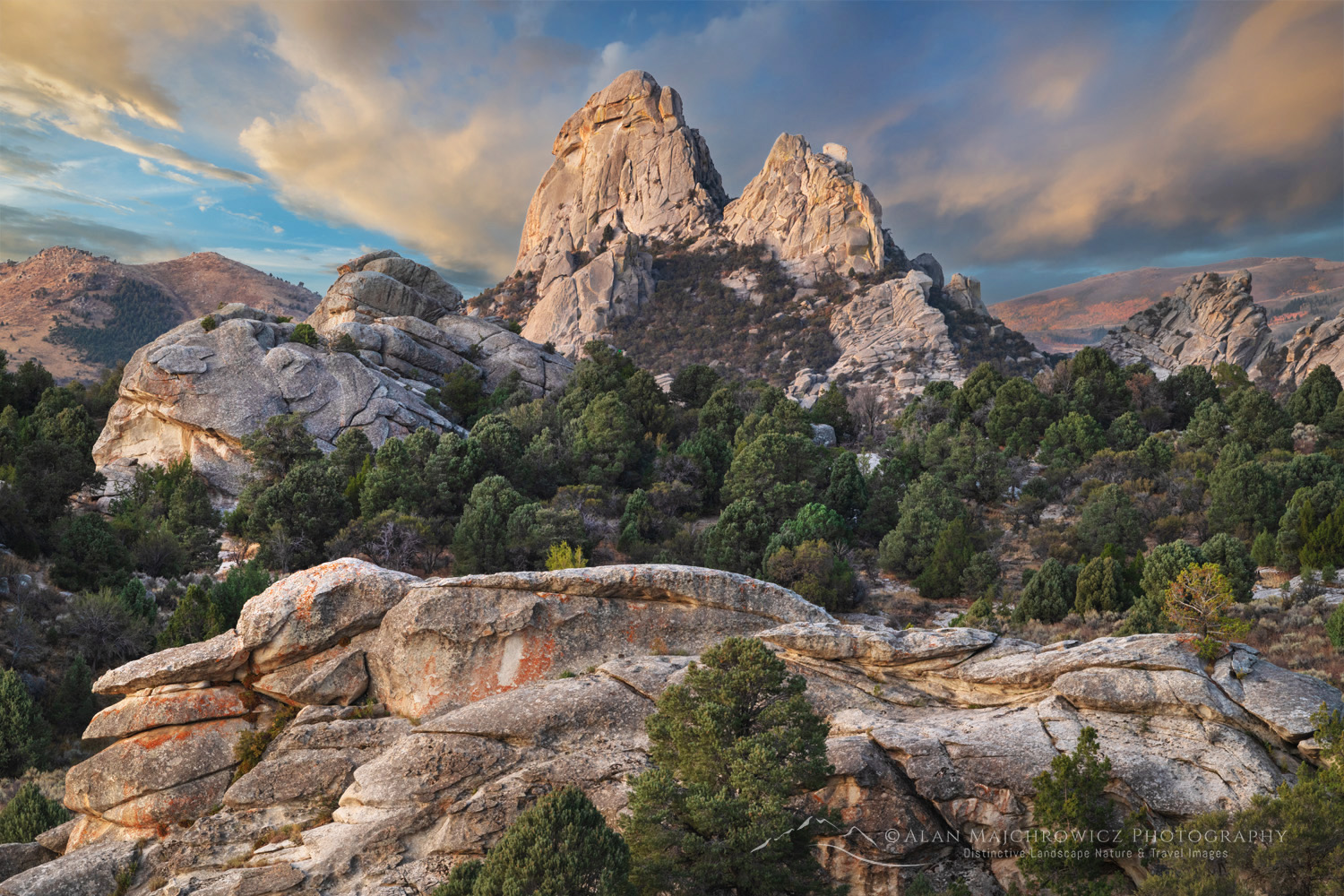
Elephant Rock (L) and the Twin Sisters, City Of Rocks National Reserve Idaho #84403Elephant Rock, the Twin Sisters, City Of Rocks, Idaho #84408  Purchase

In southern Idaho, near the Utah border, is a small but fascinating area of granite spires and monoliths. Although sometimes known as “Silent City,” its official name is City of Rocks National Reserve. The National Park Service and Idaho State Parks and Recreation administer this remote park on the northern edge of the Great Basin.

Over the years, City of Rocks has become a magnet for rock climbers looking to test their skills on the smooth granite. In addition, hikers, campers, and photographers are also finding the City of Rocks a quiet, out-of-the-way alternative to larger and more popular parks.

The City of Rocks is also an important historical site. Between 1843 and 1882, nearly a quarter-million pioneers traveled through here on the California Trail. The Silent City was often a brief stopover on the long, arduous journey to California. Some pioneers even left their names on the rock faces, and they are still visible today.

Eroded granite, City Of Rocks National Reserve Idaho #84384City of Rocks National Reserve #84384  Purchase

Photographing City of Rocks

City of Rocks has been on my must-visit list for several years. This year, I was finally able to photograph there since it was conveniently on the way to Great Basin National Park.

New visitors may find that the City of Rocks resembles Joshua Tree National Park in southern California in several ways. Both have similar rock formations and are extremely popular with climbers. Both also have cozy campsites tucked away among the rocks, which require reservations.

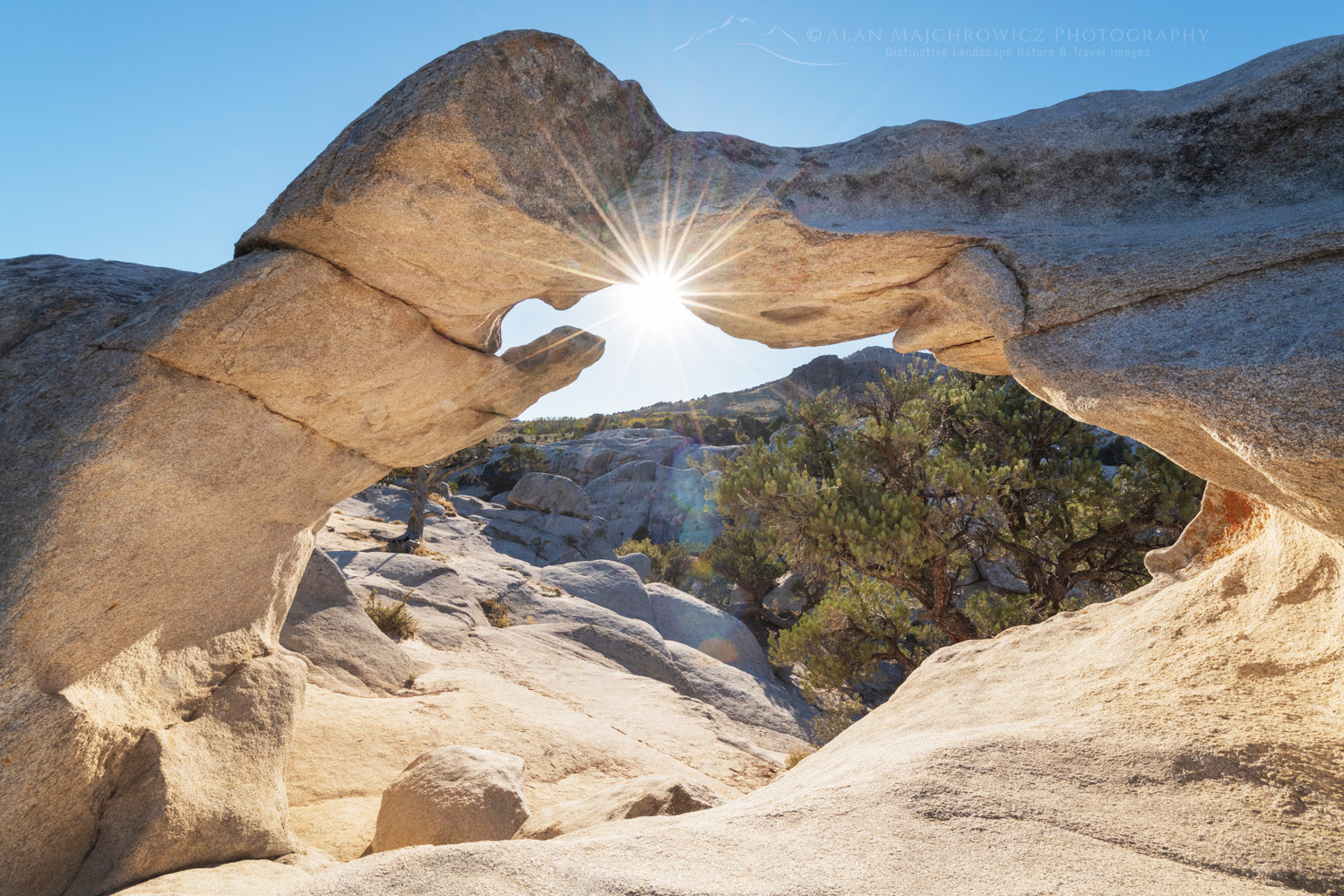
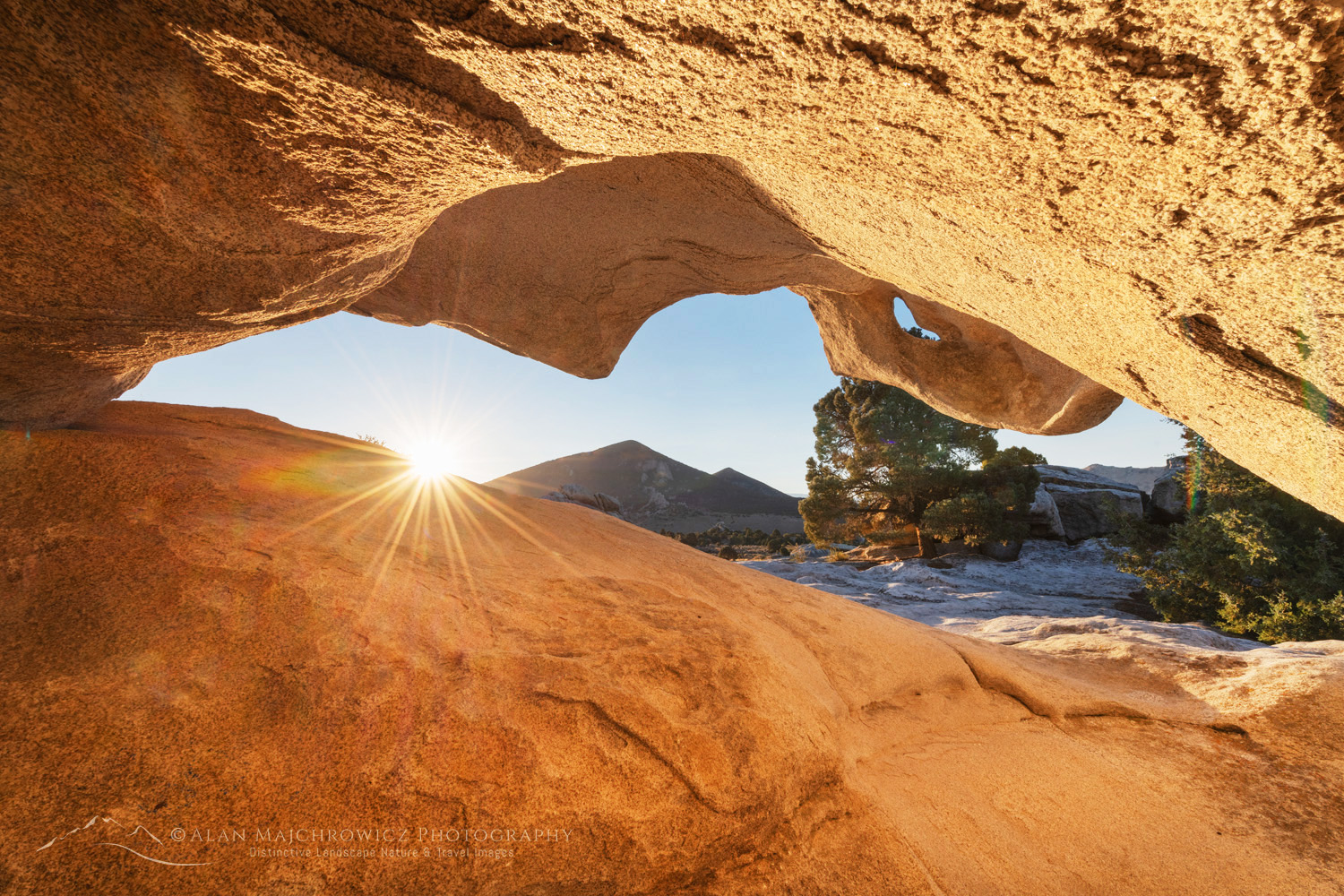
Window Arch, #84328Window Arch, City of Rocks #84384  Purchase

Window Arch, City Of Rocks National Reserve Idaho #84321Window Arch, City of Rocks #84321  Purchase

Photographers will find quite a bit of subject matter to explore. In addition to general landscape compositions, there is plenty of abstract rock detail and nature study material. There is even a small natural arch to check out. In addition, the central Silent City area is small enough to explore within a few hours.

An ideal strategy for photography in the City of Rocks is to reserve a campsite for a few days in the main area of the rocks. Just walking among the campsites will reveal many interesting spots for photography. During the day, when lighting conditions may be poor, take this opportunity to scout the area either on one of the trails or by hiking along the road.

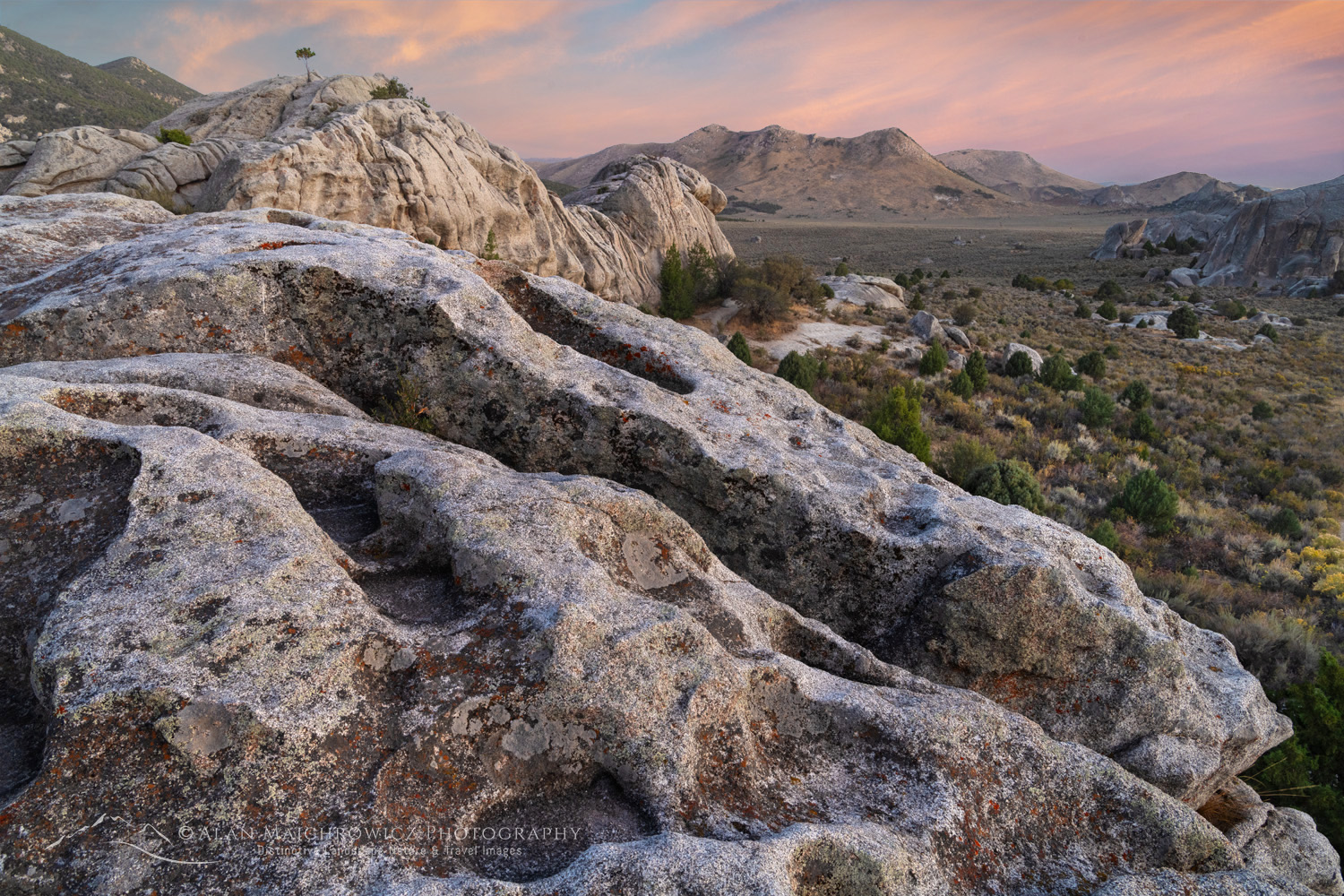
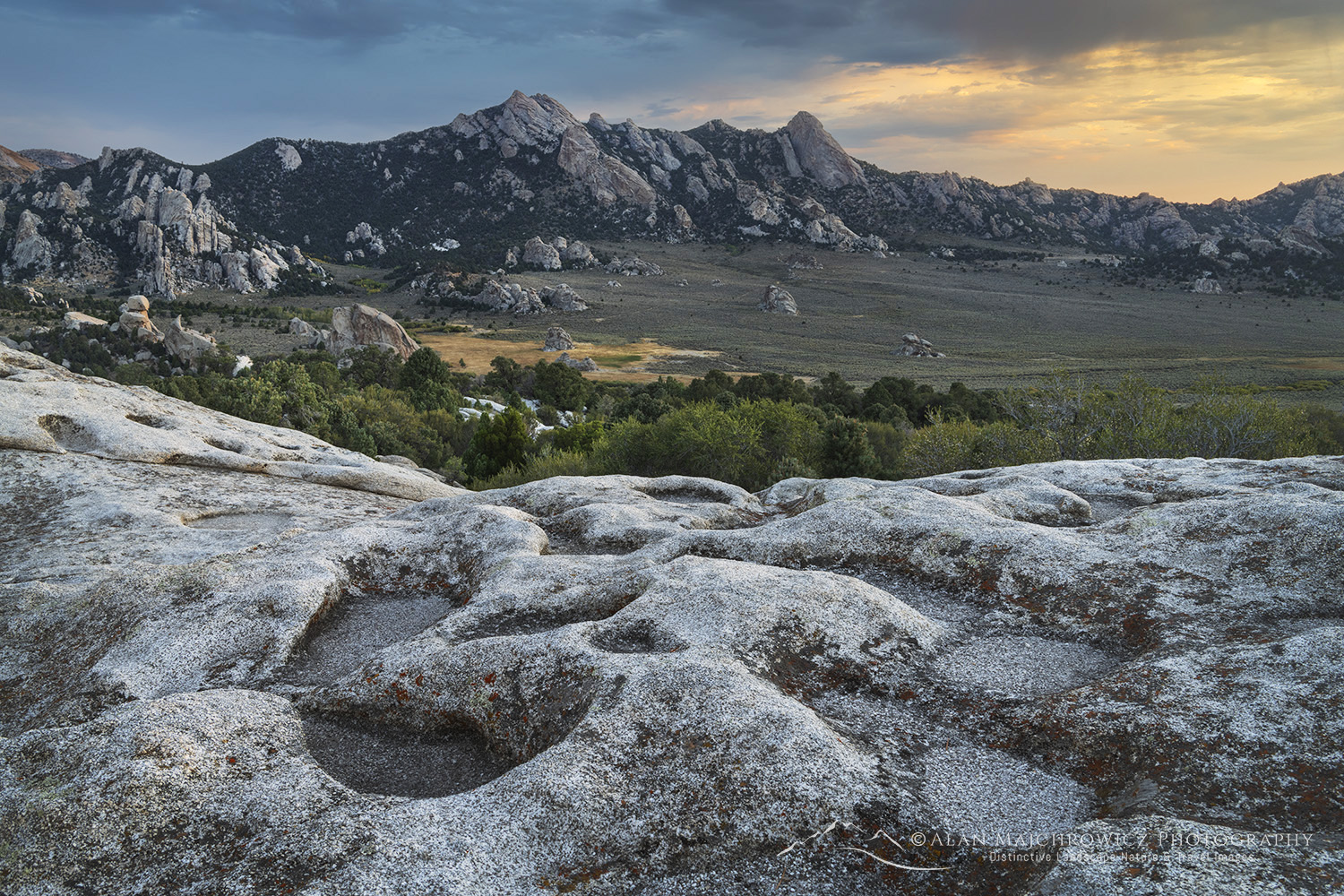
There are eroded potholes on the top of many of the rock formations. Following rain, these potholes will be filled with water and can be used for foreground reflections in compositions.

Eroded granite, City Of Rocks National Reserve Idaho #84346Window Arch, City of Rocks #84346  Purchase

Essential Tips for Photographing City of Rocks

  • Scouting is an essential, but often overlooked, technique for better photography. Always scout out the best locations in advance by spending the day thoroughly exploring the area. Make notes of the best spots and also how long it will take to reach them in the morning and evening golden hours
  • Always allow enough time. One of the most important considerations when planning a photography trip to any location is time.  Good photography rarely results from a hurried schedule. Likewise, chasing light is stressful, stay in one place and let the light come to you!
  • No fees are required for entry into the City of Rocks National Reserve.
  • Free campsites are available outside of the reserve on BLM land. However, these sites do not have water, restrooms, or other amenities.
  • Cell service and WiFi are generally non-existent in the reserve. Although the visitor center parking lot has a decent signal.
  • Fuel and basic groceries are available near the visitor center in Almo, Idaho. The nearest major town is Burley, Idaho, about 50 miles away.

City Of Rocks National Reserve Idaho #84437City of Rocks National Reserve #84437  Purchase

Leave No Trace

Please, Please, Please!  Don’t plan a trip to this or any other national park, monument, or wilderness area unless you are prepared to follow Leave No Trace guidelines (LNT). National parks and wilderness areas worldwide are under incredible pressure from the growing number of visitors. So, please do your part to help preserve these precious areas for future generations!

To learn more about the principles and practicing LNT please take a few minutes to visit the Leave No Trace Center for Outdoor Ethics. Your children and grandchildren will thank you!

LEAVE NO TRACE SEVEN PRINCIPLES

1. Plan Ahead and Prepare
2. Travel and Camp on Durable Surfaces
3. Dispose of Waste Properly
4. Leave What You Find
5. Minimize Campfire Impacts
6. Respect Wildlife
7. Be Considerate of Other Visitors
© Leave No Trace: www.LNT.org

Learn about how to protect the places we love to photograph
Visit the Nature First Website
Nature First the alliance for responsible nature photography


Eroded granite, City Of Rocks National Reserve Idaho #84370City of Rocks National Reserve #84370  Purchase

All photos appearing in Photographing City of Rocks Idaho are available for Commercial Licensing and Fine Art Prints. Click on any image to purchase, or contact me for more info!

Photographing City of Rocks Idaho

The Temple reflected in the still waters of a tarn in Cramer Basin. Sawtooth Wilderness, Idaho #83651

Photographing Cramer Lakes Sawtooth Mountains

Photographing Cramer Lakes Sawtooth Mountains

Golden light of sunset reflected on still waters of a tarn in Upper Cramer Basin Sawtooth Wilderness, Idaho #83712bUpper Cramer Basin, Sawtooth Wilderness, Idaho #83712  Purchase

The Sawtooth Mountains are a sub-range of the Rocky Mountains, in south central Idaho. There are 57 peaks with an elevation of over 10,000 feet. The Sawtooth National Recreation Area (Sawtooth NRA) consists of 756,000 acres of spectacular mountains, over 700 miles of trails, and more than 300 mountain lakes.

Needless to say, the Sawtooth Mountains attract visitors of every type, in all seasons. In spring, summer, and fall, hikers, climbers, fishing enthusiasts, hunters, photographers, hot spring fanatics, and road-trippers, flock to the area. In winter the crowds thin, but are replaced by skiers and snowmobilers.

For photographers and backpackers, one of the more attractive trips, and there are many in the Sawtooths, is the hike to Cramer Lakes. Cramer Lakes Basin consists of lower, middle, and upper Cramer Lakes, and a few smaller lakes and tarns in the upper basin. The hike to Middle Cramer Lake is about 15 miles, roundtrip from Redfish Lake, with around 2000′ of elevation gain.

The Temple reflected in the still waters of a tarn in Cramer Basin. Sawtooth Wilderness, Idaho #83651Laury Tarn Upper Cramer Lakes Basin #83651  Purchase

Hiking to Cramer Lakes Sawtooth Mountains

To get to Cramer Lakes trail or any destination along Redfish Creek Valley you have two options. On the one hand, you can begin at the Redfish Trail hiker’s parking lot near Redfish Lake Lodge, then follow the trail along the lake. Alternatively, you can take a water taxi from the lodge to the trailhead at the head of Redfish Lake. This option will save you about five miles of hiking. Like a lot of other hikers, I opted for the water taxi. The cost for adults is $18.00 one-way or $24.00 for a round trip

Redfish Creek Canyon Trail Sawtooth Mountains Idaho #65998Redfish Creek Canyon Trail Sawtooth Mountains Idaho #65998 Purchase

After an initial climb from the water taxi dock, the trail levels out a bit for the first few miles. This nearly flat section is a very pleasant hike through the forest with glimpses of impressive peaks. At Flatrock Junction, the trail splits. The right fork will take you to Alpine and Baron Lakes, another wonderful destination.

Shortly after the fork you come to the crux of the trip, a bridgeless ford of Redfish Lake Creek. The crossing isn’t especially difficult, but if you do the hike too early in the season, then water levels may be too high to safely cross. However, by early July, the crossing is usually manageable.

For the next 4 miles, the trail ascends the valley through pleasant forest with more glimpses of the surrounding peaks. Eventually, the trail levels out and small ponds and marshes replace the rushing creek, before arriving at Middle Cramer Lake.

Middle Cramer Lake, Sawtooth Wilderness, Idaho #83762Middle Cramer Lake, the Sawtooth Mountains #83762  Purchase

Camping at Cramer Lakes

You can’t mistake Middle Cramer Lake since there is a scenic waterfall at its far end plunging into its waters. There are many attractive campsites along Middle Cramer Lake, but you will need to arrive early in the day to secure the best sites.

However, while camping at Middle Cramer Lake is very scenic, camping at the upper lake is even better. There are also plenty of good sites here, with great views across the water. If you’re here for photography, I thoroughly recommend camping here. Quite possibly the best site in the area is one that is along the outlet creek, just above the waterfall.

Sevy Peak and Mount Cramer are reflected in the still waters of Upper Cramer Lake. Sawtooth Wilderness, Idaho #83611Upper Cramer Lake, Sawtooth Mountains #83611  Purchase

Sevy Peak is seen from the outlet stream of Upper Cramer Lake. Sawtooth Wilderness. Idaho #83633Upper Cramer Lake, Sawtooth Mountains #83633  Purchase

Photographers camping at a site at Upper Cramer Lake can easily scout out both upper and lower lakes and find excellent compositions. Both morning and evening golden hours are wonderful here, with the evening being especially nice.

Golden light of sunset on peaks of Upper Cramer Basin Sawtooth Wilderness, Idaho #83704Golden hour at Laury Tarn  #83704  Purchase

Upper Basin and Cramer Divide

While Middle and Upper Cramer Lakes are undoubtedly scenic, the upper basin takes scenic to another level. In addition, it undeniably has the most and possibly the best subject matter for photographers.

From Upper Cramer Lake to Cramer Divide the trail traverses through an exceptionally beautiful alpine environment. Along the way there are a couple more lakes, small tarns, rock gardens, and fearsome towers of rock in every direction, all culminating at Cramer Divide.

The Temple, Sawtooth Wilderness, Idaho #83650The Temple, Upper Cramer Basin #83650  Purchase

The largest of the lakes in the upper basin is Laury Tarn. Photographers will find this lake/tarn to be especially rich in compositions. After a night or two at the lower lakes, it would be ideal to spend a couple more at Laury Tarn. This would allow time to thoroughly scout the upper basin and Cramer Divide for photo opportunities. The entire lakeshore is particularly rich in compositions, and this is a prime location during golden hour.

From Laury Tarn to Cramer Divide the trail passes through moraines, rock gardens, and a few more tarns before arriving at the divide. Cramer Divide is a wonderfully scenic spot with groves of wind-weathered white-bark pines and magnificent views in every direction.

The Temple and trail to Cramer Divide in upper Cramer Basin. Sawtooth Mountains Idaho #83722Upper Cramer Basin #83722  Purchase

Essential Tips for Photographing Cramer Lakes Sawtooth Mountains:

  • Start early. Try to get the first water taxi to the trailhead. This will help with securing a prime campsite without having to rush up the trail.
  • Crossing Red Fish Creek will be easier with hiking poles or a sturdy stick. Rocks on the creekbed are round and slippery, so take your time and use caution. However, If the water levels are too high and the crossing looks sketchy, change your plans and go to Baron Lakes instead.
  • Bring a tripod. Especially for serious photography, saving weight by leaving your tripod at home isn’t the best idea. Of course, the rest of your gear can be ultra-light but camera gear takes priority.
  • Golden hour in the evening is, for the most part, better than in the morning.
  • Check out these posts for even more in-depth tips:
    Backpacking Photography Tips
    Backpacking Photography Gear Tips

Sunset light in Upper Cramer Basin Sawtooth Wilderness, Idaho #83720Cramer Lakes Sawtooth Wilderness #83720  Purchase

If You Go to Cramer Lakes

Round Trip Distance:  15 Miles
Elevation:   About 3000′ gain, highpoint Cramer Divide 9501′
Difficulty:  Moderate to difficult
Red Tape:  Free Permits are required, available at the trailhead

To get to Redfish Lake hikers parking lot, Redfish Lake Lodge and water taxi drive about 6 miles south of Stanley on U.S. 75 and another two miles along FR 214. There are plenty of campsites near Redfish Lake and Little Redfish Lake.

The small scenic town of Stanley Idaho makes a great base for trips into the Sawtooths. Lodging, groceries, restaurants, outdoor gear stores, and a great bakery are in town. Redfish Lake Lodge also has many similar amenities.

As mentioned earlier in this post, the Sawtooth Mountains are a popular destination. Not only for hikers and backpackers, but also tourists, front country family camping, river rafters, and fishing. During the height of summer just about every campsite, both front country, and backcountry will be filled before noon. So make your plans accordingly to avoid frustration.

One of the best perks of the area is the numerous natural and wild hot springs. Soaking in one along the Salmon River is also one of the greatest post-hike activities.

Sevy Peak and Mount Cramer are reflected in the still waters of Upper Cramer Lake. #83609Upper Cramer Lake Sawtooth Wilderness #83609  Purchase

Leave No Trace

Please, Please, Please!  Don’t plan a trip to this or any other wilderness area unless you are prepared to follow the guidelines of Leave No Trace (LNT). National Parks and wilderness areas throughout the world are under incredible pressure from growing amounts of visitors. So, please do your part to help preserve these precious areas for future generations!

To learn more about the principles and practicing LNT please take a few minutes to visit the Leave No Trace Center for Outdoor Ethics. Your children and grandchildren will thank you!

LEAVE NO TRACE SEVEN PRINCIPLES

1. Plan Ahead and Prepare
2. Travel and Camp on Durable Surfaces
3. Dispose of Waste Properly
4. Leave What You Find
5. Minimize Campfire Impacts
6. Respect Wildlife
7. Be Considerate of Other Visitors
© Leave No Trace: www.LNT.org

Learn about how to protect the places we love to photograph
Visit the Nature First Website

Nature First the alliance for responsible nature photography


Check out these other Sawtooth Wilderness Posts:
Baron Lakes Sawtooth Mountains
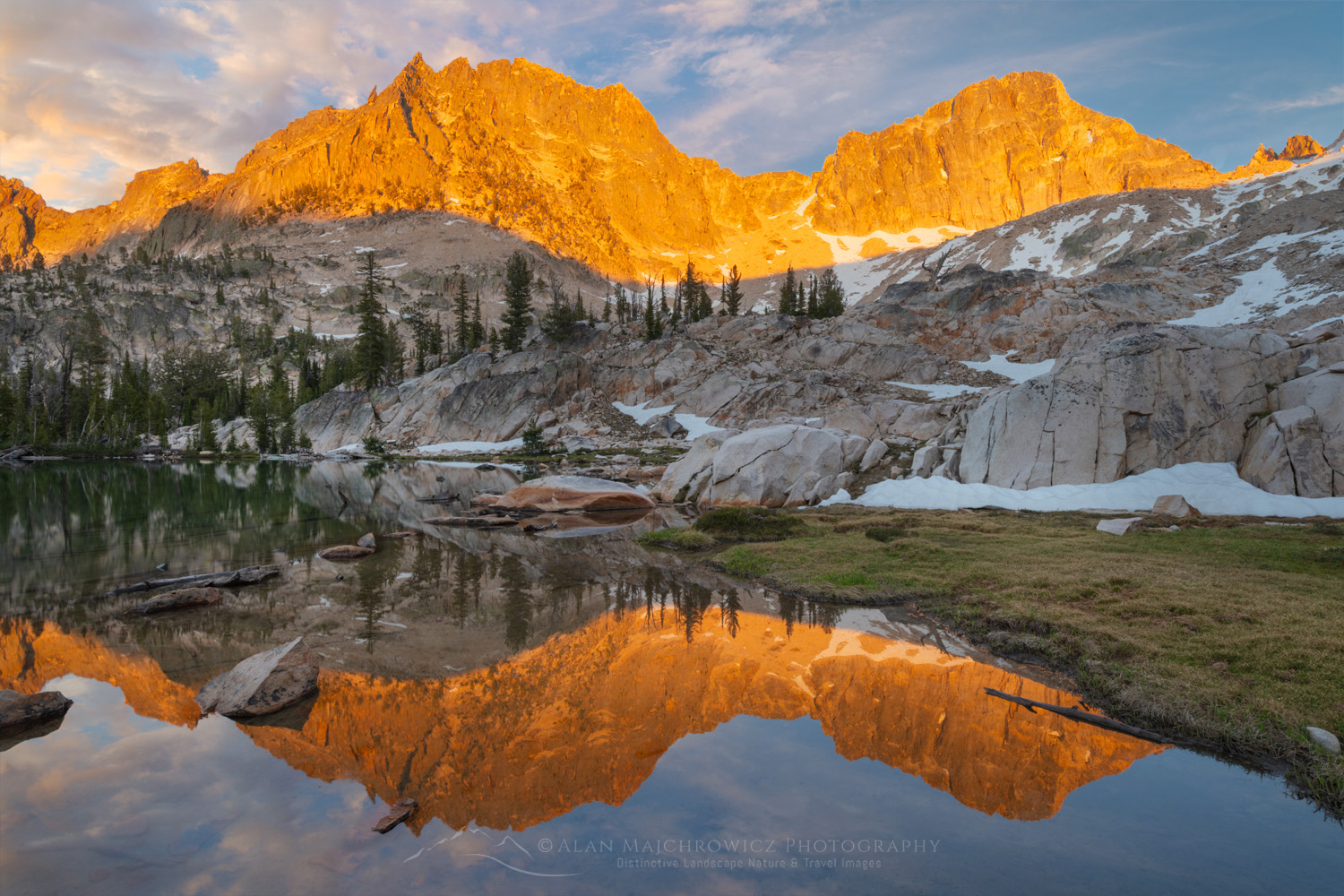
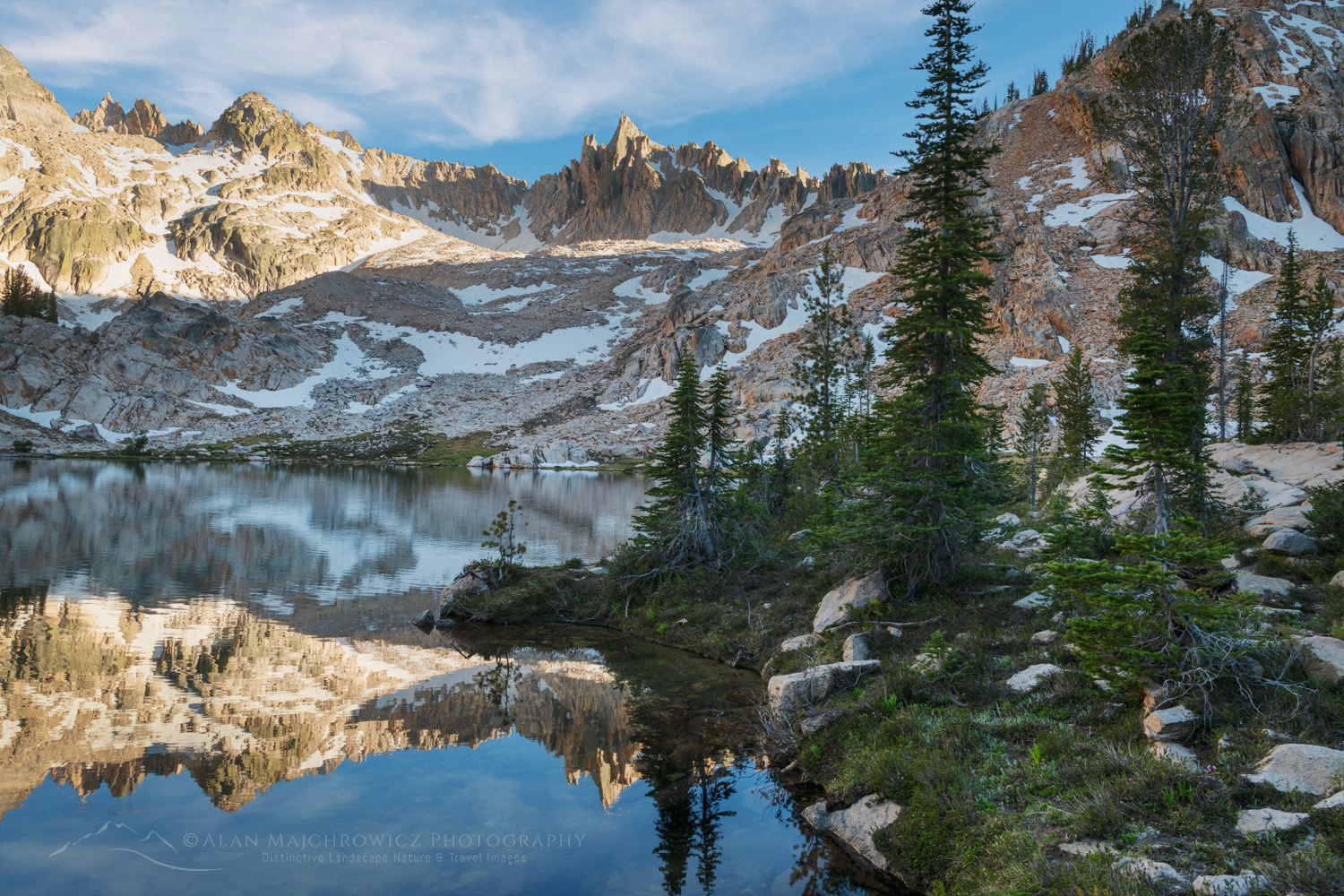
Alice Lake-Toxaway Loop Backpacking Photography
Sawtooth Lake Idaho

The Temple, Sawtooth Wilderness, Idaho #83648The Temple, Sawtooth Wilderness #83648  Purchase

All photos appearing in Photographing Cramer Lakes Sawtooth Mountains are available for Commercial Licensing and Fine Art Prints. Click on any image to purchase, or contact me for more info!

Photographing Cramer Lakes Sawtooth Mountains

Little Redfish Lake, Sawtooth National Recreation Area Idaho

Summer Photography 2024

Summer is finally here and it’s time to hit the road and trails! This week I’ll be leaving for my extended summer photography 2024 tour.

Little Redfish Lake, Sawtooth National Recreation Area Idaho Summer Photography 2024Little Redfish Lake Sawtooth Mountains, Idaho #56176  Purchase

Summer is finally here and it’s time to hit the road and trails! This week I’ll be leaving for my extended summer photography 2024 tour. The tour will be similar to those in 2019 and 2021. Destinations will be Idaho’s Sawtooth and White Clouds Wilderness Areas, and then on to the Wind River Range in Wyoming.

While I’ve photographed most of the locations before I’m aiming to build on images from previous trips. As I mention in other posts, it’s rare that a photographer creates compelling images on the first visit to a location. Weather and lighting conditions may not be optimum, and it’s also difficult to fully know the new subject matter.

Mount Helen and field of purple Asters growing in Upper Titcomb Basin, Bridger Wilderness, Wind River Range Wyoming Summer Photography 2024Titcomb Basin Wildflowers #66700 Purchase

Below are some of the locations scheduled for this trip. As always locations are subject to change due to weather, wildfire smoke, etc.

  • Sawtooth Mountains Wilderness, Idaho / Cramer Lakes, Saddleback Lakes
  • Cecil D. Andrus-White Clouds Wilderness, Idaho / Boulder Chain Lakes
  • Wind River Range, Wyoming / East Fork Valley, Titcomb Basin, Pronghorn Peak, Green River Lakes

Pronghorn Peak and Lake Donna. Bridger Wilderness, Wind River Range WyomingPronghorn Peak Wind River Range #69198  Purchase

Check out the following links to see images and trip details from some of the locations:
Cecil D. Andrus-White Clouds Wilderness
Sawtooth Mountains, Idaho
Central Wind River Range 
Titcomb Basin Wind River Range
Green River Lakes Wind River Range

White Clouds Wilderness IdahoWhite Clouds Wilderness, Idaho #68945  Purchase

El Capitan and Alice Lake Sawtooth Mountains IdahoEl Capitan Sawtooth Mountains Idaho #66114  Purchase

All photos appearing in this post are available for Commercial Licensing and Fine Art Prints. Click on any image to purchase, or contact me for more info!

Summer Photography 2024

Lonesome Lake at dawn in Cirque of the Towers, Popo Agie Wilderness Wind River Range Wyoming #78372

Cirque of the Towers Wind River Range

Cirque of the Towers Wind River Range

Lonesome Lake at dawn in Cirque of the Towers, Popo Agie Wilderness Wind River Range Wyoming #78372Cirque of the Towers Wind River Range #78372  Purchase

The Cirque of the Towers is one of the most popular destinations in Wyoming’s Wind River Range. Only Island Lake and Titcomb Basin come close in popularity. Both locations are mind-bogglingly beautiful with plenty of features to lure the outdoor enthusiast. The Cirque of the Towers however is more of a draw for rock climbers. Its numerous spires and big granite walls with dozens of routes are a climber’s dream.

This summer I made my third trip to the Cirque of the Towers with the goal of coming back with some great new photos. The previous trips were difficult and only partially successful for photography due to widespread wildfire smoke. So I’ve been waiting for the right time to make a return. As with my last trip to the Cirque, my plan was to also include a few days at nearby Deep Lake.

Mitchell Peak reflected in stream flowing into Lonesome Lake in Cirque of the Towers, Popo Agie Wilderness Wind River Range WyomingMitchell Peak Cirque of the Towers #78320  Purchase

This is also the second part of two backpacking trips to the southern Wind River Range. The first segment was a 7-day trip to Pyramid and Shadow Lakes. Shadow Lake sits on the backside of the Cirque of the Towers and is often part of a loop trip to the cirque that crosses over Texas Pass.

Some people may wonder why I didn’t just do that loop hike or one of several other longer scenic loops. The reason is that since my main goal is photography I need both flexibility and plenty of extra time built into my trips. Often I end up waiting for several days at a location for the right light for photography. So while most loops in the area can be done in 4-7 days, I would need more like 9-14 days. And going solo with lots of camera gear means I’d be carrying an unholy amount of weight.

Evening storm clouds refelcted in Big Sandy Lake, Bridger Wilderness, Wind River Range WyomingBig Sandy Lake Wind River Range #78267  Purchase

Big Sandy trailhead to Big Sandy Lake & Jackass Pass

After a few days in Pinedale, I returned to the Big Sandy Trailhead. This trailhead was also the start of the first trip and is the jumping-off point for many other destinations. One look at the parking area might shock a first-time visitor. The lot is big, always full, and often overflows nearly a mile back down the road. But again this trailhead is the starting point for many different destinations, so not everyone parked there is going to the same place.

The approximately 5.5-mile hike to Big Sandy Lake is pleasant with minimal elevation gain. And it’s entirely possible to continue from Big Sandy Lake into the Cirque in one day. However, Big Sandy is a nice place to spend the first night if you got a late start. Or if like me you enjoy hiking at a leisurely pass and would like to photograph evening light at the lake. There are plenty of campsites along the west and north sides of the lake. But if you arrive late in the day you may be out of luck finding one.

Clouds refelcted in Big Sandy Lake at sunset, Bridger Wilderness, Wind River Range WyomingBig Sandy Lake Wind River Range #78299  Purchase

On the second day, I got a crack of dawn start to tackle the climb to Jackass Pass and down to Lonesome Lake on the other side. The pass is only 2.4 miles from Big Sandy Lake with about 1100′ of elevation gain. However, there is a surprising amount of significant ups and downs along the way. Plus much of the trail is over rough rocky terrain. Starting up in midday sun and heat is not recommended.

At a little over the halfway point, there is a junction with a trail marked “Climbers Route”. This trail climbs through a boulder field along Arrowhead Lake to a lower pass SW of Jackass Pass. I’ve never done it but although it looks like a quicker route I’ve heard it’s very difficult and tiring. Most hikers follow the main trail, even though from here on it’s often steep and in a few spots easy to lose. From the pass, it’s a descent to Lonesome Lake with stupendous views at every step.

War Bonnet and Warrior Peaks reflected in Lonesome Lake at dawn in Cirque of the Towers, Popo Agie Wilderness Wind River Range WyomingDawn at Cirque of the Towers Wind River Range #78372  Purchase

Lonesome Lake Cirque of the Towers

Though it was a short hike up and over the pass I was ready to find a campsite near Lonesome Lake and relax a bit. Most of the better sites are east of the lake on both sides of the North Popo Agie River. Hanging food or using bear-proof canisters is absolutely necessary. Not so much because of bears but for the bold thieving squirrels!

*It must be noted here that camping is not permitted within 1/4 mile of Lonesome Lake.  It would seem pretty obvious that an area that receives such heavy use would need a little extra love and consideration. Most people follow that rule but not all. It seems some hikers who get a late start, or thru-hikers that travel from dawn to dusk are too tired to bother, or even care.

Cirque of the Towers reflected in stream flowing into Lonesome Lake, Popo Agie Wilderness Wind River Range WyomingCirque of the Towers Wind River Range #78418  Purchase

Mitchell Peak and Cirque of the Towers reflected in Lonesome Lake, Popo Agie Wilderness Wind River Range WyomingLonesome Lake Wind River Range #78444  Purchase

As usual, after setting up camp I scouted the area around the lake for photo compositions. One of my favorite spots is near the outlet on the south side of the lake. There are plenty of partially submerged boulders in the water to aid in composing photos. Another good spot is on the NE side of the lake by grassy meadows and streams. Both offer different views of the Cirque and give some variety to your images. During one morning with particularly good light, I first set up by the boulders and then ran to the other end while the light was still good, and back again to the start. It was exhilarating, and went a long way to make up for days of boring light!

Pingora Peak reflected in pond. Cirque of the Towers Popo Agie Wilderness. Wind River Range Wyoming #78532Pingora Peak Wind River Range #78530  Purchase

Upper Cirque of the Towers

Aside from Lonesome another fantastic area is higher up and closer to the towers of the Cirque. This is where most of the climbers set up camp. And once again it is advisable to arrive very early in the day to find a suitable campsite. Being almost above the tree line this area can be problematic for hanging food. Again, bears aren’t much of a problem in the Cirque, as far as I know, but smaller critters are. Bear-proof food canisters are a good idea in the upper Cirque. An alternate ingenious method is to hang food from a long branch secured on a big boulder.

There are several features in the Upper Cirque attractive for photographers. The first is a small wide waterfall pouring over a smooth rock face. You’ll need an ultra-wide lens here though to get a good composition. Behind the waterfall are several small ponds which perfectly mirror Pingora Peak and the other towers.

Cirque of the Towers waterfall. Popo Agie Wilderness. Wind River Range WyomingCirque of the Towers Waterfall #78490  Purchase

A little further back and a short scramble up is a glacial tarn beneath the walls of Warrior Peaks. It has a greenish-blue color from glacial flour. Again, you’ll need a wide-angle lens for compositions here. Plus, lighting can be tricky since the towers are mostly in full sun or total shade. Of course dramatic sunrise or sunset, clouds make the task much easier.

For just about any visitor whose sole destination is the Cirque of the Towers I definitely would advise spending at least two nights. For serious photography, I would double or triple that.


East Temple and Temple Peaks reflected in Deep Lake. Bridger Wilderness Wind River Range WyomingDeep Lake Wind River Range #78599  Purchase

Deep Lake

After spending time in the Cirque my next destination was Deep Lake. From the Cirque it’s less than a 6-mile hike, but first, a climb back up and down Jackass Pass is necessary.  So to beat the heat and get a campsite at Deep Lake another sunrise start was in order. I was already higher up so the climb wasn’t too bad. But the hike back down the pass to Big Sandy Lake was still tiring, due to all the ups and downs and rough terrain along the way.

From Big Sandy to Deep Lake the trail is mostly pleasant and easy. The last mile or so is a bit exciting as you must route-find your way up and across an extensive slab of granite. Once at Deep Lake the views are again stupendous. The rocks and lake make a perfect frame for the backdrop of East Temple and Temple Peaks. Behind you is another impressive sight, the peaks of the Cirque of the Towers in the distance.

View towards Cirque of the Towers from Deep Lake. Bridger Wilderness Wind River Range WyomingCirque of the Towers from Deep Lake #78568  Purchase

The area around Deep Lake doesn’t see as many visitors as the Cirque but finding a campsite is generally more difficult than at the Cirque. Mainly because of the lack of suitable flat spots. Many backpackers set up tents on the broad flat granite slabs near the lake outlet. Tents are then anchored down with large rocks.

Temple Peak, Bridger Wilderness, Wind River Range WyomingTemple Peak (L) and Lake #78649  Purchase

Temple Peak and Temple Lake

While Deep Lake can be a destination in itself there is far more to explore and see. Along the west side of the lake, there is a good trail that climbs up to a saddle on the long ridge. It’s only about a twenty-minute hike to the broad pass with even more impressive views and more exploring. A short and easy trail leads down to Temple Lake and the rock and flower gardens surrounding it. The more ambitious can continue up to Temple Pass and then the long ramp to the summit of East Temple Peak.

Temple Peak and Temple Lake. Bridger Wilderness, Wind River Range WyomingTemple Lake #78625  Purchase

I was hoping to be able to spend a night or two in the vicinity of Temple Lake for more photography. However, I only had one night left and I was still waiting for some good light back down at Deep Lake. Oh well, another excuse to come back in the future!

That evening back at camp and the lake some nice clouds were hanging around during the first part of golden hour. They didn’t stay for a nice sunset glow but it was productive anyway. In the morning there was a bit of a repeat light show but in reverse.

Packing up and hiking down the trail back to my truck I again had that satisfying feeling of wrapping up another great trip and returning home warm set of memories. Not to mention lots of new images!

East Temple and Temple Peaks reflected in Deep Lake. Bridger Wilderness Wind River Range WyomingDeep Lake Wind River Range #78674  Purchase

If You Go to Cirque of the Towers and Deep Lake:

Distance: ~31 miles round trip
Elevation: ~2300″ not including numerous elevation gains and losses
Difficulty:  Moderate
Red Tape:  As of 2022, no permits are needed
Maps: Wind River Range South; Beartooth Publishing
Guidebooks: Beyond Trails in the Wind River Mountains

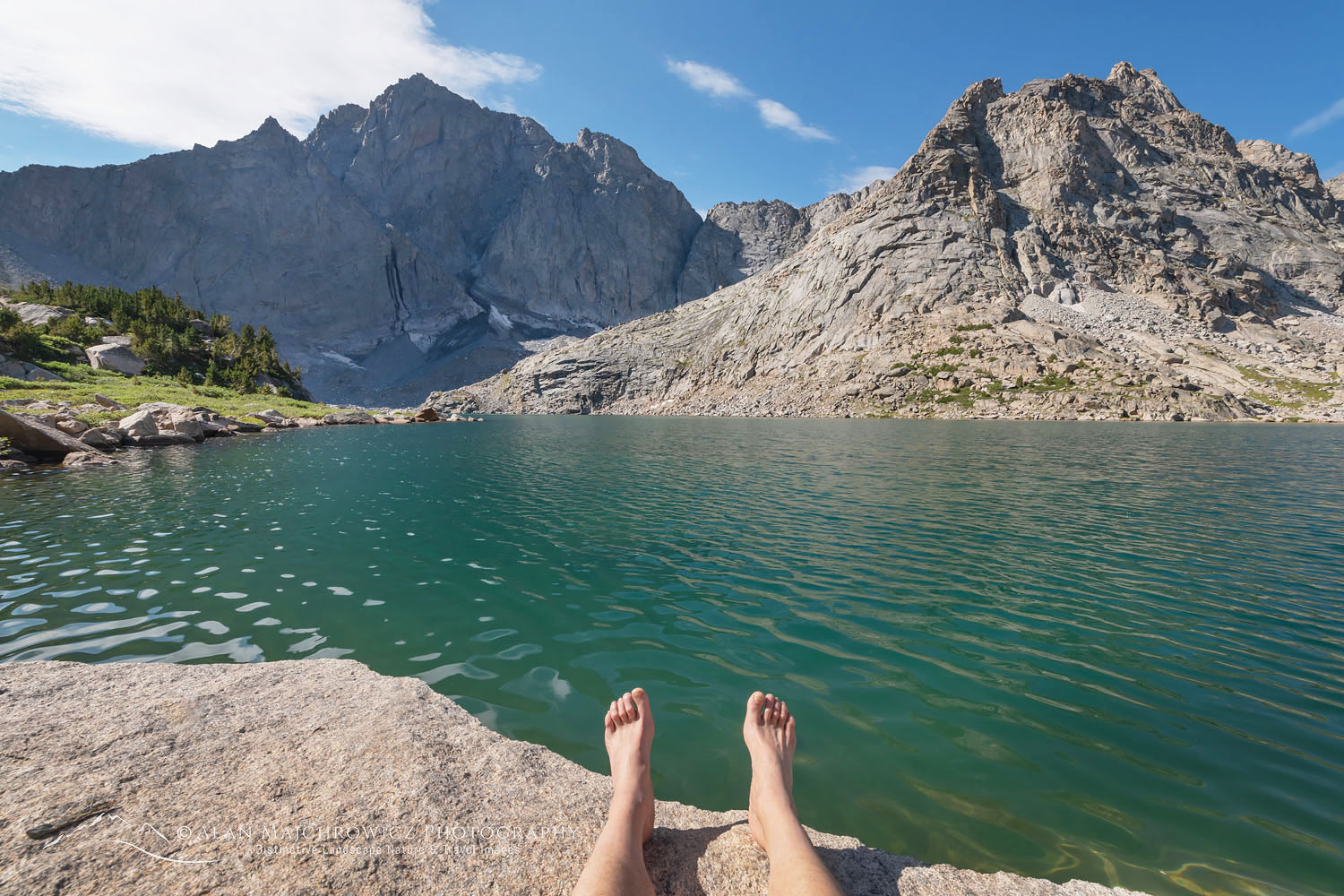
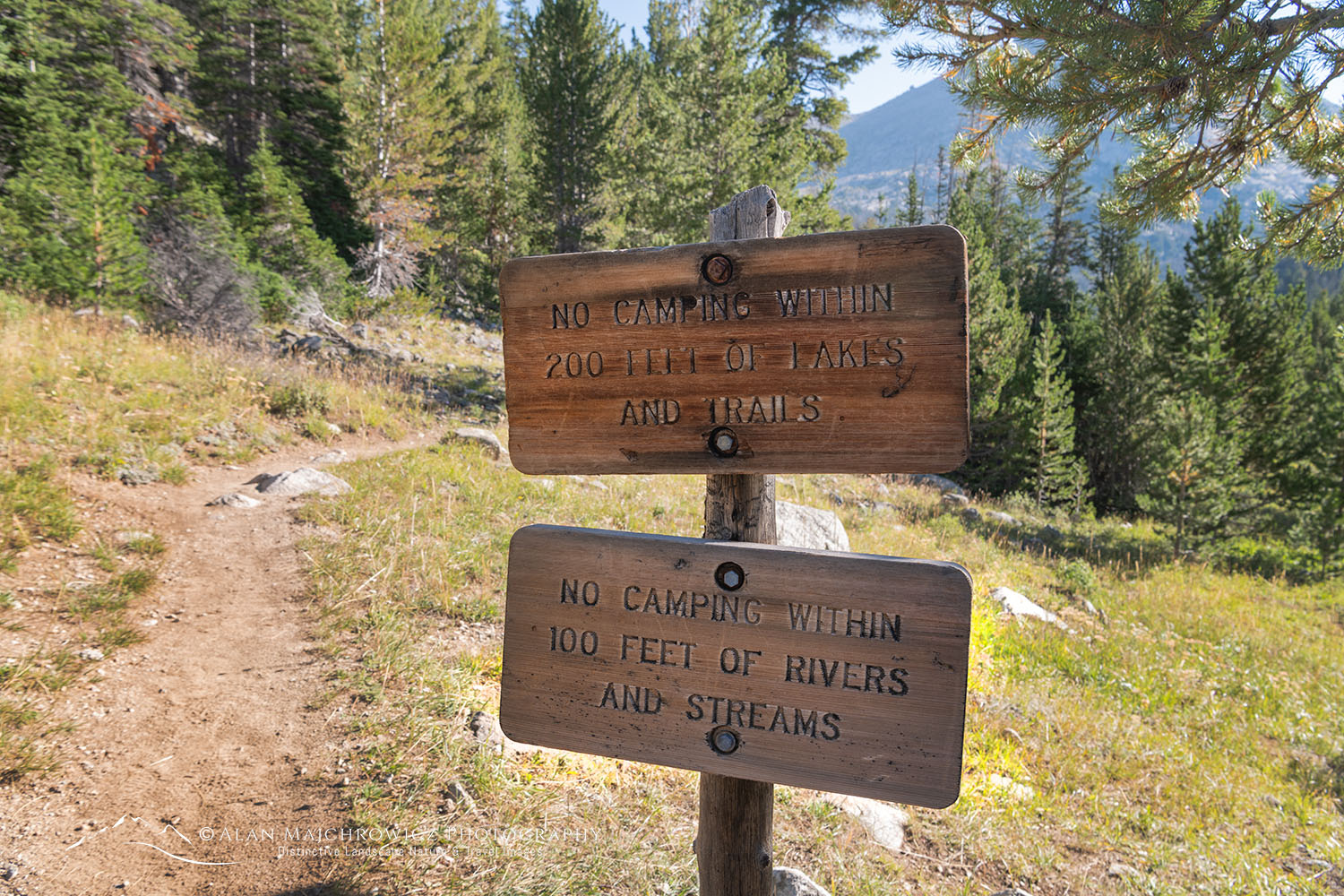
*Please be courteous and think of future visitors, respect the signs, and don’t camp within 1/4 of Lonesome Lake. Also, camp at least 200′ of lakes and trails and 100′ from rivers and streams.

Trail signs Bridger Wilderness Wind River Range WyomingBig Sandy Trail signs Wind River Range #78683  Purchase

The Big Sandy Trailhead is located about 56 miles south of Pinedale. The last eight miles or so can be rough and slow going but is passable for ordinary passenger cars. Adjacent to the trailhead there is a small campground, and there are also scattered sites along the last few miles of the road. Like most trailheads in the Winds, parking can be at a premium, get an early start.

Make sure you take along plenty of insect repellant. The Winds are notorious for their ravenous hordes of mosquitoes and flies. Although they weren’t too bad during my trip in early August. Also, be prepared for dramatic weather changes. Summer thunder and lightning storms are very common along the Continental Divide. Because of this stay off high ridges and summits during the afternoon.

The town of Pinedale makes a great base for multiple trips into the Winds. It has everything you’ll need, from good food and lodging to one of my favorite outdoor recreation stores, the Great Outdoor Shop. It’s stocked with everything needed for a successful trip, including a very knowledgeable and friendly staff. Don’t visit Pinedale without dropping in! Right next door to the great Outdoor Shop is the best place to go for a post-trip meal, the Wind River Brewing Company. They have excellent burgers and great brews!

Pingora Peak reflected in Lonesome Lake at dawn. Popo Agie Wilderness, Wind River Range WyomingPingora Peak Wind River Range #78384 

Leave No Trace

Please Please Please!  Don’t plan a trip to this or any other wilderness area unless you are prepared to follow the guidelines of Leave No Trace (LNT). The Wind River Range and all other wilderness areas throughout the world are under incredible pressure from growing amounts of visitors. Please do your part to help preserve these precious areas for future generations!

To learn more about the principles and practicing LNT please take a few minutes to visit the Leave No Trace Center for Outdoor Ethics. Your children and grandchildren will thank you!

LEAVE NO TRACE SEVEN PRINCIPLES

1. Plan Ahead and Prepare
2. Travel and Camp on Durable Surfaces
3. Dispose of Waste Properly
4. Leave What You Find
5. Minimize Campfire Impacts
6. Respect Wildlife
7. Be Considerate of Other Visitors
© Leave No Trace: www.LNT.org

Learn about how to protect the places we love to photograph
Visit the Nature First Website
Nature First the alliance for responsible nature photography


Photo Gear Used On This Trip

Nikon D850
Nikkor Lens:
14-24mm 2.8G ED
24-70mm 2.8E ED
Gitzo 1532 Tripod
Really Right Stuff B-55 Ball Head
B+H Polarizing Filter
Vello FWM-N2 Remote Shutter Release

East Temple Peak and trail along Deep Lake. Bridger Wilderness Wind River Range WyomingEast Temple Peak and  Deep Lake #78557  Purchase

If you enjoyed reading about the Cirque of the Towers Wind River Range please share it with your friends and family.

Also, check out these other Wind River posts!

Wind River Range Pyramid and Shadow Lakes
Central Wind River Range Backpacking
Bonneville Lakes Wind River Range
Island Lake Wind River Range
Titcomb Basin Wind River Range
Indian Basin Wind River Range
Green River Lakes Wind River Range

All photos appearing in Cirque of the Towers Wind River Range are available for Commercial Licensing and Fine Art Prints. Click on any image to purchase, or contact me for more info!

Cirque of the Towers Wind River Range

Ambush Peak, Bridger Wilderness. Wind River Range Wyoming

Wind River Range Pyramid and Shadow Lakes

Wind River Range Pyramid and Shadow Lakes 

Shadow Lake and view of the backside of Cirque of the Towers. Bridger Wilderness. Wind River Range WyomingShadow Lake Wind River Range #78151   Purchase

The Wind River Range is a mountain range in western Wyoming. It encompasses 40 peaks over 13,000′ in altitude, over 1300 named lakes, and is home to the largest glacier in the American Rockies. While not as well known as nearby Grand Teton National Park, the Winds nonetheless attracts an increasing amount of backpackers, climbers, photographers, hunters, and fishermen. An extensive network of trails, and easy cross-country travel, give access to nearly every corner of the range. All of this offers outdoor enthusiasts a lifetime of wilderness adventures.

My first visit to the Winds was in 2002, and I’ve been coming back for more adventure ever since. On this summer’s return, I visited the Southern part of the range on two separate backpacking trips, each lasting from 6-9 days.

Peaks and ridges of East Fork Valley seen from tarn above Pyramid Lake. Bridger Wilderness. Wind River Range WyomingAmbush Peak Wind River Range #78047  Purchase

The first trip would take me to views of the awesome peaks of the East Fork Valley, also known as Desolation Valley. Then moving on to Shadow Lake for views of the backside of the Cirque of the Towers. The second trip, coming in my next post, would be to the Cirque of the Towers itself, and then to Deep Lake with views of East Temple and Temple peaks.

Big Sandy Trailhead parking area. Wind River Range WyomingBig Sandy Trailhead #78182  Purchase

Big Sandy Trailhead Wind River Range

For both trips, the start would be from the Big Sandy Trailhead, one of the main access points for the southern part of the range. Getting to the trailhead is itself an adventure. It is about 56 miles from the nearest town of Pinedale with about half that distance on unpaved roads. The last 8 miles or so can be pretty rough and bumpy but is passable for regular passenger cars without four-wheel drive.

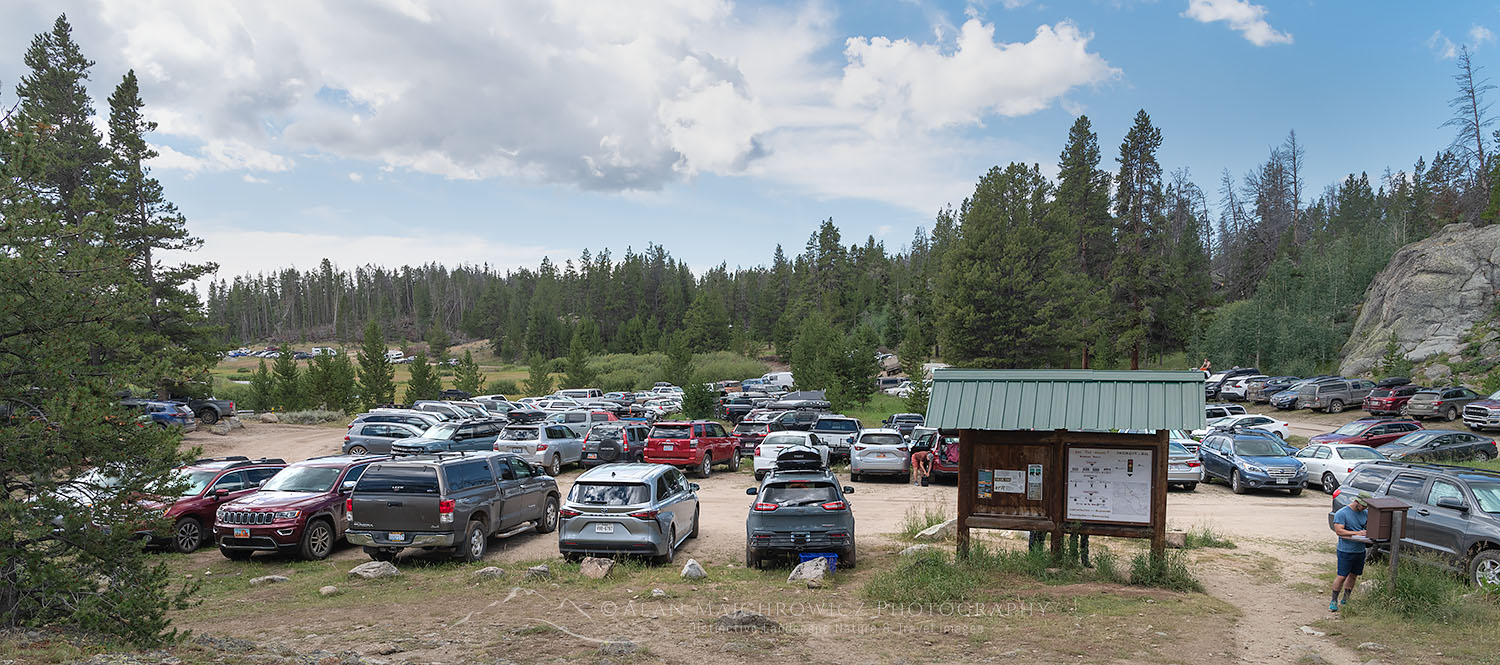
First-time visitors will be amazed, although possibly disheartened, by the huge amount of cars in the parking lot and overflowing nearly a mile down the road. However, it’s worth noting that the Big Sandy trailhead gives access to many other trails and destinations. So rest assured, not all of those vehicles belong to people heading to the Cirque.

Fremont Trail alongside Marms Lake Bridger Wilderness WyomingMarms Lake Wind River Range #78176  Purchase

Hiking to Pyramid Lake Wind River Range

My first destination was  Pyramid Lake and a small nearby pass with views of the East Fork or Desolation Valley. It’s about a 12-mile hike from the trailhead to Pyramid Lake and is part of the popular Hailey Pass Washakie Pass Loop. After gradually ascending through the open forest for the first few miles, the trail enters wide open meadows. This is some of the most pleasant hiking imaginable. Soon the trail passes Mirror Lake, then Dads Lake, and finally Marms Lake.  All of these are very picturesque and inviting for fishing and camping.

Subalpine pond at sunset. Bridger Wilderness, Wind River Range WyomingSubalpine Pond Wind River Range #77976  Purchase

Being the first day of an 8-day trip and loaded with camera gear my pack was pretty heavy. So upon reaching some lovely subalpine ponds just beyond and above Marms Lake I decided to set up camp. It was a very scenic area set amid meadows and polished rock outcroppings. All the other hikers on the trail passed up this spot so I had it all to myself! Plus I was able to make some nice photographs here during the golden hour light.

The next day’s hike was a bit shorter, although with more elevation gain. Shortly after starting the trail began to climb and enter the actual mountains. Up to this point, travel was along a high benchland running parallel to the big peaks along the Continental Divide. And once again along the way, there was a string of picturesque lakes along the way.

Pyramid Lake, Bridger Wilderness. Wind River Range WyomingPyramid Lake Wind River Range #77995 Purchase

Pyramid Creek, Bridger Wilderness. Wind River Range WyomingCreek flowing from Pyramid Lake Wind River Range #78011 Purchase

Pyramid Lake and Pass Wind River Range

After one last short but steep climb Pyramid Lake came into view. Sitting at 10,500′ and bordered on three sides by tall granite peaks it is a stunning scene. Although my main goal of a small pass was only a short hike further I decided Pyramid Lake was a worthy spot to spend the night and do some photography.

After setting up camp I did my usual location scouting in preparation for evening photography before making dinner.  Even though the middle of August was approaching, mosquitoes were still a nuisance and hindered the enjoyment of evening photography.

Raid Peak seen from tarn above Pyramid Lake. Bridger Wilderness. Wind River Range WyomingRaid Peak Wind River Range #78055 Purchase

The next day I moved camp the short distance higher up to the small pass overlooking the East Fork River valley. The views here were especially stunning. In addition, there was even a small tarn in a perfect location to aid in composing photographs. I only had to sit back, enjoy the surroundings, and wait for some good light for photography.

My original trip plan was to descend into the East Fork or Desolation Valley and photograph there for a few days before doing the entire Hailey Pass/Washakie Pass Loop. However, after consulting the map I felt that Shadow Lake needed to be a part of this trip. But allotting enough time at Shadow Lake for meaningful photography would mean a major altering of my itinerary.

Raid and Bonneville Peaks above East Fork Valley, Bridger Wilderness. Wind River Range WyomingRaid and Bonneville Peaks Wind River Range #78043 Purchase

Peaks and ridges of East Fork Valley seen from tarn above Pyramid Lake. Bridger Wilderness. Wind River Range WyomingAmbush Peak Wind River Range #78046  Purchase

After a lengthy debate, I made the difficult decision to stay at the pass before moving directly to Shadow Lake. Unfortunately, Desolation Valley and the Hailey Pass/Washakie Pass Loop will need to be part of a future trip. I should note here that since my main goal on backpacking trips is photography, I often need to have the flexibility to be able to change plans, so I have enough time to wait at a location for optimum lighting conditions. And this soon proved essential.

Shadow Lake and view of the backside of Cirque of the Towers. Bridger Wilderness. Wind River Range WyomingClearing storm at Shadow Lake Wind River Range #78077   Purchase

Shadow Lake Wind River Range

Shadow Lake is a notable destination in that it sits on the backside of the Cirque of the Towers. It’s a truly beautiful lake situated below impressive granite spires. For most backpackers, it is at the beginning or end of an exciting and scenic loop trip over Texas pass to the Cirque. For me, however, it was the actual destination.

The hike from Pyramid Lake to Shadow Lake was a breeze. It was mostly downhill for several miles to the Shadow Lake trail junction. From there it was less than 3 miles on a pleasant trail with minimal elevation gain. Once at the lake I scouted for a campsite located near the best photo opportunities. This turned out to be below the lake outlet. Nearby were some pretty pools set among boulders and grassy tussocks, perfect for creating photo compositions. Once again, all I had to do was wait for ideal lighting conditions.

Trail alongside Barren Lake, Bridger Wilderness. Wind River Range WyomingTrail along Billy Lake River Range #78104   Purchase

Barren Lake Bridger Wilderness, Wind River Range Wyoming Barren Lake Wind River Range #78097  Purchase

I ended up spending three nights at Shadow Lake. At first, I once again debated if maybe I should alter my plans. It was entirely possible to continue over Texas pass and then photograph at Cirque of the Towers. This would make for an impressive trip. However, that would leave me only one day, two at the most for photography in the Cirque, and no time at all to visit nearby Deep Lake. But the photographer in me advised that it would be more prudent to sit tight at the lake, which I did.

Patience Pays Off

On the second day at Shadow Lake, I day hiked to the upper lakes and below Texas Pass. This area was a stark and dramatic alpine landscape among granite boulders and small grassy meadows. The next morning I was tempted to move my camp the short distance to the upper lakes. A cloudless morning soon gave way to an overcast sky which was soon followed by showers. It then rained for most of the day, eliminating all thoughts of moving camp and photographing in the upper valley.

Shadow Lake and view of the backside of Cirque of the Towers. Bridger Wilderness. Wind River Range WyomingShadow Lake Wind River Range #78112   Purchase

Shadow Lake and view of the backside of Cirque of the Towers. Bridger Wilderness. Wind River Range Wyoming #78143orEvening at Shadow Lake Wind River Range #78143   Purchase

Even though I was stuck in the tent all day everything turned out for the better.  Just before sunset, the clouds began to part and some beautiful light began to illuminate the peaks. It was just the kind of condition I was waiting for and did much to reaffirm my decision to stay and be patient.

The next day I packed up and hiked back out to the trailhead, with the warm feeling of satisfaction that comes at the end of an enjoyable backpacking trip. And also that I was returning with many great photos.

Backpacker on trail Bridger Wilderness, Wind River Range WyomingBackpacker Wind River Range #77923  Purchase

If You Go to Pyramid and Shadow Lakes:

Distance: ~34 miles round trip
Elevation: ~3500″ not including numerous elevation gains and losses
Difficulty:  Moderate
Red Tape:  As of 2022, no permits are needed
Maps: Wind River Range South; Beartooth Publishing
Guidebooks: Beyond Trails in the Wind River Mountains

The Big Sandy Trailhead is located about 56 miles south of Pinedale. The last eight miles or so can be rough and slow going but is passable for ordinary passenger cars. Adjacent to the trailhead there is a small campground, and there are also scattered sites along the last few miles of the road. Like most trailheads in the Winds, parking can be at a premium, get an early start.

Make sure you take along plenty of insect repellant. The Winds are notorious for their ravenous hordes of mosquitoes and flies. Although they weren’t too bad during my trip in early August. Also, be prepared for dramatic weather changes. Summer thunder and lightning storms are very common along the Continental Divide. Because of this stay off high ridges and summits during the afternoon.

The town of Pinedale makes a great base for multiple trips into the Winds. It has everything you’ll need, from good food and lodging to one of my favorite outdoor recreation stores, the Great Outdoor Shop. It’s stocked with everything needed for a successful trip, including a very knowledgeable and friendly staff. Don’t visit Pinedale without dropping in! Right next door to the great Outdoor Shop is the best place to go for a post-trip meal, the Wind River Brewing Company. They have excellent burgers and great brews!

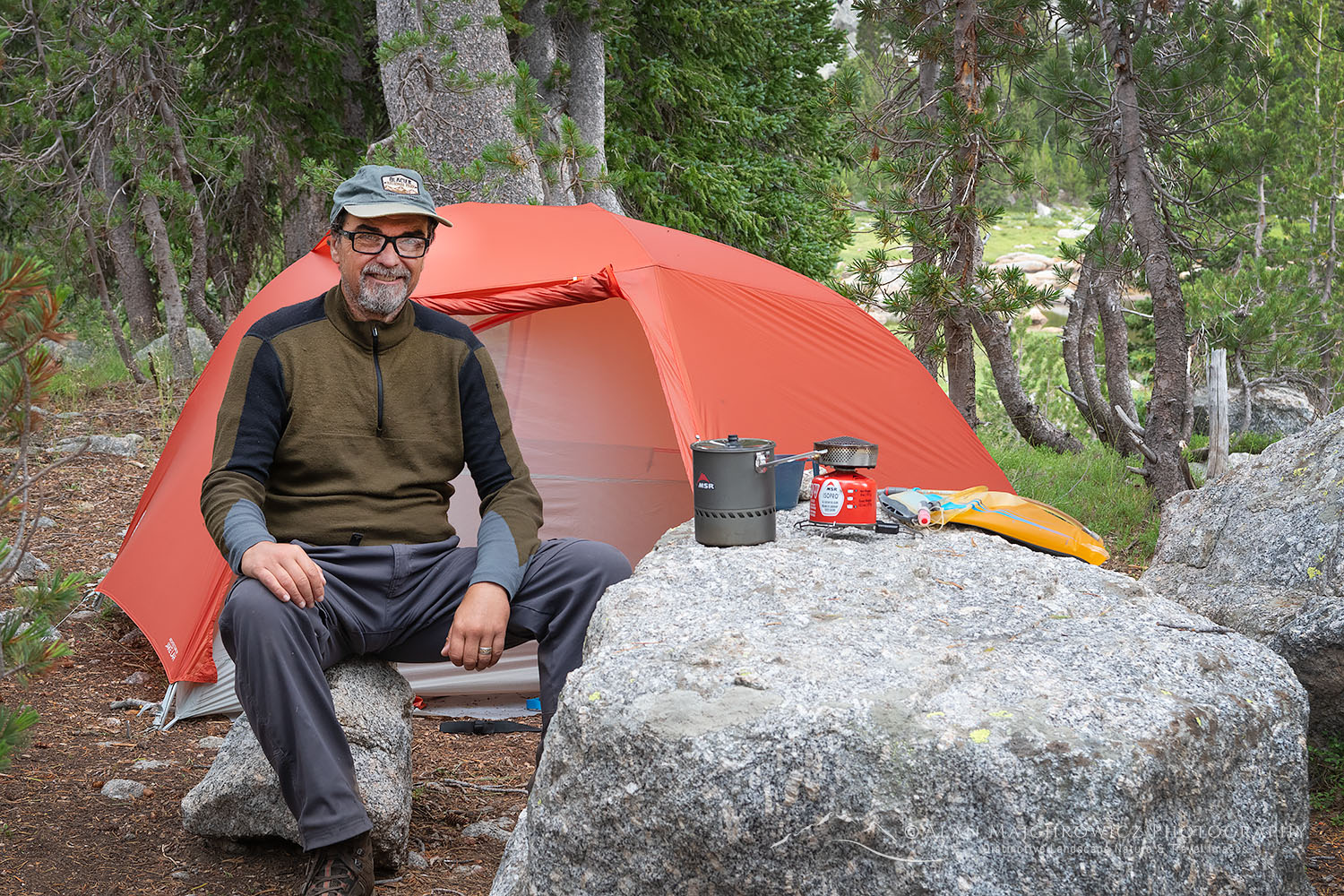
Shadow Lake Camp, Wind River RangeThe author at Shadow Lake camp

Leave No Trace

Please Please Please!  Don’t plan a trip to this or any other wilderness area unless you are prepared to follow the guidelines of Leave No Trace (LNT). The Wind River Range and all other wilderness areas throughout the world are under incredible pressure from growing amounts of visitors. Please do your part to help preserve these precious areas for future generations!

To learn more about the principles and practicing LNT please take a few minutes to visit the Leave No Trace Center for Outdoor Ethics. Your children and grandchildren will thank you!

LEAVE NO TRACE SEVEN PRINCIPLES

1. Plan Ahead and Prepare
2. Travel and Camp on Durable Surfaces
3. Dispose of Waste Properly
4. Leave What You Find
5. Minimize Campfire Impacts
6. Respect Wildlife
7. Be Considerate of Other Visitors
© Leave No Trace: www.LNT.org

Learn about how to protect the places we love to photograph
Visit the Nature First Website
Nature First the alliance for responsible nature photography


Photo Gear Used On This Trip

Nikon D850
Nikkor Lens:
14-24mm 2.8G ED
24-70mm 2.8E ED
70-200mm 2.8E FL ED
Gitzo 1532 Tripod
Really Right Stuff B-55 Ball Head
B+H Polarizing Filter
Vello FWM-N2 Remote Shutter Release

If you enjoyed reading Pyramid and Shadow Lakes Wind River Range please share it with your friends and family.

Also, check out these other Wind River posts!
Cirque of the Towers Wind River Range
Central Wind River Range Backpacking
Bonneville Lakes Wind River Range
Island Lake Wind River Range
Titcomb Basin Wind River Range
Indian Basin Wind River Range
Green River Lakes Wind River Range

All photos appearing in Pyramid and Shadow Lakes Wind River Range are available for Commercial Licensing and Fine Art Prints. Click on any image to purchase, or contact me for more info!

Pyramid and Shadow Lakes Wind River Range

Squaretop Mountain Wind River Range Wyoming

Rocky Mountains Photography Tour

Rocky Mountains Photography Tour

Backpacker on Titcomb Basin Trail Wind River Range Rocky Mountains WyomingBackpacking Wind River Range #66803

Update 8/162021: Due to wildfires and heavy smoke and haze, this trip has been delayed.

This summer’s Rocky Mountains Photography Tour will start on July 9. I was once again hoping to head north to Alaska and the Yukon Territory. But since it looks like the border won’t be open in time, it is on to Plan B. So this year I’ll be revisiting some locations from 2019 and 2020.

These locations will mainly the Boulder-White Clouds Wilderness in Idaho, and the Wind River Range of Wyoming. I’m also planning a lengthy backpacking trip to the Chinese Wall in the Bob Marshall Wilderness of Montana. That location was on my itinerary last year but I swapped it out for Glacier National Park instead.

White Clouds Wilderness Rocky Mountains IdahoBoulder White-Clouds Wilderness  #68945  Purchase

Boulder-White Clouds Wilderness Idaho

On last summer’s visit to the White-Clouds I was only able to visit the north section. This year I’ll be backpacking in to the south half to photograph the Boulder Chain Lakes Basin and the some of the highest peaks in the wilderness. This area is also part of the popular White Clouds Wilderness Loop. For my purposes though I will be doing an out and back trip instead of the loop. I’ll also have plenty of time budgeted for layovers at the best locations along the route.

Squaretop Mountain Wind River Range WyomingSquaretop Mountain Wind River Range #66997 Purchase

Wind River Range Wyoming

Ah, what can I say about the Winds? This will be my seventh trip there and I still can’t get enough of this spectacular mountain range. It’s a backpackers’ dream. Thousands of lakes, 40 peaks over 13,000′, miles and miles of trails in the subalpine along the Continental Divide, plus easy cross country travel to boot!

This year my plans will include parts of the Hailey Pass-Washakie Pass Loop, Desolation Valley, and Baptiste Lake. Also on the itinerary will be a return to Cirque of the Towers and Deep Lake. I’ll also be returning to the Green Lakes area for more new photos of the Green River and Squaretop Mountain.

Castle Reef Mountain Sun Canyon Rocky Mountains MontanaCastle Reef Mountain Montana  #68136  Purchase

Bob Marshall Wilderness Montana

Known among locals and avid backpackers as “The Bob”, this wilderness destination in the northern Rocky Mountains has been on my must photograph list for decades. The Bob Marshall Wilderness Complex is a huge swath of land straddling both sides of the Continental Divide. An important part of the Greater Yellowstone Ecosystem it is home to the largest intact population of Grizzlies in the lower 48.

Last year It was on my itinerary but I took a pass due to an unusual opportunity to obtain backcountry permits in Glacier National Park. The destination on this trip will be a multi-day backpack to the famous Chinese Wall. This is arguably the signature feature of the Bob Marshall Wilderness, a 12 mile long 1000′ high limestone escarpment on the Continental Divide.

U.S. Highway 93 Lost River Range IdahoU.S. 93 Idaho #68984  Purchase

A Flexible Itinerary

For an ambitious trip like this several caveats need to be mentioned. First of all if it becomes clear the Canada border will open before the end of July it will be back to Plan A, as in A for Alaska.

Secondly, as with all of my trips that include multiple long backpacking excursions, some locations may be modified due to weather or time constraints. There are already indications of a major wildfire season in the making, so smoky conditions or closed off areas may change my plans.

Finally, if you are in any of these areas in July or August and would like to meet up in the wilderness, or in town for a coffee or beer, feel free to contact me!

If you enjoyed reading Rocky Mountains Photography Tour please share it with your friends, colleagues and family.

Photos appearing in Rocky Mountains Photography Tour are available for Commercial Licensing and Fine Art Prints. Click on any image to purchase, or contact me for more info!

Rocky Mountains Photography Tour

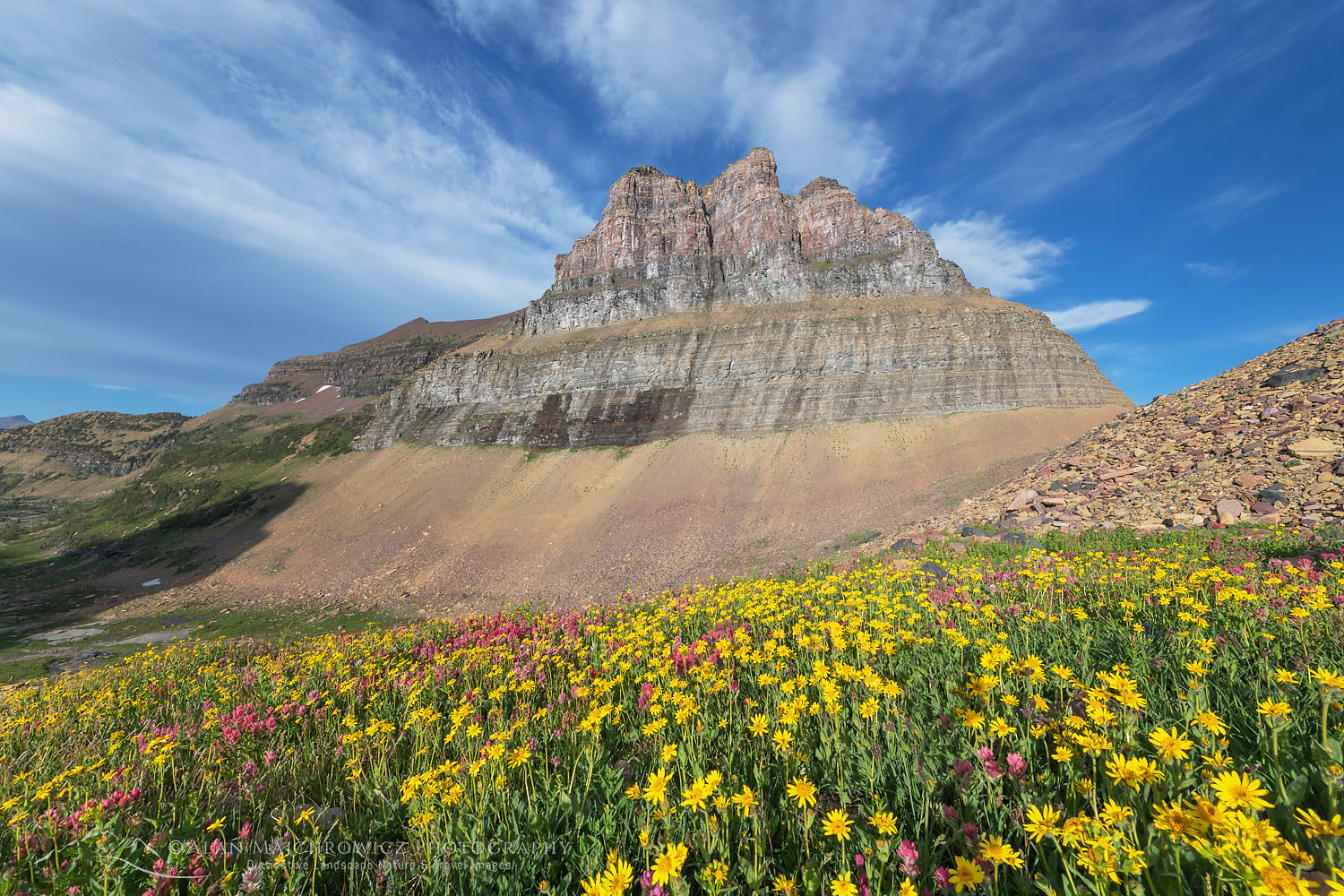
Meadows of Broadleaf Arnica (Arnica latifolia) at Boulder Pass, Glacier National Park Montana

Boulder Pass Glacier National Park Part 2
Boulder Pass Glacier National Park Part 2
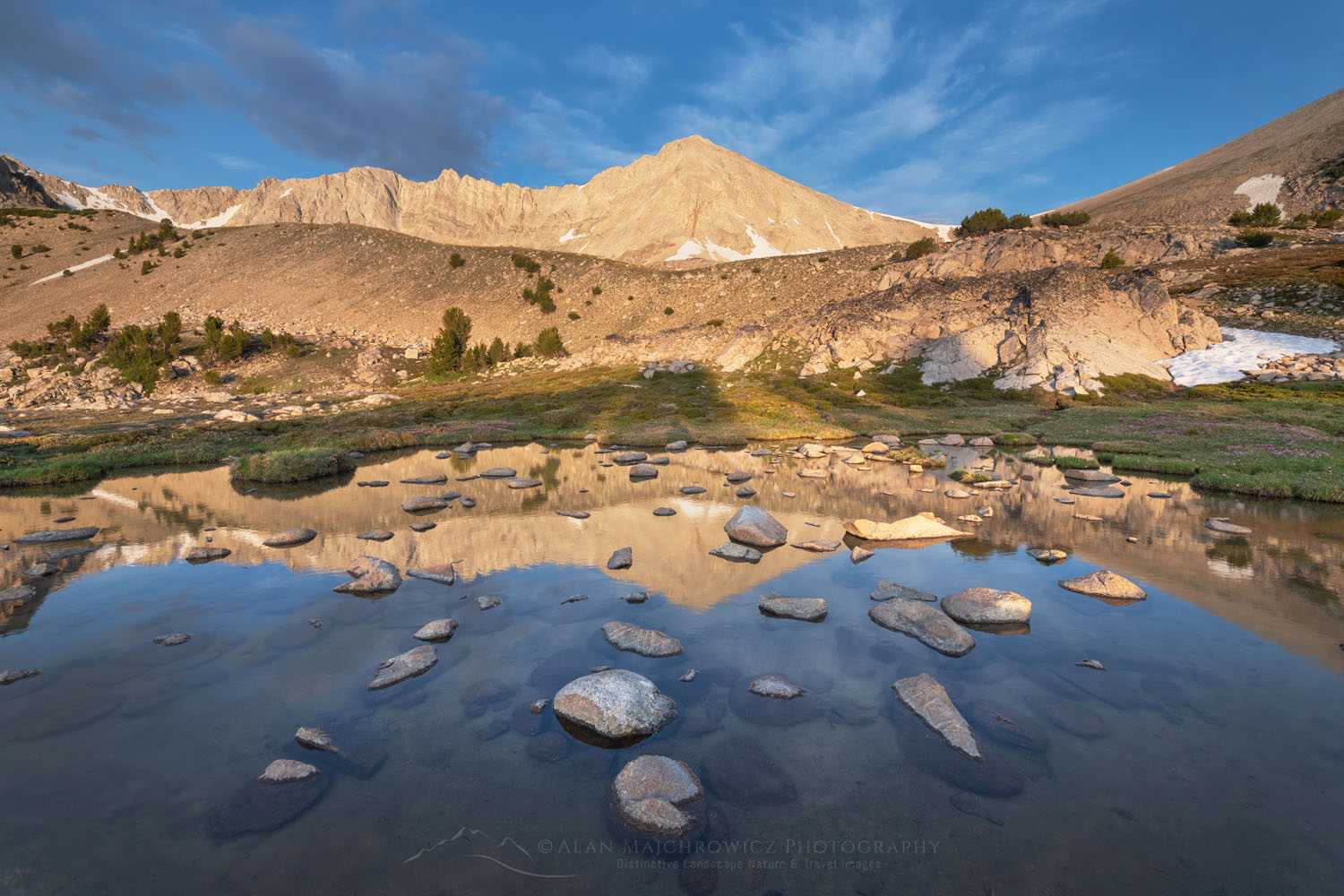
Meadows of Broadleaf Arnica (Arnica latifolia) at Boulder PassBoulder Pass Glacier National Park #69880  Purchase

Read: Boulder Pass Glacier National Park Part 1 here

Glacier National Park is truly one of the great gems in the national park system. It has many attributes which set it apart from other parks. In addition to being a national park, it is also a biosphere reserve, world heritage site, and international peace park.  It is the home of one of the last strongholds of grizzly bears in the lower 48. And although it contains two dozen named glaciers, the park’s name reflects the sculpting of its terrain by ice age glaciation.

All of this and more attracts visitors from around the world, to the tune of 3,000,000 visitors a year, on average. The reasons visitors flock to the park are as diverse as the park’s features. Some come to marvel at the beauty of the mountains. Some hope to see wildlife close up. Others come solely to escape the crushing pressures of modern-day society. Unfortunately, the latter have little chance of doing so when touring the park by car.

Others like me come to the park to photograph the dramatic landscape of the northern Rocky Mountains. As I mentioned in my previous post, I’ve been to Glacier many times over the years and photographed it in all seasons. Nearly all of those trips were to iconic front-country locations. But last summer I took the opportunity to visit a remote and special corner of Glacier National Park, Kintla Lake, and Boulder Pass.

First Day Along Kintla Lake

The remoteness of Kintla Lake and Boulder Pass in the northeast corner of the park looked appealing to me. It was a long hike and passed through areas with lots of photographic potential. But first I needed a wilderness permit, and it took me a couple of tries to obtain one. Even though it was August the park service just opened campsites at the pass the day before. So I was one of the first to stay there that season.

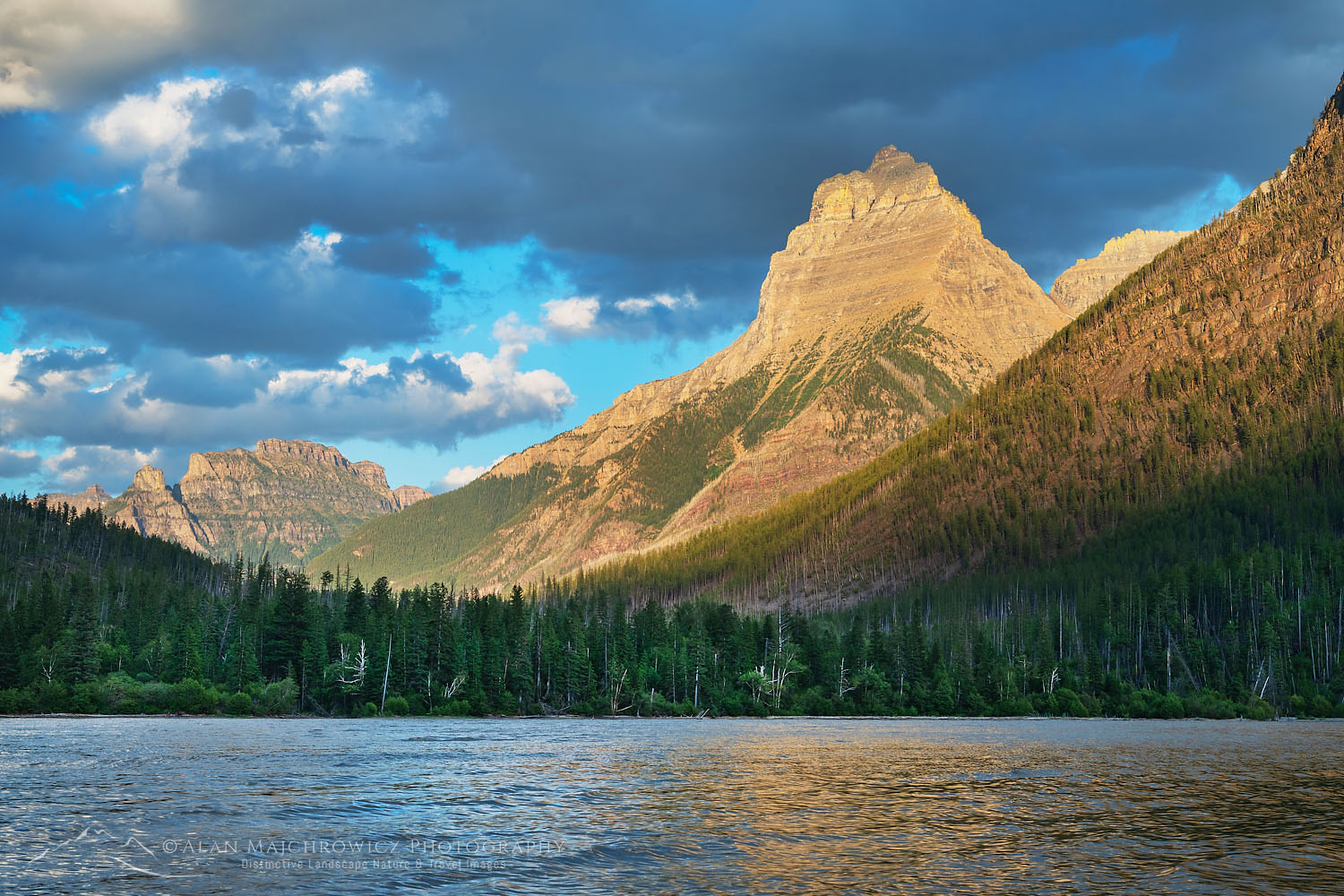
Kinnerly Peak Kintla Lake. Glacier National Park MontanaKinnerly Peak Kintla Lake  #69835  Purchase

The hike begins at Kintla Lake and reaches Boulder Pass 17.5 miles later, with about 3200′ of elevation gain along the way. Some hardcore long-distance hikers can make the trip in one day, but nearly everyone splits it in two. It’s also possible to continue down Boulder Pas, down to Waterton Lake, and exit the eastern side of the park. A popular loop trip would begin at Kintla Lake and exit at Bowman Lake, or vice versa. My plan was to simply do an out and back on the same route.

The first day was a pretty easy hike along Kintla Lake to Kintla Head camp. It’s a pleasant hike mostly through the forest with a few views of the lake along the way. The first day or two on a long hike is sometimes the hardest since your pack is full of food and fuel. At camp, it was a pleasure to sit around the food prep area with other hikers and swap stories and backgrounds. I usually travel solo so chatting it up with others is a welcome treat.

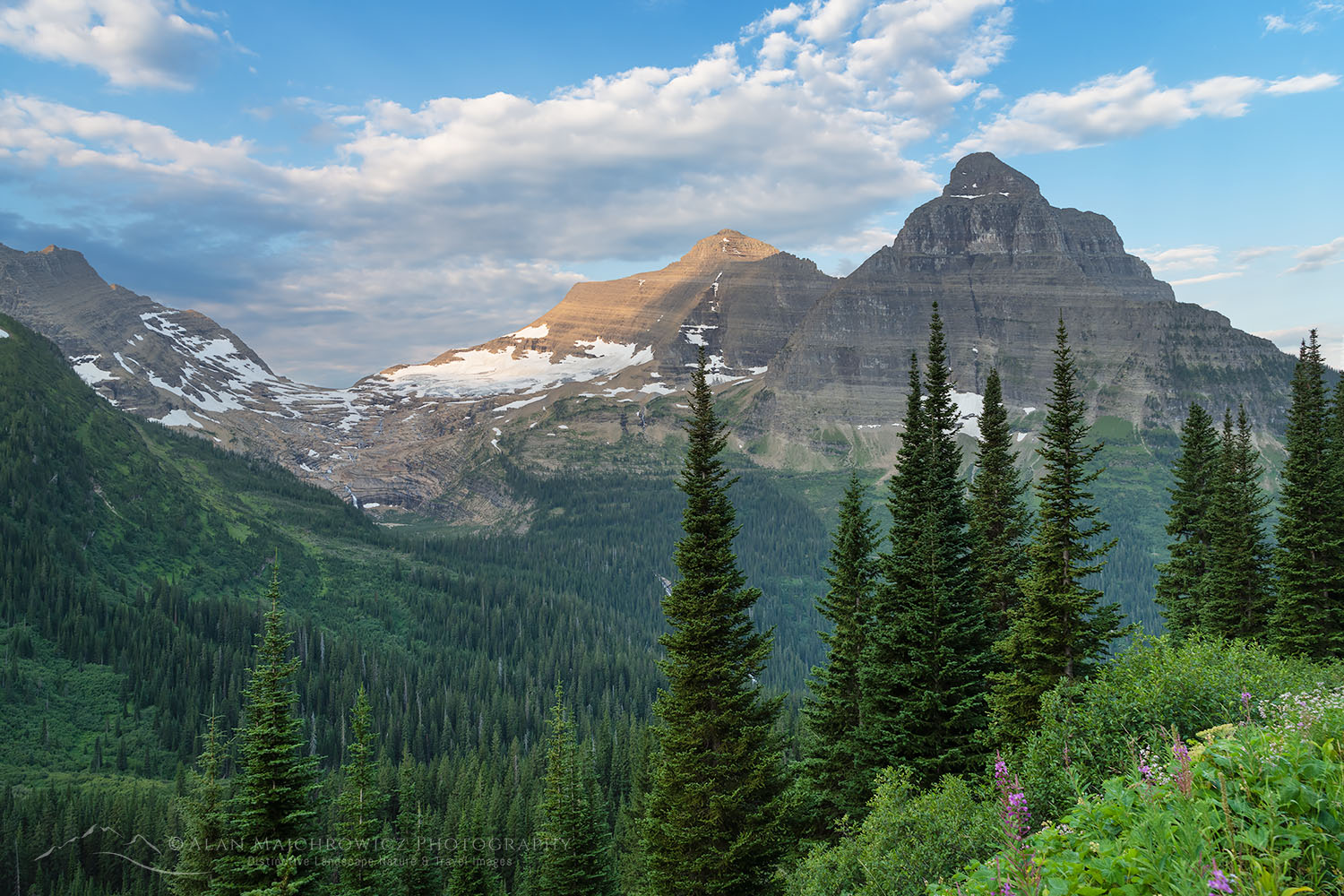
Kintla and Kinnerly Peaks Glacier National Park MontanaKintla Peak Glacier National Park #70050  Purchase

Kintla Lake to Boulder Pass Glacier National Park

The hard work would come the next day. It was another 11 miles to Boulder Pass camp, with nearly all of the 3200′ of elevation coming in the last miles. I got an early start to beat the heat and travel at a leisurely pace. Just past the head of Upper Kintla Lake, the work began. The trail wasn’t too steep or difficult, just a long constant uphill slog. At one point the trail passes through about a mile of thick shoulder-high brush. Often it was so thick it was hard to see the trail or rocks and roots.

It seems to take forever to reach the point where signs of the subalpine begin. And although the view across the valley to Kintla Glacier is rewarding it’s difficult to tell where the trail tops out at the pass. It was when I was just below the pass that I saw my first grizzly in the backcountry.

I’ve been backpacking for 40 years and this is my first bear encounter, go figure. The bear was a sow with two cubs about 25 yards uphill of the trail. Since I was following the book and making plenty of noise she saw me and slowly moved away. But proceeding further would have brought me closer to the next switchback. So I waited and continued to talk loudly. The bear eventually moved on and I continued up to the pass. A couple of passing hikers, who apparently felt close bear encounters weren’t anything to worry about, lightheartedly kidded me for talking so loudly to ward off the bear.

Wildflower meadows at sunset. Boulder Pass, Glacier National Park MontanaBoulder Pass Wildflowers  #69886  Purchase

At Boulder Pass Glacier National Park

Finally, the trail reached the pass with all its glorious views. At this point, an oddity struck me. Everywhere you go in Glacier Park you’re passing by or walking over colorful layers of sedimentary rock. However, at Boulder Pass, I was walking over a vast expanse of ancient lava.

Afterward, I did some geology research and found out that it was Purcell Lava.  Long ago when the area was still beneath an ancient sea molten rock squeezed up from below and flowed onto the sediment forming rocks. It was also interesting to see that this lava exposed at the pass was smooth and bore striations from past glacial activity.

Meadows of Broadleaf Arnica (Arnica latifolia) at Boulder PassThunderbird Mountain from Boulder Pass   #69907  Purchase

The Boulder Pass camp has three tent sites, a food prep area with hanging poles, an outhouse, and one very aggressive marmot. I’ve never come across a marmot that was so intent on obtaining food or salt from sweaty backpack straps. You have to be on guard since marmots can easily chew through straps, shoelaces, and other important items in search of nutrients and food. This guy had the appearance of having seen quite a few winters and fortunately eventually gave up on his pursuits.

I had three days to explore and photograph the area, and after a bite to eat I was eager to get to work. It turns out that Boulder Pass is a pretty big area with a few adjacent benches and basins below Boulder Peak. There was everything from lush meadows, streams, and tarns, to glacial moraines and debris. Plenty of subject matter to keep me busy.

Meadows of red paintbrush wildflowers at Boulder Pass. Glacier National ParkWildflowers at Boulder Pass  #69947  Purchase

Hello Bear

After some exploring, it was getting towards golden hour in the evening. The best option was to go back to the meadows teeming with wildflowers. The compositions I wanted meant shooting very low to the ground with an ultra-wide-angle lens.  With the setting sun shining through the trees and colors glowing all the elements were coming together. I was absorbed in photographing the moment.

It was then I heard a noise and looked up from the camera to see a large grizzly bear. It was just rounding a corner and coming up the trail about 50′ away. We both saw each other at the same time and the bear jumped back a bit in surprise. Very slowly I stood up while at the same time reaching for my bear spray. At this point, I remembered the sow and cubs from earlier in the day. I carefully looked behind me to see if I was in the unfortunate position of being between a mother and her cubs. There was no sign of them so perhaps this was a different bear.

Meadows of purple aster wildflowers at Boulder Pass. Glacier National ParkWildflowers at Boulder Pass  #69970  Purchase

After a few seconds, which seemed much longer, the bear slowly moved away downslope while watching me. Then it turned its head and bolted away. This was about as close as I ever would want to get to a grizzly. I can’t say I was terrified, but I was nervous and very conscious about keeping my wits and not making a wrong move. After a while, I went back to photographing my composition.

I’ve since told this story many times and have always gotten the same question. Did you get a picture of the bear? No, I didn’t, at the time photographing the bear was the last thing on my mind.

Exposed section of trail between Brown Pass and Hole in the Wall. Glacier National Park MontanaHole In The Wall Trail  #69893  Purchase

Hole In The Wall Boulder Peak

At the east end of Boulder Pass, the trail descends into the large horseshoe basin of Hole In The Wall. From there it continues to Browns Pass and Waterton Lake, or Bowman Lake. Day hiking on Hole In The Wall looked inviting but there was still a lot to investigate at Boulder Pass.

One area, in particular, was a series of benches on the west side of Boulder Peak. The views from there looking down to Pocket Lake and out to Kintla and Kinnerly Peaks were fabulous. In addition, some wispy clouds were moving in which could make for a great sunset. Since this was my last day at the pass, and it was mostly blue sky days while there, this seemed like the best chance to get some good photos.

Rainbow Peak Glacier National ParkRainbow Mountain from Boulder Pass  #69907  Purchase

Another thing that I noticed just below the west side of Boulder Pass was the presence of Subalpine Larches. These are a special type of conifer which in the fall their needles turn brilliant gold and fall off. In all my years of looking at photos of Glacier Park, I never saw any pictures of these trees in fall. So it was surprising to see them. Of course, this means that a trip to Boulder Pass in late September would be well worth it.

The next day I hiked back down to the Camp at Upper Kintla Lake. The lake was pleasant and scenic but nothing like the dramatic scenery up at the pass. The following day was the long hike out to complete the trip. It was a sweet feeling to have finally made such a wonderful trip to a new section of the park. It was also a bit sad when reflecting on when or if I’ll ever return.

Upper Kintla Lake Glacier National Park MontanaUpper Kintla Lake  #70062  Purchase
 

If You Go to Boulder Pass Glacier National Park

Distance from Kintla Lake Trailhead to Boulder Pass:  17.5 miles
Elevation Gain:  ~3200
Difficulty:  Moderate
Red Tape:  National Park Entrance Fee, Backcountry Wilderness Permits

The Kintla Lake Trailhead is located about 40 miles north of the West Entrance on the North Fork Road. The last 10 or so miles are on a gravel road which can be very dusty and bumpy. There is a hiker’s parking area 1/4 from the lake. There is also a small campground at the lake.

The  West Entrance and Apgar area has many services including gas, groceries, dining, and a very large campground. If you have the time it’s a great place to stay for a day or two before or after your hike.

Food bags hanging for bear safety at food prep area of Kintla Lake Campsite Glacier National Park MontanaKintla Head camp food prep area #69827

Bear Safety in Glacier National Park

All backpackers are required to carry bear spray. Bear canisters are not required as of this writing, as all backcountry camp areas have food prep areas with poles for hanging food. Make sure to bring about 50′ of parachute cord or similar to hang your food. When getting your permit you’ll also need to watch a short video on bear safety. Don’t take this lightly, as you’ve seen in this post there is a good chance of seeing bears on the trail or near campsites.

Sunset over Kinnerly and Long Knife Peaks seen from Boulder Peak. Glacier National Park MontanaSunset Boulder Pass Glacier National Park  #70041  Purchase

Leave No Trace

Please Please Please!  Don’t plan a trip to this or any other wilderness area unless you are prepared to strictly follow the guidelines of Leave No Trace (LNT). Glacier Park and all other wilderness areas throughout the world are under incredible pressure from growing amounts of visitors. Please do your part to help preserve these precious areas for future generations!

To learn more about the principles and practicing LNT please take a few minutes to visit the Leave No Trace Center for Outdoor Ethics. Your children and grandchildren will thank you!

Seven Leave No Trace Principles

  • Plan ahead and prepare.                                       
  • Travel and camp on durable surfaces.                 
  • Dispose of waste properly.                                                                         
  • Leave what you find.                                            
  • Minimize campfire impacts (be careful with fire).
  • Respect wildlife.  
  • Be considerate of other visitors.

Hoary Marmot (Marmota caligata) Glacier National ParkMarmot at Boulder Pass Glacier National Park  #69980  Purchase

Photo Gear Used On This Trip

Nikon D850
Nikkor Lens:
14-24mm 2.8G ED
24-70mm 2.8E ED
70-200mm 2.8E FL ED
Gitzo 1532 Tripod
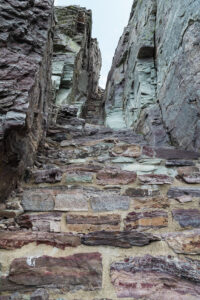
Really Right Stuff B-55 Ball Head
Assorted Lee Graduated Neutral Density Filters
B+H Polarizing Filter
Vello FWM-N2 Remote Shutter Release

If you enjoyed reading Boulder pass Glacier National Park please share it with your friends and family. And make sure you check out Boulder Pass Glacier National Park Part 1

Photos appearing in Boulder Pass Glacier National Park  are available for Commercial Licensing and Fine Art Prints. Click on any image to purchase, or contact me for more info!

Boulder Pass Glacier National Park

Sunrise at Lake McDonald Glacier National Park Montana

Boulder Pass Glacier National Park Part 1

Boulder Pass Glacier National Park

Sunrise at Lake McDonald Glacier National Park MontanaLake McDonald Glacier National Park #69738  Purchase

Glacier National Park is one of the most popular national parks in the country. It averages around 3,000,000 visitors a year. That’s a lot of people, and you would be correct in thinking the park has an overwhelming amount of visitors. However, like most popular national parks, nearly all of those visitors only experience the park along front country roads and its iconic attractions. In Glacier, the vast majority of visitors only travel along Going-to-the-Sun Road and stay only for a day. If they get out of their car to experience the park it is most likely at Logan Pass.

Indeed, on any given summer day the line of traffic on Going-to-the-Sun Road begins well before dawn. The parking lot at Logan Pass usually fills to capacity by 9 am. Soon after that, there is traffic congestion similar to that in any big city, and most scenic pullouts have no open parking spaces left. Those that want a more in-depth experience often choose day hikes beginning with Going to the Sun Road. And a smaller percentage explore trails in other sections of the park. The smallest percentage of visitors choose overnight backpacks to more well-known backcountry destinations.

It would seem that there is no corner of Glacier National Park free from crowds. This would be true if the park service didn’t have a strict permit system in place that limits backcountry campsites. This system is necessary to preserve the wilderness experience, and also protect fragile environments and wildlife. The visitor wanting to spend a night or two in the backcountry must negotiate the online permit reservation system. This can be very frustrating as nearly all sites fill up many months in advance. Some sites can even be closed and reservations canceled at the last minute due to bear activity.

Wilderness Permit Line Glacier National ParkWilderness permit line Glacier National Park

Obtaining a Permit for Boulder Pass

All this changed last summer. Because of the COVID pandemic, Glacier was operating the permit system on an in-person first-come basis only. So I saw this as a chance to improve my odds of doing a multi-day backpacking and photography trip into one of the most beautiful and remote areas of the park. Nearly all photographers gravitate to several well-known places in the park, such as Logan Pass, Lake McDonald. But my plan was to photograph in Kintla Lake and at Boulder Pass, a relatively unknown area for photographers.

So with time on my side, I set about obtaining a permit for a six-day trip. Accommodations in Glacier during the summer months are difficult to come by in a normal year. But last summer I had to work even harder to find a place, resorting to some obscure places I’ve found over the years. Fortunately, I found a place outside the park only minutes away from the wilderness permit office.

It still wasn’t easy to get my permits though. The line for permits was long and people began arriving well before dawn. On my first attempt I got there around 6 am and there were already at least 40 people in front of me. After waiting a couple of hours I heard that my chosen sites were already filled. So the next day I set my alarm for 1:30 am. Upon arriving at the office I was relieved to see there were only four others already in line. With a camp chair and my sleeping bag, I got comfortable until the office opened at 9. The waiting paid off and I left with a permit for my desired sites and dates in hand.

Couple on dock at Sunrise at Lake McDonald Glacier National Park MontanaSunrise proposal on Lake McDonald Glacier National Park #69805

Extra Time in Glacier Park

After obtaining my permit for Boulder Pass, I still had a couple of days to wait to start my trip. With time to kill there was no lack of ways to use it. Every morning and evening since arriving I set up to photograph at Lake McDonald. During my stay there were several very nice instances of light, making the efforts worthwhile.

One morning after arriving at the lake before dawn there was a couple on the nearby boat dock. I didn’t pay much attention to them until I saw the man drop to one knee. It was then apparent he was proposing marriage. He certainly chose the right day and time since the sky was ablaze with color at dawn.

On another occasion, I was sitting on the beach in the evening. A couple showed up that apparently were just married since the woman was wearing her wedding gown. They were there for some post-wedding portrait photographs. I wonder how many such events take place here during the year?

During this free time, there was also the opportunity to get in a day hike or two. After a quick look at the park map, one hike, in particular, rose above the rest, Sperry Chalet and Comeau Pass.

Sperry Chalet, Glacier National ParkSperry Chalet Glacier National Park  #69749

Sperry Chalet

A few years back the historic Sperry Chalet burned in the Sprague Fire. It was since rebuilt and this summer it was again open for business. Further up the trail from the chalet is Comeau Pass with an overlook of the Sperry Glacier. Together they offered a chance for me to see a new area of the park while getting a good workout.

The hike begins at the trailhead across the road from Lake McDonald Lodge. There is a huge parking area and it too overflows with cars by noon, so I got there early in the morning. The hike to Comeau Pass and back is around 17 miles with a nearly 5000′ in elevation gain. This is definitely a full-day leg burner unless you’re a trail runner who does this kind of thing before breakfast.

Sperry Chalet cookhouse entrance during Covid 19 Pandemic, Glacier National ParkSperry Chalet Dining Hall  #69752

If you make it all the way you’ll be rewarded with spectacular views at an elevation 1500′ higher than those at Logan Pass. Most hikers on this trail however are happy to get as far as Sperry Chalet, about 12 miles round trip with 3600′ elevation gain. The chalet sits right at the tree line, and the views down the valley are great, but the best scenery lies further up.

The chalet can be described as rustic elegance. Although during the pandemic only registered guests were allowed inside I was able to peak in the windows. There was a classic western lodge or cabin look to the rooms. The chalet has no electricity but there were oil lamps in the rooms, adding to the charm. There is a separate building for dining, looking in the door the aroma of freshly baked cinnamon rolls was wafting out. Sadly again only guests could enter this summer.

View from Comeau Pass, Glacier National Park MontanaComeau Pass Glacier National Park #69770

Comeau Pass

From the Chalet, the trail passes numerous waterfalls, wildflowers, interesting rock layers, and two alpine lakes. Finally, as you get closer to the pass it appears the trail dead-ends at the base of a cliff. However, when you get there a steep narrow stairway cut into the cliff awaits you. Something any fan of Lord of the Rings will enjoy. It’s kind of a short tame version of the Stair of Cirith Ungol, but there aren’t any giant spiders or Dark Tower on the other side. There are cables to assist in ascending and descending. On my hike the stairs acted like a wind tunnel gone nuts, it would have been difficult to get down safely without them.

Stairs cut in rock at final segment to Comeau Pass trail Glacier National ParkComeau Pass Stairway Glacier National Park #69777

Wildlife is another perk of this hike. On the way up to the pass, a herd of mountain goats blocked my way. They took a while to move on so I played wildlife photographer for a few minutes. On the way down a passing hiker alerted me to a grizzly sow and two cubs not far from the trail. I saw them from a good distance and was happy they weren’t closer.

Mountain Goats (Oreamnos americanus) on Comeau Pass Trail, Glacier National Park MontanaMountain Goats Comeau Pass Trail  #69757

Even though I was already on several lengthy backpacking trips in the past month the last few miles back from this one was slow and tiring. It was nice to get back to camp relax and recoup before starting my six-day trip to Boulder Pass.

Click here to read part two of Boulder Pass Glacier National Park

Canoeist paddling on Lake McDonald at sunrise. Glacier National Park MontanaLake McDonald Glacier National Park #69818 Purchase

If you enjoyed reading Boulder Pass Glacier National Park please share it with your friends and family. Next up Boulder Pass Glacier National Park Part 2!

Photos appearing in Boulder Pass Glacier National Park are available for Commercial Licensing and Fine Art Prints. Click on any image to purchase, or contact me for more info!

Boulder Pass Glacier National Park