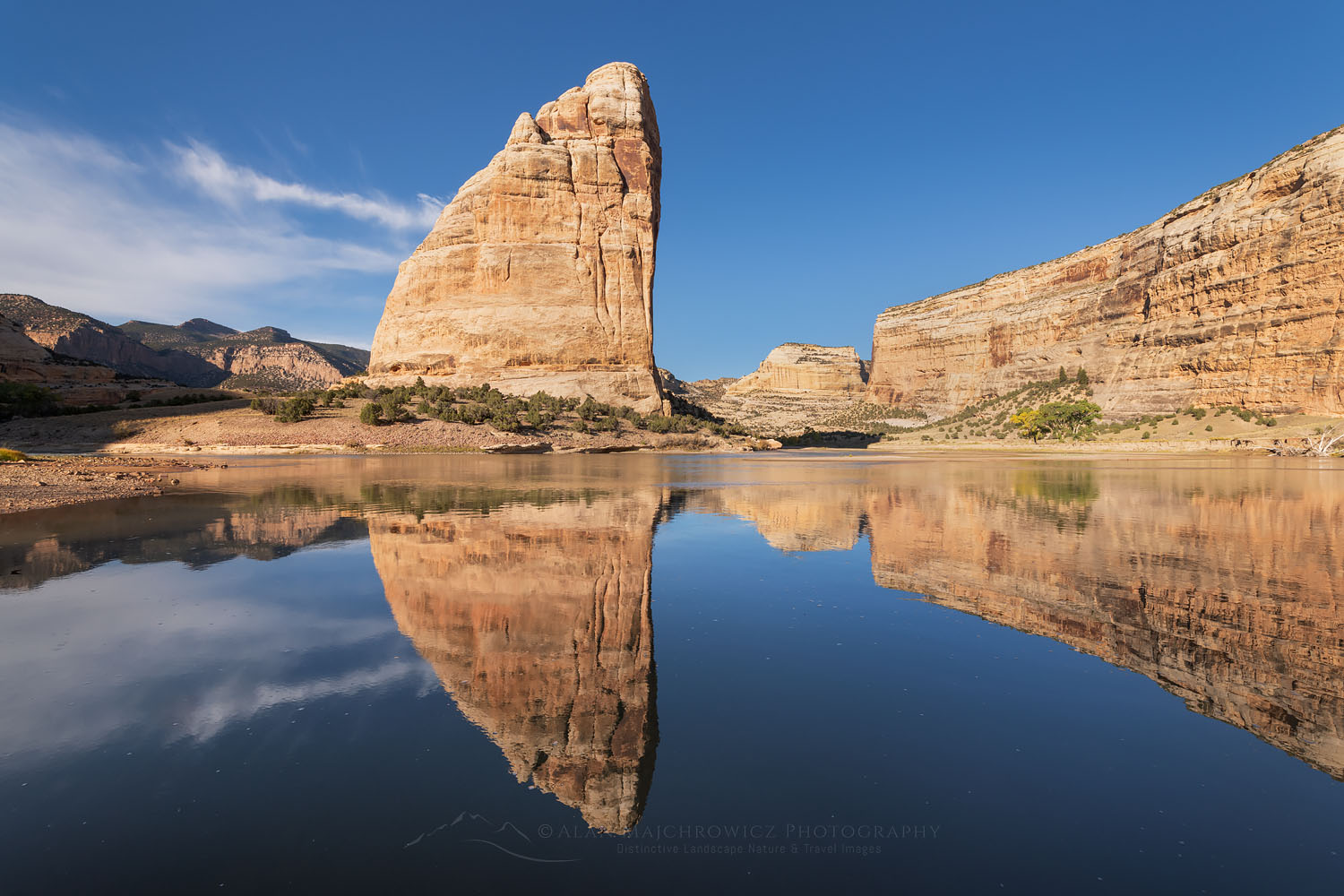
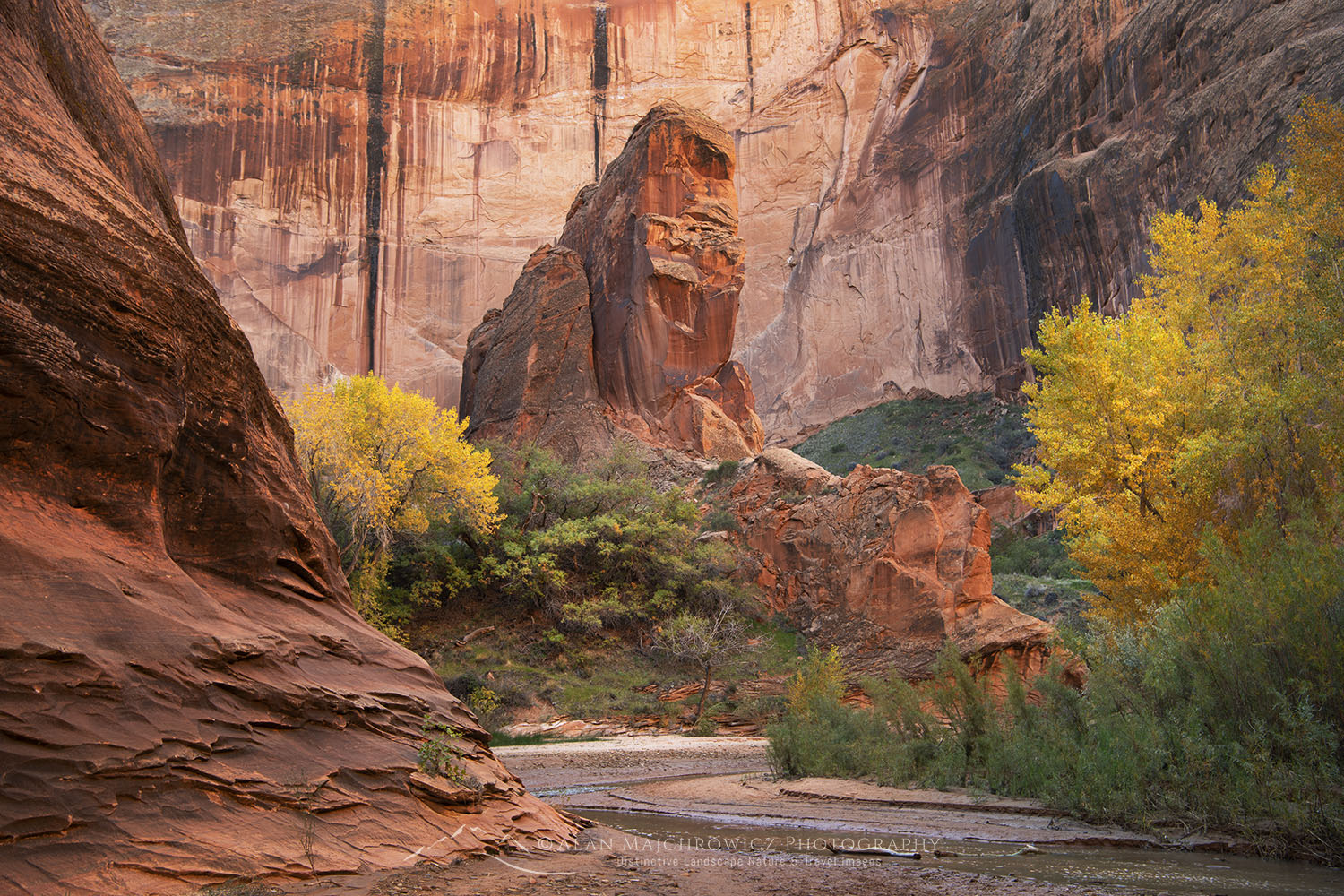
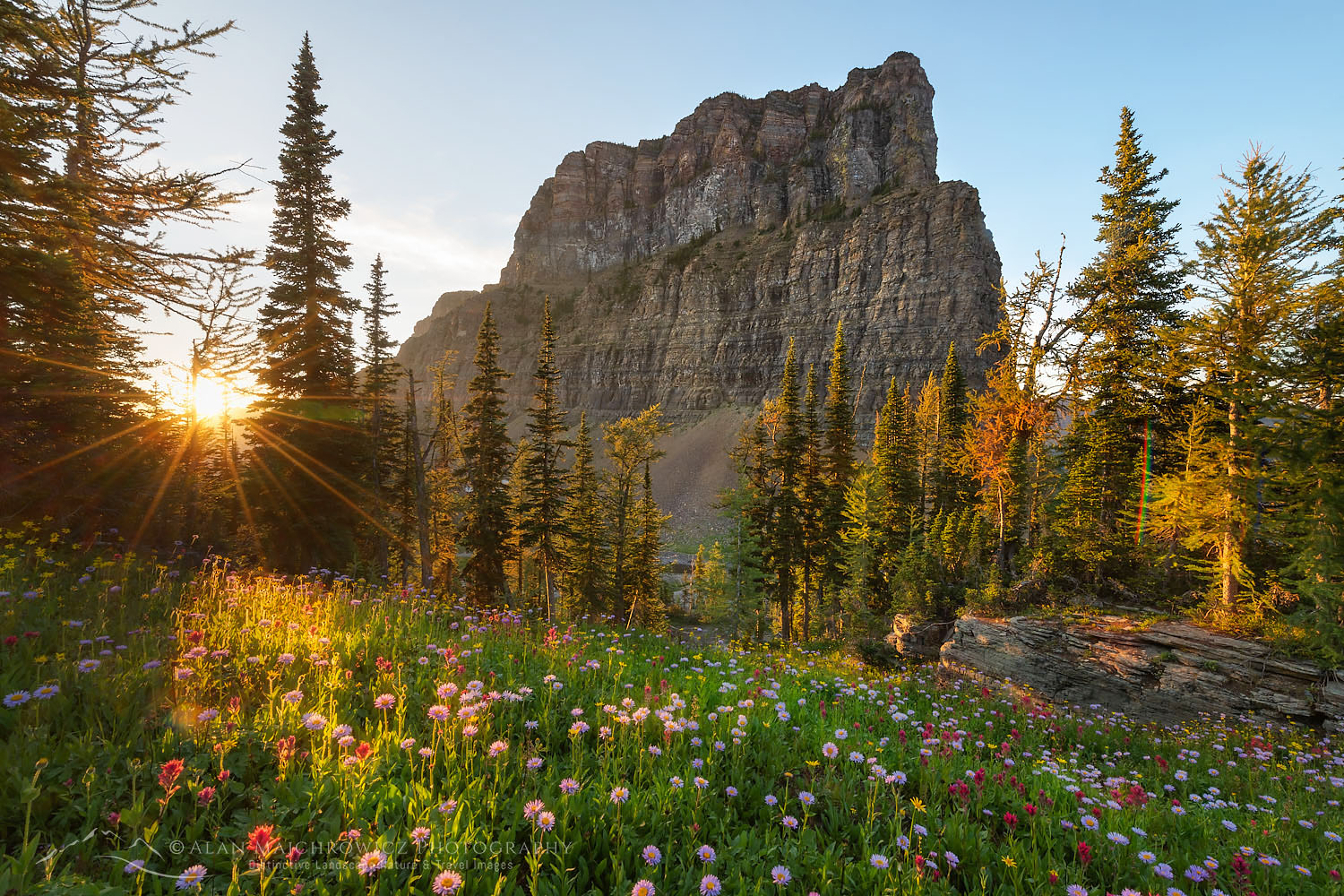
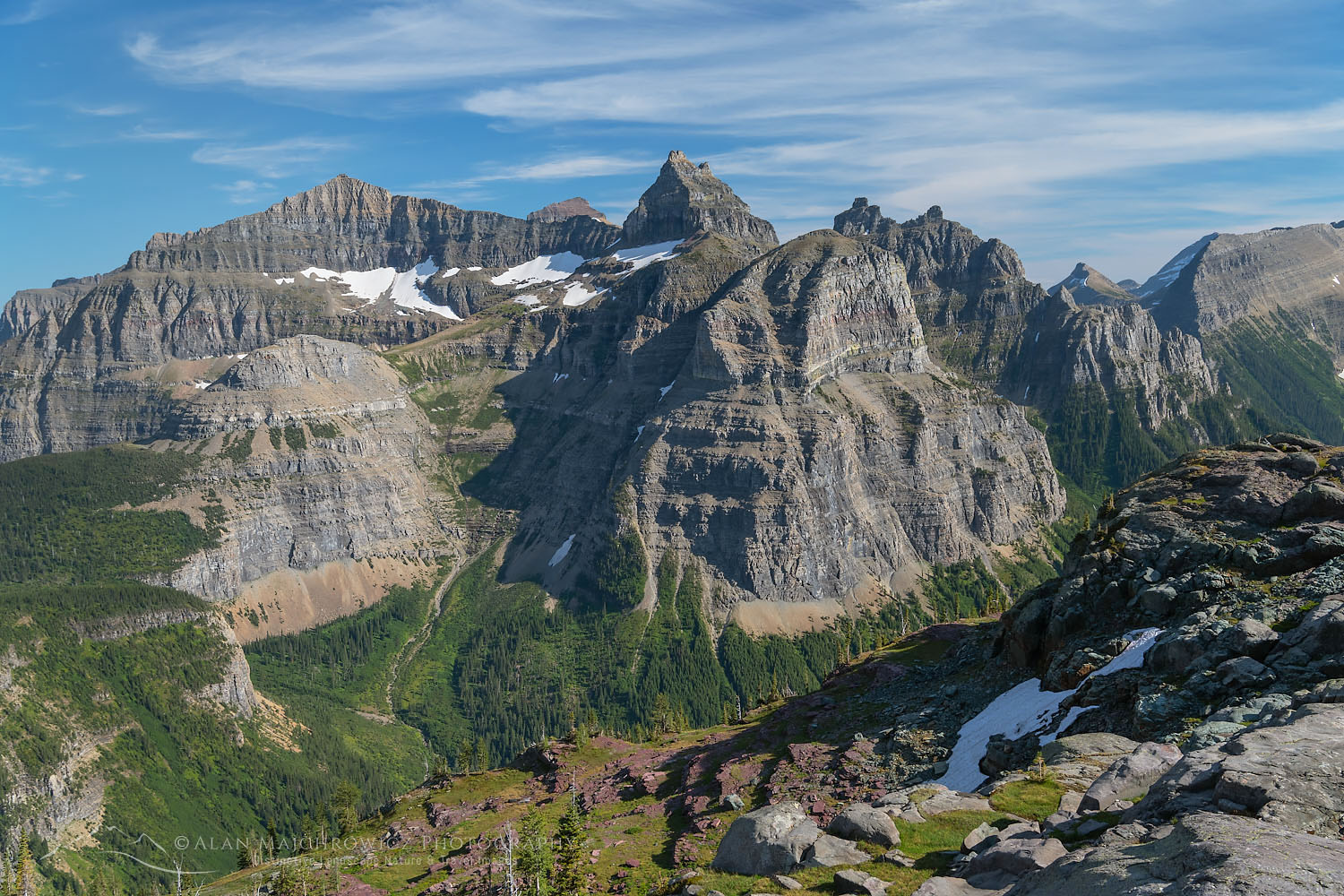
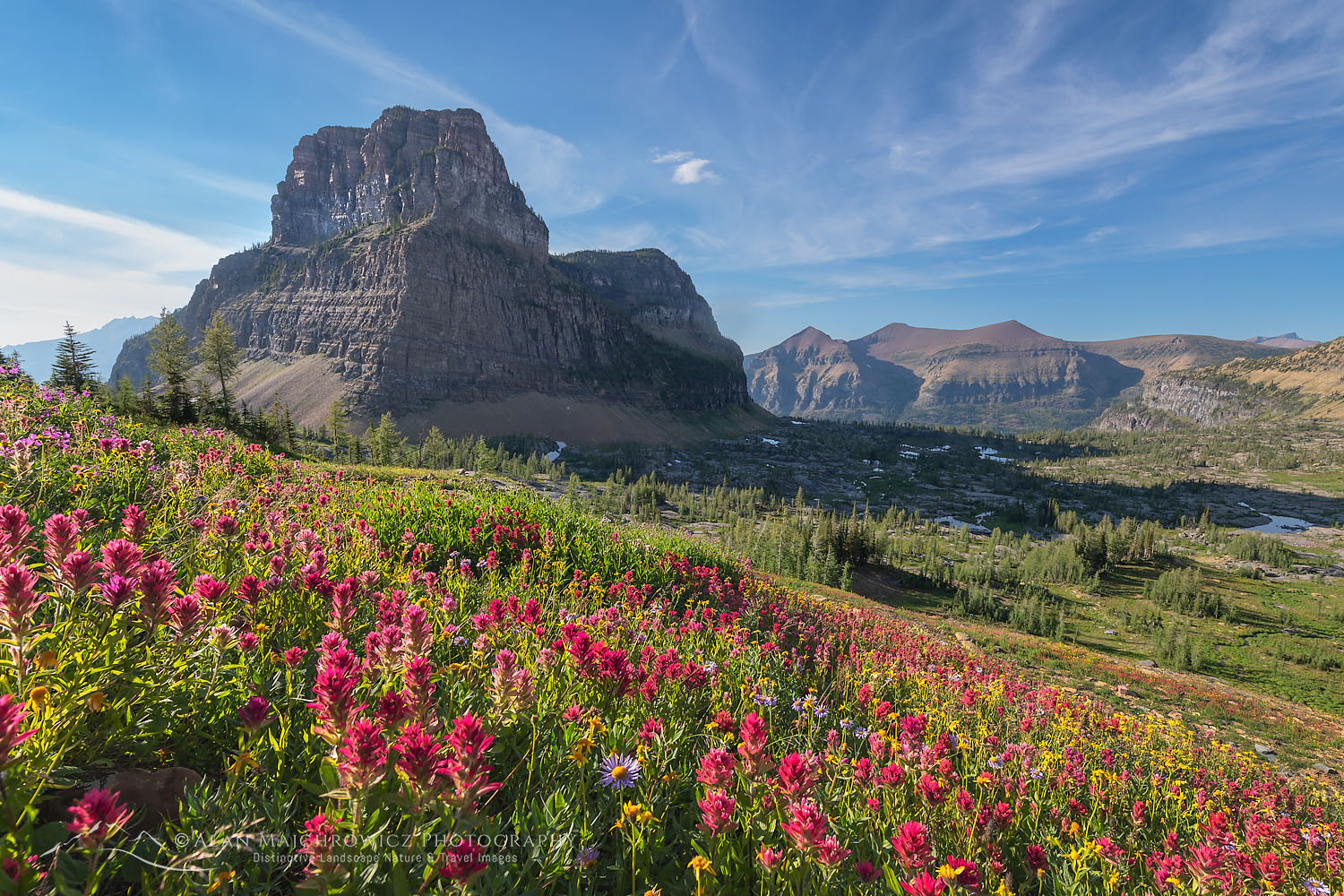
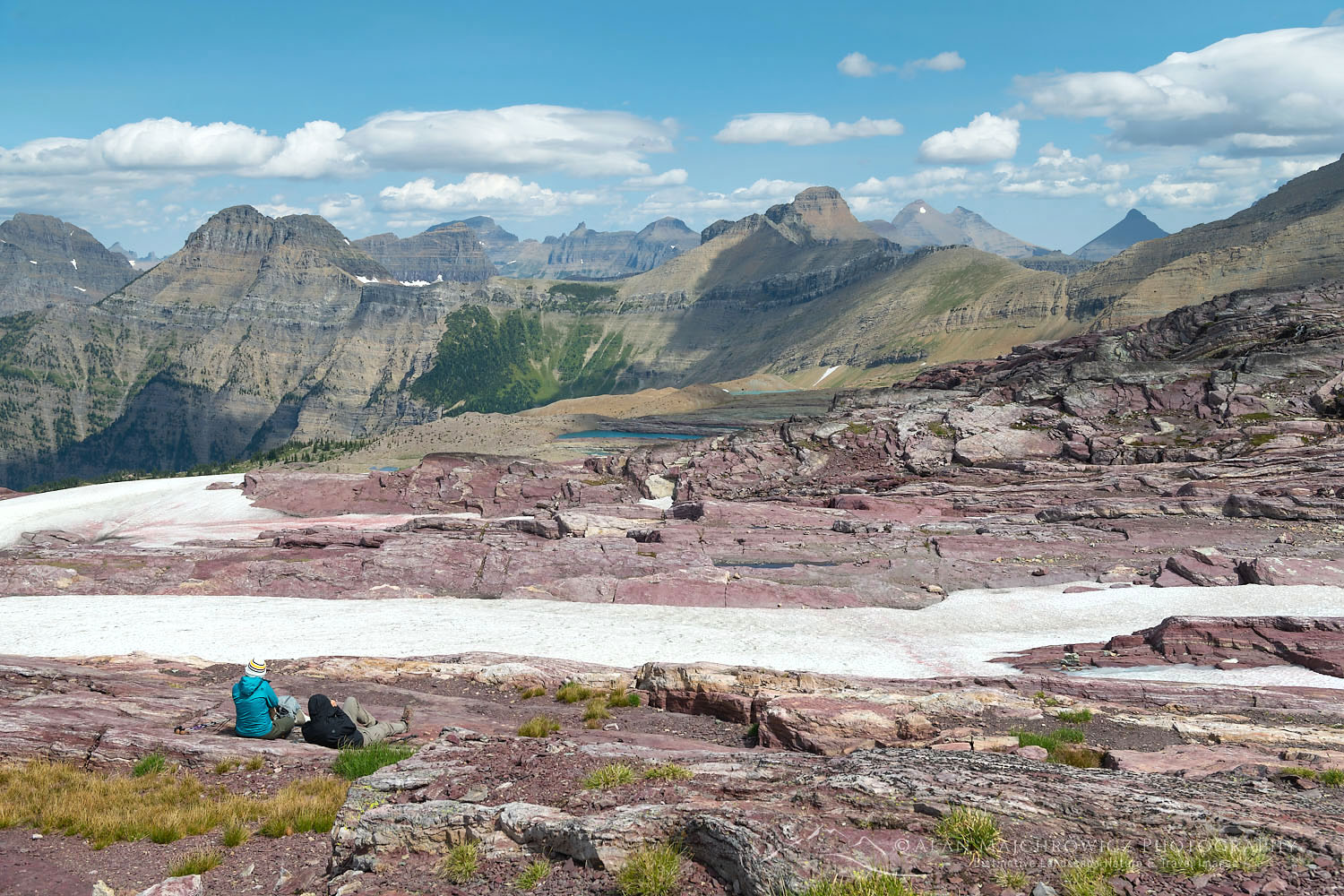
Steamboat Rock Dinosaur National Monument

Photo Highlights of 2021

The year is swiftly coming to a close, so it’s time to look back and present my Photo Highlights of 2021. Although overall it was a better year than 2020, many aspects made it resemble the slightly less evil twin of 2020. But for new photography and business, the past 12 months were outstanding. I added a record number of new images to my library from some outstanding locations. Plus print sales and commercial licensing came in at an all-time high. Many thanks to all of you out there who helped make 2021 a great year!

This year the photos appearing in this post are those which I consider my favorites. Although they are still among some of the best of 2021, for me they mostly reflect fond memories of the past year’s trips.  Selecting these 11 images was especially difficult since there were many more favorites that I would’ve liked to include. And also because I’m still working on editing and processing lots of great new images from my fall Southwest trip. Many of those would easily make this list, but unfortunately, they’ll have to wait.

Vote For Your Favorite Photo Highlights

As always feel free to vote for and comment on your favorites. And if you would like to see more images made in 2021 please check out the New Images Gallery. Also, please feel free to share this post with friends, family, and colleagues. Thanks for looking!

Taylor Dock Boardwalk Boulevard Park Bellingham Washington Photo Highlights of 2021#1  Taylor Dock Boardwalk Bellingham Washington  #70663  Purchase

Cape Perpetua Oregon Photo Highlights of 2021#2  Cape Perpetua Oregon  #71095  Purchase

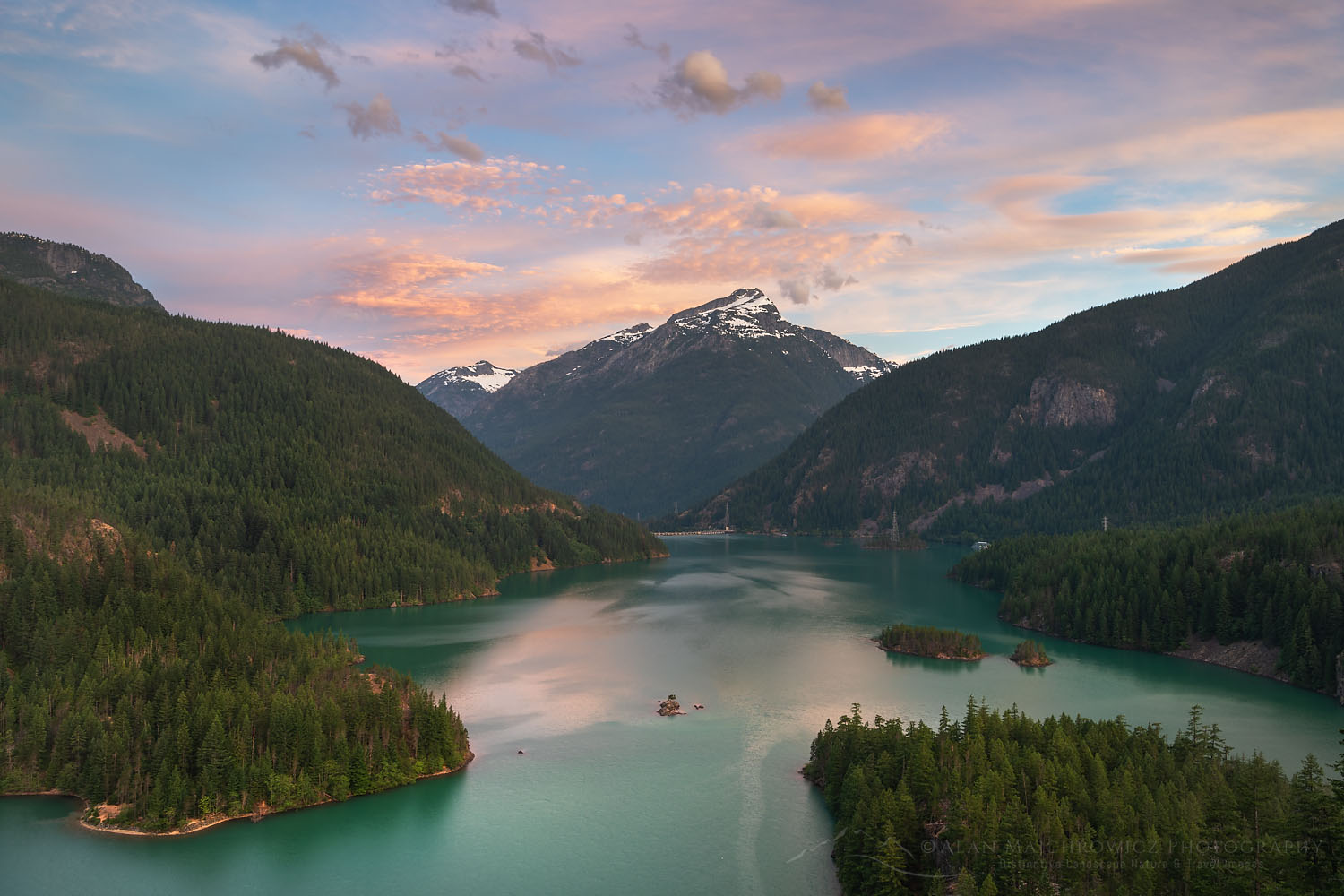
Diablo Lake North Cascades Washington Photo Highlights of 2021#3   Diablo Lake North Cascades  #71702  Purchase

Fog over Puget Sound At sunrise seen from Olympic Mountains. Mount Baker is in the distance #71815#4  Fog over Olympic Peninsula from Olympic National Park  #71815  Purchase

Myrtle Falls Mount Rainier National Park#5 Myrtle Falls Mount Rainier National Park  #72865s  Purchase

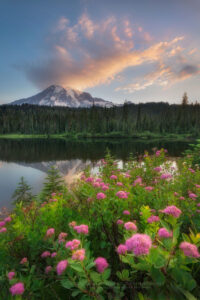
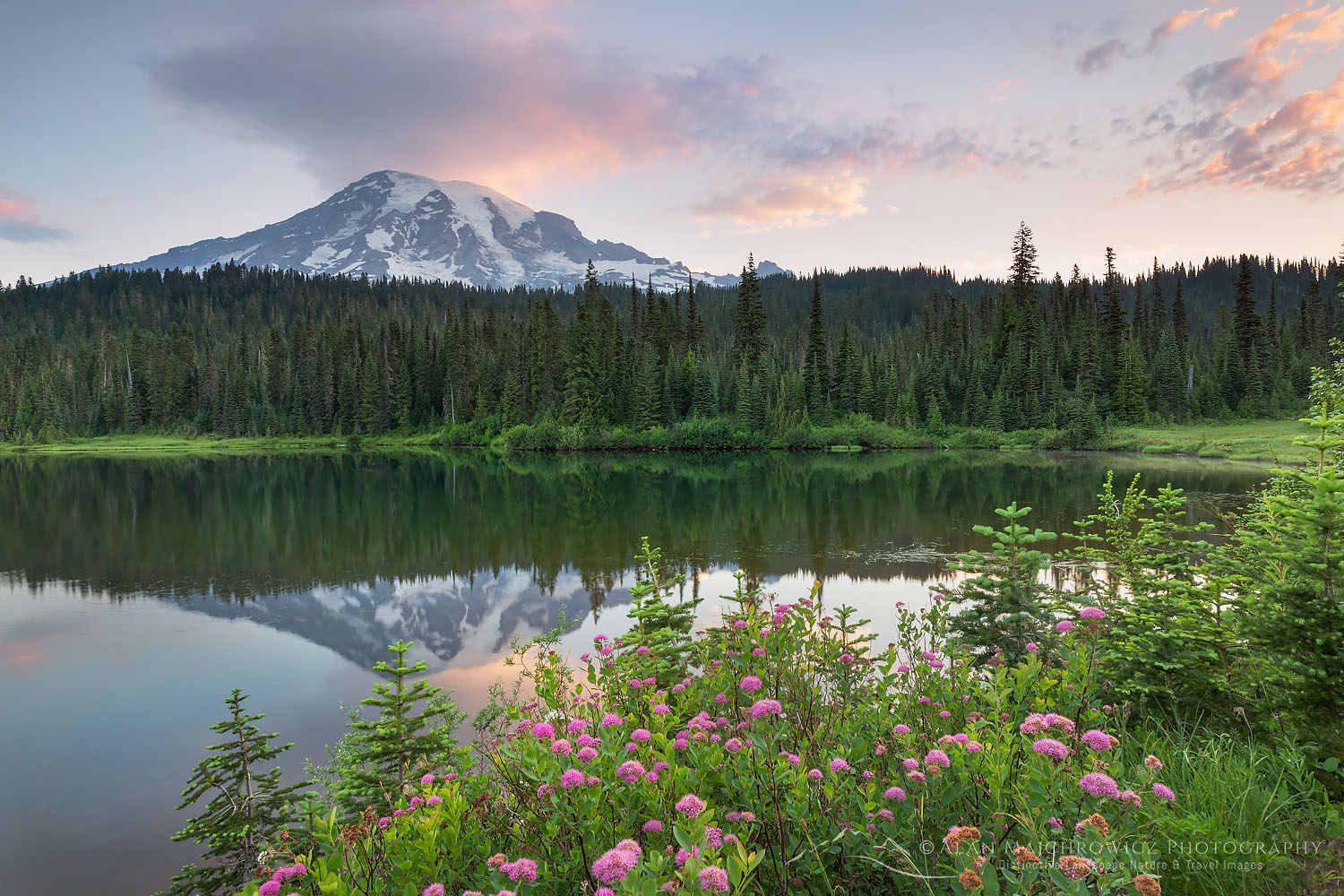
Sunrise over Mount Rainier seen from Reflection Lake, Rosy Spirea (Spirea splendens) is in the foreground. Mount Rainier National Park Washington #73108or#6 Reflection Lake Mount Rainier National Park #73103  Purchase

North Cascades clearing storm#7  Clearing storm over Mount Baker Wilderness North Cascades #73538b  Purchase

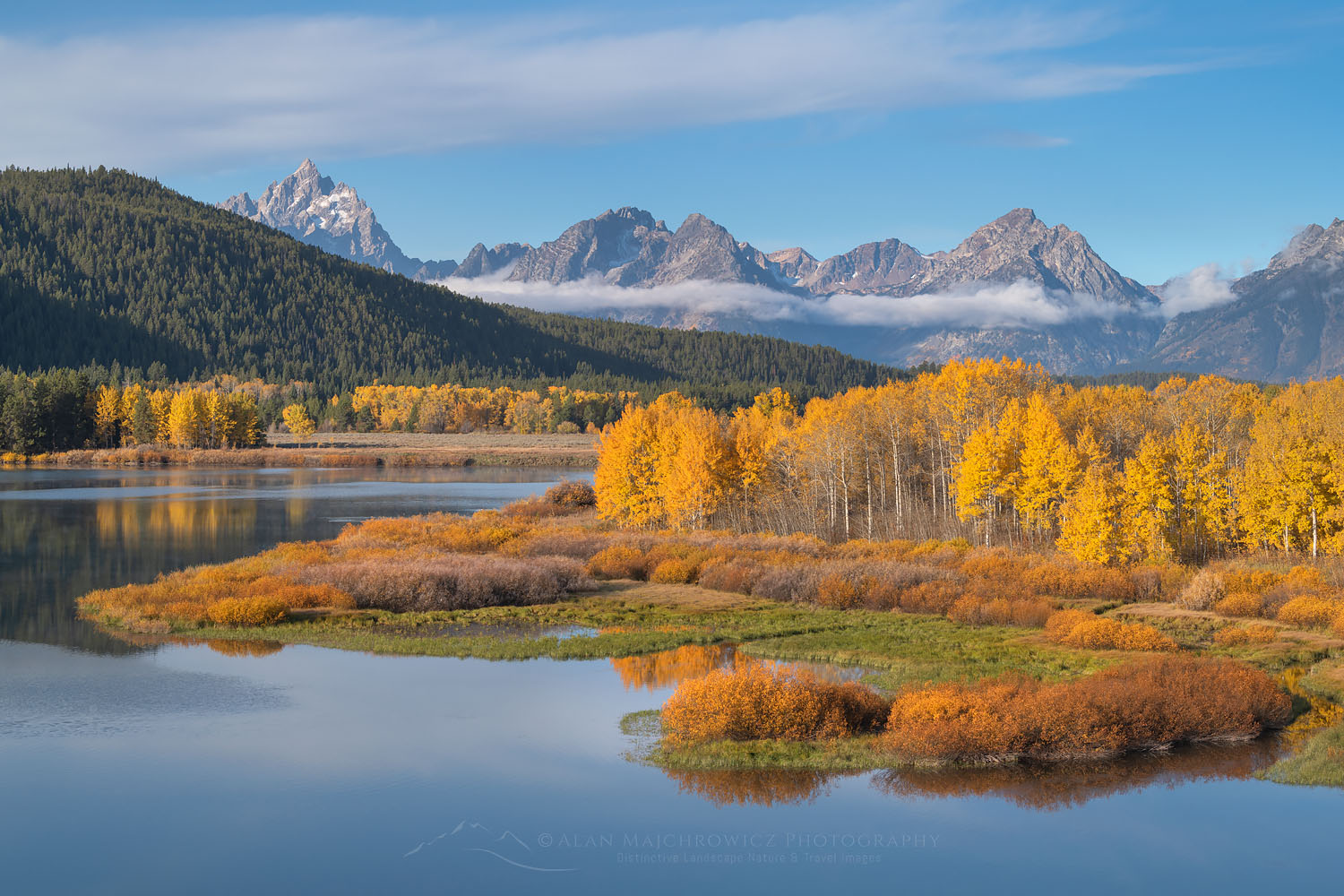
Oxbow Bend Grand Teton National Park#8 Fall color at Oxbow Bend Grand Teton National Park #74143  Purchase

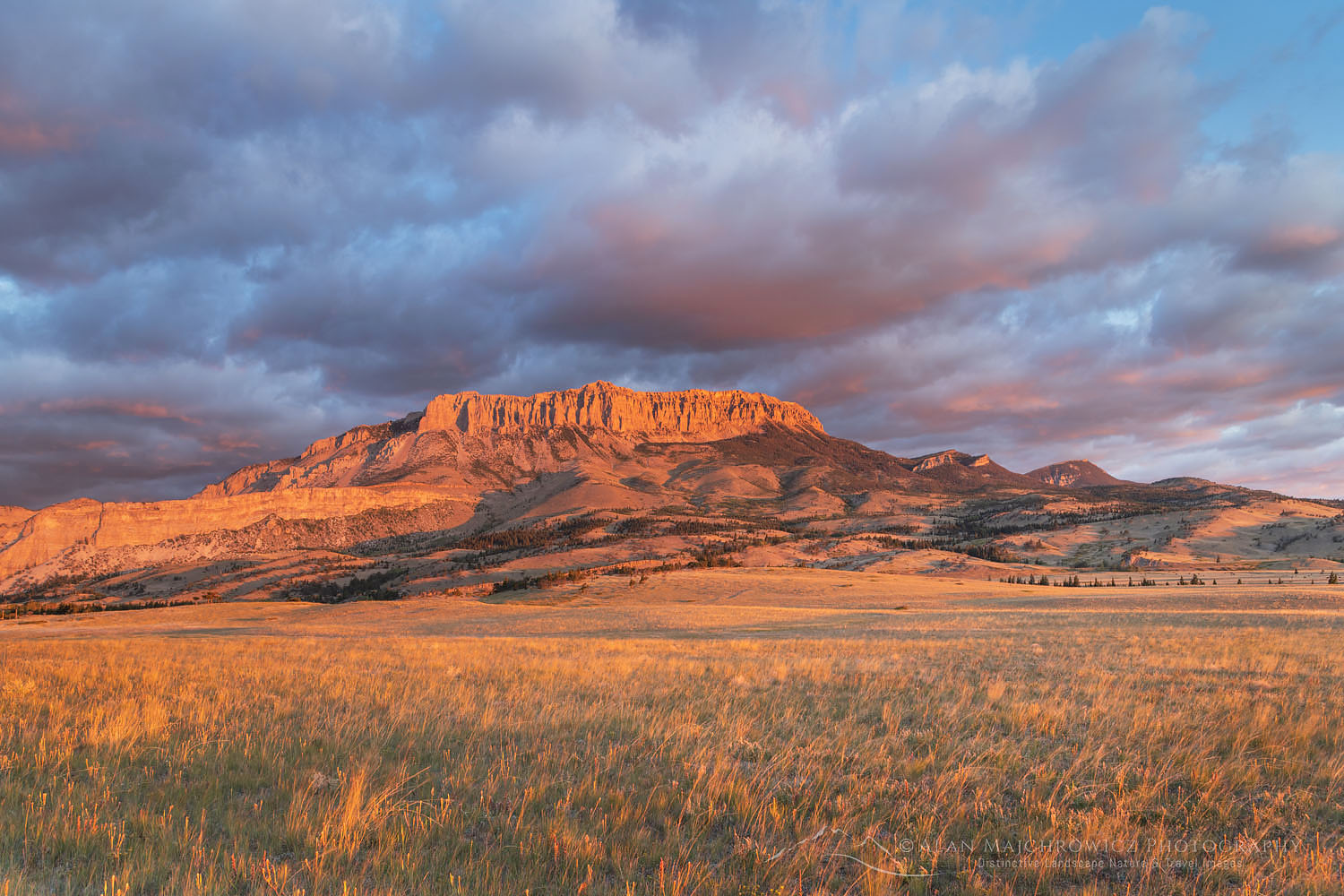
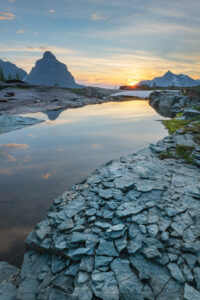
Steamboat Rock Dinosaur National Monument#9  Steamboat Rock reflected in Green River Dinosaur National Monument  #74439  Purchase

Sandstone patterns Dinosaur National Monument#10 Sandstone erosion patterns Dinosaur National Monument  #74400  Purchase

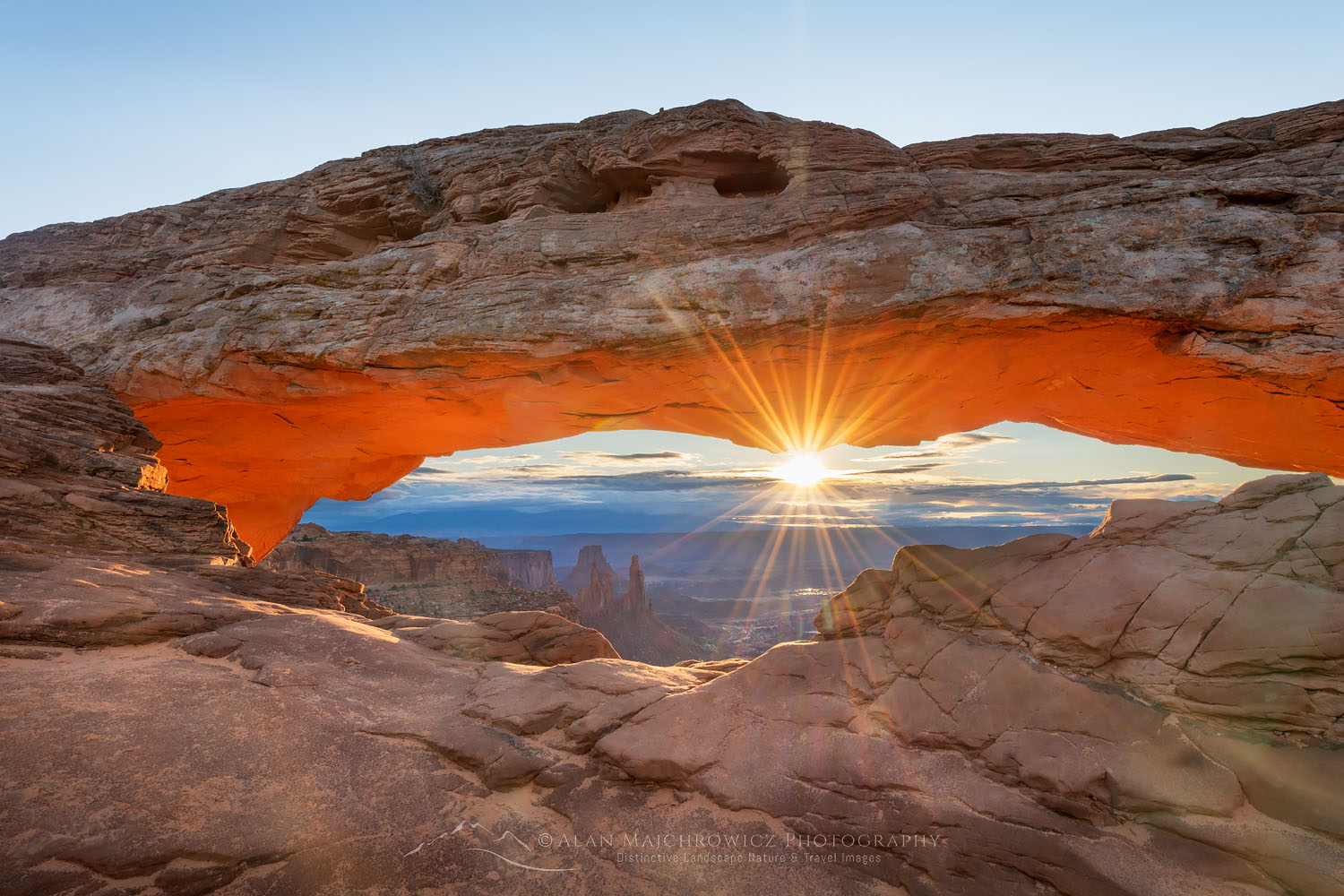
Mesa Arch Canyonlands National Park#11 Mesa Arch Canyonlands National Park  #74554  Purchase

Want to learn more, or have a professional photographer guide you in the field? Then take your Creative Photography to the next level with  Private Instruction and Guided Photo Tours.

All photos appearing in Photo Highlights 2021 are available for Commercial Licensing and Fine Art Prints. Click on any image to purchase, or contact me for more info!

Photo Highlights of 2021

Oxbow Bend Grand Teton National Park

New Additions Fall 2021

New Additions Fall 2021

Oxbow Bend Grand Teton National Park New AdditionsGrand Teton National Park  #74160  Purchase

After nearly three weeks of editing and processing files from my recent SW trip the first group of new additions is ready to view. It is always fun to relive the trip by processing new images.  Since returning home it has rained nearly every day, with some newsworthy storms causing flooding. So working on photos from the warm dry Southwest provides a nice respite from the soggy weather outside.

This first group of new releases contains images from the following locations.

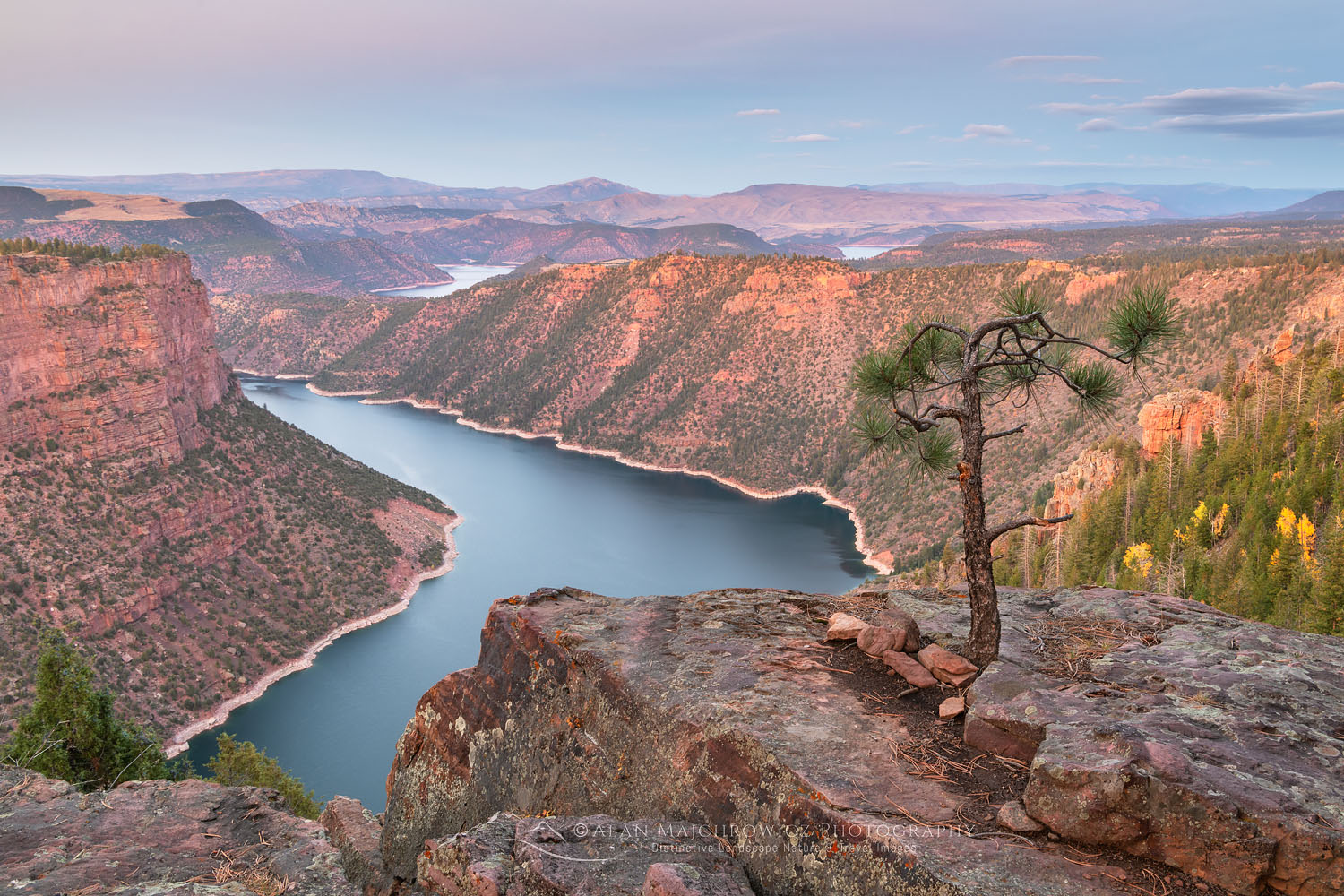
Red Canyon Flaming Gorge National Recreation Area New AdditionsFlaming Gorge National Monument  #74267  Purchase

New Additions from New Locations

Flaming Gorge was an interesting location in that it was on the very edge of the Colorado Plateau. Since the Red Canyon area was nearly deserted it was also a welcome relief from the crowds of Grand Teton National Park. Crowds are an ever present issue when visiting national parks, especially in the Southwest. Even in the shoulder seasons of spring and fall there is no escape.

Steamboat Rock Dinosaur National Monument New AdditionsSteamboat Rock Dinosaur National Monument  #74439  Purchase

Dinosaur National Monument was another first time visit location for me. It’s always exciting to explore and photograph new territory.  In Dinosaur I was like a kid in a candy store! This was especially true on the thrilling ride to the remote camp at Echo Park. A sometimes rough 13 mile dirt road ends at a beautiful primitive camp alongside the Green River. Along the way are historic ranches and Fremont Petroglyphs. At Echo Park the scene is dominated by the imposing monolith of Steamboat Rock. Overall this was one of the most enjoyable and memorable locations on the entire trip.

Mesa Arch Canyonlands National ParkMesa Arch Canyonlands National Park  #74540  Purchase

More New Images Coming Soon

In several weeks I should have another group of new additions ready for viewing from the following locations.  Also among this group are some new locations as well as with some I’ve photographed in several time before.

  • Bears Ears National Monument Utah
  • Natural Bridges National Monument Utah
  • San Rafael Swell, Crack Canyon
  • Goblin Valley State Park Utah
  • Factory Butte Utah
  • Capitol Reef National Park Utah
  • Coyote Gulch Grand Staircase Escalante National Monument Utah

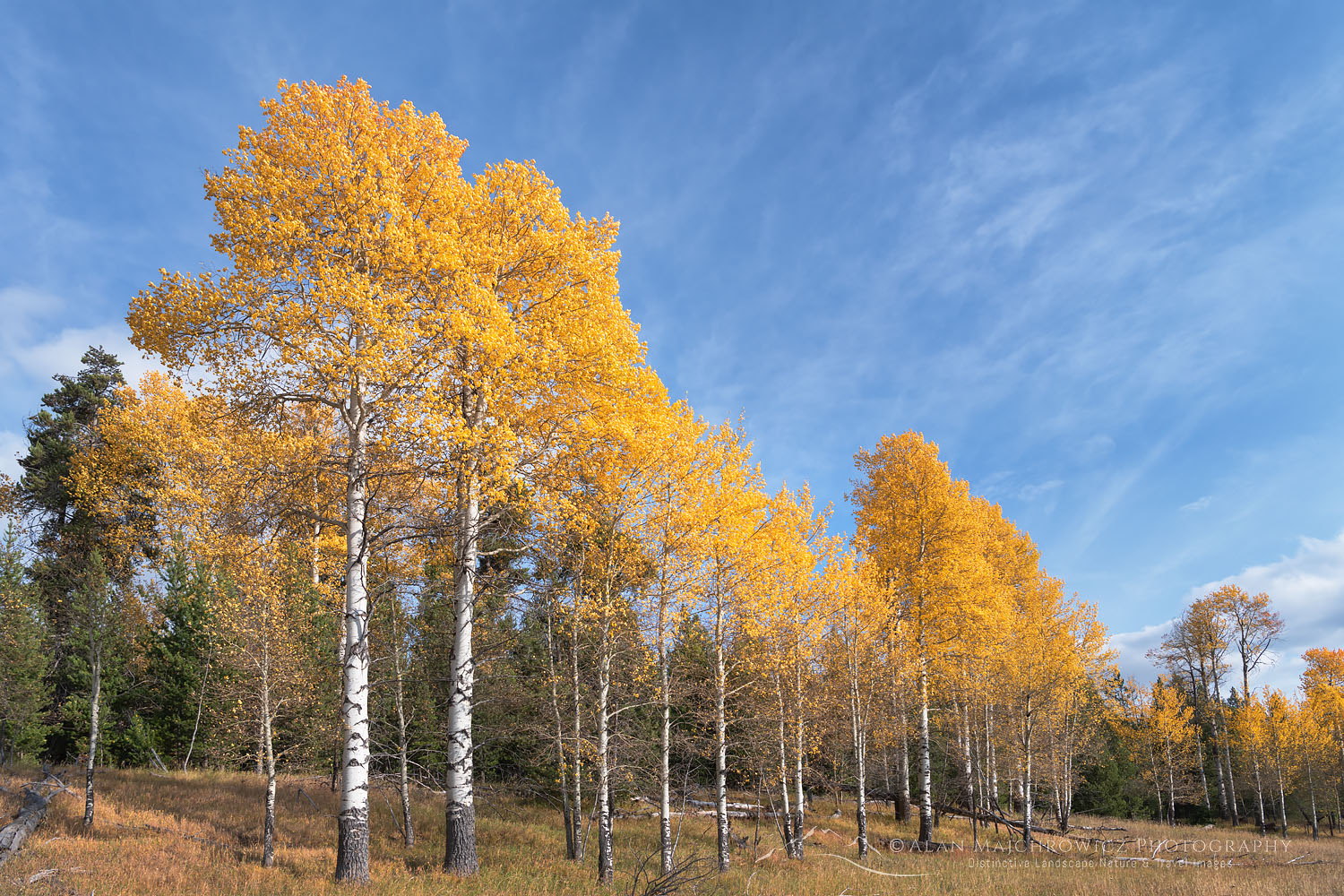
Aspens in fall color Grand Teton National ParkAspens Grand Teton National Park  #74050  Purchase

Want to learn more, or have a professional photographer guide you in the field? Then take your Creative Photography to the next level with  Private Instruction and Guided Photo Tours.

All photos appearing in New Additions Fall 2021 are available for Commercial Licensing and Fine Art Prints. Click on any image to purchase, or contact me for more info!

Coyote Gulch Glen Canyon National Recreation Area

Southern Utah Photography Trip 2021

Coyote Gulch Glen Canyon National Recreation Area Southern Utah Photography TripCoyote Gulch, Glen Canyon National Recreation Area #76072or Purchase

My Southern Utah Photography trip is now complete. After 47 days and over 4800 miles on the road and trail I’m back home in the office catching up on business. This trip was an outstanding success with lots of new images from both classic and little known locations. But now the real work begins. Since I have so many new images it will be quite a project to edit and process them all.

Instead of waiting to finish editing and processing photos from the entire trip I will be breaking them down and publishing a New Image Gallery by each location. Below is a list of all the locations from this trip. Meanwhile be sure to check back often to see the new updates. And of course I’ll be sending out email announcements to all of you who are on my mailing list.

Locations:

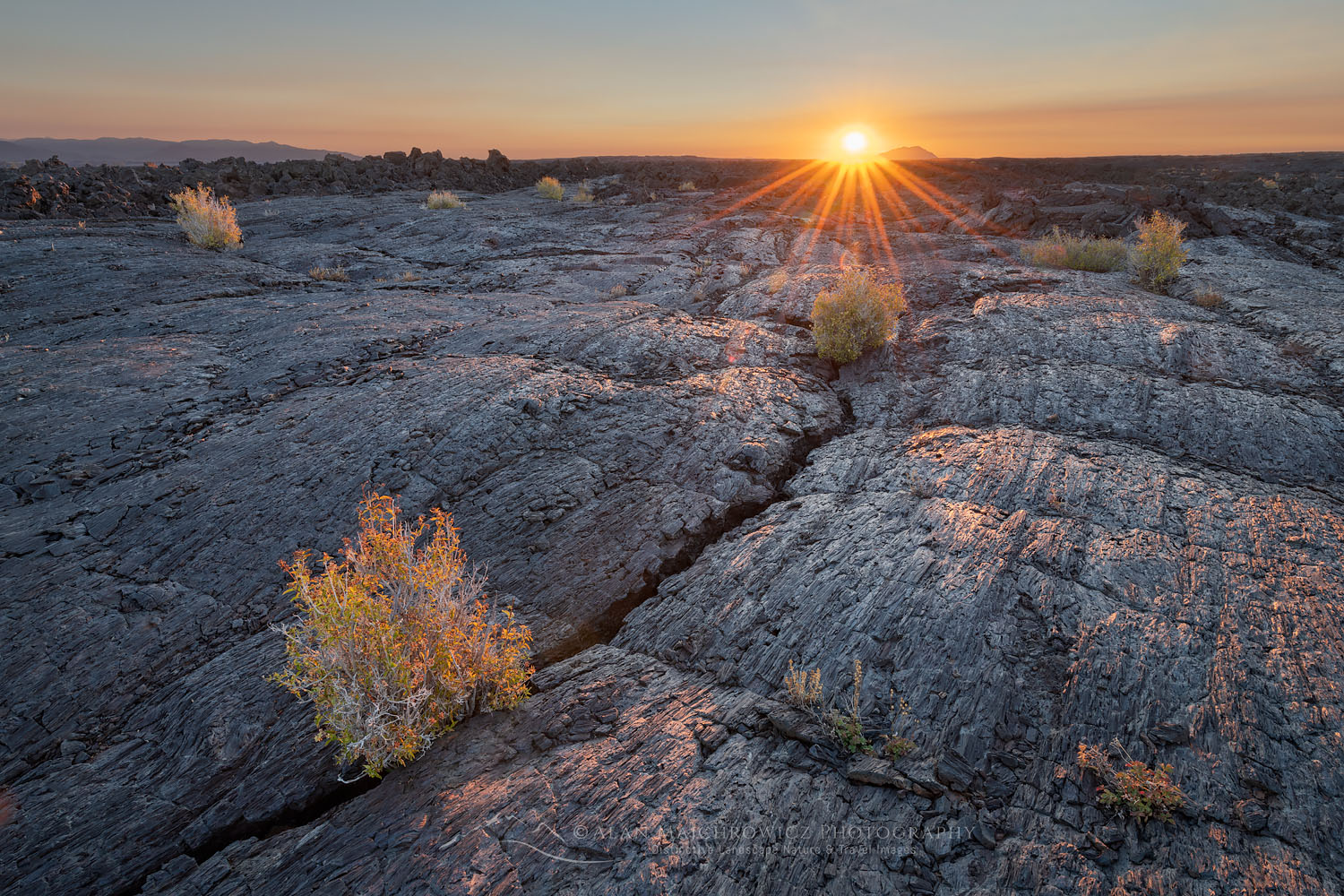
  • Craters of the Moon National Monument
  • Grand Teton National Park
  • Flaming Gorge National Recreation Area
  • Dinosaur National Monument
  • Canyonlands National Park; Island in the Sky, Needles Districts
  • Cedar Mesa/Bears Ears Wilderness; Grand Gulch, Ancestral Pueblo Ruins
  • Natural Bridges National Monument
  • San Rafael Reef; Goblin Valley, Crack Canyon
  • Capitol Reef National Park
  • Grand Staircase Escalante National Monument
  • Glen Canyon National Recreation Area; Coyote Gulch
  • Bryce Canyon National Park
  • Zion National Park; Zion Narrows, The Subway, Kolob Canyons
  • Snow Canyon State Park

Want to learn more, or have a professional photographer guide you in the field? Then take your Creative Photography to the next level with  Private Instruction and Guided Photo Tours.

All photos appearing in Southern Utah Photography Trip 2021 are available for Commercial Licensing and Fine Art Prints. Click on any image to purchase, or contact me for more info!

Southern Utah Photography Trip 2021

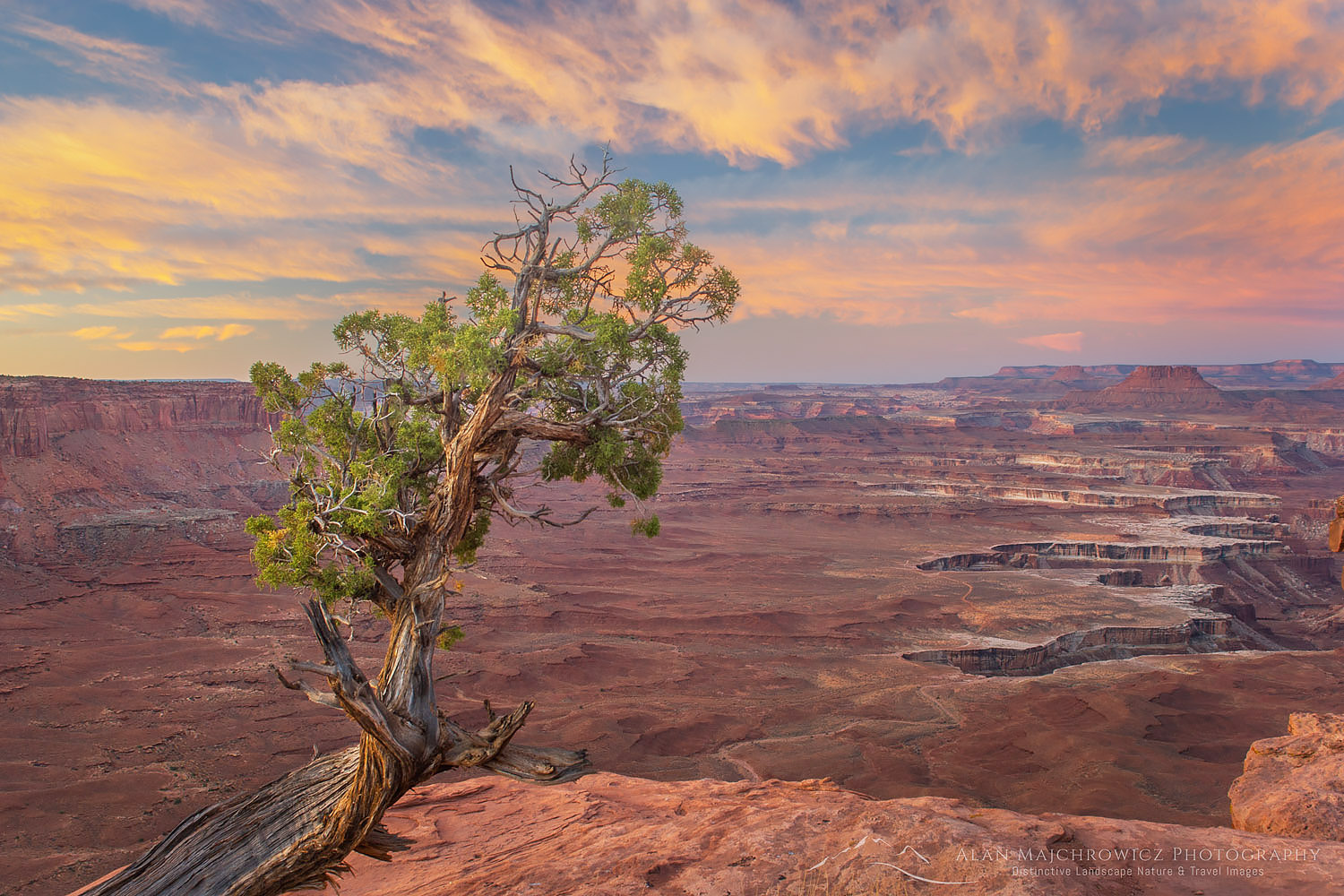
Weathered and twisted Juniper tree (Juniperus osteosperma) at dawn on rim Green River Overlook, Canyonlands National Park Utah

Fall Southwest Photography Tour 2021

Autumn along the Virgin River, The Watchman in the distance, Zion National Park Utah Fall Southwest Photography TourVirgin River Zion National Park #09187   Purchase

Fall is here and the air is finally free of wildfire smoke! So after delaying several summer photo trips we’re excited to get back on the road for a lengthy photo tour. This year the bulk of the trip will be to locations in Red Rock Canyon Country and the National Parks of Southern Utah. Listed below are some of the locations on the itinerary, generally in order from beginning to end.

If you have any locations or subject matter which interests you in, and we can include them in our itinerary, let us know. Also let us know if you will be in any of these areas in October, it would be great to meet up with you!

  • Craters of the Moon National Monument
  • Grand Teton National Park
  • Flaming Gorge
  • Dinosaur National Monument
  • Arches National Park
  • Canyonlands National Park
  • Cedar Mesa/Bears Ears Wilderness, Anasazi Ruins
  • Capitol Reef National Park
  • Grand Staircase-Escalante National Monument, slot canyons, and arches
  • Bryce Canyon National Park
  • Zion National Park
  • Great Basin National Park

*This is an ambitious trip so some locations may be omitted due to time and weather considerations.

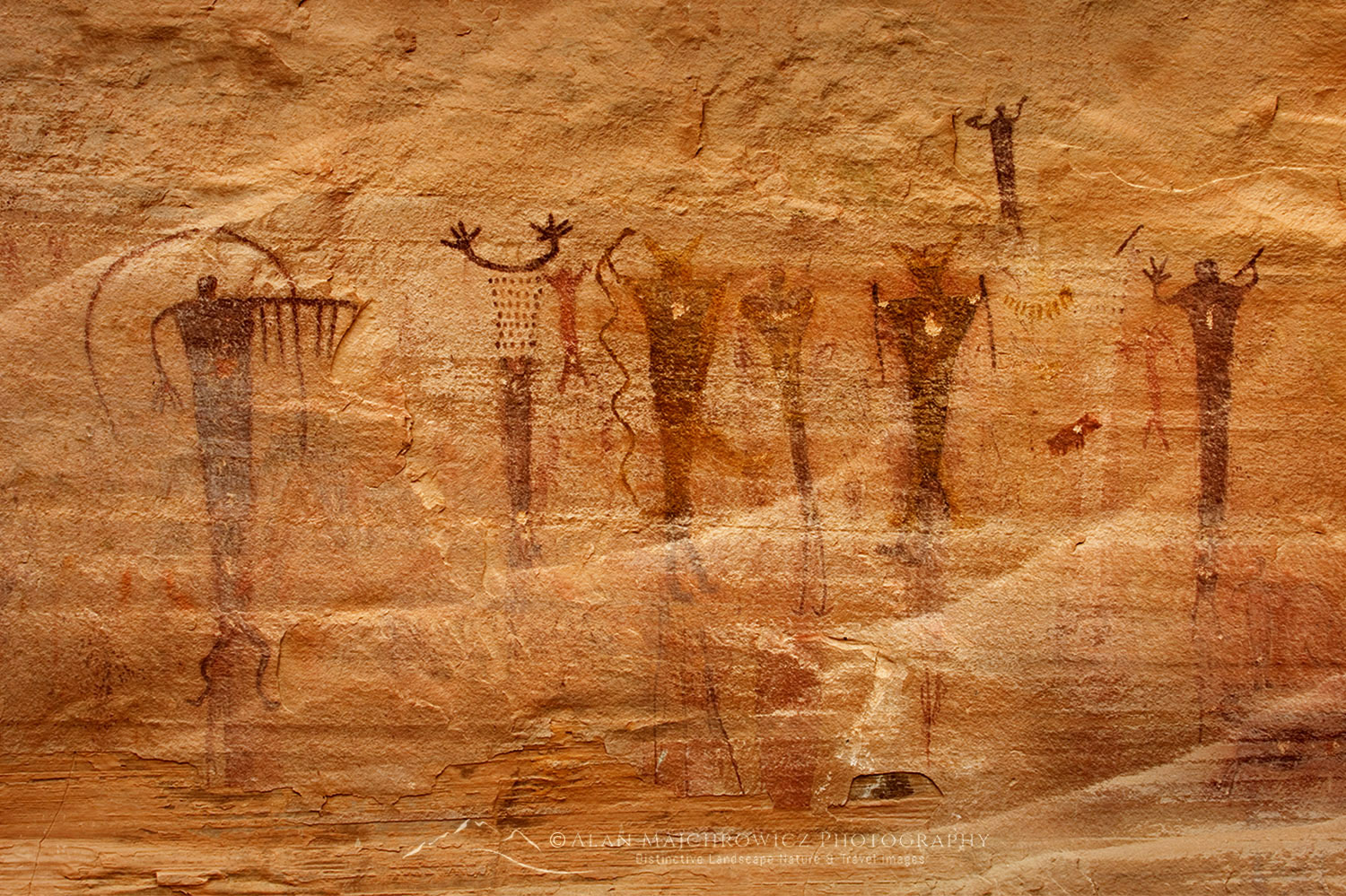
Buckhorn Wash barrier style pictographs, San Rafael Swell Utah Fall Southwest Photography TourBuckhorn Wash Pictographs, San Rafael Swell Utah #42086  Purchase

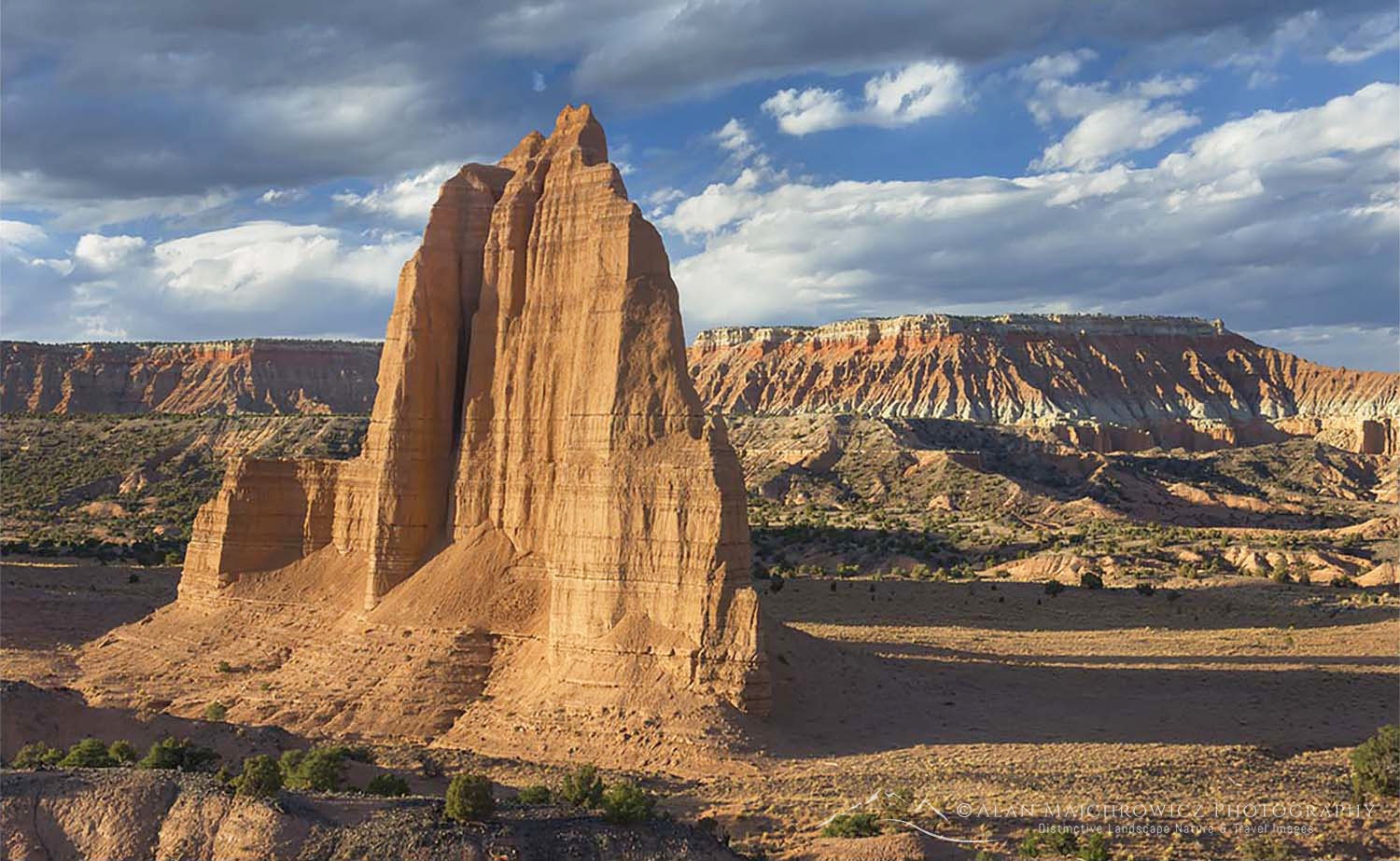
Sandstone Monoliths of the Upper Cathedral Valley in evening light, Capitol Reef National Park UtahCapitol Reef National Park #2901  Purchase

Weathered and twisted Juniper tree (Juniperus osteosperma) at dawn on rim Green River Overlook, Canyonlands National Park UtahCanyonlands National Park  #27457  Purchase

Want to learn more, or have a professional photographer guide you in the field? Then take your Creative Photography to the next level with  Private Instruction and Guided Photo Tours.

All photos appearing in Fall Southwest Photography Tour 2021 are available for Commercial Licensing and Fine Art Prints. Click on any image to purchase, or contact me for more info!

Tatoosh Range, Mount Rainier National Park

Photographing in Paradise Meadows Mount Rainier

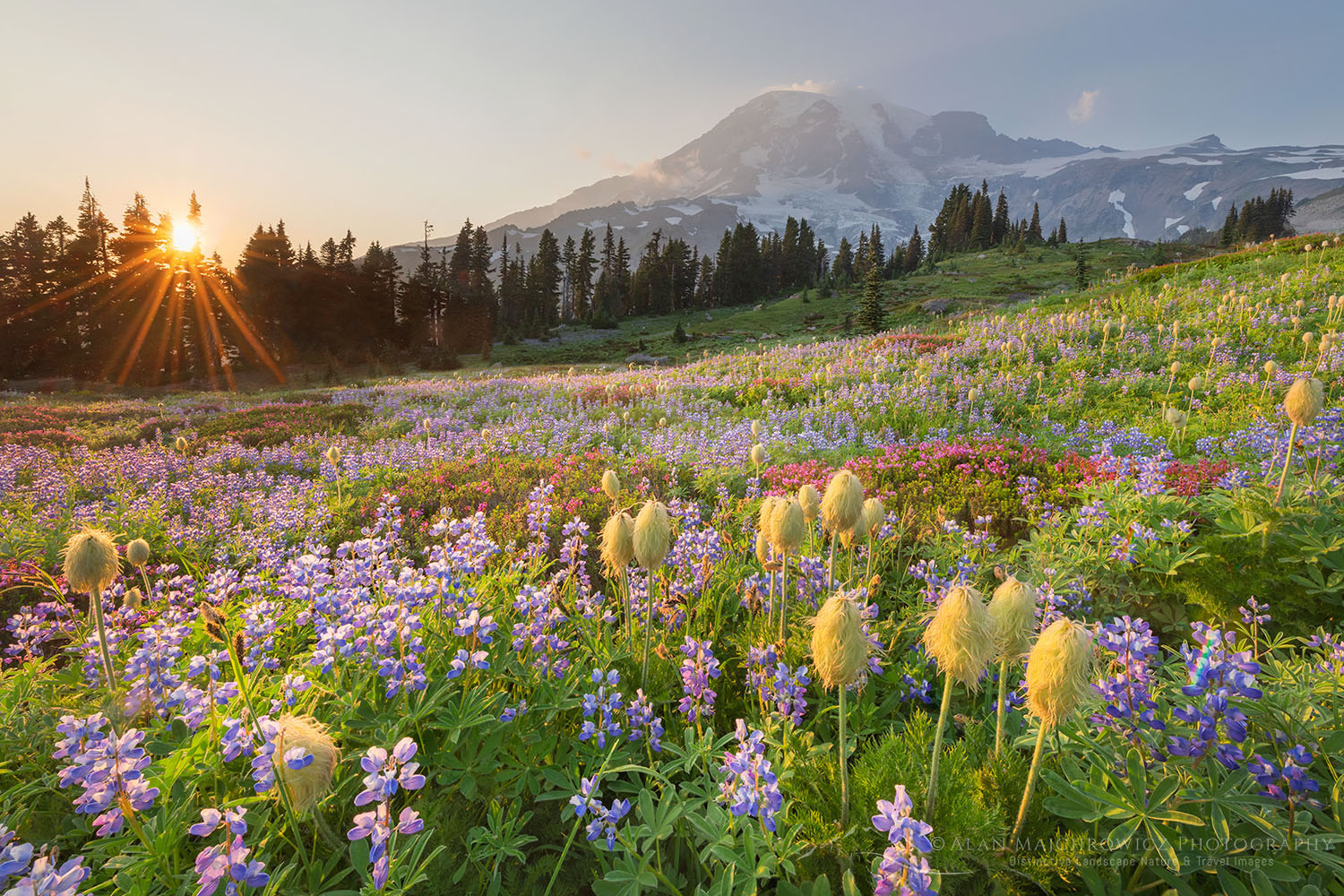
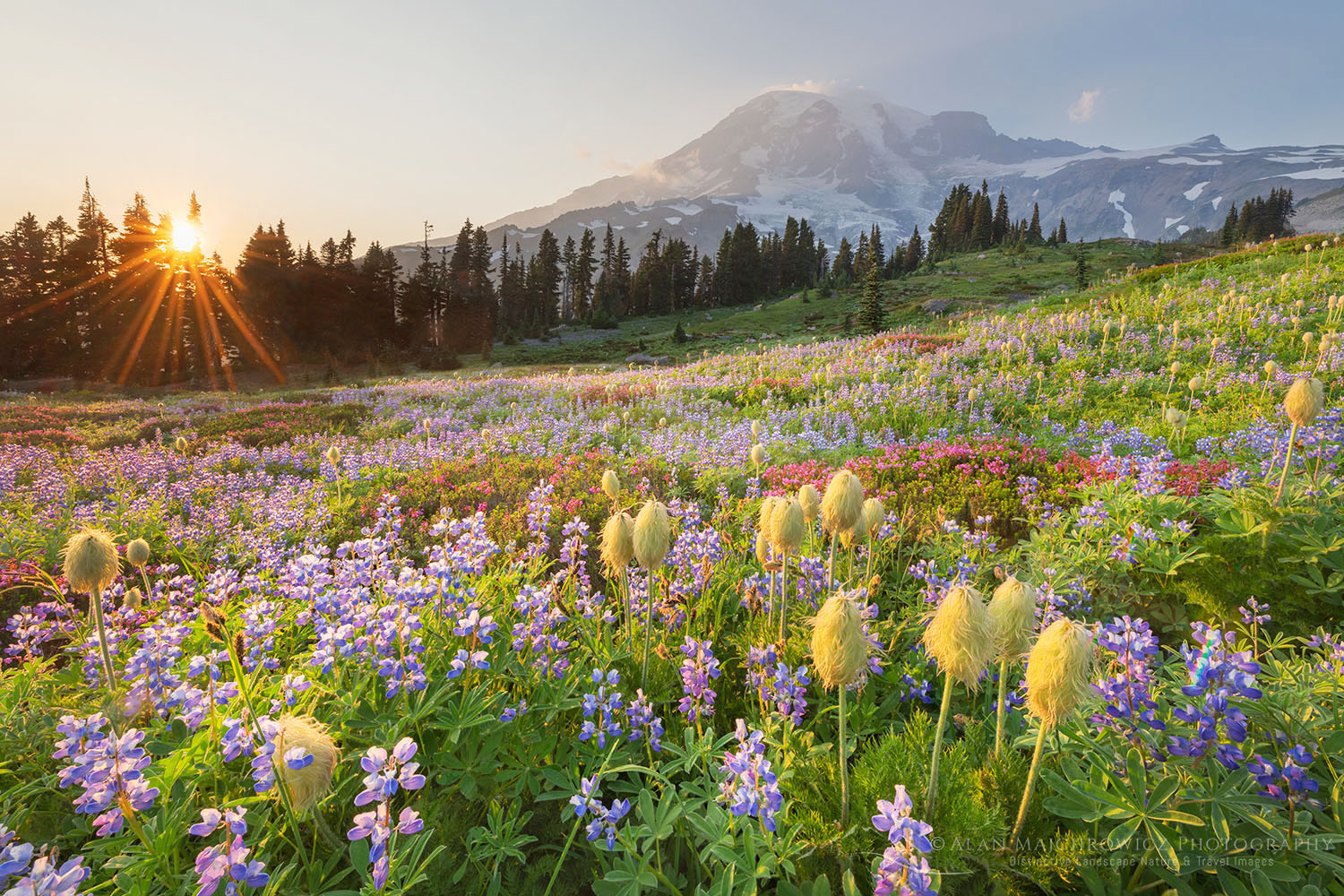
Paradise Meadows Wildflowers Mount RainierParadise Meadows Wildflowers Mount Rainier #73268  Purchase

This post is the second of a two-part article about planning and photographing in Mount Rainier National Park Paradise Meadows. Read part one here.

A trip to photograph in Mount Rainier National Park or any other national park can be a very rewarding experience. It can also be a disappointing exercise in frustration. Good planning and having enough time available to meet your photography goals will increase your chances of success.

Since I’ve already given some tips on trip planning in my previous post, let’s start talking about locations and how best to photograph them. Mount Rainier is a big park with lots of great areas to photograph in. However, for this article, I’m going to focus only on the Paradise Meadows area and a few adjacent locations.

Essential Tip #1:  All of the locations in the Paradise Meadows area provide excellent opportunities for both sunrise and sunset. In summer the sun will rise and set a bit further in the north. There will be slightly more light hitting the glaciers on Mount Rainier at sunrise than there will at sunset. Both times can provide some excellent side-lighting to wildflowers.

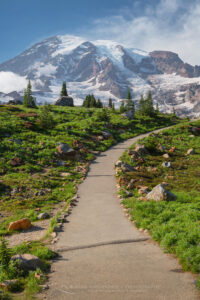
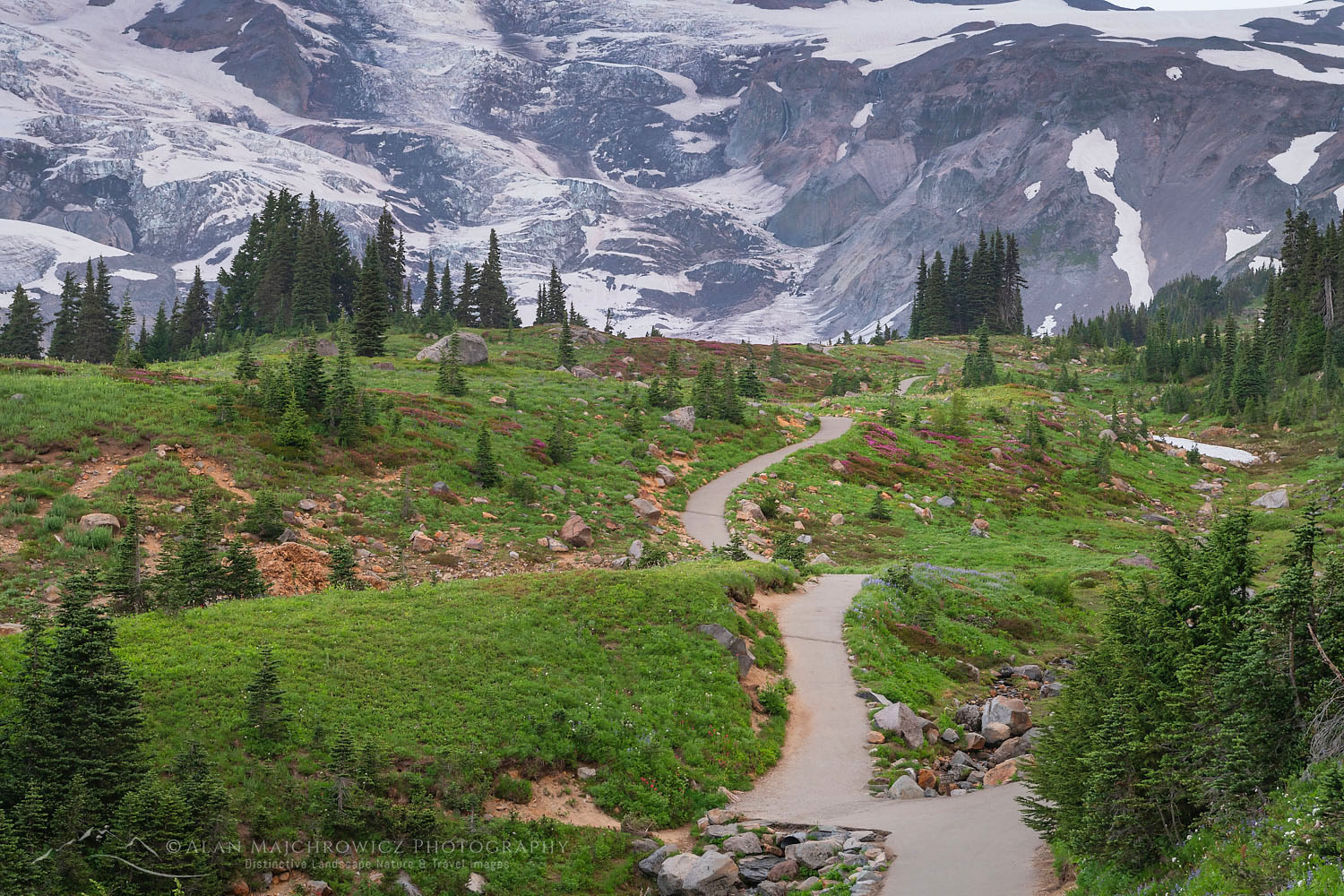
Paradise Meadows Skyline Trail Mount Rainier Skyline Trail Mount Rainier #72892 Purchase

But First a Lecture

Mount Rainier National Park receives over 2,000,000 visitors every year, and that number will continue to grow every year. The park service has gone to great lengths and expense (your tax dollars!) to make the meadows accessible for everyone, while also trying to keep them from getting trampled into oblivion.

Please take a minute to read the park’s Meadow Preservation page.

Many trails are paved and roped off, and all have numerous signs to keep people on the trails. Please be thoughtful and considerate to the plants and future visitors, stay on the trails!

It is 100% possible to get great images while staying on the trails. But every time I photograph here I see other photographers going off the trail and trampling the flowers just to get that seemingly better photo. If everyone did that then Paradise Meadows would be nothing more than Paradise Dust Pit.

I wish I didn’t need to say this but here it goes. Do not even think of visiting Paradise Meadows unless you plan on strictly photographing only from established trails and keeping off the meadows. If you can’t do that then you should probably stay home!!

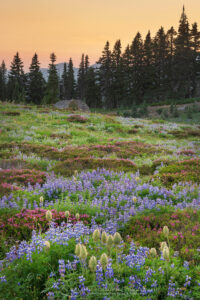
Paradise Meadows Wildflowers Mount RainierParadise Meadows Wildflowers #73347  Purchase

Paradise Meadows Trails and Locations

There are numerous trails in the Paradise Meadows area that give access to all the best photo locations. I like to divide the trails in the area between the west and east halves of the Paradise Meadows area. Both sections have excellent photo opportunities, but the western half has a better-unobstructed view of Mount Rainier. I also feel that the west half often has better groupings of flowers and opportunities for compositions.

Download the Paradise Meadows Hiking brochure and map here.

Essential Tip #2:  Scouting is an essential technique for better photography. Always scout out the best locations in advance by spending the day hiking as many trails as possible. Make notes of the best spots and how long it will take to reach them in the morning and evening golden hours.

Essential Tip #3:  Keep in mind that to reach most of the best flower meadows there is an elevation gain of several hundred feet from the parking area. While the trails aren’t steep or difficult it will take some effort to reach the best spots, especially if you’re racing against time and chasing light.

Essential Tip #4: Photo compositions in the west and east sections of Paradise are sufficiently far enough apart as to exclude photographing in both areas during the same morning or evening golden hour. Stick to one area and come back the next morning or evening for the other.

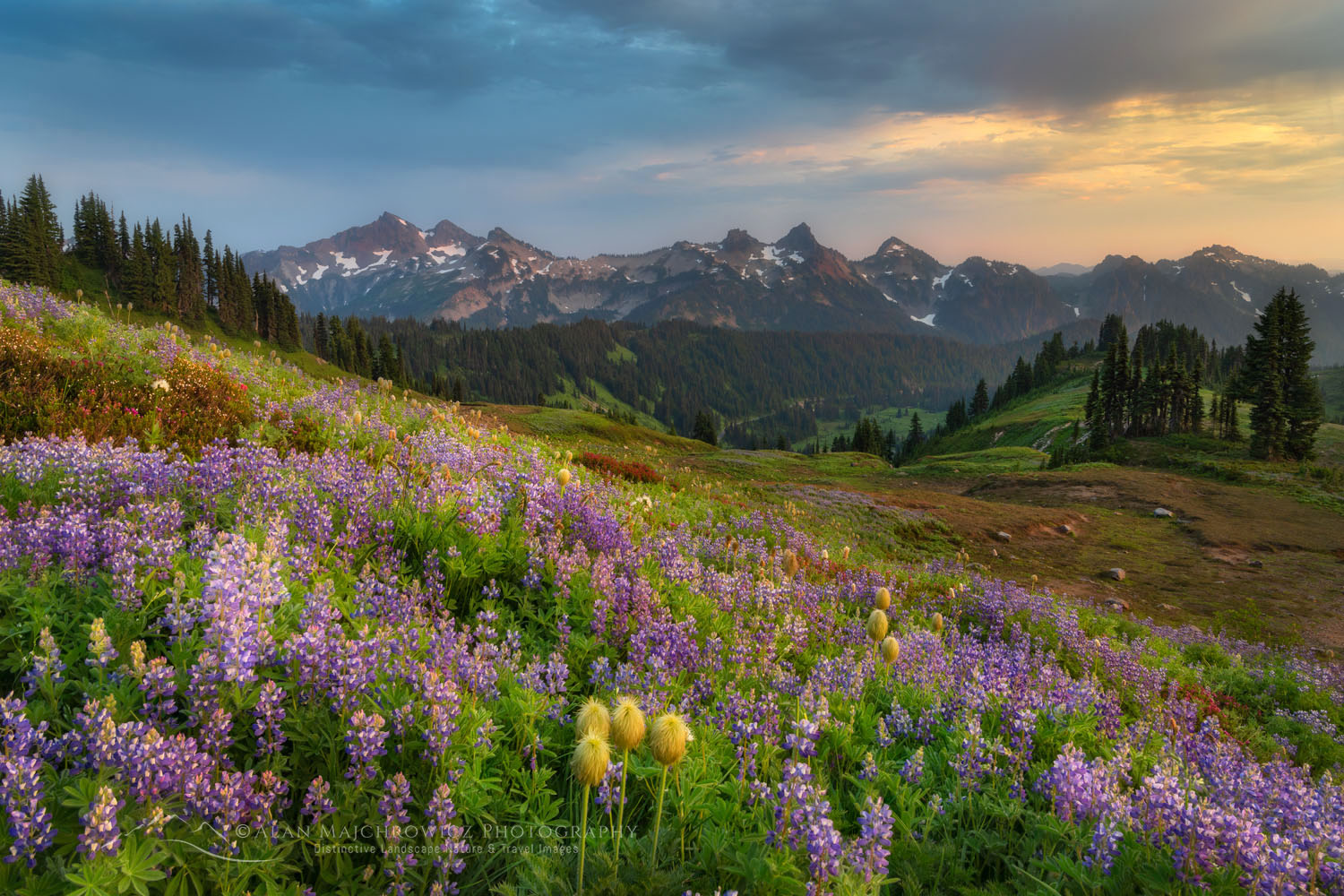
Tatoosh Range with a mixture of Broadleaf Lupines, and Western Anenomes in the foreground. Mount Rainier National Park, Washington #73159orTatoosh Range Paradise Wildflower Meadows #73159  Purchase

Skyline Trail: This is the main trail that makes a loop through the entire Paradise area. This scenic trail makes an excellent leisurely all-day loop. However, be aware that the higher elevation part of this trail traverses mostly rocky alpine terrain. Nearly all of the best flower meadows are at middle elevations on the western parts of this trail.

There are many great compositions to be had around 5800′ elevation by using the trail network between Skyline and Deadhorse Creek Trails.

Deadhorse Creek, Moraine,  Nisqually Vista Trails: The main attraction for all of these trails are the views of Mount Rainier and the yawning chasm below the Nisqually Glacier. Deadhorse Creek trail connects with the Skyline trail so a loop will offer both glacier views and great wildflower photos.

Golden Gate Trail: This mile-long trail begins on the lower Skyline at Myrtle Falls, and ends at the upper Skyline Trail on Mazama Ridge. There are some great flower groupings all along this trail, especially near Myrtle Falls. Make sure you check out classic compositions of both Edith Creek from the footbridge and Myrtle Falls from the lower overlook.

The downside of the Golden Gate trail is that views of Mount Rainier are partially obscured by Panorama Point Ridge. However, this trail is great for including the Tatoosh Range in compositions instead. There are some wonderful flower groupings on the upper section switchbacks for use in such compositions.

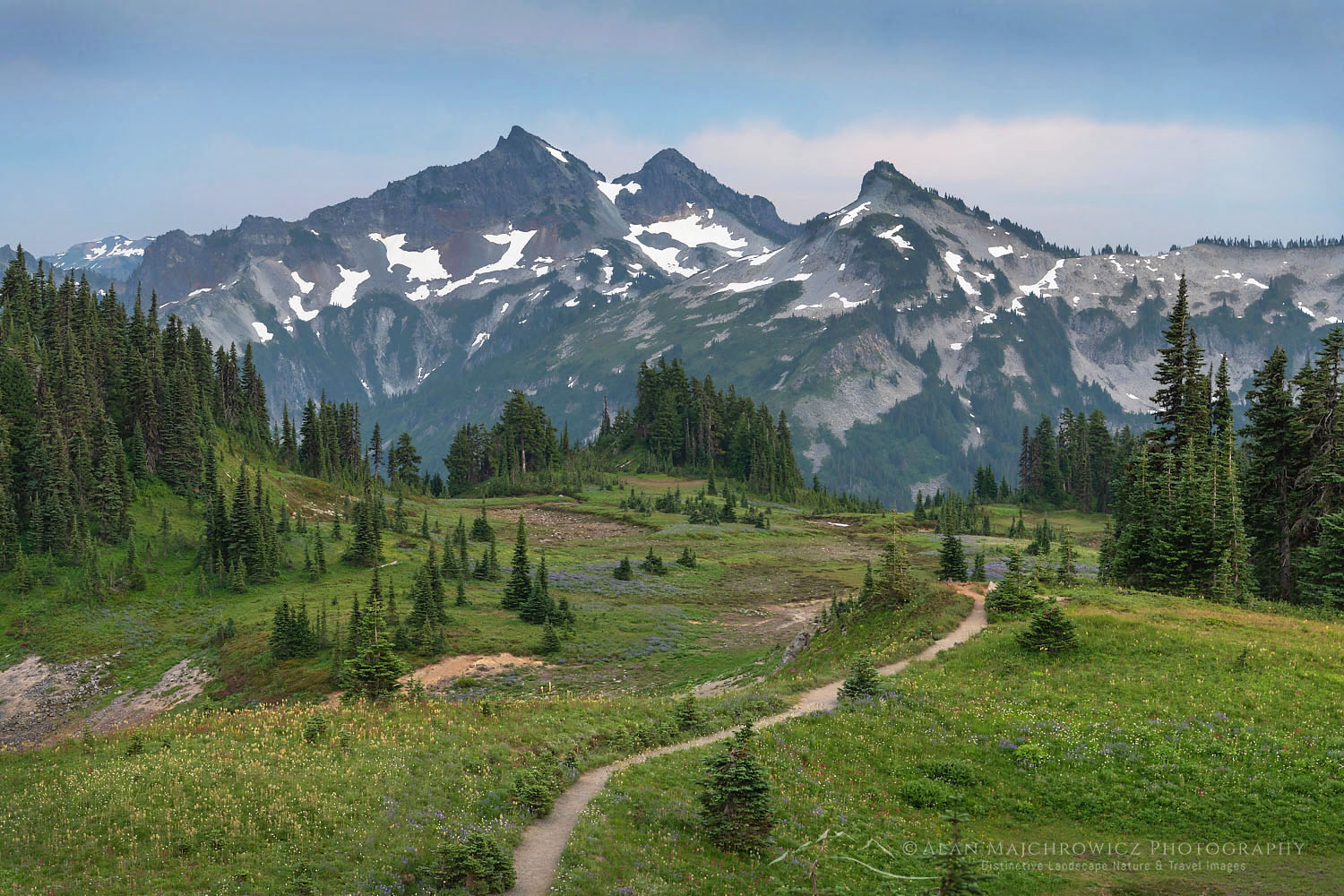
Tatoosh Range and Skyline Trail Paradise Meadows Skyline Trail Mount Rainier Tatoosh Range from Mazama Ridge #73153

Mazama Ridge Paradise Meadows 

Mazama Ridge can be accessed by several different trails. It can be reached via the Skyline Trail from the Paradise Meadows parking area, or from below at Reflection Lakes. Keep in mind that if you are starting from Reflection Lakes you will have a considerable amount of elevation to gain before reaching the best areas.

Due to the nature of the snowpack melting out many of the best wildflower displays on Mazama Ridge often bloom a bit later than elsewhere in Paradise.

Skyline Trail on Mazama Ridge:  Access is either part of the Skyline Loop or from the end of the Golden Gate Trail. I feel the upper part of Mazama Ridge on the Skyline Trail offers the best photo opportunities. This is mainly due to the more open views of the Tatoosh Range.

Lakes Trail:  While there are some good photo ops on this trail they are mostly the upper half. One of the benefits of this trail is that the views of Mount Rainier are set back a bit.

Paradise Glacier Trail: This trail begins on the upper part of Mazama Ridge. For the most part, it travels through fairly barren rocky terrain. But there are some decent flower displays along the first half mile or so. The attraction on this trail is viewing the raw landscape that not too long ago was beneath glaciers.

Some of the best displays of Lewis’s Monkeyflowers are near the junction of the Paradise Glacier and Skyline trails. Here they grow alongside streams thick with bright green mosses. Unfortunately, it’s difficult to include a satisfactory view of Mount Rainier or the Tatoosh Range in photos from this spot.

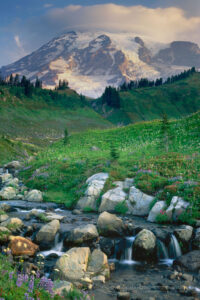
Mount Rainier and Edith CreekEdith Creek Mount Rainier #3522  Purchase

Myrtle Falls Edith Creek Paradise Meadows

These classic locations are only a half-mile from the Paradise parking area on the Skyline Trail. Both photograph well in morning or evening light with a preference for sunrise.

Be aware that this is one of those locations that can be crowded not only during the day but during golden hour light. This is a very popular spot for photo workshops and wedding photographers. Please be considerate of other photographers, especially those photographing newlyweds.

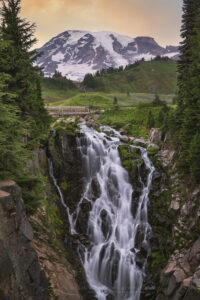
Myrtle Falls Mount Rainier National ParkMyrtle Falls Mount Rainier #72865  Purchase

Also, use caution at the overlook to Myrtle Falls. It’s a small cliffside viewing area which can be a bit dangerous for you and your gear when surrounded by overzealous visitors. Early in the season dangerous snow bridges and slippery snowpacks can prove fatal, exercise extreme caution or avoid the overlook completely at this time!

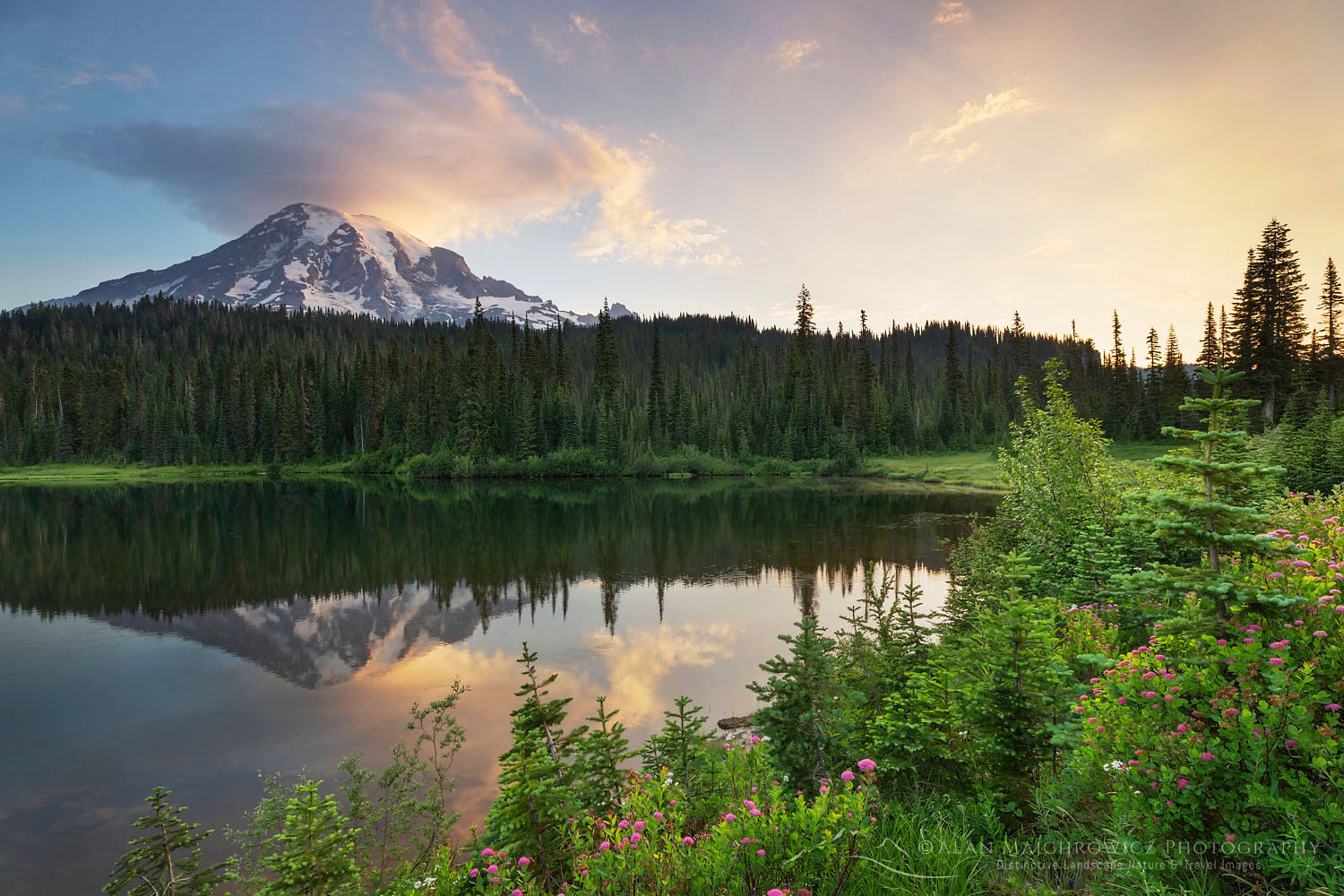
Mount Rainier sunrise from Reflection LakeReflection Lakes Mount Rainier #73126  Purchase

Reflection Lakes

The roadside view of Mount Rainier from Reflection Lakes is one of the classic photographic vantage points in the park. One can easily argue it’s one of the most classic views in the entire Pacific Northwest!

To get here just take the road turnoff to Stevens Canyon just below Paradise Meadows, or follow Paradise Valley Road east from the Visitor’s center parking lot.

Essential Tip #5: This is a primarily sunrise location. Like many classic national park photo locations, it attracts hordes of photographers and workshops. Plan on setting up in the best spot at least an hour before sunrise. Bring a headlamp and a thermos of coffee! And of course please heed the signs and help preserve fragile areas by staying out of closed areas.

Landscape photography doesn’t get much easier than at Reflection Lakes. Parking is right alongside the lake so theoretically, you don’t even need to get out of your car! Of course, getting the best photos will involve a bit more than that. It will be to your advantage to scout out the best spots the day before so you won’t be guessing in the dark the next morning.

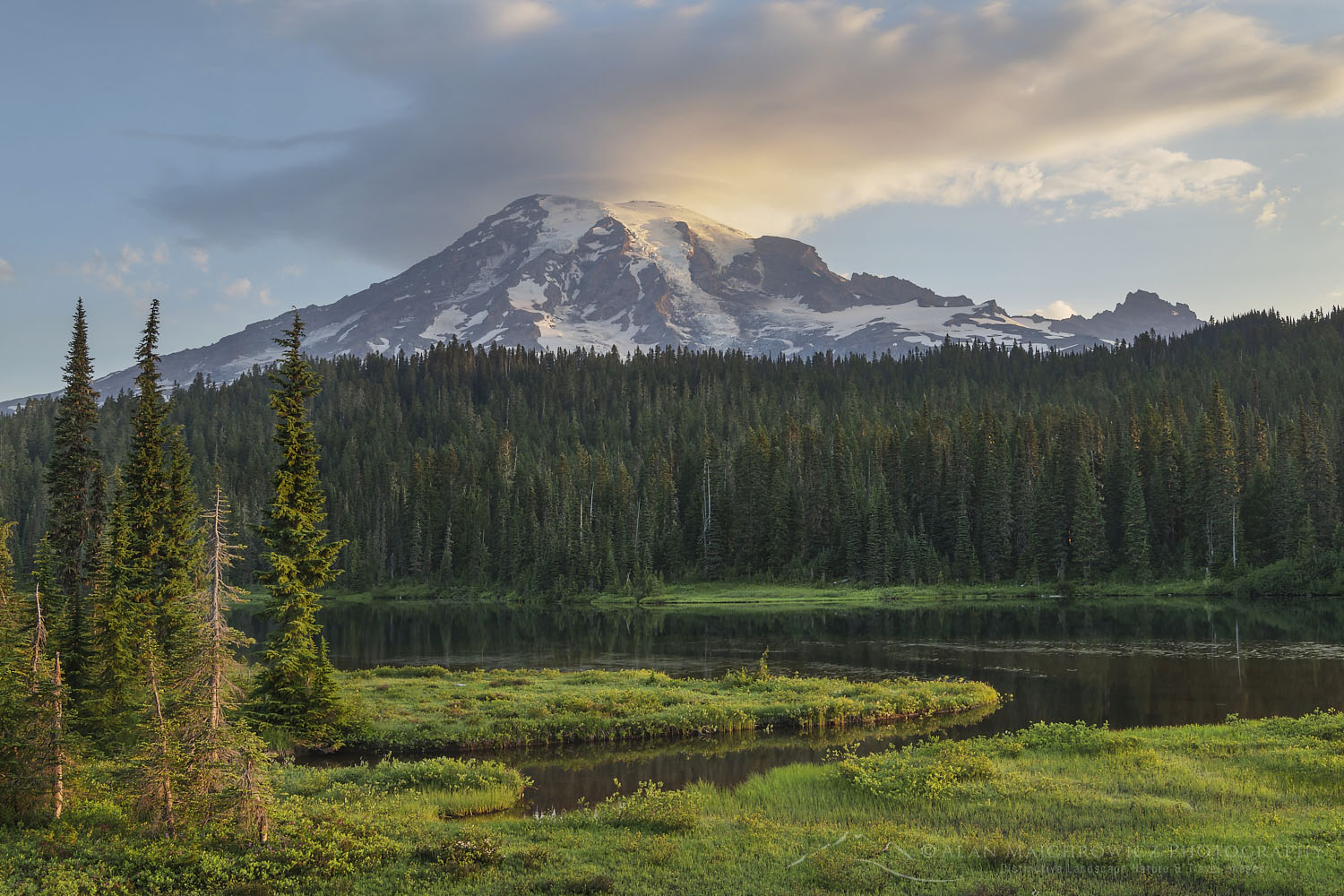
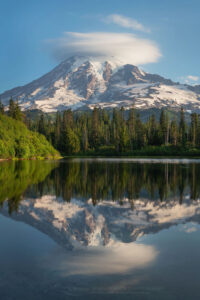
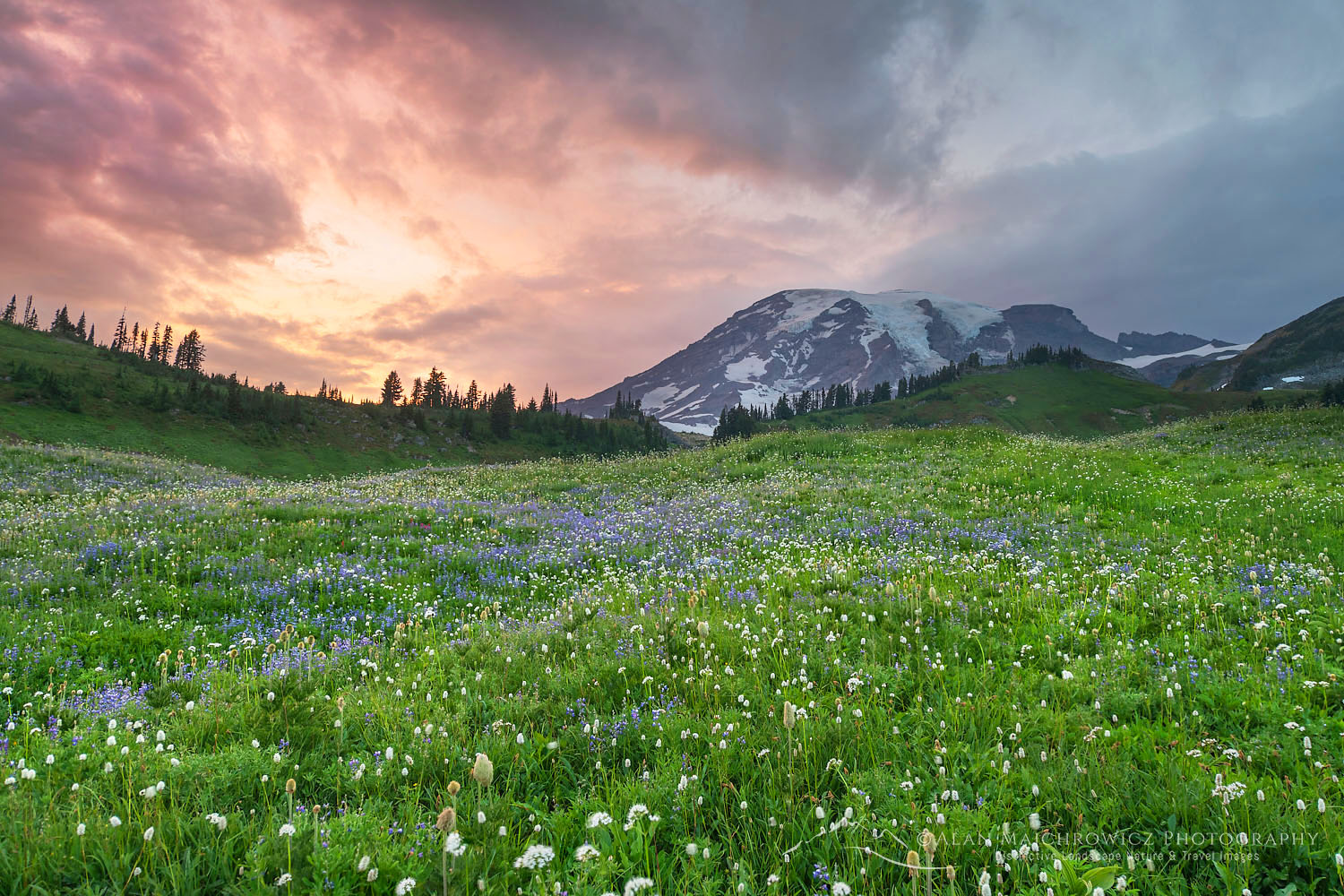
Sunrise over Mount Rainier seen from Reflection Lake, Rosy Spirea (Spirea splendens) is in the foreground. Mount Rainier National Park Washington #73108orReflection Lakes Mount Rainier #73103  Purchase

I feel the best spots are on the eastern end of the lake where small groups of wildflowers can be used in the foreground. This is also one location that will provide great photos whether you are there during or after wildflower season. On a cold fall morning, there are often thin sheets of ice on the very photogenic lakes.

Essential Tip #6:  Don’t make the mistake of setting up your tripod and photographing only one composition. Pick out the best primary spot and wait to photograph it in the best light, then move on to other compositions.

Bench Lake Mount Rainier National ParkBench Lake Mount Rainier #73143  Purchase

Bench Lake

This is a great sunrise location with wonderful views of Mount Rainier that not many photographers visit. The view of Rainier from Bench Lake shows more of the lower part of the mountain than at Reflection Lake. However, you are limited to a tiny stretch of sand along the lake for compositions.

Bench Lake is an extra doable location after photographing sunrise at Reflection Lake if you still have some nice early morning light to work with. Drive about 1.5 miles east of Reflection Lakes to reach the trailhead to Bench and Snow Lakes. The lake is about 1.25 miles along the trail with some minor ups and downs along the way.

Pinnacle Peak Trail Mount Rainier National ParkPinnacle Peak Trail Mount Rainier #72992  Purchase

Pinnacle Peak

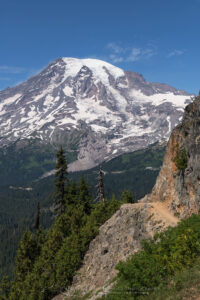
If you have extra time during your trip a hike up to Pinnacle Peak is definitely worth the effort. The trail starts across from Reflection Lakes and is about 1.25 miles in length with about 1400′ of elevation gain. It feels longer than 1.25 miles but the increasingly dramatic views of Mount Rainier keep your mind off the work.

There are several good spots along the trail for photos which include wildflowers or hikers on the switchbacks. Just west of the saddle at the trail’s end there are a few spots to sit and get some pics. If you’re up for it you can continue the steep route to Plummer Peak. For the adventurous photographer continue hiking east on a rough semi-exposed trail to a saddle above Pinnacle Glacier. The views of Mount Rainier from there are wide open.

Essential Tip #7:  Photography from the Pinnacle Peak trail is best in the evening light. Bring water and wear a hat, this trail can be very hot in the afternoon during the summer. Make sure to bring a headlamp for the way down if you’re planning on golden hour photography.

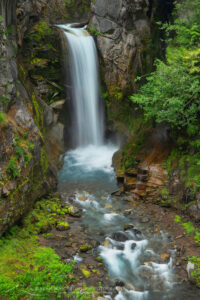
Christine Falls Mount Rainier National ParkChristine Falls #73210  Purchase

Christine and Narada Falls

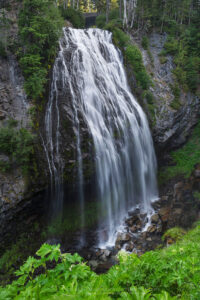
These two waterfalls are an absolute must photograph when you’re in the area. Both are very easy short walks from the road and both offer perfect compositions from the viewing areas. As with most waterfalls, they are best photographed on an overcast day, or in the early morning or evening when they are in shade.

Essential Tip #8:  Like nearly every location in a national park try to avoid photographing these waterfalls during the crowded busy part of the day. Before 9:00 am or after 5:00 pm is best, then you’ll probably have them all to yourself.

Narada Falls Mount Rainier National ParkNarada Falls #72871  Purchase

Camera Equipment Suggestions 

What camera gear should you bring on a Mount Rainier photography trip? In a nutshell, everything you have. Ok, maybe not everything, especially if you’re a gear junkie with dozens of lenses and camera bodies. 

If you’re using a camera with a full-frame sensor the most useful focal lengths are 14mm-70mm. So basically ultra-wide to very slight telephoto should cover most compositions. The only time I used my telephoto lens was to zoom in on some glacier details.

Basic Essentials:

    • Tripod
    • Wide to ultra-wide lenses
    • Normal range lens
    • Telephoto lens; for landscapes up to 200mm would be good enough. Paradise Meadows isn’t known for wildlife photography so long telephotos aren’t necessary.
    • Polarizing filter
    • Graduated Neutral Density Filters;  I still use these in the field in certain circumstances instead of creating the effect in post-processing. Although they are not always the best option.
    • Remote shutter release
    • Bug Spray!

Essential Tip #9:  Brush up on your focus stacking techniques. Since you’ll probably be photographing wide-angle compositions with wildflowers in the foreground and Mount Rainier in the background you’ll need to use methods that increase your depth of field.

Essential Tip #10: Mosquitoes, gnats, and other flying insects will be especially bothersome during times around sunrise and sunset. The same time when you will need to concentrate on your photography. Bring insect repellant or wear netting.

Essential Tip #11:   BE CREATIVE! Use your own eyes and mind. Just because 20 other photographers are photographing the same scene, in the same position, with the same gear and settings, doesn’t mean that you have to follow suit. Photographing something uniquely and creatively could be as simple as just turning around to see what’s behind you!

Mount Rainier sunrise from Reflection LakeReflection Lake Sunrise Mount Rainier #73082  Purchase

In Conclusion

Combining all the information and tips in this post and Paradise Meadows Mount Rainier Photography Trip Planning, you now should have everything you need to know to have a productive, safe, and enjoyable trip to Paradise Meadows. Now get out there and have fun!

Thanks for reading, feel free to share this post with your friends and colleagues!

Want to learn more, or have a professional photographer guide you in the field? Then take your Creative Photography to the next level with  Private Instruction and Guided Photo Tours.

All photos appearing in Photographing in Paradise Meadows Mount Rainier are available for Commercial Licensing and Fine Art Prints. Click on any image to purchase, or contact me for more info!

Mount Rainier, Paradise Meadows Wildflowers

Paradise Meadows Mount Rainier Photography Trip Planning

Mount Rainier, Paradise Meadows WildflowersParadise Meadows Mount Rainier #3485  Purchase

This post is part one of a two-part article about planning and photographing in Mount Rainier National Park Paradise Meadows. Jump to part two here.

One of the most popular locations for photographing wildflowers in the Pacific Northwest is Paradise Meadows Mount Rainier National Park. Few mountain locations have such an abundant display of wildflowers along with easy access to them. But at Mount Rainer, there are more than just subalpine meadows bursting with color. The views of the meadows include the hulking mass of a 14,411′ volcano and some of the largest active glaciers in the lower 48 states.

What is even more impressive is that there are numerous meadows of wildflowers around the entire circumference of the mountain. Some of them, like those at Paradise and Sunrise, are just a short walk on paved trails from the parking lot. While other locations like Spray Park are only accessible as longer day hikes or overnight backpacking excursions.

The most extensive and luxurious wildflower displays by far are found in the Paradise Meadows area. It is at this and adjacent locations that I’ll be talking about in this post.

Mount Rainier, Paradise Meadows WildflowersParadise Meadows Mount Rainier #3499  Purchase

But First a Lecture

Mount Rainier National Park receives over 2,000,000 visitors every year, and that number will continue to grow every year. The park service has gone to great lengths and expense (your tax dollars!) to make the meadows accessible for everyone, while also trying to keep them from getting trampled into oblivion.

Please take a minute to read the park’s Meadow Preservation page.

Many trails are paved and roped off, and all have numerous signs requesting people to stay on the trails. Please be thoughtful and considerate to the plants and future visitors, stay on the trails!

Skyline Trail Mount Rainier National ParkSkyline Trail Mount Rainier #72982

It is absolutely 100% possible to get great images while staying on the trails. But every time I photograph here I see other photographers going off the trail and trampling the flowers just to get that seemingly better photo. If everyone did that then Paradise Meadows would be nothing more than Paradise Dust Pit.

I wish I didn’t need to say this but here it goes. Do not even think of visiting Paradise Meadows unless you plan on strictly photographing only from established trails and keeping off the meadows. If you can’t do that then you should probably stay home!!

Paradise Wildflower Meadows Mount RainierParadise Meadows Mount Rainier #73244  Purchase
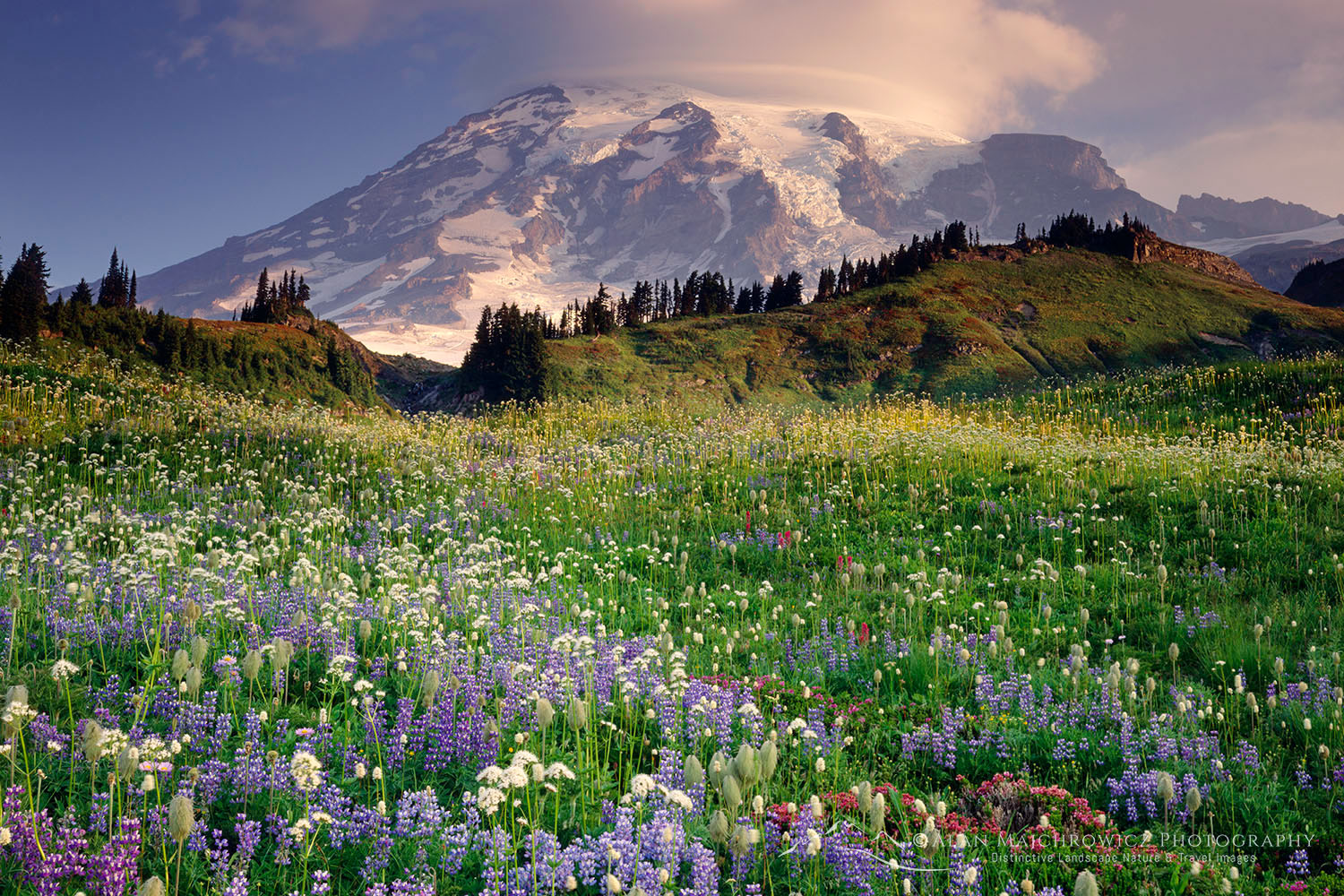
Planning A Paradise Meadows Photography Trip

You can spend as little as a day in the park and come away with a few good photos. But if your goal is portfolio quality images you’ll need to schedule more time. So I would recommend at least three days. That way you can explore all the trails and photo opportunities in the area.

Ideally a better trip length might be 5-7 days. With a week available you’ll be able to scout out all the best locations and photograph them in multiple lighting events. On my last trip to Mount Rainier, I photographed every day for a week but had only one morning and one evening of outstanding light. Because of this, I stayed in the Paradise area the entire trip to make sure I got the images I wanted.

Essential Tip #1: Always give yourself enough time and be flexible with your itinerary.

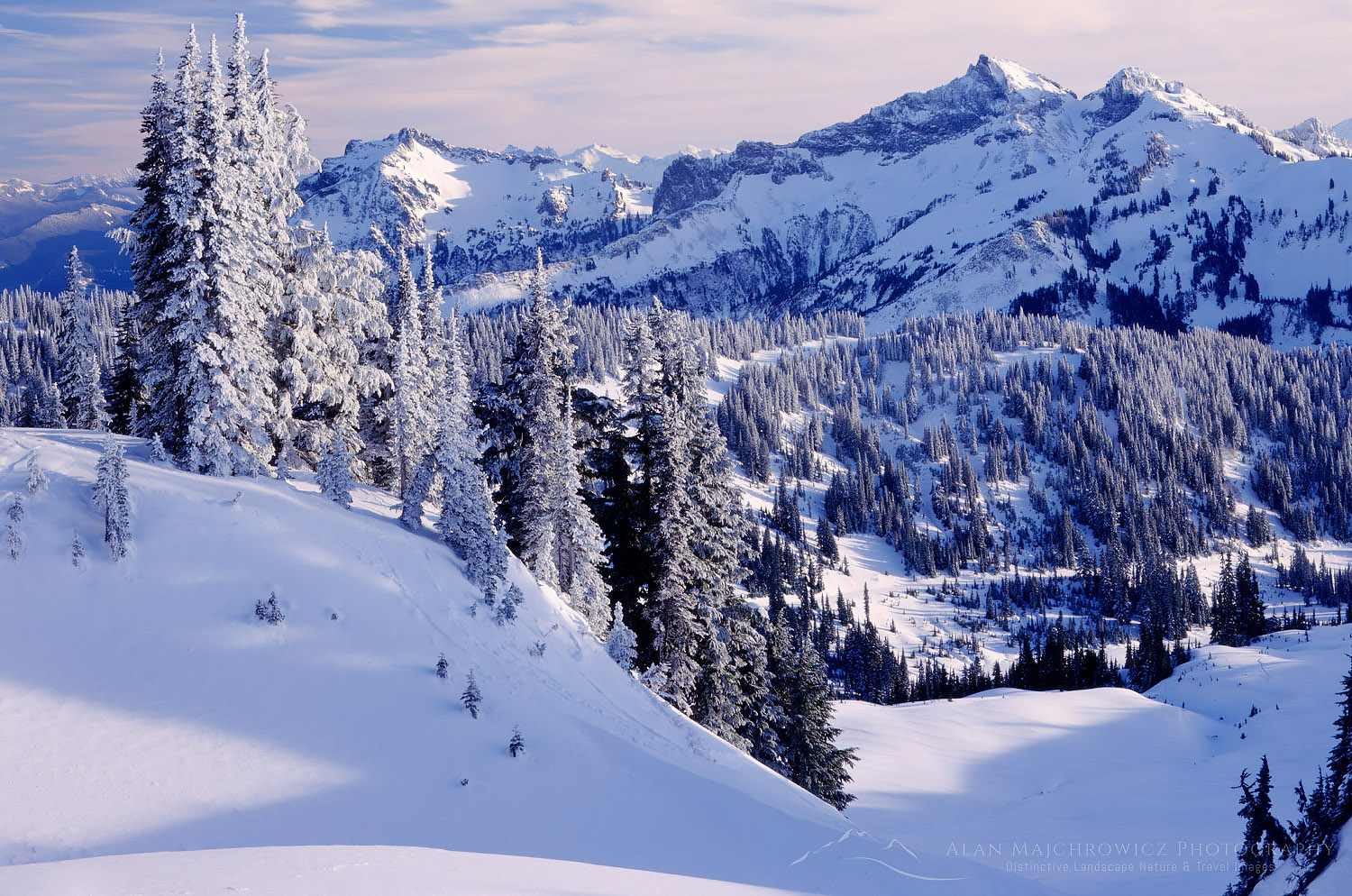
Tatoosh Range in winter, Mount Rainier National ParkTatoosh Range in Winter #5019  

Seasons in Paradise Meadows Mount Rainier

The road to Paradise Meadows and the parking area are open year-round. Although summer sees the most visitors, the winter season which stretches from November until May is also very popular. During those months Paradise is a magnet for backcountry skiers and climbers training for Alaskan or Himalayan expeditions.

For landscape and nature photographers late July to mid-August is the best time to plan a trip. However, timing varies every year due to the amount of snowpack.  But generally, you can usually be sure of hitting the peak wildflower bloom in the first weeks of August.

Keep in mind that all species of flowers don’t bloom at the same time. Glacier and Avalanche Lilies are the first to bloom as soon as the snow melts away. Shortly after Lupines, Sitka Valerian, Paintbrush, Pink  Mountain Heather, and Western Anemone dominate the scene. After the Lupines begin to fade Asters and Arnica take over the show.

Essential Tip #2: Check out the Park Service’s Wildflower Status page to see what is currently in bloom.

One of my favorite wildflowers is Lewis’s Monkeyflower. These brilliant purple flowers grow in dense clusters along streams and marshy areas in the subalpine. You can often see them among mats of vibrant green moss. Note that Lewis’s Monkeyflower is often in full bloom later in the season.

Mount Rainier sunrise from Reflection LakeReflection Lakes Sunrise #73114  Purchase
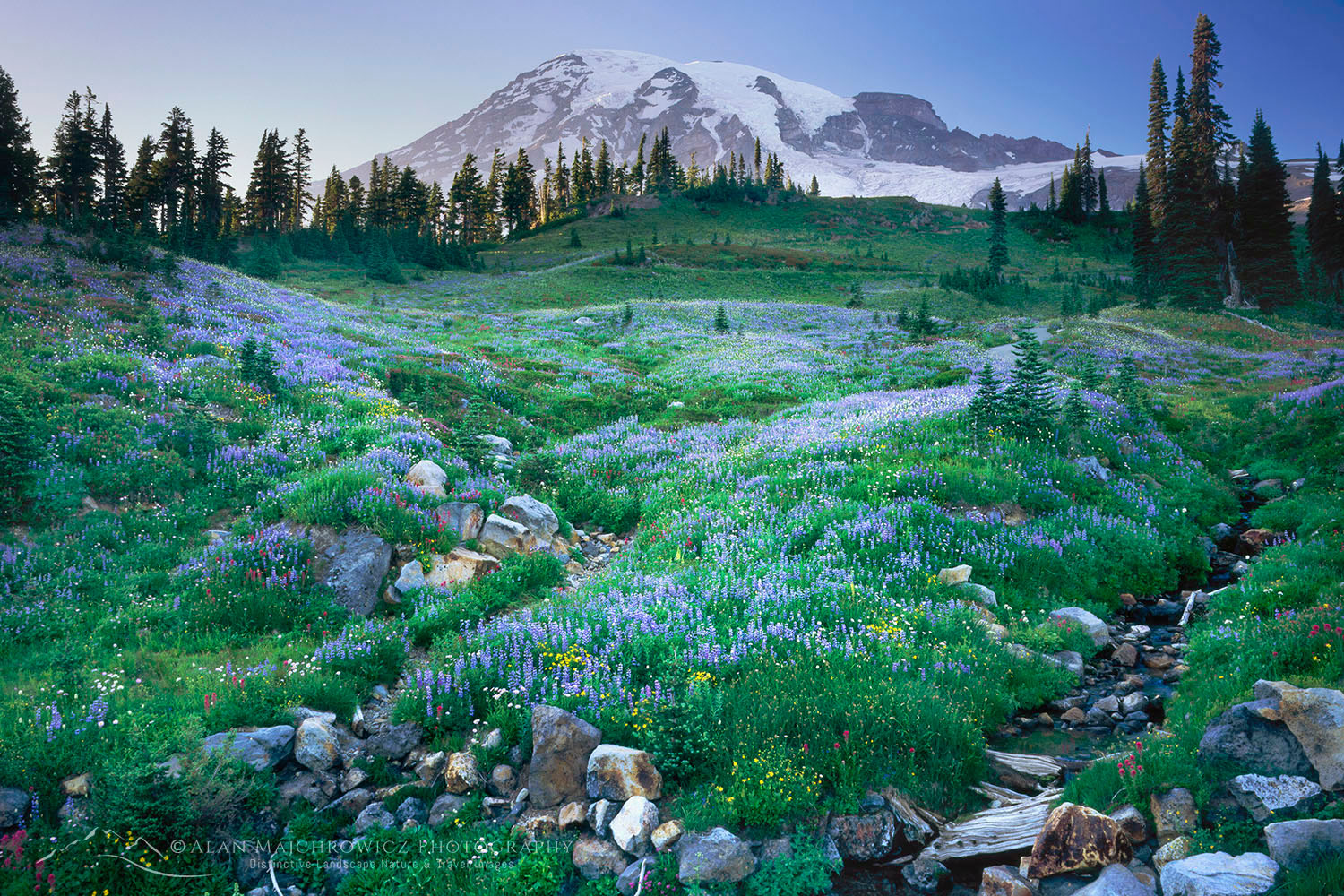
Guided Workshop Or Solo Trip

At some point, you’ll need to decide whether to go with an established workshop/photo tour or do the trip on your own. There are many advantages and disadvantages to either option.

Photo Tour/Workshop Advantages:
-Led by a seasoned professional photographer with intimate knowledge of the park and the opportunity to learn new techniques from a pro.
-Meals, lodging, and transportation are usually included, someone else does the driving for you.
-Being part of a group dynamic can be creatively beneficial.

Photo Tour/Workshop Disadvantages:
-Limited freedom to photograph where and when you want.
-Inability to postpone trips or change schedules due to weather considerations.
-Daily schedules can be very rigid, there may not be any flexibility to stay longer in one location.
-Travel times and distances from lodging to locations can be great, making for long days.
-Cost can be prohibitive

Solo Photo Tour Advantages:
-Unlimited freedom, photograph where you want when you want.
-Ability to postpone trips or change schedules due to weather considerations.
-Ability to lodge or camp where you choose, cutting down on travel time to locations.
-Huge cost savings.

Solo Photo Tour Disadvantages:
-Extra research is needed to find the best locations.
-Finding lodging on the fly daily can be difficult.
-Lack of assistance and input from a leader or group members.
-No one to share ideas or experiences with.

During my entire career as a professional photographer, I’ve traveled mostly solo. I love the freedom and flexibility associated with this mode of travel. And I know for a fact that I’ve been able to get better photos because of it. But of course, this is just my preference and it certainly won’t work for everyone. It’s up to you to decide.

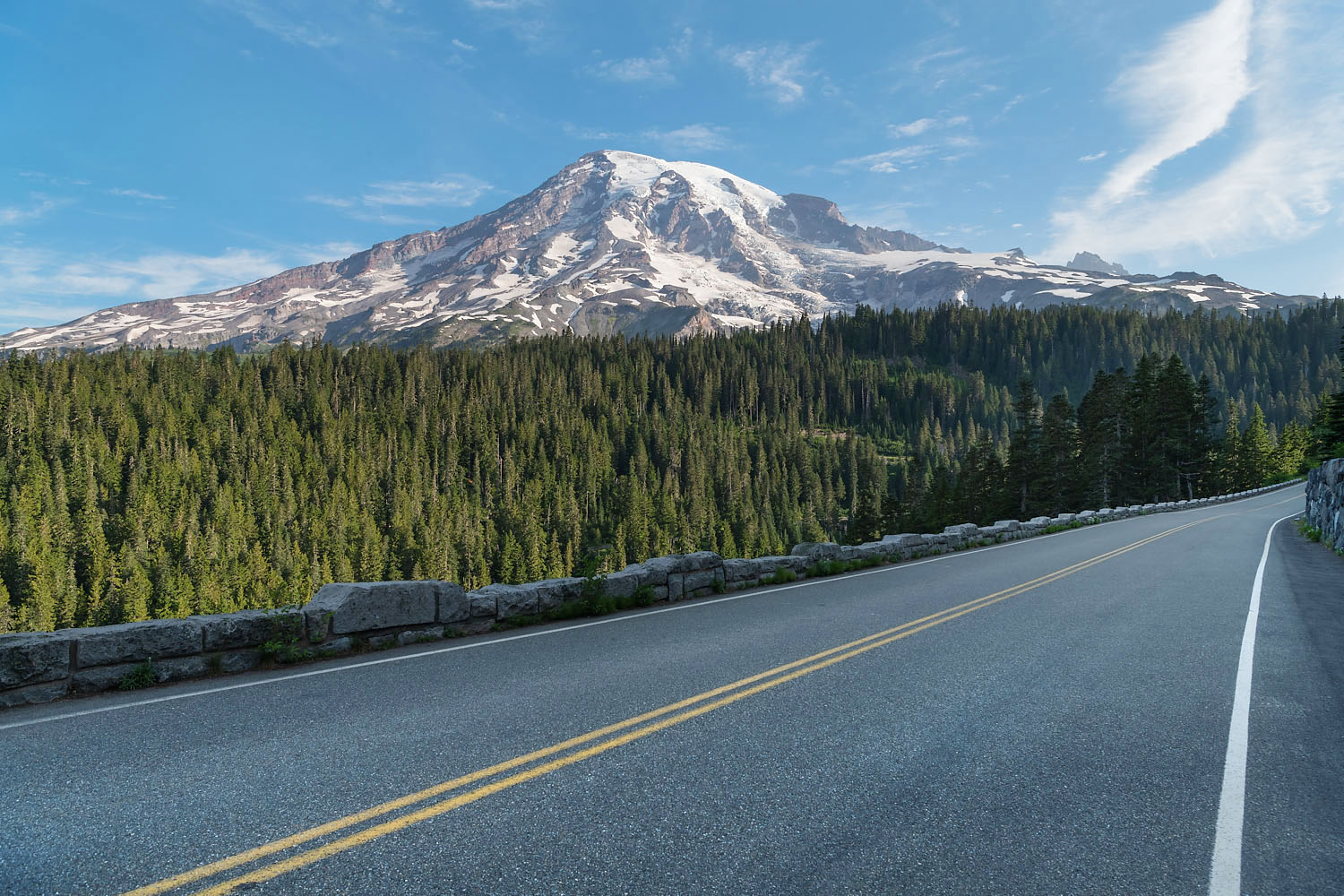
Paradise Road Mount Rainier National ParkRoad to Paradise Mount Rainier #72878  

Trip Logistics Paradise Meadows Mount Rainier

Location, location, location. It’s all about location, and Mount Rainier National Park is no different. Generally, you’ll have time to photograph only one location during the morning or evening golden hour. By the time you can reach the next spot, the light will most likely have faded until the evening or the next morning. And remember this isn’t a race or contest, slow down and appreciate where you are!

Keep in mind that it is about an 18-mile drive from the Nisqually entrance to Paradise Meadows. Since it is a slow winding mountain road allows about an hour for the drive. The closer you stay to your subject matter the better chance you have of being in the right place at the right time. And you will be more relaxed and focused when you get there.

Essential Tip #3:  Set your alarm and get used to rising very early. Absolutely nothing is worse than planning on being at a certain spot before sunrise than being late because of hitting the snooze alarm one last time and then having a long drive ahead. Stopped for speeding, or worse, hitting a moose in the dark during your haste? Ughh!

Sunset over Paradise Mount Rainier National ParkParadise Sunset Mount Rainier #73203  Purchase
Lodging and Services

No matter where you stay, be it in a national park, a forest service campground, or a motel or resort, be prepared to make reservations well in advance of your trip, if possible. Even in the shoulder seasons vacancies in lodging and campgrounds can be difficult to find. Popular campgrounds will fill by early morning. Research and plan. It’s no fun driving around in the dark after a long day trying to find a place to sleep.

Essential Tip #4: Plan and reserve accommodations far in advance.

Lodging: There are several options for lodging when photographing in the Paradise Meadows area. If you can afford it the most convenient option would be to stay at the historic Paradise Inn. Situated right at Paradise all the best locations are right outside your door! For this option, you’ll need to book well in advance. There is also the National Park Inn located lower down the mountain in Longmire.

Between the town of Ashford and the Nisqually entrance, there are several options for cabins and motels. The best and closest option for camping is Cougar Rock, about a half-hour drive from Paradise Meadows. Reservations are recommended but you can usually get a site if you arrive before 9:00 am.  

Services: Gas and groceries are limited to Ashford which has one gas station a couple of small convenience-type stores, and a small laundromat. In the park, Longmire has a small general store with limited supplies. So it is best to plan ahead and arrive with all the food you need for your stay.

Cell Signal:  While in the park cell service is limited to the Paradise area, where there is a pretty strong signal. Otherwise, you’ll have to travel back down to Ashford.

Paradise wildflower meadows Mount Rainier National ParkPink Heather Mount Rainier #72905  

Fees Passes

The entrance fee to Mount Rainier National Park as of this date is $30 for a private vehicle and passengers and is good for seven days. An annual pass exclusive to Mount Rainier National Park is $55.

Consider purchasing an America The Beautiful annual pass if you photograph in many national parks and federal recreation areas throughout the year. This pass costs $80 and is good for National Parks, BLM lands, National Forests, and more.

Thanks for reading, please feel free to share this post with your friends and colleagues!

Next up, is part two of this article, Photographing in Paradise Meadows Mount Rainier.

Want to learn more, or have a professional photographer guide you in the field? Then take your Creative Photography to the next level with  Private Instruction and Guided Photo Tours.

All photos appearing in Photographing Paradise Meadows Mount Rainier are available for Commercial Licensing and Fine Art Prints. Click on any image to purchase, or contact me for more info!

Paradise Meadows Mount Rainier Photography Trip Planning

New Additions: Mount Rainier Olympic National Parks, North Cascades

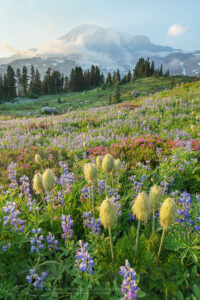
Paradise Wildflower Meadows Mount RainierParadise Meadows Mount Rainier #73268  Purchase
Update: New Additions images have been moved to the following pages: Mount Rainier National Park, Olympic National Park, and Washington

The summer of 2021 has been challenging, to say the least. Record-breaking heat waves, devastating wildfires, widespread smoke, crowded parks, and the persistent COVID thing. There was so much hope that this summer would offer a return to normalcy. Well, it is better than last year, but not much.

I can usually plan and complete successful photography trips by having various backup locations in mind. Mostly for when conditions are less than optimal. However, this year the wildfire season started much earlier than usual, and by early July thick smoke was present over all my primary and most backup locations. That is except one.

Sunrise over Mount Rainier seen from Reflection Lake, Rosy Spirea (Spirea splendens) is in the foreground. Mount Rainier National Park Washington #73108orMount Rainier from Reflection Lake #73103  Purchase
Backup Plans:  Mount Rainier

So far NW Washington has been, for the most part, lucky to escape all the wildfire smoke. So that gave me the opportunity to visit some great locations closer to home.  In particular, I was able to make a long-overdue trip to Mount Rainier National Park. For many years I’ve put off photographing Mount Rainer for various reasons. Mainly because in August I’m usually off on more ambitious trips out of state, or in Canada. But also because of the summer crowds. And the necessity of having to drive through all the Seattle and Tacoma congestion to get there.

Diablo Lake, North Cascades WashingtonDiablo Lake, North Cascades #71713  Purchase

In addition to a very successful trip to Mount Rainier, several other locations made it on my list. These included Olympic National Park, Diablo Lake, Heather Meadows, and Skyline Divide in the North Cascades. Summer isn’t over yet so hopefully, there will be several more trips to be made before fall arrives.

For a more in-depth selection check out the Washington, Mount Rainier, and Olympic National Parks Galleries.

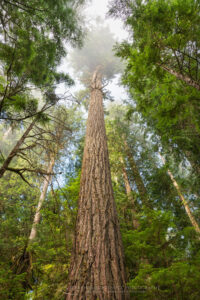
Old Growth Douglas Fir tree Olympic National ParkHeart O’ the Hills, Olympic National Park #71873  Purchase

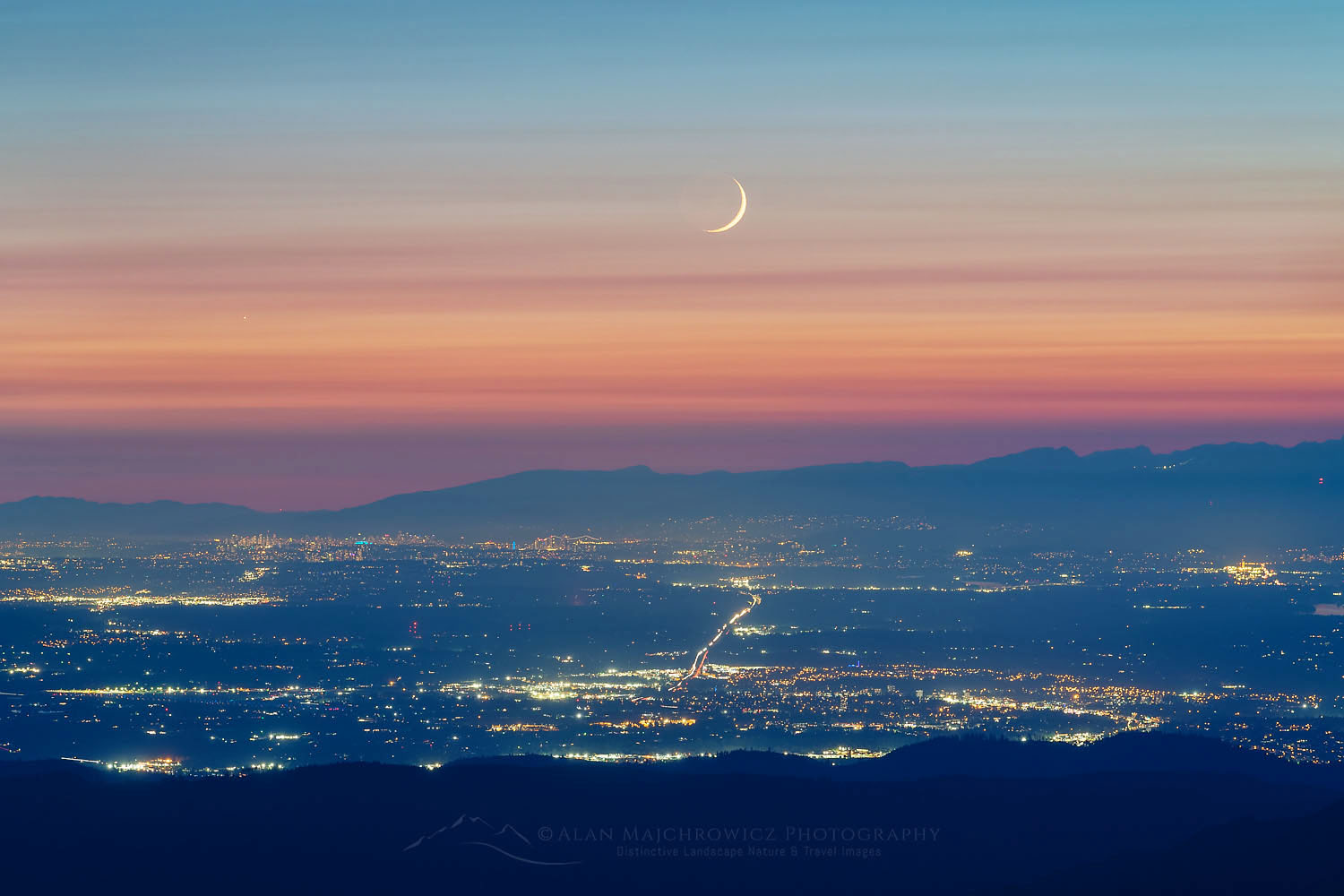
Crescent moon over Vancouver British ColumbiaMoon over Vancouver, British Columbia #71787 Purchase

Photos appearing in New Additions: Mount Rainier Olympic National Parks, North Cascades are available for Commercial Licensing and Fine Art Prints. Click on any image to purchase, or contact me for more info!

Squaretop Mountain Wind River Range Wyoming

Rocky Mountains Photography Tour

Rocky Mountains Photography Tour

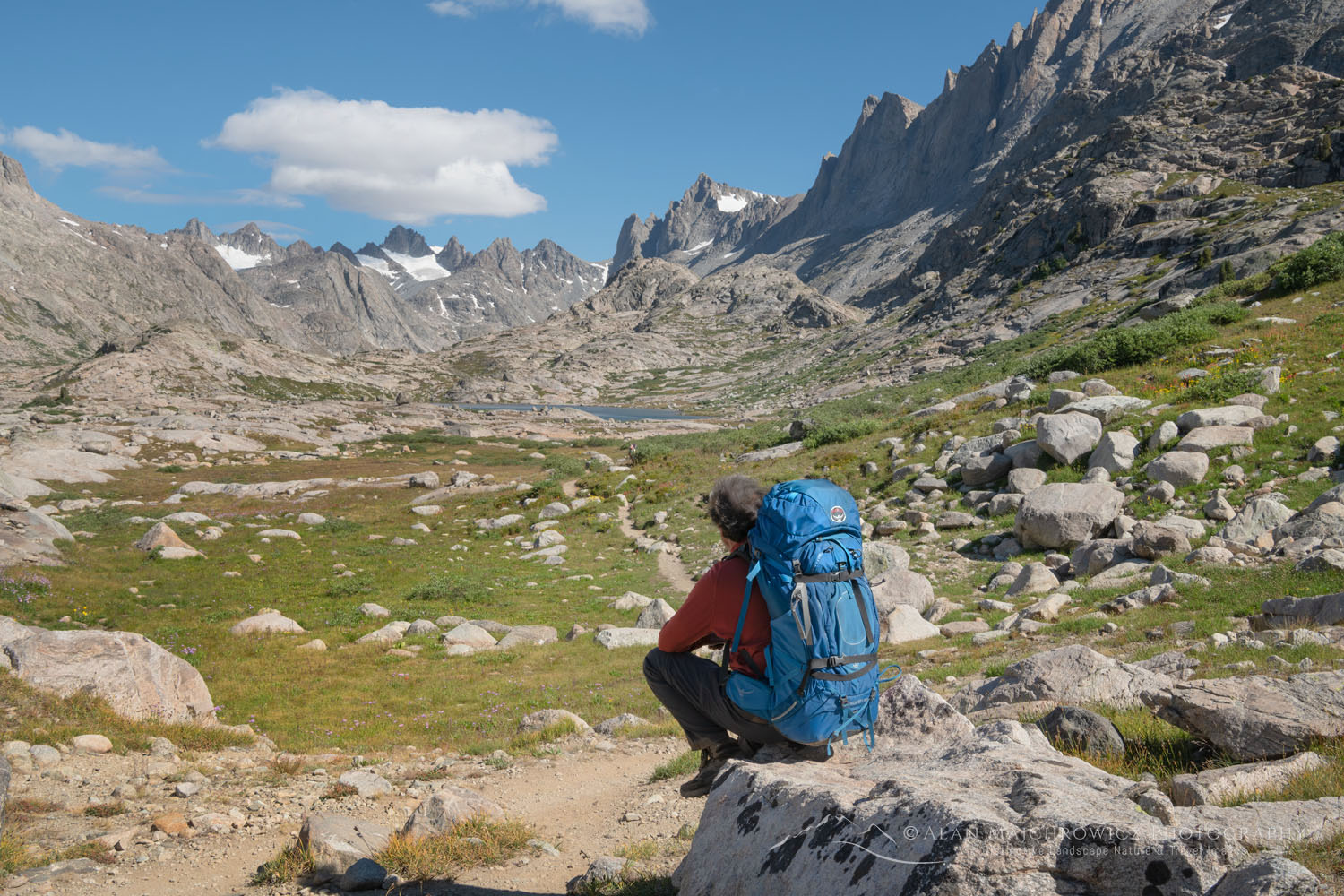
Backpacker on Titcomb Basin Trail Wind River Range Rocky Mountains WyomingBackpacking Wind River Range #66803

Update 8/162021: Due to wildfires and heavy smoke and haze, this trip has been delayed.

This summer’s Rocky Mountains Photography Tour will start on July 9. I was once again hoping to head north to Alaska and the Yukon Territory. But since it looks like the border won’t be open in time, it is on to Plan B. So this year I’ll be revisiting some locations from 2019 and 2020.
These locations will mainly the Boulder-White Clouds Wilderness in Idaho, and the Wind River Range of Wyoming. I’m also planning a lengthy backpacking trip to the Chinese Wall in the Bob Marshall Wilderness of Montana. That location was on my itinerary last year but I swapped it out for Glacier National Park instead.

White Clouds Wilderness Rocky Mountains IdahoBoulder White-Clouds Wilderness  #68945  Purchase

Boulder-White Clouds Wilderness Idaho

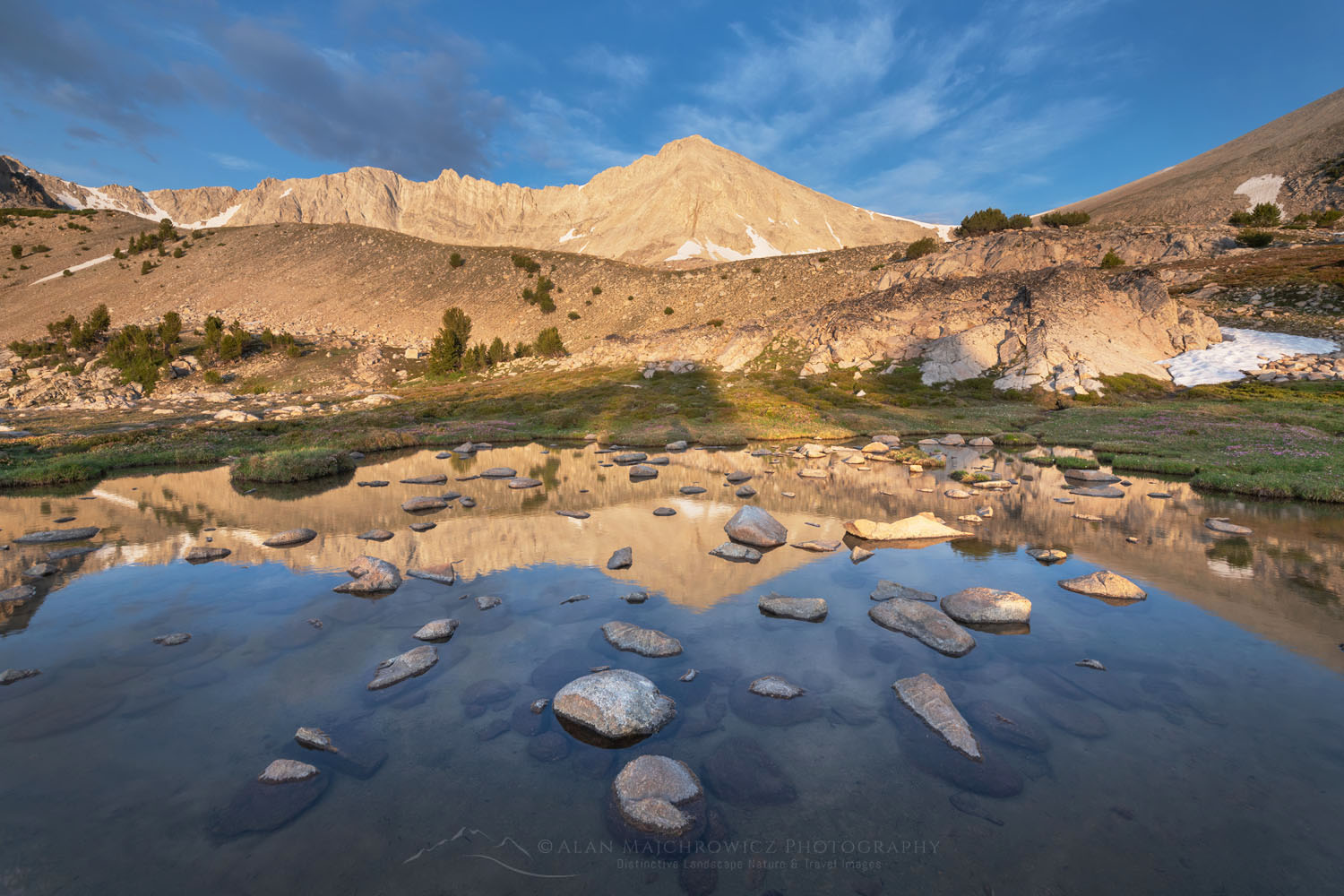
On last summer’s visit to the White-Clouds I was only able to visit the north section. This year I’ll be backpacking in to the south half to photograph the Boulder Chain Lakes Basin and the some of the highest peaks in the wilderness. This area is also part of the popular White Clouds Wilderness Loop. For my purposes though I will be doing an out and back trip instead of the loop. I’ll also have plenty of time budgeted for layovers at the best locations along the route.

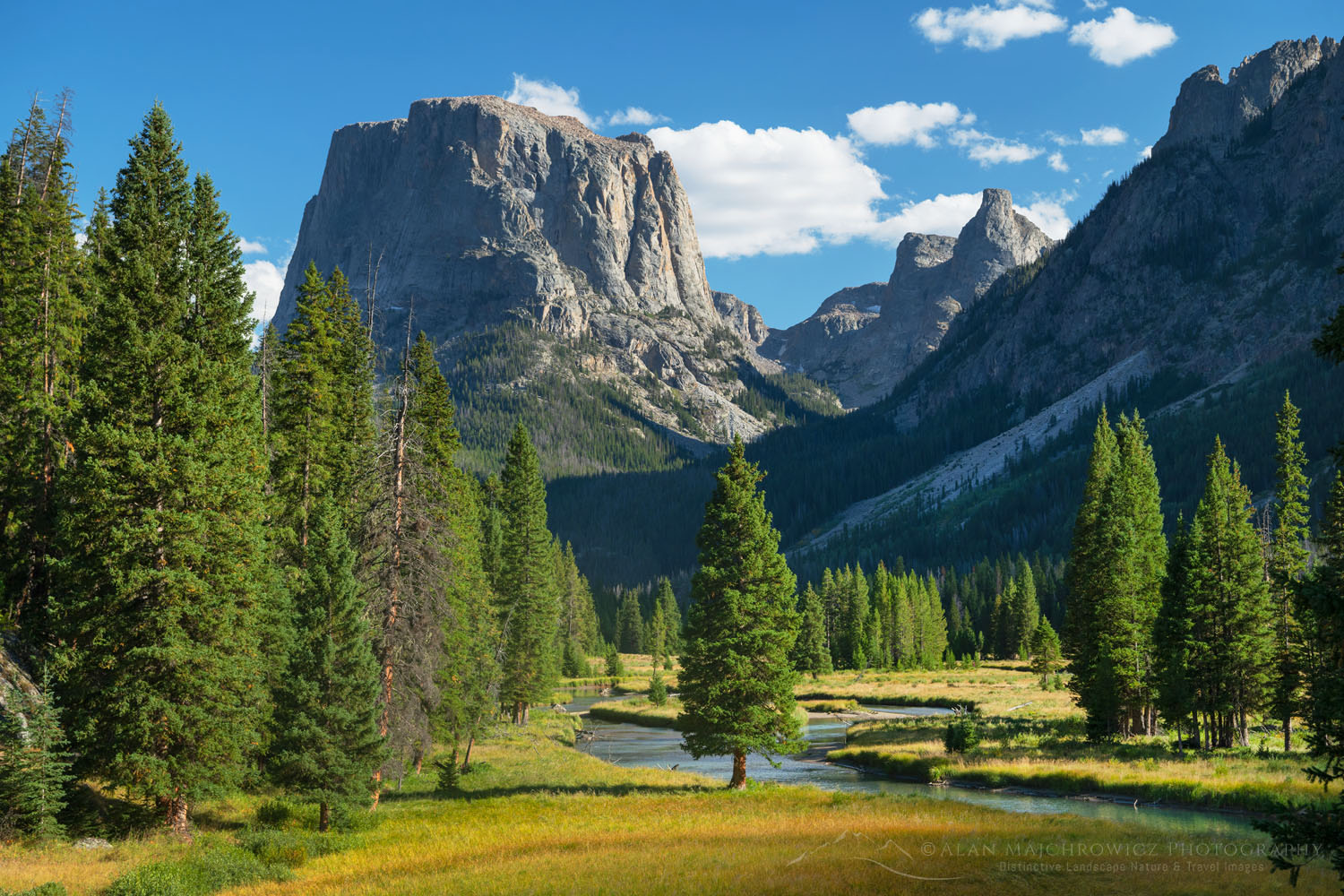
Squaretop Mountain Wind River Range WyomingSquaretop Mountain Wind River Range #66997 Purchase

Wind River Range Wyoming

Ah, what can I say about the Winds? This will be my seventh trip there and I still can’t get enough of this spectacular mountain range. It’s a backpackers’ dream. Thousands of lakes, 40 peaks over 13,000′, miles and miles of trails in the subalpine along the Continental Divide, plus easy cross country travel to boot!

This year my plans will include parts of the Hailey Pass-Washakie Pass Loop, Desolation Valley, and Baptiste Lake. Also on the itinerary will be a return to Cirque of the Towers and Deep Lake. I’ll also be returning to the Green Lakes area for more new photos of the Green River and Squaretop Mountain.

Castle Reef Mountain Sun Canyon Rocky Mountains MontanaCastle Reef Mountain Montana  #68136  Purchase

Bob Marshall Wilderness Montana

Known among locals and avid backpackers as “The Bob”, this wilderness destination in the northern Rocky Mountains has been on my must photograph list for decades. The Bob Marshall Wilderness Complex is a huge swath of land straddling both sides of the Continental Divide. An important part of the Greater Yellowstone Ecosystem it is home to the largest intact population of Grizzlies in the lower 48.

Last year It was on my itinerary but I took a pass due to an unusual opportunity to obtain backcountry permits in Glacier National Park. The destination on this trip will be a multi-day backpack to the famous Chinese Wall. This is arguably the signature feature of the Bob Marshall Wilderness, a 12 mile long 1000′ high limestone escarpment on the Continental Divide.

U.S. Highway 93 Lost River Range IdahoU.S. 93 Idaho #68984  Purchase

A Flexible Itinerary

For an ambitious trip like this several caveats need to be mentioned. First of all if it becomes clear the Canada border will open before the end of July it will be back to Plan A, as in A for Alaska.

Secondly, as with all of my trips that include multiple long backpacking excursions, some locations may be modified due to weather or time constraints. There are already indications of a major wildfire season in the making, so smoky conditions or closed off areas may change my plans.

Finally, if you are in any of these areas in July or August and would like to meet up in the wilderness, or in town for a coffee or beer, feel free to contact me!

If you enjoyed reading Rocky Mountains Photography Tour please share it with your friends, colleagues and family.

Photos appearing in Rocky Mountains Photography Tour are available for Commercial Licensing and Fine Art Prints. Click on any image to purchase, or contact me for more info!

Rocky Mountains Photography Tour

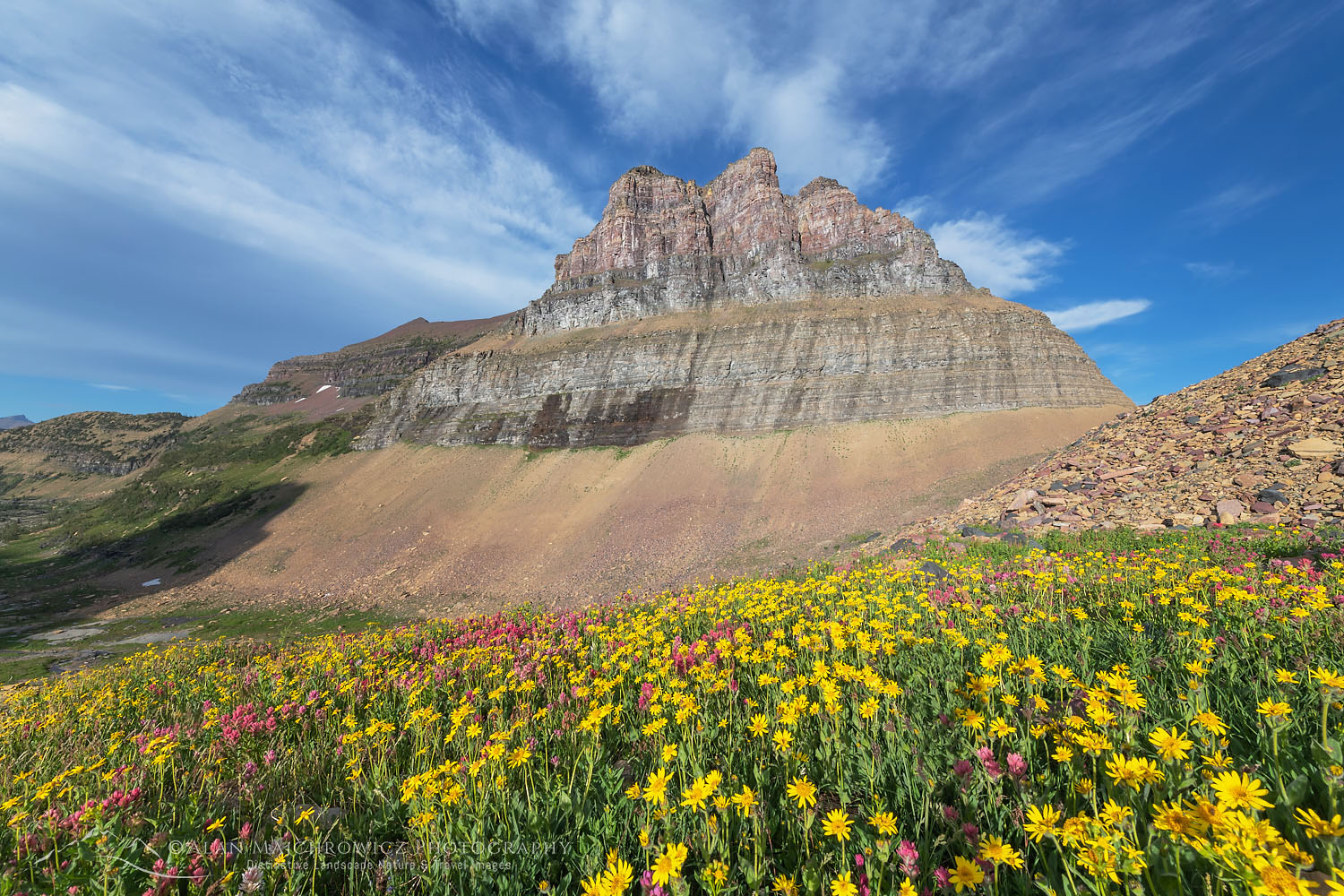
Meadows of Broadleaf Arnica (Arnica latifolia) at Boulder Pass, Glacier National Park Montana

Boulder Pass Glacier National Park Part 2

Boulder Pass Glacier National Park Part 2

Meadows of Broadleaf Arnica (Arnica latifolia) at Boulder PassBoulder Pass Glacier National Park #69880  Purchase

Read: Boulder Pass Glacier National Park Part 1 here

Glacier National Park is truly one of the great gems in the national park system. It has many attributes which set it apart from other parks. In addition to being a national park, it is also a biosphere reserve, world heritage site, and international peace park.  It is the home of one of the last strongholds of grizzly bears in the lower 48. And although it contains two dozen named glaciers, the park’s name reflects the sculpting of its terrain by ice age glaciation.

All of this and more attracts visitors from around the world, to the tune of 3,000,000 visitors a year, on average. The reasons visitors flock to the park are as diverse as the park’s features. Some come to marvel at the beauty of the mountains. Some hope to see wildlife close up. Others come solely to escape the crushing pressures of modern-day society. Unfortunately, the latter have little chance of doing so when touring the park by car.

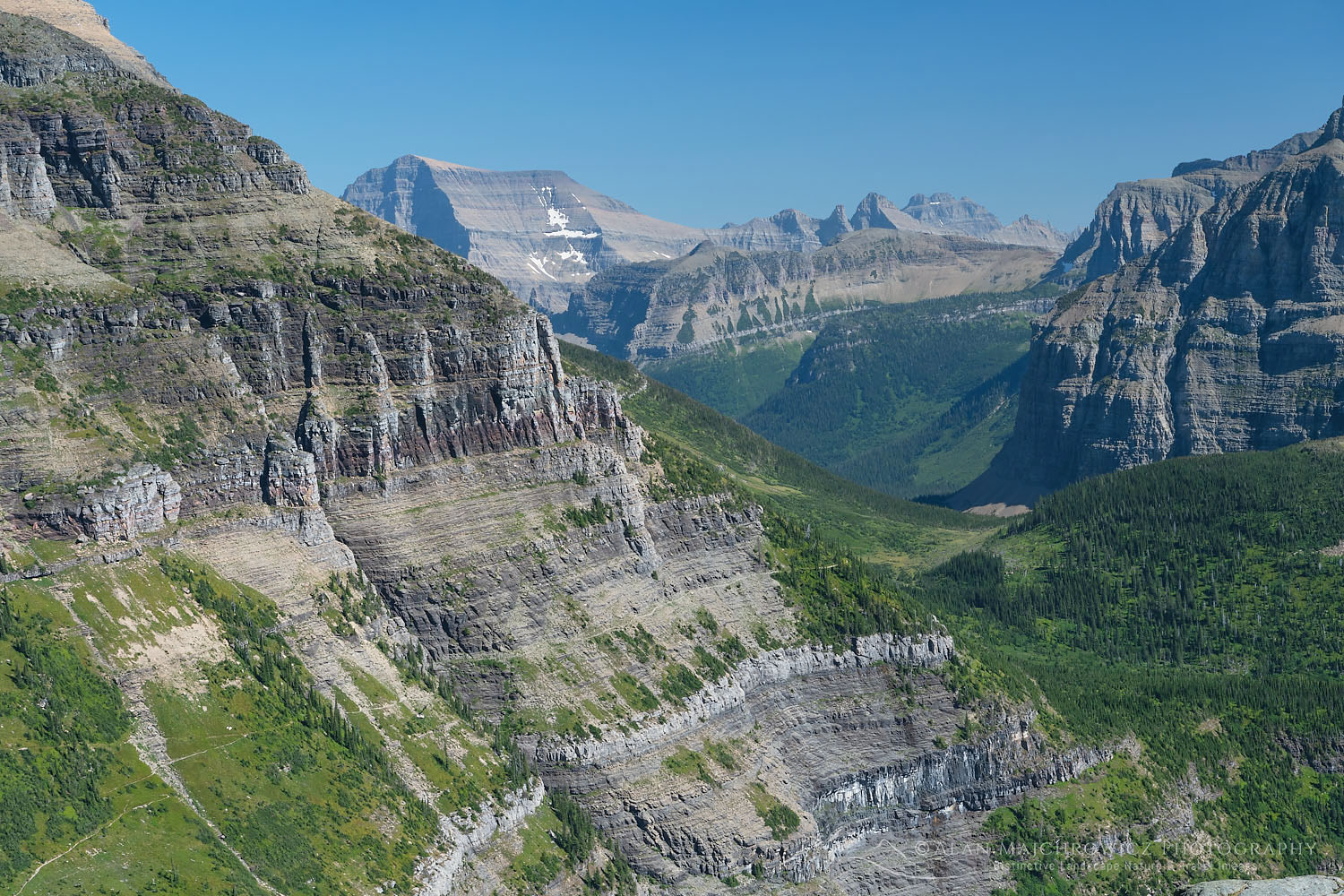
Others like me come to the park to photograph the dramatic landscape of the northern Rocky Mountains. As I mentioned in my previous post, I’ve been to Glacier many times over the years and photographed it in all seasons. Nearly all of those trips were to iconic front-country locations. But last summer I took the opportunity to visit a remote and special corner of Glacier National Park, Kintla Lake, and Boulder Pass.

First Day Along Kintla Lake

The remoteness of Kintla Lake and Boulder Pass in the northeast corner of the park looked appealing to me. It was a long hike and passed through areas with lots of photographic potential. But first I needed a wilderness permit, and it took me a couple of tries to obtain one. Even though it was August the park service just opened campsites at the pass the day before. So I was one of the first to stay there that season.

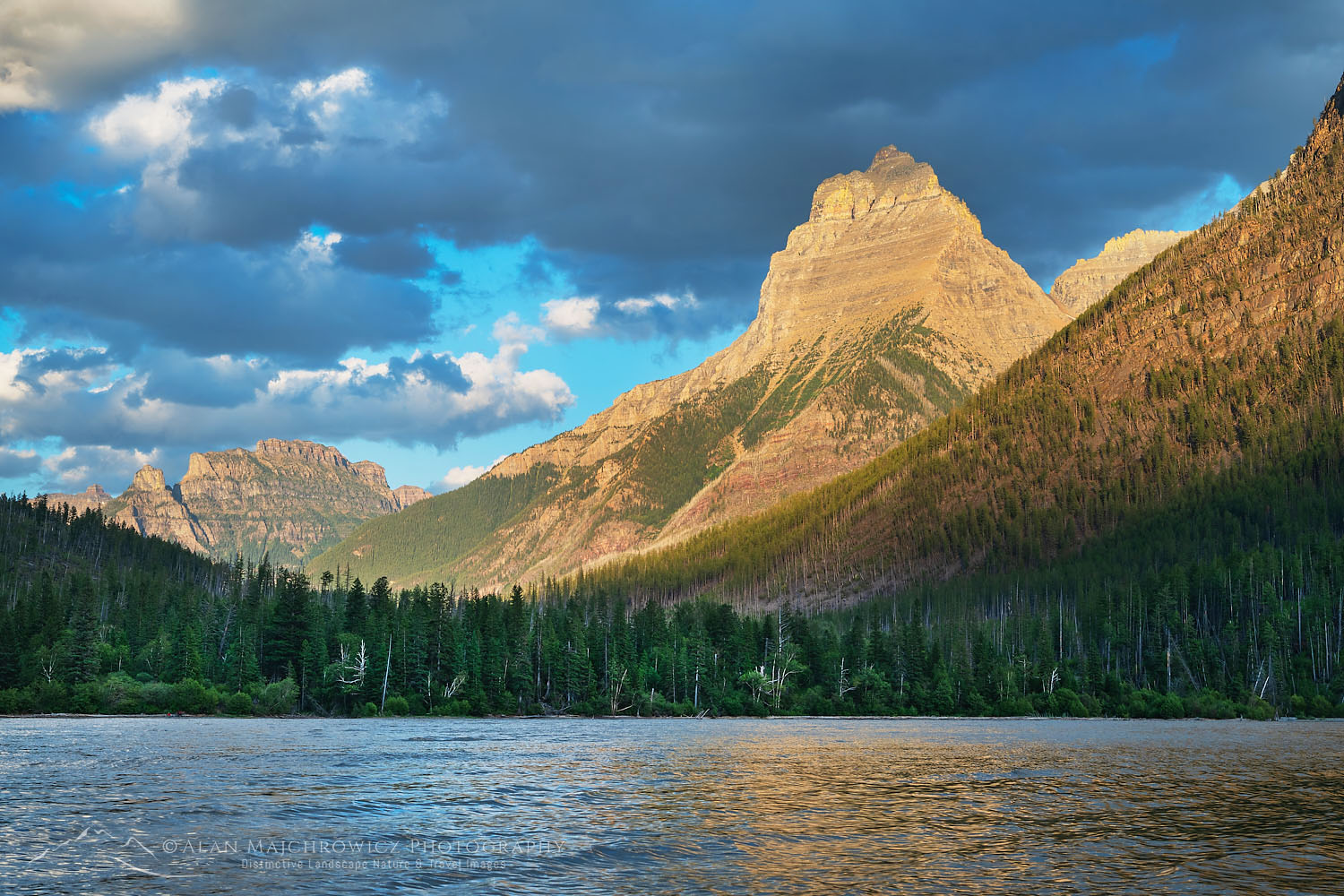
Kinnerly Peak Kintla Lake. Glacier National Park MontanaKinnerly Peak Kintla Lake  #69835  Purchase

The hike begins at Kintla Lake and reaches Boulder Pass 17.5 miles later, with about 3200′ of elevation gain along the way. Some hardcore long-distance hikers can make the trip in one day, but nearly everyone splits it in two. It’s also possible to continue down Boulder Pas, down to Waterton Lake, and exit the eastern side of the park. A popular loop trip would begin at Kintla Lake and exit at Bowman Lake, or vice versa. My plan was to simply do an out and back on the same route.

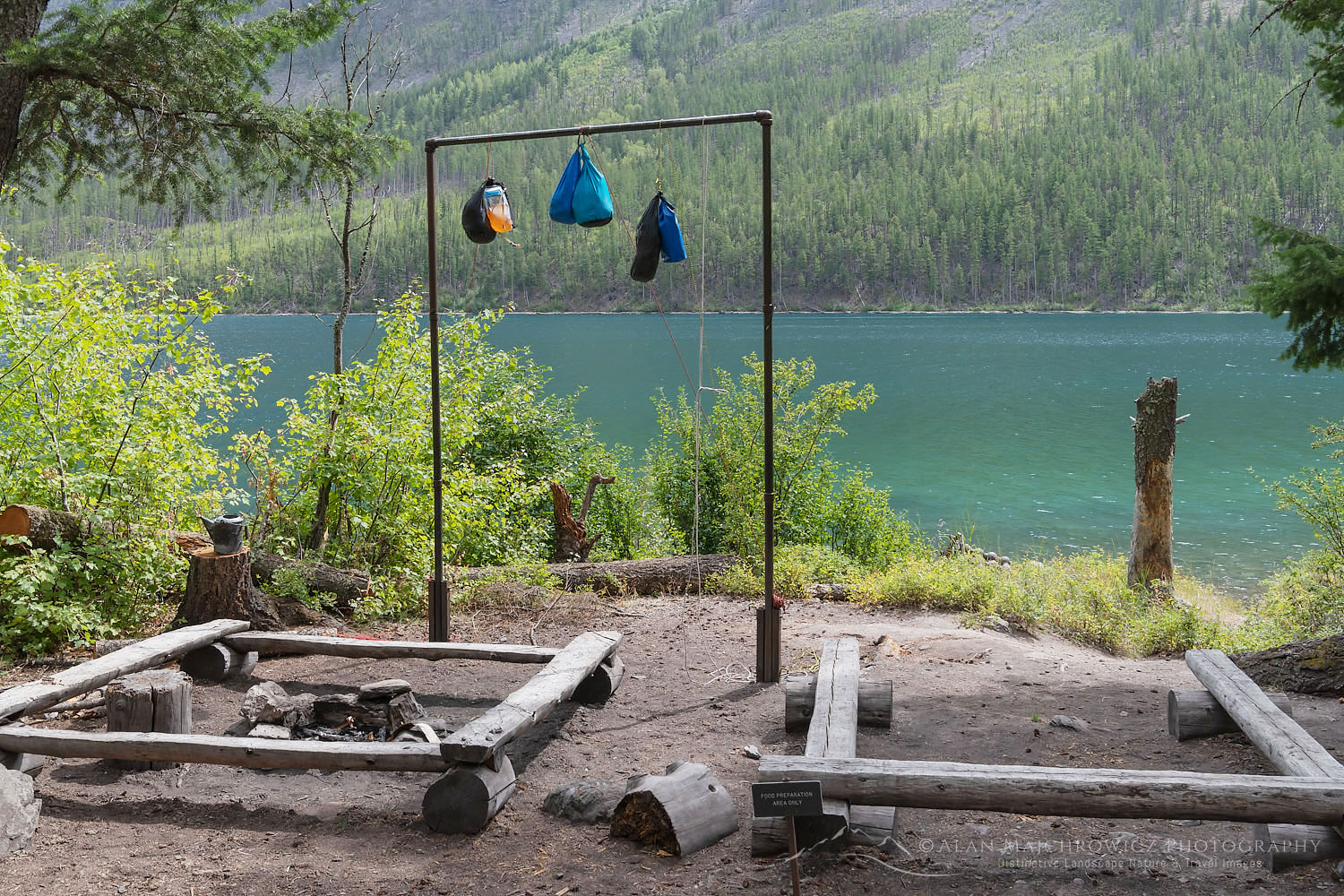
The first day was a pretty easy hike along Kintla Lake to Kintla Head camp. It’s a pleasant hike mostly through the forest with a few views of the lake along the way. The first day or two on a long hike is sometimes the hardest since your pack is full of food and fuel. At camp, it was a pleasure to sit around the food prep area with other hikers and swap stories and backgrounds. I usually travel solo so chatting it up with others is a welcome treat.

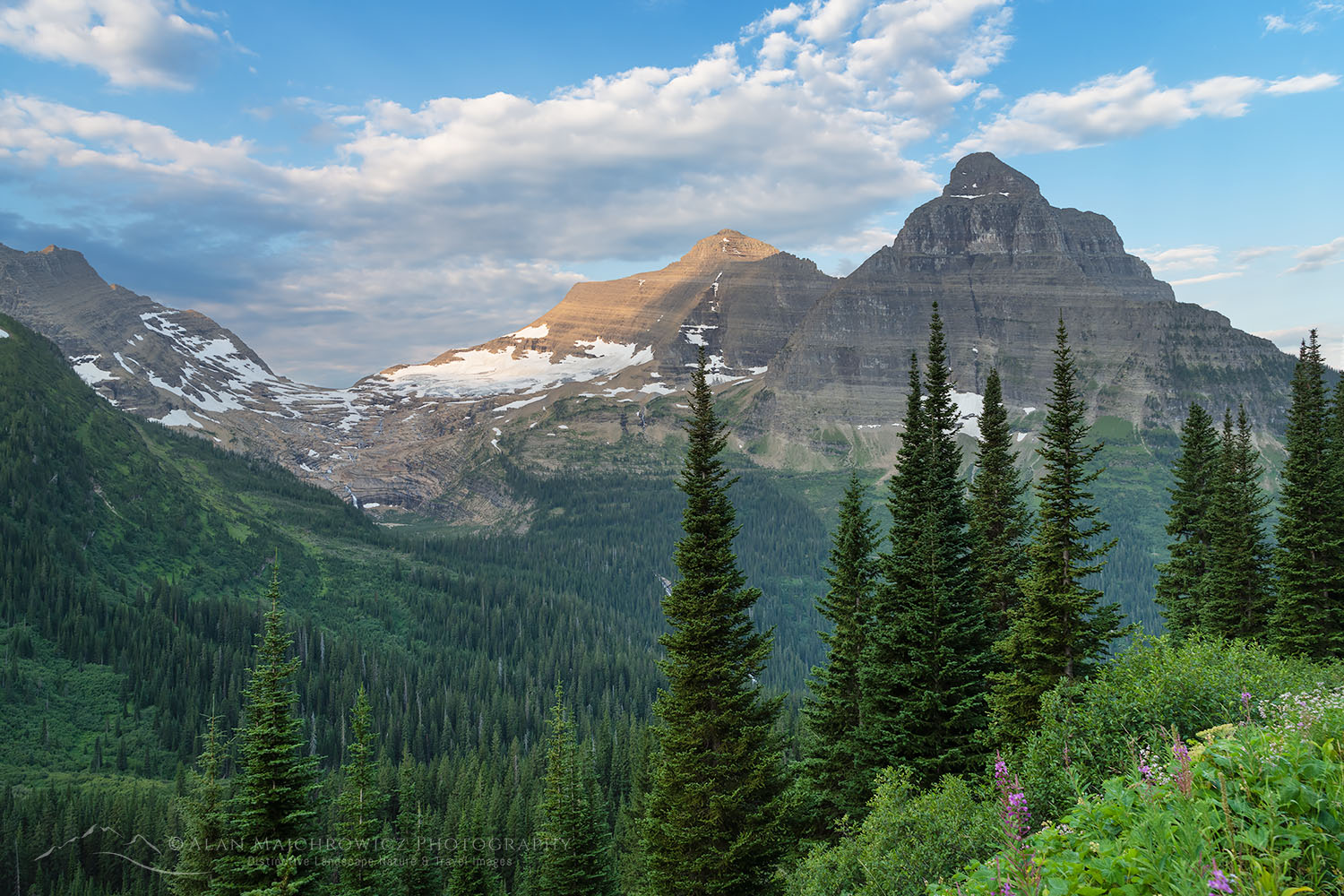
Kintla and Kinnerly Peaks Glacier National Park MontanaKintla Peak Glacier National Park #70050  Purchase

Kintla Lake to Boulder Pass Glacier National Park

The hard work would come the next day. It was another 11 miles to Boulder Pass camp, with nearly all of the 3200′ of elevation coming in the last miles. I got an early start to beat the heat and travel at a leisurely pace. Just past the head of Upper Kintla Lake, the work began. The trail wasn’t too steep or difficult, just a long constant uphill slog. At one point the trail passes through about a mile of thick shoulder-high brush. Often it was so thick it was hard to see the trail or rocks and roots.

It seems to take forever to reach the point where signs of the subalpine begin. And although the view across the valley to Kintla Glacier is rewarding it’s difficult to tell where the trail tops out at the pass. It was when I was just below the pass that I saw my first grizzly in the backcountry.

I’ve been backpacking for 40 years and this is my first bear encounter, go figure. The bear was a sow with two cubs about 25 yards uphill of the trail. Since I was following the book and making plenty of noise she saw me and slowly moved away. But proceeding further would have brought me closer to the next switchback. So I waited and continued to talk loudly. The bear eventually moved on and I continued up to the pass. A couple of passing hikers, who apparently felt close bear encounters weren’t anything to worry about, lightheartedly kidded me for talking so loudly to ward off the bear.

Wildflower meadows at sunset. Boulder Pass, Glacier National Park MontanaBoulder Pass Wildflowers  #69886  Purchase

At Boulder Pass Glacier National Park

Finally, the trail reached the pass with all its glorious views. At this point, an oddity struck me. Everywhere you go in Glacier Park you’re passing by or walking over colorful layers of sedimentary rock. However, at Boulder Pass, I was walking over a vast expanse of ancient lava.

Afterward, I did some geology research and found out that it was Purcell Lava.  Long ago when the area was still beneath an ancient sea molten rock squeezed up from below and flowed onto the sediment forming rocks. It was also interesting to see that this lava exposed at the pass was smooth and bore striations from past glacial activity.

Meadows of Broadleaf Arnica (Arnica latifolia) at Boulder PassThunderbird Mountain from Boulder Pass   #69907  Purchase

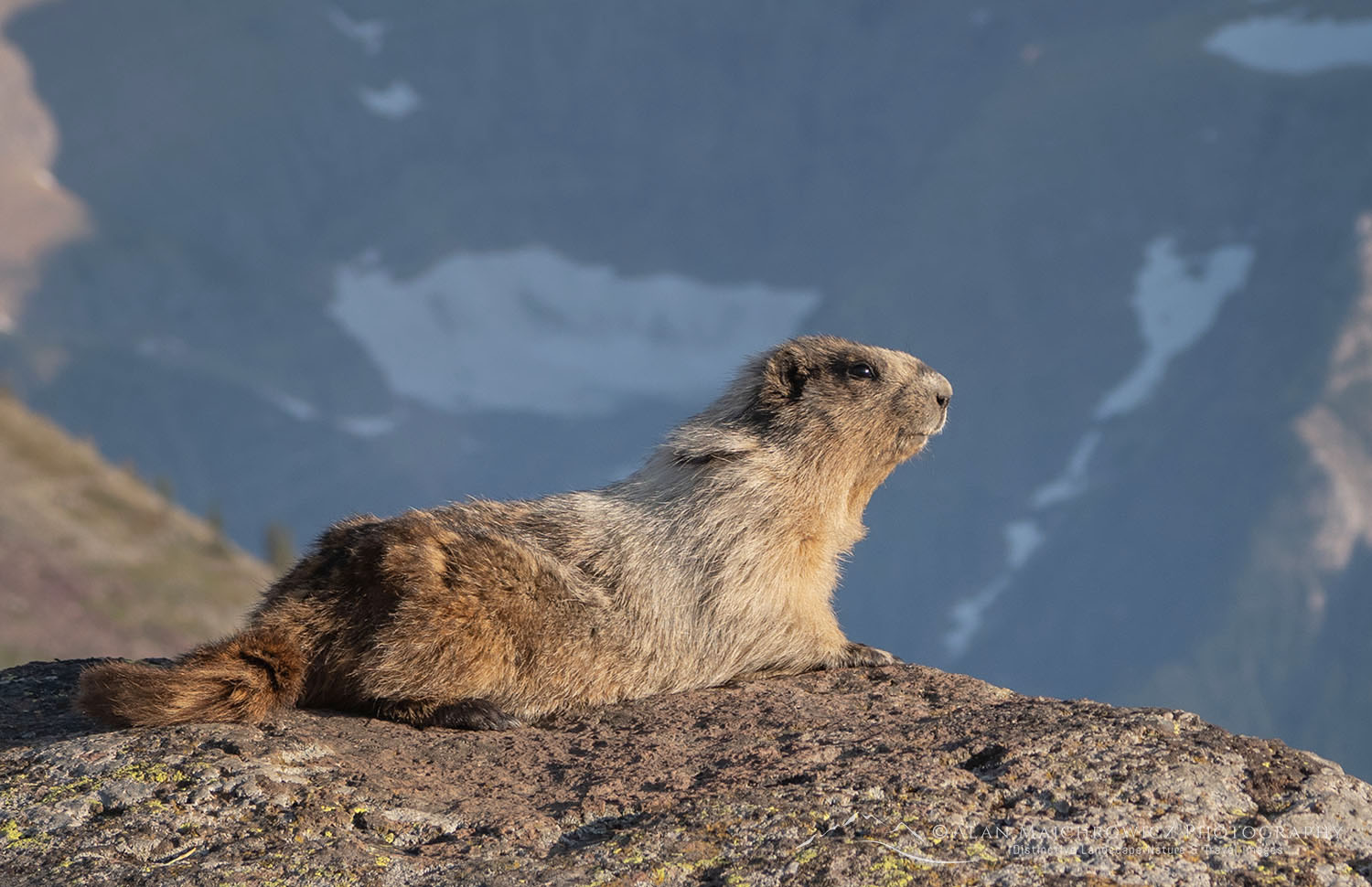
The Boulder Pass camp has three tent sites, a food prep area with hanging poles, an outhouse, and one very aggressive marmot. I’ve never come across a marmot that was so intent on obtaining food or salt from sweaty backpack straps. You have to be on guard since marmots can easily chew through straps, shoelaces, and other important items in search of nutrients and food. This guy had the appearance of having seen quite a few winters and fortunately eventually gave up on his pursuits.

I had three days to explore and photograph the area, and after a bite to eat I was eager to get to work. It turns out that Boulder Pass is a pretty big area with a few adjacent benches and basins below Boulder Peak. There was everything from lush meadows, streams, and tarns, to glacial moraines and debris. Plenty of subject matter to keep me busy.

Meadows of red paintbrush wildflowers at Boulder Pass. Glacier National ParkWildflowers at Boulder Pass  #69947  Purchase

Hello Bear

After some exploring, it was getting towards golden hour in the evening. The best option was to go back to the meadows teeming with wildflowers. The compositions I wanted meant shooting very low to the ground with an ultra-wide-angle lens.  With the setting sun shining through the trees and colors glowing all the elements were coming together. I was absorbed in photographing the moment.

It was then I heard a noise and looked up from the camera to see a large grizzly bear. It was just rounding a corner and coming up the trail about 50′ away. We both saw each other at the same time and the bear jumped back a bit in surprise. Very slowly I stood up while at the same time reaching for my bear spray. At this point, I remembered the sow and cubs from earlier in the day. I carefully looked behind me to see if I was in the unfortunate position of being between a mother and her cubs. There was no sign of them so perhaps this was a different bear.

Meadows of purple aster wildflowers at Boulder Pass. Glacier National ParkWildflowers at Boulder Pass  #69970  Purchase

After a few seconds, which seemed much longer, the bear slowly moved away downslope while watching me. Then it turned its head and bolted away. This was about as close as I ever would want to get to a grizzly. I can’t say I was terrified, but I was nervous and very conscious about keeping my wits and not making a wrong move. After a while, I went back to photographing my composition.

I’ve since told this story many times and have always gotten the same question. Did you get a picture of the bear? No, I didn’t, at the time photographing the bear was the last thing on my mind.

Exposed section of trail between Brown Pass and Hole in the Wall. Glacier National Park MontanaHole In The Wall Trail  #69893  Purchase

Hole In The Wall Boulder Peak

At the east end of Boulder Pass, the trail descends into the large horseshoe basin of Hole In The Wall. From there it continues to Browns Pass and Waterton Lake, or Bowman Lake. Day hiking on Hole In The Wall looked inviting but there was still a lot to investigate at Boulder Pass.

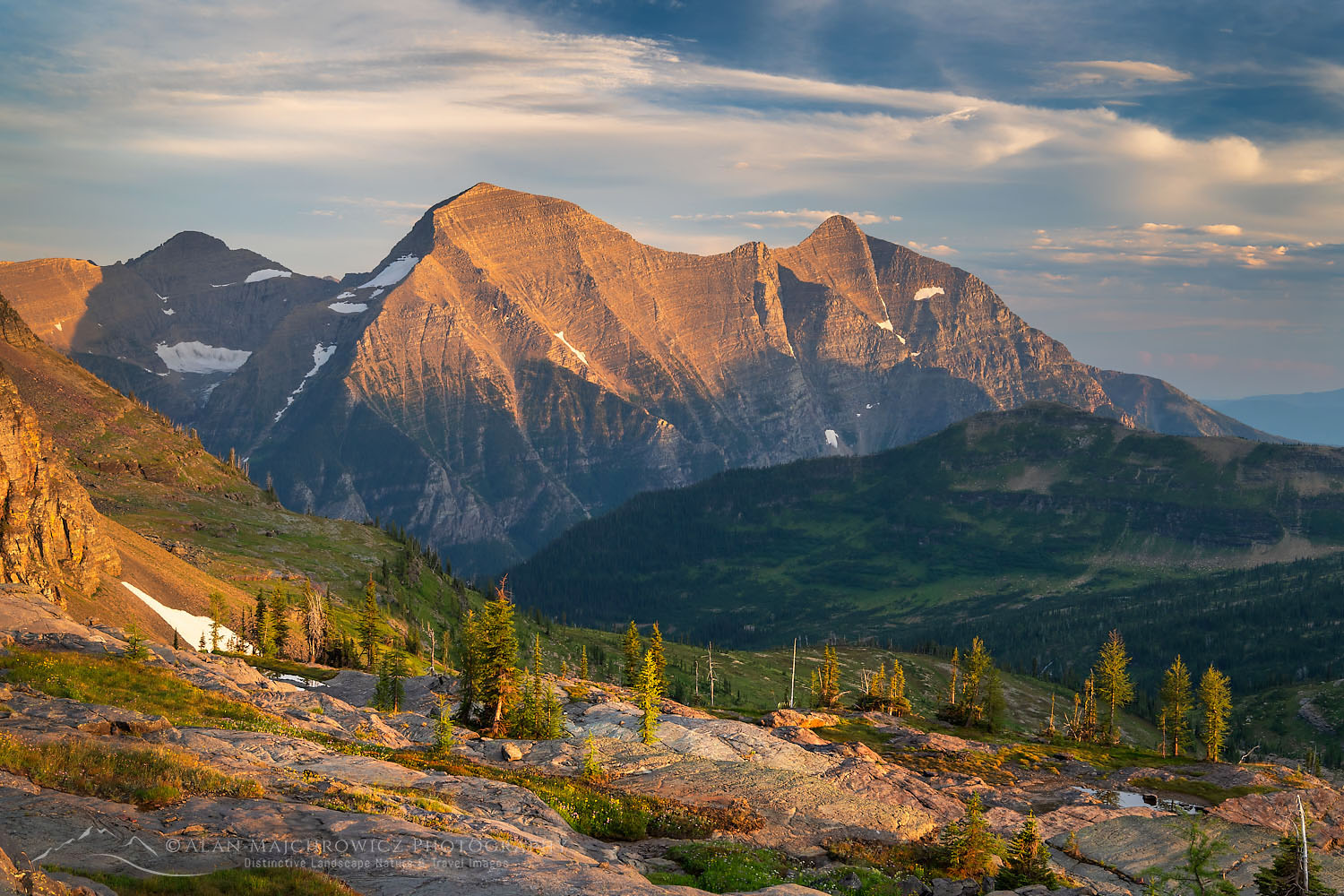
One area, in particular, was a series of benches on the west side of Boulder Peak. The views from there looking down to Pocket Lake and out to Kintla and Kinnerly Peaks were fabulous. In addition, some wispy clouds were moving in which could make for a great sunset. Since this was my last day at the pass, and it was mostly blue sky days while there, this seemed like the best chance to get some good photos.

Rainbow Peak Glacier National ParkRainbow Mountain from Boulder Pass  #69907  Purchase

Another thing that I noticed just below the west side of Boulder Pass was the presence of Subalpine Larches. These are a special type of conifer which in the fall their needles turn brilliant gold and fall off. In all my years of looking at photos of Glacier Park, I never saw any pictures of these trees in fall. So it was surprising to see them. Of course, this means that a trip to Boulder Pass in late September would be well worth it.

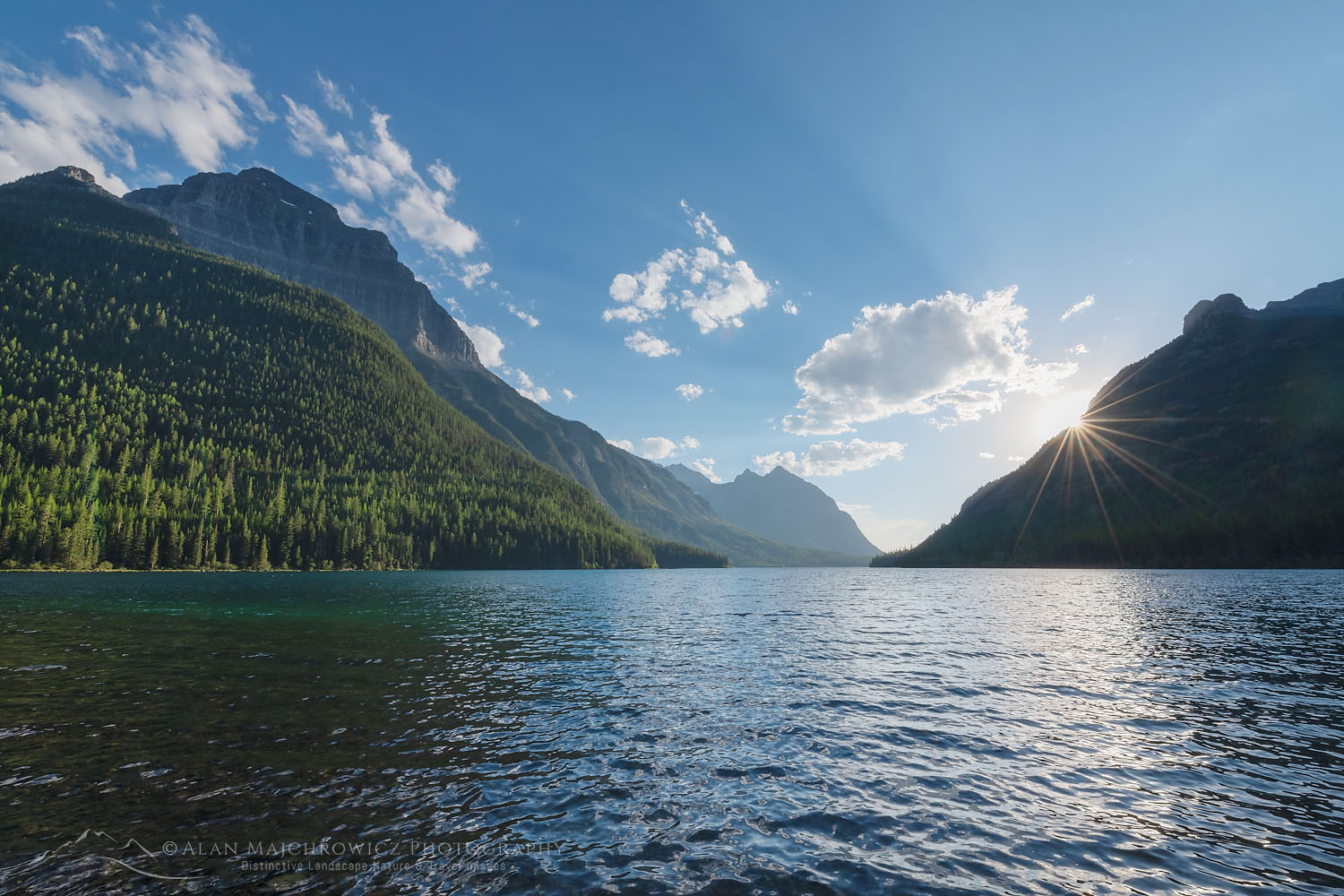
The next day I hiked back down to the Camp at Upper Kintla Lake. The lake was pleasant and scenic but nothing like the dramatic scenery up at the pass. The following day was the long hike out to complete the trip. It was a sweet feeling to have finally made such a wonderful trip to a new section of the park. It was also a bit sad when reflecting on when or if I’ll ever return.

Upper Kintla Lake Glacier National Park MontanaUpper Kintla Lake  #70062  Purchase


If You Go to Boulder Pass Glacier National Park

Distance from Kintla Lake Trailhead to Boulder Pass:  17.5 miles
Elevation Gain:  ~3200
Difficulty:  Moderate
Red Tape:  National Park Entrance Fee, Backcountry Wilderness Permits

The Kintla Lake Trailhead is located about 40 miles north of the West Entrance on the North Fork Road. The last 10 or so miles are on a gravel road which can be very dusty and bumpy. There is a hiker’s parking area 1/4 from the lake. There is also a small campground at the lake.

The  West Entrance and Apgar area has many services including gas, groceries, dining, and a very large campground. If you have the time it’s a great place to stay for a day or two before or after your hike.

Food bags hanging for bear safety at food prep area of Kintla Lake Campsite Glacier National Park MontanaKintla Head camp food prep area #69827

Bear Safety in Glacier National Park

All backpackers are required to carry bear spray. Bear canisters are not required as of this writing, as all backcountry camp areas have food prep areas with poles for hanging food. Make sure to bring about 50′ of parachute cord or similar to hang your food. When getting your permit you’ll also need to watch a short video on bear safety. Don’t take this lightly, as you’ve seen in this post there is a good chance of seeing bears on the trail or near campsites.

Sunset over Kinnerly and Long Knife Peaks seen from Boulder Peak. Glacier National Park MontanaSunset Boulder Pass Glacier National Park  #70041  Purchase

Leave No Trace

Please Please Please!  Don’t plan a trip to this or any other wilderness area unless you are prepared to strictly follow the guidelines of Leave No Trace (LNT). Glacier Park and all other wilderness areas throughout the world are under incredible pressure from growing amounts of visitors. Please do your part to help preserve these precious areas for future generations!

To learn more about the principles and practicing LNT please take a few minutes to visit the Leave No Trace Center for Outdoor Ethics. Your children and grandchildren will thank you!

Seven Leave No Trace Principles

  • Plan ahead and prepare.                                       
  • Travel and camp on durable surfaces.                 
  • Dispose of waste properly.                                                                         
  • Leave what you find.                                            
  • Minimize campfire impacts (be careful with fire).
  • Respect wildlife.  
  • Be considerate of other visitors.

Hoary Marmot (Marmota caligata) Glacier National ParkMarmot at Boulder Pass Glacier National Park  #69980  Purchase

Photo Gear Used On This Trip

Nikon D850
Nikkor Lens:
14-24mm 2.8G ED
24-70mm 2.8E ED
70-200mm 2.8E FL ED
Gitzo 1532 Tripod
Really Right Stuff B-55 Ball Head
Assorted Lee Graduated Neutral Density Filters
B+H Polarizing Filter
Vello FWM-N2 Remote Shutter Release

If you enjoyed reading Boulder pass Glacier National Park please share it with your friends and family. And make sure you check out Boulder Pass Glacier National Park Part 1

Photos appearing in Boulder Pass Glacier National Park  are available for Commercial Licensing and Fine Art Prints. Click on any image to purchase, or contact me for more info!

Boulder Pass Glacier National Park

Sunrise at Lake McDonald Glacier National Park Montana

Boulder Pass Glacier National Park Part 1

Boulder Pass Glacier National Park

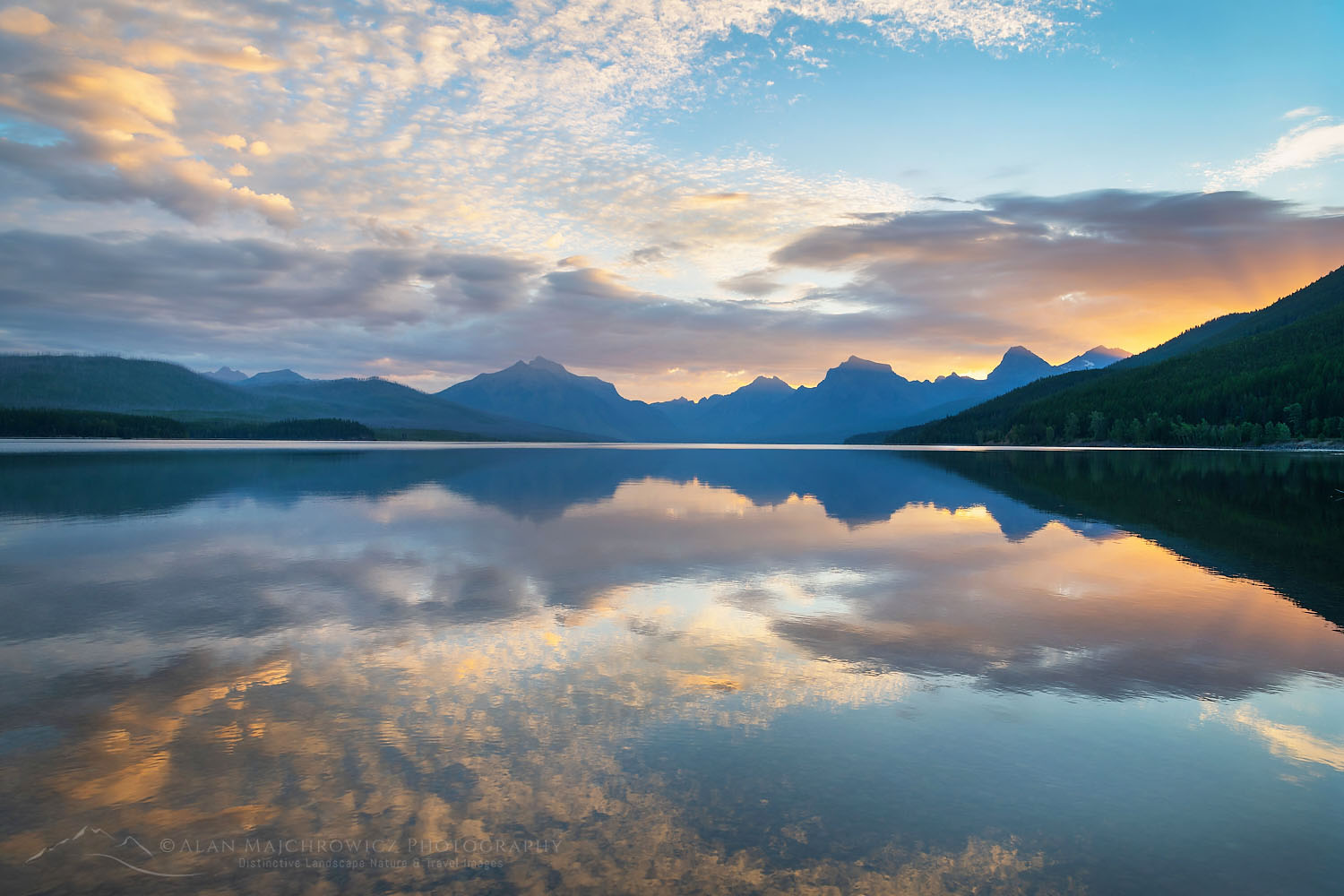
Sunrise at Lake McDonald Glacier National Park MontanaLake McDonald Glacier National Park #69738  Purchase

Glacier National Park is one of the most popular national parks in the country. It averages around 3,000,000 visitors a year. That’s a lot of people, and you would be correct in thinking the park has an overwhelming amount of visitors. However, like most popular national parks, nearly all of those visitors only experience the park along front country roads and its iconic attractions. In Glacier, the vast majority of visitors only travel along Going-to-the-Sun Road and stay only for a day. If they get out of their car to experience the park it is most likely at Logan Pass.

Indeed, on any given summer day the line of traffic on Going-to-the-Sun Road begins well before dawn. The parking lot at Logan Pass usually fills to capacity by 9 am. Soon after that, there is traffic congestion similar to that in any big city, and most scenic pullouts have no open parking spaces left. Those that want a more in-depth experience often choose day hikes beginning with Going to the Sun Road. And a smaller percentage explore trails in other sections of the park. The smallest percentage of visitors choose overnight backpacks to more well-known backcountry destinations.

It would seem that there is no corner of Glacier National Park free from crowds. This would be true if the park service didn’t have a strict permit system in place that limits backcountry campsites. This system is necessary to preserve the wilderness experience, and also protect fragile environments and wildlife. The visitor wanting to spend a night or two in the backcountry must negotiate the online permit reservation system. This can be very frustrating as nearly all sites fill up many months in advance. Some sites can even be closed and reservations canceled at the last minute due to bear activity.

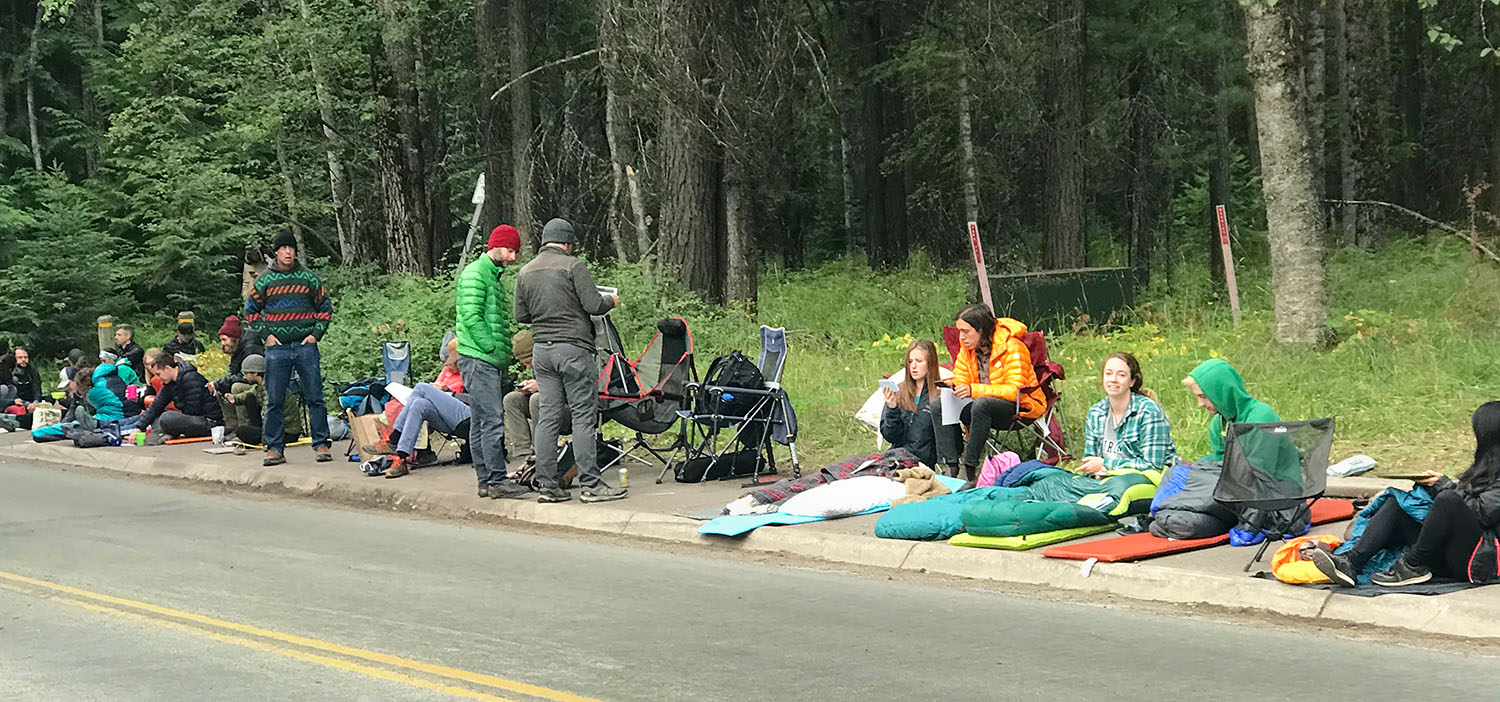
Wilderness Permit Line Glacier National ParkWilderness permit line Glacier National Park

Obtaining a Permit for Boulder Pass

All this changed last summer. Because of the COVID pandemic, Glacier was operating the permit system on an in-person first-come basis only. So I saw this as a chance to improve my odds of doing a multi-day backpacking and photography trip into one of the most beautiful and remote areas of the park. Nearly all photographers gravitate to several well-known places in the park, such as Logan Pass, Lake McDonald. But my plan was to photograph in Kintla Lake and at Boulder Pass, a relatively unknown area for photographers.

So with time on my side, I set about obtaining a permit for a six-day trip. Accommodations in Glacier during the summer months are difficult to come by in a normal year. But last summer I had to work even harder to find a place, resorting to some obscure places I’ve found over the years. Fortunately, I found a place outside the park only minutes away from the wilderness permit office.

It still wasn’t easy to get my permits though. The line for permits was long and people began arriving well before dawn. On my first attempt I got there around 6 am and there were already at least 40 people in front of me. After waiting a couple of hours I heard that my chosen sites were already filled. So the next day I set my alarm for 1:30 am. Upon arriving at the office I was relieved to see there were only four others already in line. With a camp chair and my sleeping bag, I got comfortable until the office opened at 9. The waiting paid off and I left with a permit for my desired sites and dates in hand.

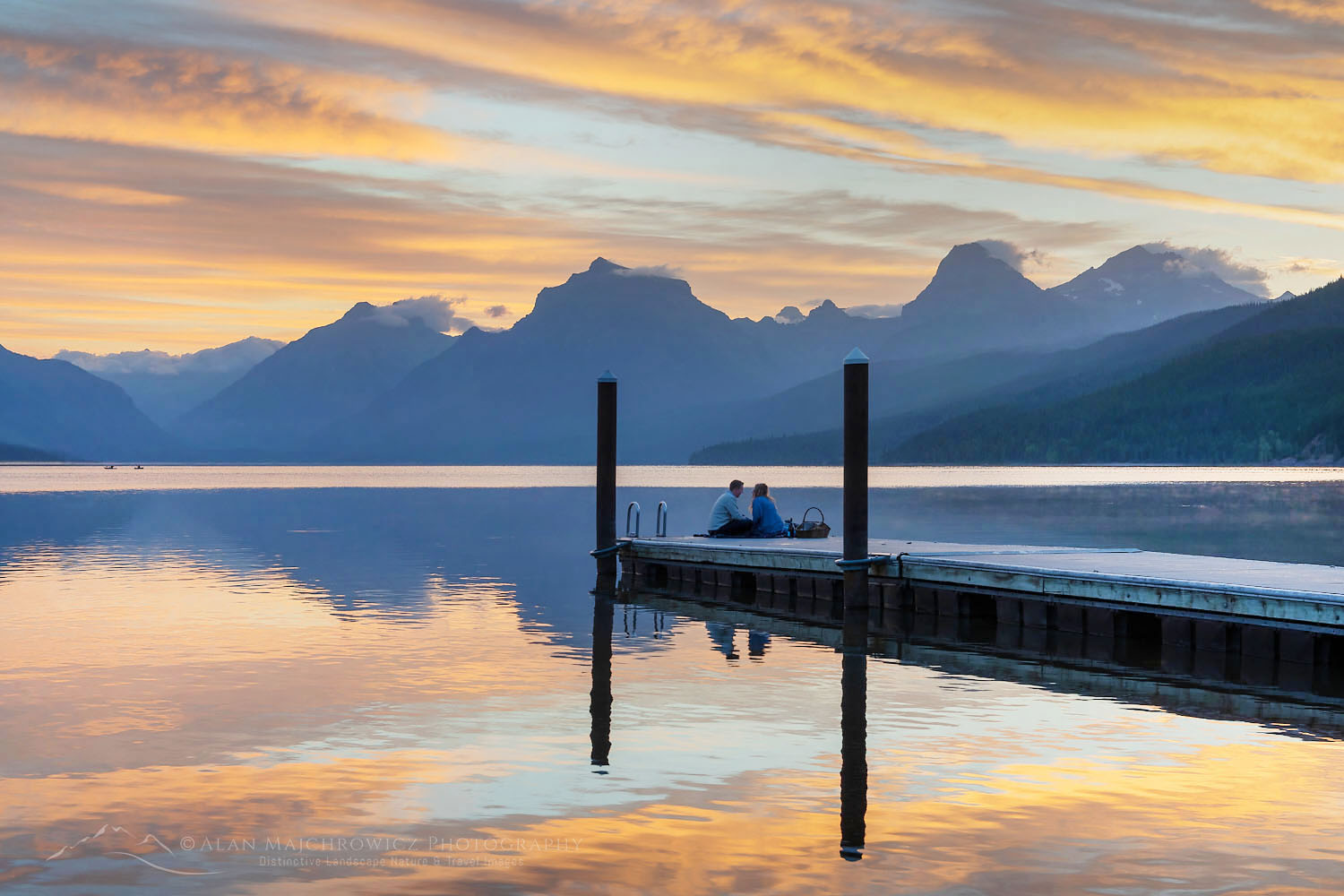
Couple on dock at Sunrise at Lake McDonald Glacier National Park MontanaSunrise proposal on Lake McDonald Glacier National Park #69805

Extra Time in Glacier Park

After obtaining my permit for Boulder Pass, I still had a couple of days to wait to start my trip. With time to kill there was no lack of ways to use it. Every morning and evening since arriving I set up to photograph at Lake McDonald. During my stay there were several very nice instances of light, making the efforts worthwhile.

One morning after arriving at the lake before dawn there was a couple on the nearby boat dock. I didn’t pay much attention to them until I saw the man drop to one knee. It was then apparent he was proposing marriage. He certainly chose the right day and time since the sky was ablaze with color at dawn.

On another occasion, I was sitting on the beach in the evening. A couple showed up that apparently were just married since the woman was wearing her wedding gown. They were there for some post-wedding portrait photographs. I wonder how many such events take place here during the year?

During this free time, there was also the opportunity to get in a day hike or two. After a quick look at the park map, one hike, in particular, rose above the rest, Sperry Chalet and Comeau Pass.

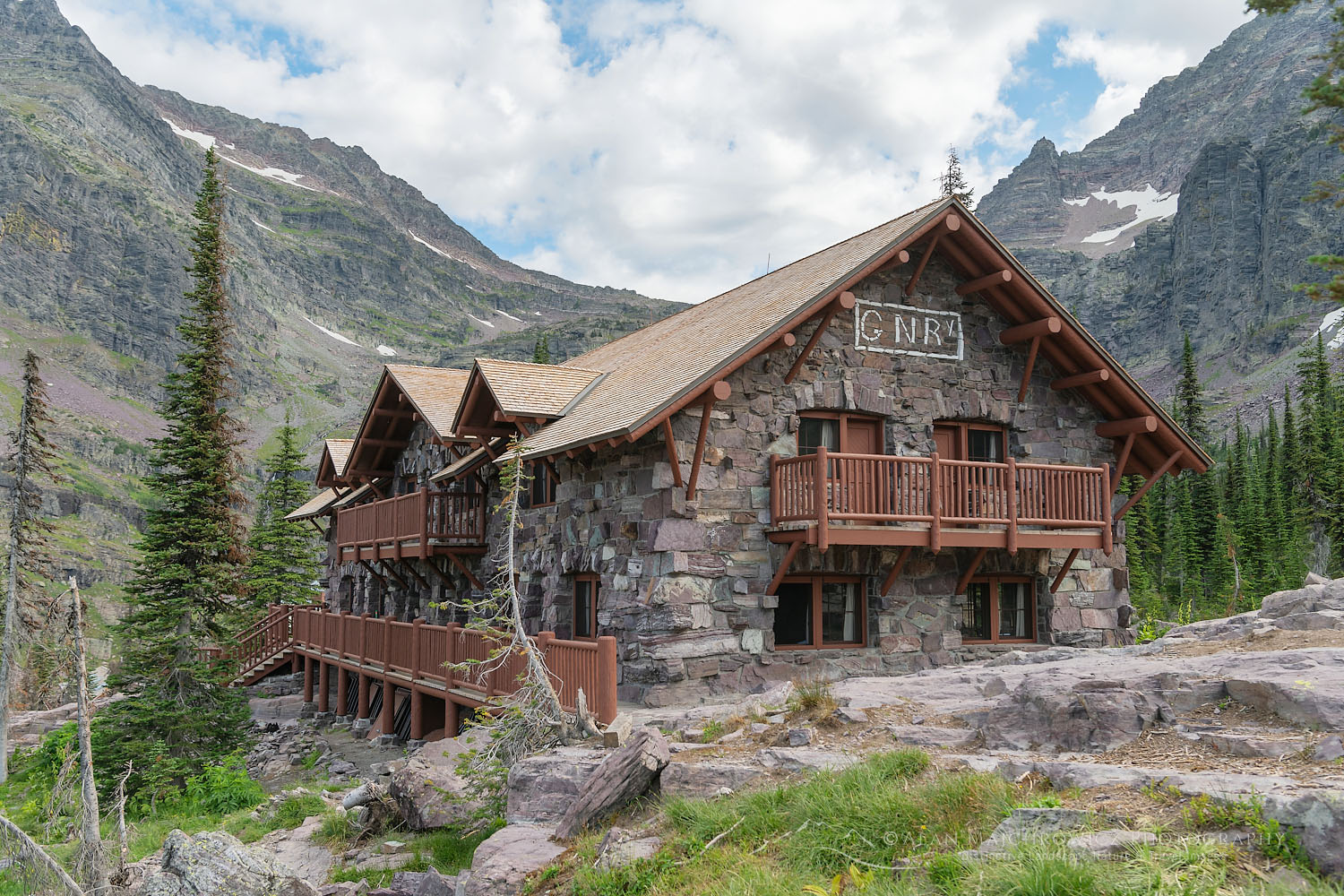
Sperry Chalet, Glacier National ParkSperry Chalet Glacier National Park  #69749

Sperry Chalet

A few years back the historic Sperry Chalet burned in the Sprague Fire. It was since rebuilt and this summer it was again open for business. Further up the trail from the chalet is Comeau Pass with an overlook of the Sperry Glacier. Together they offered a chance for me to see a new area of the park while getting a good workout.

The hike begins at the trailhead across the road from Lake McDonald Lodge. There is a huge parking area and it too overflows with cars by noon, so I got there early in the morning. The hike to Comeau Pass and back is around 17 miles with a nearly 5000′ in elevation gain. This is definitely a full-day leg burner unless you’re a trail runner who does this kind of thing before breakfast.

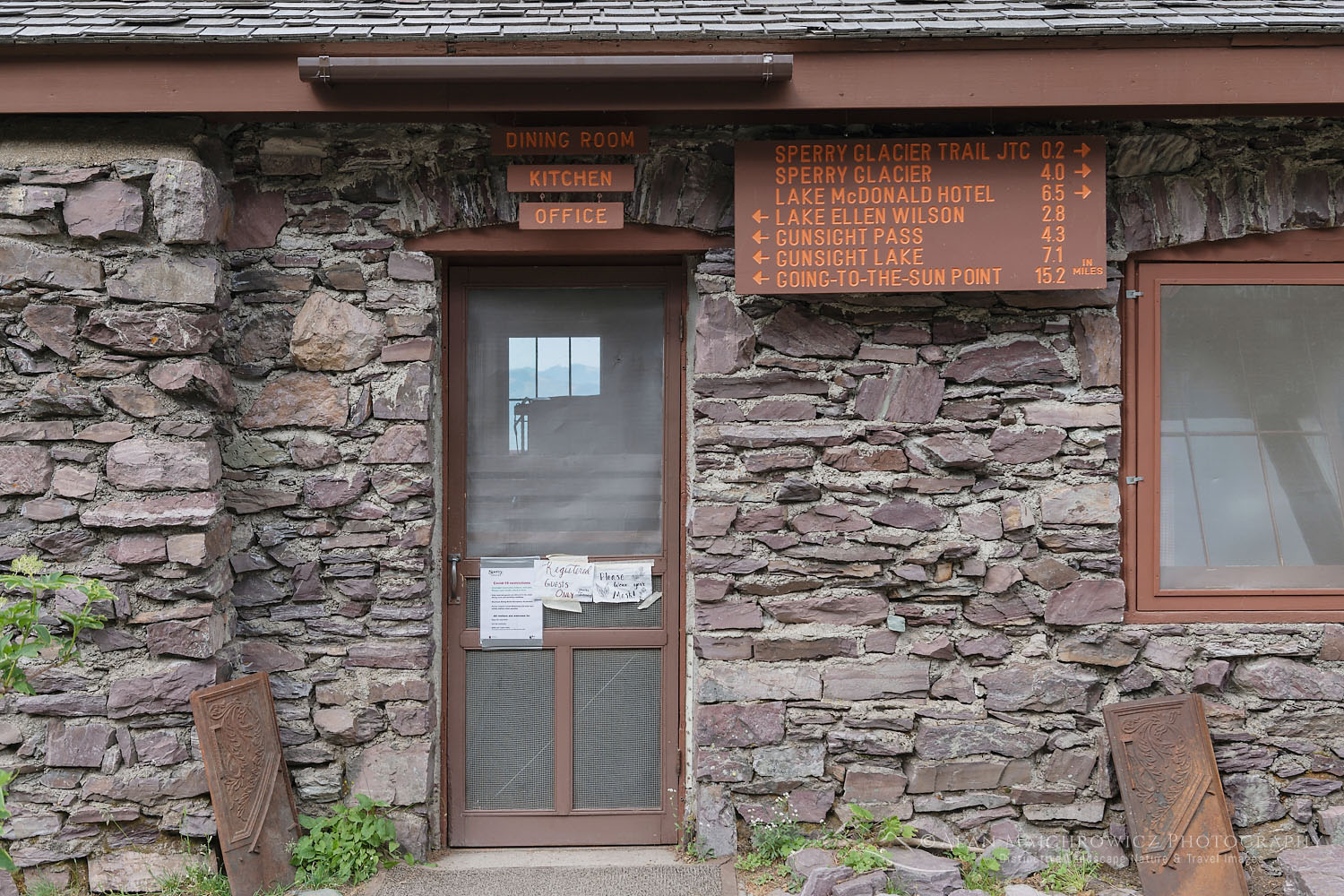
Sperry Chalet cookhouse entrance during Covid 19 Pandemic, Glacier National ParkSperry Chalet Dining Hall  #69752
If you make it all the way you’ll be rewarded with spectacular views at an elevation 1500′ higher than those at Logan Pass. Most hikers on this trail however are happy to get as far as Sperry Chalet, about 12 miles round trip with 3600′ elevation gain. The chalet sits right at the tree line, and the views down the valley are great, but the best scenery lies further up.

The chalet can be described as rustic elegance. Although during the pandemic only registered guests were allowed inside I was able to peak in the windows. There was a classic western lodge or cabin look to the rooms. The chalet has no electricity but there were oil lamps in the rooms, adding to the charm. There is a separate building for dining, looking in the door the aroma of freshly baked cinnamon rolls was wafting out. Sadly again only guests could enter this summer.

View from Comeau Pass, Glacier National Park MontanaComeau Pass Glacier National Park #69770

Comeau Pass

From the Chalet, the trail passes numerous waterfalls, wildflowers, interesting rock layers, and two alpine lakes. Finally, as you get closer to the pass it appears the trail dead-ends at the base of a cliff. However, when you get there a steep narrow stairway cut into the cliff awaits you. Something any fan of Lord of the Rings will enjoy. It’s kind of a short tame version of the Stair of Cirith Ungol, but there aren’t any giant spiders or Dark Tower on the other side. There are cables to assist in ascending and descending. On my hike the stairs acted like a wind tunnel gone nuts, it would have been difficult to get down safely without them.

Stairs cut in rock at final segment to Comeau Pass trail Glacier National ParkComeau Pass Stairway Glacier National Park #69777

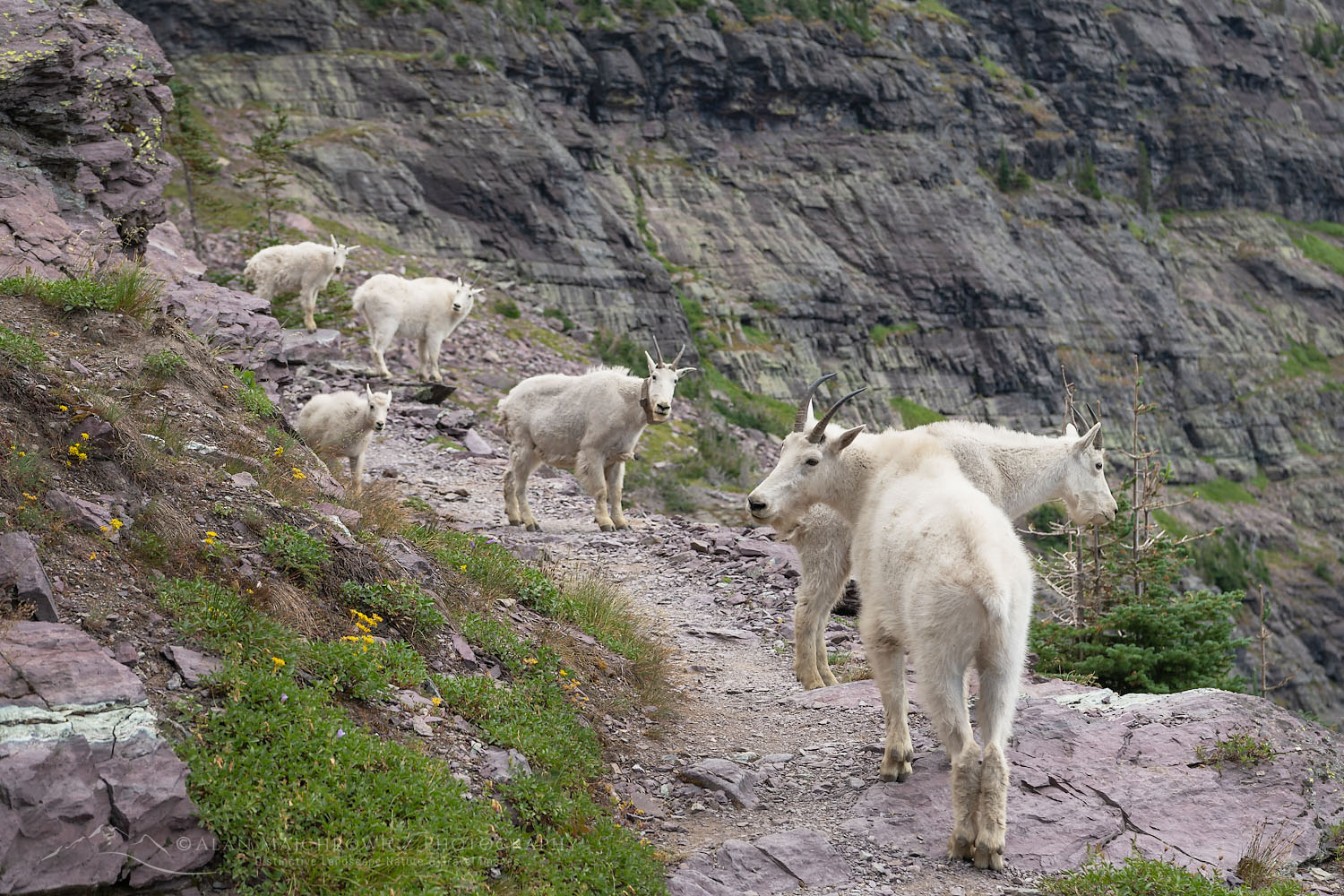
Wildlife is another perk of this hike. On the way up to the pass, a herd of mountain goats blocked my way. They took a while to move on so I played wildlife photographer for a few minutes. On the way down a passing hiker alerted me to a grizzly sow and two cubs not far from the trail. I saw them from a good distance and was happy they weren’t closer.

Mountain Goats (Oreamnos americanus) on Comeau Pass Trail, Glacier National Park MontanaMountain Goats Comeau Pass Trail  #69757

Even though I was already on several lengthy backpacking trips in the past month the last few miles back from this one was slow and tiring. It was nice to get back to camp relax and recoup before starting my six-day trip to Boulder Pass.

Click here to read part two of Boulder Pass Glacier National Park

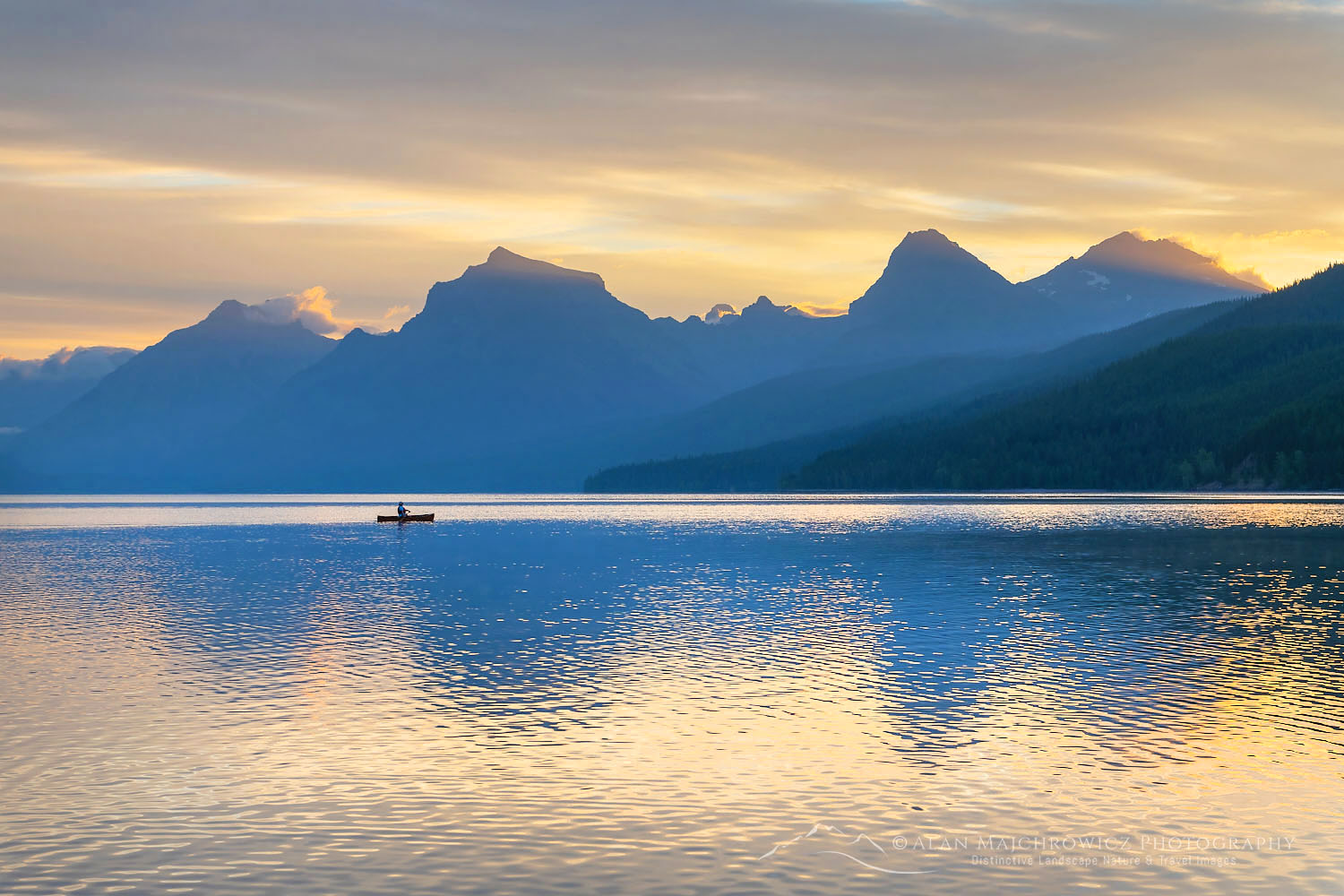
Canoeist paddling on Lake McDonald at sunrise. Glacier National Park MontanaLake McDonald Glacier National Park #69818 Purchase

If you enjoyed reading Boulder Pass Glacier National Park please share it with your friends and family. Next up Boulder Pass Glacier National Park Part 2!

Photos appearing in Boulder Pass Glacier National Park are available for Commercial Licensing and Fine Art Prints. Click on any image to purchase, or contact me for more info!

Boulder Pass Glacier National Park